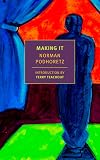
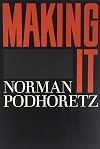
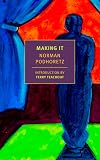
Making It (NYRB Classics)
by Norman Podhoretz
On This Page
Description
Norman Podhoretz, the son of Jewish immigrants, grew up in the tough Brownsville section of Brooklyn, attended Columbia on a scholarship, and later received degrees from the Jewish Theological Seminary and Cambridge University. Making It is his blistering account of fighting his way out of Brooklyn and into, then out of, the Ivory Tower, of his military service, and finally of his induction into the ranks of what he calls The Family, the small group of left-wing and largely Jewish critics show more and writers whose opinions came to dominate and increasingly politicize the American literary scene in the fifties and sixties. It is a Balzacian story of raw talent and relentless and ruthless ambition. It is also a closely observed and in many ways still pertinent analysis of the tense and more than a little duplicitous relationship that exists in America between intellect and imagination, money, social status, and power. The Family responded to Podhoretz's book with outrage, and Podhoretz soon turned no less angrily on them, becoming the fierce neoconservative he remains to this day. Fifty years after its first publication, this controversial and legendary book remains a riveting autobiography, a book that can be painfully revealing about the complex convictions and needs of a complicated man as well as a fascinating and essential document of mid-century American cultural life. show lessTags
Recommendations























Member Reviews
Sharp and gifted writing, but I never finished and will donate I think.
Ratings
Members
- Recently Added By
Published Reviews
ThingScore 35
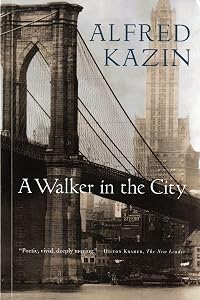
To mark the fiftieth anniversary of Making It, NYRB Classics has revived Podhoretz’s battle-scarred memoir with an innocuous new introduction by Terry Teachout, Commentary’s critic at large, who isn’t about to jeopardise his post by saying anything too jazzy or impolitic here. Given the long history of gangland strife between Commentary and the New York Review of Books, it’s gracious show more of its reprint house to include Making It in its classics line. It’s more of a curiosity today than a classic, too lacking in novelistic redolence and vivid characterisation, too pocked with deadwood phrases of punditry (‘it would seem’, ‘which is to say’, ‘to be sure’), to rank with Alfred Kazin’s A Walker in the City, Willie Morris’s North toward Home, and other urban romances of the ardent outsider whose eyes are on the prize. Still, it’s handy to have it back in print after its long stay in limbo, for documentary purposes. show less
added by SnootyBaronet
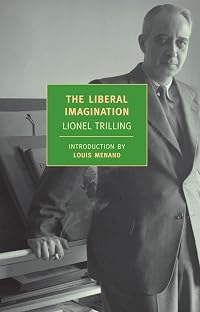
In the brief acknowledgments section, Podhoretz thanks Lionel Trilling, who, he says, “has taught me more than he or I ever realized—though not, I fear, precisely what he would have wanted me to learn.” This reads pretty clearly as a suggestion that Trilling, too, was a suck-up who wrote literary criticism in the hope of getting invited to a party with Jackie Kennedy. You can see why show more Trilling was not eager for Podhoretz’s memoir to see the light of day.
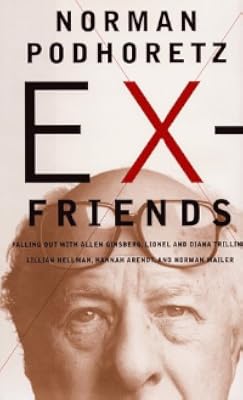
And not only Trilling. “Making It” is a book about what Podhoretz, borrowing the term from Murray Kempton, calls the Family—the writers and editors, mostly but not exclusively Jewish, who dominated the New York intellectual scene in the decades after the war. It is as their proud product that Podhoretz presents himself, and he obviously hoped to retain the approval of these people, as he had done so often in the past, by daring to write something they were afraid to write. He believed that they would admire his courage, recognize the justice of his account, forgive any indiscretions he may have committed, and, freed at last from a stifling hypocrisy, embrace him and the book. Many writers have tried this kind of thing. It never works. show less
And not only Trilling. “Making It” is a book about what Podhoretz, borrowing the term from Murray Kempton, calls the Family—the writers and editors, mostly but not exclusively Jewish, who dominated the New York intellectual scene in the decades after the war. It is as their proud product that Podhoretz presents himself, and he obviously hoped to retain the approval of these people, as he had done so often in the past, by daring to write something they were afraid to write. He believed that they would admire his courage, recognize the justice of his account, forgive any indiscretions he may have committed, and, freed at last from a stifling hypocrisy, embrace him and the book. Many writers have tried this kind of thing. It never works. show less
added by SnootyBaronet
Podhoretz wants you to focus on him, on his mind, on the things he has to say. And he does not cheat. He never makes himself good or—more cleverly—interestingly bad. Perhaps unconsciously, he has been tougher on himself than is really fair. With scarcely a trace of human warmth he has drawn the portrait of someone, surely not himself, who is an intellectual nebbish. And after writing a show more book that is not commercial, not dangerous, not ambitious, but is, in fact, in rather good taste by today's standards, he stretches out his neck on the platter of that last paragraph—for a crime he never committed. So let us give him the due he does not give himself. show less
added by SnootyBaronet
Lists

Tablet Magazine's List of 101 Great Jewish Books
103 works; 9 members
Author Information

Norman Podhoretz is editor at large for Commentary magazine.
Some Editions
Awards and Honors
Series
Belongs to Publisher Series
Common Knowledge
- Original publication date
- 1967
- People/Characters
- Norman Podhoretz
- Important places
- Brooklyn, New York, New York, USA
- Dedication
- For Rachel, Naomi, Ruth, and John
To whom this is, in a way, a letter - First words
- One of the longest journeys in the world is the journey from Brooklyn to Manhattan--or at least from certain neighborhoods in Brooklyn to certain parts of Manhattan.
- Quotations
- “You see that guy there?” he would say pointing to me. “He got about ten degrees from all kinds of fancy colleges all over the place, but when I say ‘Shit!’ he shits.”
- Last words
- (Click to show. Warning: May contain spoilers.)I just have.
- Blurbers
- Smith, Lee; Boynton, Robert S.
- Original language
- English
Classifications
- Genres
- Nonfiction, Biography & Memoir, Literature Studies and Criticism
- DDC/MDS
- 818.5 — Literature & rhetoric American literature in English American miscellaneous writings in English 20th Century
- LCC
- PS3566 .O3 .M3 — Language and Literature American literature American literature Individual authors 1961-
- BISAC
Statistics
- Members
- 140
- Popularity
- 234,302
- Reviews
- 1
- Rating
- (3.80)
- Languages
- English
- Media
- Paper, Ebook
- ISBNs
- 5
- ASINs
- 4