On This Page
Description
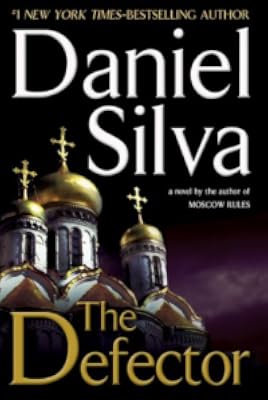
Gabriel Allon's idyllic world is once again thrown into turmoil with shocking news from London. The defector and former Russian intelligence officer Grigori Bulganov, who saved Gabriel's life in Moscow, has vanished without a trace. British intelligence is sure he was a double agent all along, but Gabriel knows better. He also knows he made a promise--a promise that leads to a deadly duel of nerve and wits with one of the world's most ruthless men: the murderous Russian oligarch and arms show more dealer Ivan Kharkov. show lessTags
Recommendations














Member Reviews
This novel will pass as an ordinary spy thriller, following the adventures of a vengeful protagonist as he pursues targets throughout the world, unless the reader decodes the contents to understand the knavery and symbolism afoot within. Daniel Silva’s book is a masterful construction and an allegorical writing.
The story begins with the sudden disappearance of Grigori Bulganov, a chess-playing Russian defector living in England. The format of the book indicates Silva’s game play within. The 77 chapters are loosely divided within five segments, the first indicating “Opening Moves”—the opening gambit for Silva’s chess match.
This strategy suggests that the entire work will conclude within “The Reckoning” section: the moves show more toward the endgame of this match. The middlegame is pursued through “Anatoly,” “All Even,” and “Resurrection Gate,” which are the competition wherein pawns (numerous lackeys), knights (Vladimir Chernov), bishops (Anton Petrov) are surrendered and finally dispatched. Meanwhile, the protagonist Gabriel ventures through zugzwang—a forced move—of his wife’s kidnapping that compels him to rescue her, which he does only to be trapped in a zwischenzug—a counter move—forcing the endgame wherein the king (Ivan Kharkov) will be capitulated.
Silva’s symbolisms begin with Bulganov’s first name: Grigori. In Biblical lore the Grigori are the watchers or holy ones of the fallen angels (Kharkov’s henchmen). Silva’s opening ploy in the struggle of good and evil is embellished through the names of the characters involved in this global contest. Parsing their names enriches their allegorical functions within this story.
Ari (“Lion of God”) Shamron is introduced as the Memuneh (A deputy angel and dispenser of dreams, through whom the Universe operates) of the Israeli intelligence unit operating on King Saul Boulevard in Tel Aviv, familiarly termed “The Office.” Shamron’s White game pieces include:
Gabriel (God’s Archangel Messenger to humans) Allon (“Oak Tree” and perhaps a reference to the son of Jedaiah who expelled the Hamites from Gedor)—the protagonist operative and son of Shamron. Gabriel is said to stand on God’s left hand, which is the sinister position that is significant to the undercover, wet jobs that earthly Gabriel alone accomplishes.
Uzi (Israeli submachine gun innovated by Uziel Gal in the 1948 Arab-Israeli War) Navot (Shlomo Navot was an Israeli ace pilot during the same conflict)—Shamron’s other son who is the Office’s impulsive muscle.
Mikhael (Michael, Archangel in command of God’s Army) Abramov (“Son of Abraham”)—Gabriel’s chief aide in many Israeli-sanctioned, clandestine operations.
The Black opponents or the dark side is led by kingpin Ivan (Ivan the Terrible, Russia’s destructive tsar) Kharkov (Ukrainian city that was devastated through German-Soviet hostilities between 1941 and 1943) has enriched and empowered his castle by plundering the resources and wealth of the toppled Soviet Union. He employs malignant minions that include:
Vladimir (Vlad the Impaler) Chernov (Slovak meaning Black)—Kharkov’s hired gun and chief assassin who shamelessly rids Kharkov’s opposition.
Anton (Anthony as in Julius Caesar’s Mark Anthony) Petrov (Peter, also Petrov’s Defense is a duplicitous chess strategy)—the middleman handling Kharkov’s directives and Chernov’s money who becomes Kharkov’s turncoat.
One entity that seems to be missing is Raphael (Archangel of healing), although this might be inferred tangentially with Gabriel’s attempts at refurbishing Vatican paintings or perhaps it could allude to Gilah Shamron’s therapeutic ministrations to Gabriel’s wife. There are other lesser name associations at play in this novel. Gabriel’s first wife Leah (“Delicate,” “soft”) is mentally fragile and institutionalized after a Vienna bombing, and Gabriel’s current spouse Chiara (“Clear”) suffers PTSD while he paints her in chiaroscuro.
I love Silva’s clever, connotative naming of his characters and I admire his roguish construction of his chess-board plotting. There certainly is more gaming at play in this novel than plain writing. show less
The story begins with the sudden disappearance of Grigori Bulganov, a chess-playing Russian defector living in England. The format of the book indicates Silva’s game play within. The 77 chapters are loosely divided within five segments, the first indicating “Opening Moves”—the opening gambit for Silva’s chess match.
This strategy suggests that the entire work will conclude within “The Reckoning” section: the moves show more toward the endgame of this match. The middlegame is pursued through “Anatoly,” “All Even,” and “Resurrection Gate,” which are the competition wherein pawns (numerous lackeys), knights (Vladimir Chernov), bishops (Anton Petrov) are surrendered and finally dispatched. Meanwhile, the protagonist Gabriel ventures through zugzwang—a forced move—of his wife’s kidnapping that compels him to rescue her, which he does only to be trapped in a zwischenzug—a counter move—forcing the endgame wherein the king (Ivan Kharkov) will be capitulated.
Silva’s symbolisms begin with Bulganov’s first name: Grigori. In Biblical lore the Grigori are the watchers or holy ones of the fallen angels (Kharkov’s henchmen). Silva’s opening ploy in the struggle of good and evil is embellished through the names of the characters involved in this global contest. Parsing their names enriches their allegorical functions within this story.
Ari (“Lion of God”) Shamron is introduced as the Memuneh (A deputy angel and dispenser of dreams, through whom the Universe operates) of the Israeli intelligence unit operating on King Saul Boulevard in Tel Aviv, familiarly termed “The Office.” Shamron’s White game pieces include:
Gabriel (God’s Archangel Messenger to humans) Allon (“Oak Tree” and perhaps a reference to the son of Jedaiah who expelled the Hamites from Gedor)—the protagonist operative and son of Shamron. Gabriel is said to stand on God’s left hand, which is the sinister position that is significant to the undercover, wet jobs that earthly Gabriel alone accomplishes.
Uzi (Israeli submachine gun innovated by Uziel Gal in the 1948 Arab-Israeli War) Navot (Shlomo Navot was an Israeli ace pilot during the same conflict)—Shamron’s other son who is the Office’s impulsive muscle.
Mikhael (Michael, Archangel in command of God’s Army) Abramov (“Son of Abraham”)—Gabriel’s chief aide in many Israeli-sanctioned, clandestine operations.
The Black opponents or the dark side is led by kingpin Ivan (Ivan the Terrible, Russia’s destructive tsar) Kharkov (Ukrainian city that was devastated through German-Soviet hostilities between 1941 and 1943) has enriched and empowered his castle by plundering the resources and wealth of the toppled Soviet Union. He employs malignant minions that include:
Vladimir (Vlad the Impaler) Chernov (Slovak meaning Black)—Kharkov’s hired gun and chief assassin who shamelessly rids Kharkov’s opposition.
Anton (Anthony as in Julius Caesar’s Mark Anthony) Petrov (Peter, also Petrov’s Defense is a duplicitous chess strategy)—the middleman handling Kharkov’s directives and Chernov’s money who becomes Kharkov’s turncoat.
One entity that seems to be missing is Raphael (Archangel of healing), although this might be inferred tangentially with Gabriel’s attempts at refurbishing Vatican paintings or perhaps it could allude to Gilah Shamron’s therapeutic ministrations to Gabriel’s wife. There are other lesser name associations at play in this novel. Gabriel’s first wife Leah (“Delicate,” “soft”) is mentally fragile and institutionalized after a Vienna bombing, and Gabriel’s current spouse Chiara (“Clear”) suffers PTSD while he paints her in chiaroscuro.
I love Silva’s clever, connotative naming of his characters and I admire his roguish construction of his chess-board plotting. There certainly is more gaming at play in this novel than plain writing. show less
Daniel Silva is back with another exciting espionage thriller featuring the famed art restorer and occasional Israeli spy, Gabriel Allon. Building upon the story begun in Moscow Rules, this book finds Gabriel and his wife back home in Umbria, a few months after the events in Moscow Rules ended. Allon is in the process of restoring an altarpiece for the Vatican, when he receives word that the Russian defector, Grigori Bulganov, has vanished. Bulganov was a former colonel in the Russian Federal Security Service who had defected to the British. He was also a man to whom Gabriel owes his life. Upon hearing of his disappearance, Allon and his team set out on a deadly race through Europe and Russian, and against time, to find his old friend. show more Allon soon learns of a horrific plot to destroy both himself and his family, which is being hatched by terrorist, Ivan Kharkov, the former KGB agent turned arms dealer, and a man with whom Gabriel made an enemy of in the last book.
This book was an exciting and complex novel, and even better than Moscow Rules. While you should read Moscow Rules before reading The Defector, it is not absolutely necessary. Silva provides enough of a back story to allow you to follow the action. No one does spy thrillers better than Daniel Silva and I highly recommend any one of his Gabriel Allon series book. show less
This book was an exciting and complex novel, and even better than Moscow Rules. While you should read Moscow Rules before reading The Defector, it is not absolutely necessary. Silva provides enough of a back story to allow you to follow the action. No one does spy thrillers better than Daniel Silva and I highly recommend any one of his Gabriel Allon series book. show less
I started reading Daniel Silva's Gabriel Allon novels several years ago. I love a good spy story and Daniel Silva never disappoints. This is another high energy installment in the Gabriel Allon saga trying to save his country from the evils of another international thug. Set in the present day, Silva weaves the story into the fabric of current events, offering commentary on our present situations, while telling a very entertaining story.
What intrigues me most about the Allon series is he isn't CIA. Allon is an Israeli spy, working for The Office. I am fascinated by the difference in the way the Jewish mind reacts to threats, even the view of history. Silva's Israelis take threats very seriously and meet them head on, taking action show more before others have the chance to even act themselves. They don't wait around for the bully to throw the first punch. He makes it clear the lessons of the Holocaust have sunk deep into the fabric of the country. When they say, "Never Again," they mean it.
The Defector picks up right after Moscow Rules and continues the story. As with real life, the act of helping the wife and children of a Russian oligarch escape will have strong repercussions that last well beyond the actual incident. This book is the mop up of the previous events, round two of the title bout. The oligarch strikes back, kidnapping not only one of the defectors Allon brought out, but Allon's own wife, in a bold attempt to get his children back. Allon must dig deep and once again become the hunter to get his wife back alive. The game of digging for information and creating plans is swift and rapid paced. As evidenced by my reading the entire book in three days, this story is on a frenetic pace.
This is not a book for the weak of stomach. If waterboarding Al-Qiada terrorists bothers you, you won't last long in this book. The tortures used are brutal, fast and effective. There is more blood flow in this book than most of Silva's stories. There were parts I wanted to skip over, as it was too graphic for me. Sometimes less description can be just as powerful as a full rendition.
I believe Silva is making a statement of the pointlessness of trying to negotiate with thugs. He shows how when time is of the highest priority, it doesn't make sense to 'ask nicely' and expect an answer. Silva's operatives know their enemies hate them and no amount of talking is going to change that hatred. The enemy has their own deep seeded beliefs and no amount of trying to explain why their belief is mistaken will result in an instant conversion. When people have been taught to hate their entire life, drastic measures may be the only course of action. Silva helps me understand the real life responses Israel makes to terrorists lobbing rockets into their cities on a daily basis. Bringing peace to the Middle East is not going to happen over a few weeks, months or years.
Allon wins the day, of course, but Silva shows how no one really escapes these experiences unscathed. Sometimes I wish he would let Allon retire to his first love - restoring old paintings and leave him be. Of course, that can't happen. Israel can't rest either, in today's world. They have enemies constantly trying to destroy them. Constant vigilance and action is the only way they will survive. Allon, like the entire nation, will have to keep fighting for their right to live. show less
What intrigues me most about the Allon series is he isn't CIA. Allon is an Israeli spy, working for The Office. I am fascinated by the difference in the way the Jewish mind reacts to threats, even the view of history. Silva's Israelis take threats very seriously and meet them head on, taking action show more before others have the chance to even act themselves. They don't wait around for the bully to throw the first punch. He makes it clear the lessons of the Holocaust have sunk deep into the fabric of the country. When they say, "Never Again," they mean it.
The Defector picks up right after Moscow Rules and continues the story. As with real life, the act of helping the wife and children of a Russian oligarch escape will have strong repercussions that last well beyond the actual incident. This book is the mop up of the previous events, round two of the title bout. The oligarch strikes back, kidnapping not only one of the defectors Allon brought out, but Allon's own wife, in a bold attempt to get his children back. Allon must dig deep and once again become the hunter to get his wife back alive. The game of digging for information and creating plans is swift and rapid paced. As evidenced by my reading the entire book in three days, this story is on a frenetic pace.
This is not a book for the weak of stomach. If waterboarding Al-Qiada terrorists bothers you, you won't last long in this book. The tortures used are brutal, fast and effective. There is more blood flow in this book than most of Silva's stories. There were parts I wanted to skip over, as it was too graphic for me. Sometimes less description can be just as powerful as a full rendition.
I believe Silva is making a statement of the pointlessness of trying to negotiate with thugs. He shows how when time is of the highest priority, it doesn't make sense to 'ask nicely' and expect an answer. Silva's operatives know their enemies hate them and no amount of talking is going to change that hatred. The enemy has their own deep seeded beliefs and no amount of trying to explain why their belief is mistaken will result in an instant conversion. When people have been taught to hate their entire life, drastic measures may be the only course of action. Silva helps me understand the real life responses Israel makes to terrorists lobbing rockets into their cities on a daily basis. Bringing peace to the Middle East is not going to happen over a few weeks, months or years.
Allon wins the day, of course, but Silva shows how no one really escapes these experiences unscathed. Sometimes I wish he would let Allon retire to his first love - restoring old paintings and leave him be. Of course, that can't happen. Israel can't rest either, in today's world. They have enemies constantly trying to destroy them. Constant vigilance and action is the only way they will survive. Allon, like the entire nation, will have to keep fighting for their right to live. show less
Israeli spy/assassin Gabriel Allon is living quietly in Italy with his wife Chiara, retired from the Israeli intelligence service in all but name. When a Russian spy, Grigori Bulganov, whom he helped smuggle out of Russia in an earlier book in the series (Moscow Rules) goes missing from his London home, the British assume he was a double agent all along, while the Israelis think he's been kidnapped by the Russian oligarch whose downfall was orchestrated by Gabriel and Gregori. The Israelis draft Gabriel into investigating and rescuing Grigori if needed.
Silva's plots are always very intricate and meticulously detailed, and that along with the characterization of Gabriel and some of the other regular characters are the highlights of this show more series for me. The downsides are the extreme graphic violence and the quick use of torture to extract information even though it's been proven that in reality the information obtained in this way is often bogus (a lesson the US learned much, much too late, if indeed it actually has). In Gabriel's world, torture always works and it's always the first resort, not the last. Gross.
So I don't love those aspects of the plot at all, and I'm tempted to give the rest of the series a pass except that I own several of the upcoming books. It will be a while before I feel moved to pick another one up, though. show less
Silva's plots are always very intricate and meticulously detailed, and that along with the characterization of Gabriel and some of the other regular characters are the highlights of this show more series for me. The downsides are the extreme graphic violence and the quick use of torture to extract information even though it's been proven that in reality the information obtained in this way is often bogus (a lesson the US learned much, much too late, if indeed it actually has). In Gabriel's world, torture always works and it's always the first resort, not the last. Gross.
So I don't love those aspects of the plot at all, and I'm tempted to give the rest of the series a pass except that I own several of the upcoming books. It will be a while before I feel moved to pick another one up, though. show less
Gabriel Allon and his team are back. Daniel Silva gives these characters a high tension drama to move in. As is usual with successful spy novels, the story borders on believability. Silva creates a believable fiction around some very possible scenarios: a Russian defector living in England, a Russian arms dealer megamillionaire and old friends in Allon’s spook network. Just to ratchet the tension up a little more, the bad guys make a serious mistake in kidnapping Allon’s wife.
All the elements are in place for a rather mundane story of espionage, betrayal and revenge. Daniel Silva elevates these plot elements into a truly gripping novel with the right blend of violence and brains to create a spy novel, and a character, worthy of show more standing next to Ian Fleming’s James Bond or John Le Carré’s classics. While the plot is based on relatively current events, Allon and his people are old school spies: their brains and their actions get them out of tight spots, not high tech gadgetry.
Highly suggested for fans of the classic spy novels mentioned above. If you are more of a high tech spy fan, this story may not do it for you, but action fans will be intrigued. show less
All the elements are in place for a rather mundane story of espionage, betrayal and revenge. Daniel Silva elevates these plot elements into a truly gripping novel with the right blend of violence and brains to create a spy novel, and a character, worthy of show more standing next to Ian Fleming’s James Bond or John Le Carré’s classics. While the plot is based on relatively current events, Allon and his people are old school spies: their brains and their actions get them out of tight spots, not high tech gadgetry.
Highly suggested for fans of the classic spy novels mentioned above. If you are more of a high tech spy fan, this story may not do it for you, but action fans will be intrigued. show less
Wow, what a whirlwind of a book... An excellent sequel to "Moscow Rules", as fast-paced as the former. It is hard to make assassins (well, that's what these Israeli agents, including the protagonist, call themselves) look credible, human, appealing, but the author succeeds in doing that.. The picture of modern Russia is not a pretty one, for sure. And I am absolutely positive that there are horrible characters like Ivan Kharkov in the country... The novel is full of killings and blood, but for some reason it's not morbid. There is this gentle streak in Gabriel Allon's character, his relationship with his wife, even the nightmares that come with his job. The contents aside, the novel reads swiftly, truly a page-turner. That said, I show more thought that the ending was a bit hurried and scrambled. show less
Generally speaking, it's safe to say that a few hours spent with Daniel Silva and Gabriel Allon will be hours well spent. This ninth outing for the Israeli art restorer and spy is every bit as good--if not better--than its predecessors. The setting for the bad guys is once again Russia, and the main thorn in the Israeli side is one of those mega-rich "new Russian" types who have benefited--by any means necessary--from Russia's new economy and the various Wild West-like aspects of it. When Allon's wife is targeted as payback for events that took place in the last book, Gabriel is once again drawn back into a world and a life that he continues to desperately want to put behind him. Listing all of the good things about this one would take show more a long time, so I'll just point out the two disappointments, both of which come near the end. One revolved around Silva's decision to employ the trite and overused plot device of the bad guy who, instead of just dispatching the heroes in his custody, opts instead to get all chatty and provide time for the heroes' friends and/or associates to bail them out. The other disappointment was in the resolution of the principal antagonist's part of the tale at the very end, which was extremely anticlimactic and practically screamed of an impending deadline facing the author. Still, resolution is there, if in relatively abbreviated form, which will please those who don't like open-ended conclusions. show less
Members
- Recently Added By
Published Reviews
ThingScore 88
"The Defector" is the perfect book for fans of well-crafted thrillers to pack in their tote bags for a day at the beach, the kind of page-turner that captures the reader from the opening chapter and doesn't let go.
added by Shortride
And yet, for all of its shortcomings, "The Defector" held me. Maybe it's Silva's skill in describing the flavor of such different places as London, Paris, Tel Aviv, Zurich, Washington, Moscow and more, or in making his plots deliciously complicated.
added by Shortride
Lists

Books Read in 2016
4,666 works; 197 members

Books Read in 2009
464 works; 11 members
Author Information

47+ Works 44,417 Members
Daniel Silva was born in Michigan in 1960. While pursuing a master's degree in international relations, he received a temporary job with United Press International to help cover the 1984 Democratic National Convention. Soon after, he left his graduate program to work full-time for United Press International. He worked in San Francisco and show more Washington, D. C. and as a Middle East correspondent in Cairo and the Persian Gulf. He was working at CNN when his first novel, The Unlikely Spy, was published. In 1997. He then left CNN to become a full-time author. His novels include The Fallen Angel, The English Girl, The Other Woman, and other titles in the Gabriel Allon series. He won the Barry Award for Best Thriller for The Messenger in 2006. In 2014 he made The New York Times Best Seller List with The Heist and The English Spy made the list in 2015. The Black Widow is his latest bestseller. (Bowker Author Biography) show less
Some Editions
Awards and Honors
Awards
Distinctions
Series

Work Relationships
Is abridged in
Common Knowledge
- Canonical title
- The Defector
- Original title
- The Defector
- Original publication date
- 2010-07; 2009
- People/Characters
- Gabriel Allon; Chiara Zolli; Ari Shamron; Sarah Bancroft; Grigori Bulganov; Olga Sukhova (show all 10); Eli Lavon; Uzi Navot; Ivan Kharkov; Elena Kharkov
- Important places
- Vladimir Oblast, Russia; Umbria, Italy; Amelia, Umbria, Italy; Saint-Tropez, Var, Provence-Alpes-Côte d'Azur, France; Oxford, Oxfordshire, England, UK; Tiberias, Israel (show all 10); London, England, UK; Georgetown, Washington, D.C., USA; Lake Como, Lombardy, Italy; Zürich, Zürich, Switzerland
- Epigraph
- If an injury has to be done to a man it should be so severe that his vengeance need not be feared.
-- MACHIAVELLI - Dedication
- For Marilyn Ducksworth,
for many years of friendship,
support, and laughter.
And as always, for my wife, Jamie,
and my children, Nicolas and Lilly. - First words
- Pytor Luzhkov was about to be killed, and for that he was grateful.
- Last words
- (Click to show. Warning: May contain spoilers.)For Chiara.
- Original language
- English
Classifications
Statistics
- Members
- 1,975
- Popularity
- 10,691
- Reviews
- 60
- Rating
- (3.93)
- Languages
- 11 — Czech, Danish, English, German, Hebrew, Hungarian, Italian, Korean, Polish, Portuguese, Slovak
- Media
- Paper, Audiobook, Ebook
- ISBNs
- 49
- ASINs
- 11