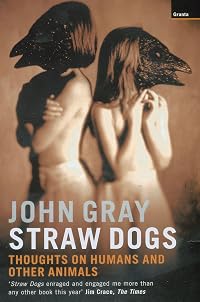
Straw Dogs: Thoughts on Humans and Other Animals
by John Gray
On This Page
Description
The British bestseller Straw Dogs is an exciting, radical work of philosophy, which sets out to challenge our most cherished assumptions about what it means to be human. From Plato to Christianity, from the Enlightenment to Nietzsche and Marx, the Western tradition has been based on arrogant and erroneous beliefs about human beings and their place in the world. Philosophies such as liberalism and Marxism think of humankind as a species whose destiny is to transcend natural limits and conquer show more the Earth. John Gray argues that this belief in human difference is a dangerous illusion and explores how the world and human life look once humanism has been finally abandoned. The result is an exhilarating, sometimes disturbing book that leads the reader to question our deepest-held beliefs. show lessTags
Recommendations

















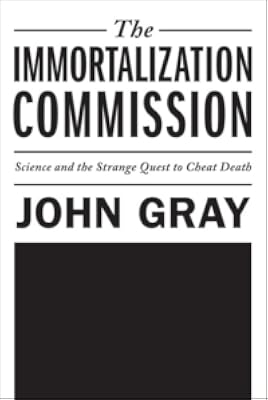





Member Recommendations

Member Reviews
Gray is better when he's in metaphysical territory, and when he's demolishing the cherished views of philosophers before him. His chapters on 'The Human' and 'The Deception' are masterful, and every page contains a 'holy fuck he's explained that well' moment.
However the book is severely let down by the later chapters, which aim to adapt some of this to our modern world, and tackle the issue of 'progress' (which is really a simplistic attack on historical determinism). Gray makes a series of mostly-unfounded (and totally unreferenced) claims about modern economics and social behavior, which end up just sounding like your classic grumpy-old-man.
Finally, Gray ends up replacing one type of determinism for another. He moves from attacking show more the straw man argument 'everything is definitely meaningful and getting better', before attempting to posit that 'everything is definitely not meaningful, nor getting better', after which you realise that it's far easier to tear things down than build them up. show less
However the book is severely let down by the later chapters, which aim to adapt some of this to our modern world, and tackle the issue of 'progress' (which is really a simplistic attack on historical determinism). Gray makes a series of mostly-unfounded (and totally unreferenced) claims about modern economics and social behavior, which end up just sounding like your classic grumpy-old-man.
Finally, Gray ends up replacing one type of determinism for another. He moves from attacking show more the straw man argument 'everything is definitely meaningful and getting better', before attempting to posit that 'everything is definitely not meaningful, nor getting better', after which you realise that it's far easier to tear things down than build them up. show less
Gray's book - like much of his work - is an attack upon religion, especially the monotheistic, Judaeo-Christian variety. He sees this as influencing the secular humanist beliefs in the fundamental goodness of human nature, and the possibility of social progress - both of which Gray rejects, arguing that that a distorted understanding of Darwinism is responsible. However, he argues, if we read Darwin correctly, then humans are merely animals, driven by irrational instincts, and therefore destined never to improve or escape these dictates. He also points out that Darwinian evolution has no end or purpose - another humanist misreading - and therefore that humanity cannot be seen as its highest expression. As such, he sees even Nietzsche as show more caught up in an alternative expression of the humanist spell. It is the tragic expression of these two mistakes that Gray traces in this and other books.
In contrast, Gray champions the pessimistic nihilism of Schopenhauer and looks similarly to Buddhism to relieve us of the necessary suffering implied in all existence. I'm not sure this really provides much solace, and we might also question the basis of Gray's assertions - his determinism, his reductive materialism, his pessimistic nihilism - which as Nietzsche himself pointed out, are no less value-driven conclusions.
That said, I do like his work. Like Nietzsche, even where you don't agree with him, his viewpoint provides a useful tool from which to dissect the inbuilt assumptions of and prejudices that drive the scientific humanism that still largely dominates the modern Western worldview.
Gareth Southwell is a philosopher, writer and illustrator. show less
In contrast, Gray champions the pessimistic nihilism of Schopenhauer and looks similarly to Buddhism to relieve us of the necessary suffering implied in all existence. I'm not sure this really provides much solace, and we might also question the basis of Gray's assertions - his determinism, his reductive materialism, his pessimistic nihilism - which as Nietzsche himself pointed out, are no less value-driven conclusions.
That said, I do like his work. Like Nietzsche, even where you don't agree with him, his viewpoint provides a useful tool from which to dissect the inbuilt assumptions of and prejudices that drive the scientific humanism that still largely dominates the modern Western worldview.
Gareth Southwell is a philosopher, writer and illustrator. show less
I rarely mark books down - I normally have something I can at least hold onto when I read a book.
However, here we go.
It draws spurious conclusions from poor research that is approached with no academic rigour. There is only one side to Gray's story ("HUMANISM BAD"). It is repeated on almost every second page. It is repeated on almost every second page.
Pessimism is one thing, but this is just bad research, poorly formed arguments and populist meanderings. A whole section is dedicated to belittling 19th Century philosophy, with no heed paid at all to 20th Century philosophy, as if it had never happened. You can learn nothing from this book that you can't learn from a half-hour Wikipedia hole, and you might learn a whole lot more there.
If show more you want to learn about human-ness, nature and technology read other theorists (I recommend Bernard Stiegler). Absolutely give this one a miss. show less
However, here we go.
It draws spurious conclusions from poor research that is approached with no academic rigour. There is only one side to Gray's story ("HUMANISM BAD"). It is repeated on almost every second page. It is repeated on almost every second page.
Pessimism is one thing, but this is just bad research, poorly formed arguments and populist meanderings. A whole section is dedicated to belittling 19th Century philosophy, with no heed paid at all to 20th Century philosophy, as if it had never happened. You can learn nothing from this book that you can't learn from a half-hour Wikipedia hole, and you might learn a whole lot more there.
If show more you want to learn about human-ness, nature and technology read other theorists (I recommend Bernard Stiegler). Absolutely give this one a miss. show less
From the premise that humans are not a special case, and rather just another species of animal that has evolved on Earth, Gray proceeds to tear down much of contemporary Western society.
The prose was easy to read, and despite the gloomy tone, the book was enjoyable. Each section was a short thought, building up to an overall picture of a human species that is unremarkable, and yet full of a fantastic conceit as to its place in the cosmos, and its destiny to greatness. This culture is apparent in the Christian faith, and its atheist successor humanism.
Christian and Humanist modes of thought are foundations of western culture, and the tendrils of this line of reasoning can be found in the big ideas of church and state, and right down to show more our own desire and motivation to find our personal calling.
The book doesn't offer any solutions to this situation. Rather, I get the feeling Gray has pulled the curtains back on the elaborate theatre of modern society, but leaves us to decide if we'll continue to play our assigned role. show less
The prose was easy to read, and despite the gloomy tone, the book was enjoyable. Each section was a short thought, building up to an overall picture of a human species that is unremarkable, and yet full of a fantastic conceit as to its place in the cosmos, and its destiny to greatness. This culture is apparent in the Christian faith, and its atheist successor humanism.
Christian and Humanist modes of thought are foundations of western culture, and the tendrils of this line of reasoning can be found in the big ideas of church and state, and right down to show more our own desire and motivation to find our personal calling.
The book doesn't offer any solutions to this situation. Rather, I get the feeling Gray has pulled the curtains back on the elaborate theatre of modern society, but leaves us to decide if we'll continue to play our assigned role. show less
This book is a lot like listening to a philosophical misanthrope who is sloshed beyond comprehension at a bar. All you can do there is sit there in silence, hoping they don't do something to hurt themselves, and sometimes nod in agreement with the more sane sections of their rants.
The essays that go all in on humanism as being a delusion wearing the skin of older, organized religion are really good. The major parts I don't like were the bizarre bits about Nazis and communists being "progressive," and the few statements I would've liked to see backed up by evidence; like when he supposes human fertility is falling because it's the "natural instinct" of us as animals to not breed in over-stressed environments. See how bunnies and other show more little critters can reabsorb their fetuses when in famine conditions or something.
(Small aside: the global human fertility rate is low and getting lower because of pollution, education, and material conditions like the grotesque costs to raise children over some nebulous nature that needs to be defined.)
Even though this book is pretty much the consolidation of what I already tend to believe, it's nice to see this worldview rendered in such a pithy, readable book. show less
The essays that go all in on humanism as being a delusion wearing the skin of older, organized religion are really good. The major parts I don't like were the bizarre bits about Nazis and communists being "progressive," and the few statements I would've liked to see backed up by evidence; like when he supposes human fertility is falling because it's the "natural instinct" of us as animals to not breed in over-stressed environments. See how bunnies and other show more little critters can reabsorb their fetuses when in famine conditions or something.
(Small aside: the global human fertility rate is low and getting lower because of pollution, education, and material conditions like the grotesque costs to raise children over some nebulous nature that needs to be defined.)
Even though this book is pretty much the consolidation of what I already tend to believe, it's nice to see this worldview rendered in such a pithy, readable book. show less
İngiliz düşünür, akademisyen John Gray, yeryüzünün dört yanında kök salmış kalıplı düşünceleri –dogma ve yargıları– bambaşka bir bakış açısıyla tartışmaya açıyor. Saman Köpekler’in merkezine insan bencilliğinin ve buna bağlı dünya görüşlerinin aşılması gerektiği fikrini yerleştiren Gray, kışkırtıcı gelecek öngörüleri eşliğinde sıradışı bir modern zamanlar okuması sunuyor.
read it again for the first time, and likely i will read this yet again and still find new points and observations that seem to spring anew from his unsentimental reasoning; always, this book will never fail to shake me out of complacent thinking. if anything this book does well, it makes one think less ideologically, less hopefully (hope is the drug of secularism, atheism, humanists; no different than religion, so disputes Gray). ever the cynic about human progress, he throws acid on held beliefs and one comes away from Straw Dogs wanting to think more like a cynic (root of "cynic": "kynikos" from the Greek, meaning: like a dog)...
Members
- Recently Added By
Lists

Reading list
170 works; 1 member

Five star books
1,767 works; 110 members
Author Information

50+ Works 5,637 Members
John Gray is the author of many critically acclaimed books, including Seven Types of Atheism, The Silence of Animals, The Immortalization Commission, Black Mass, and Straw Dogs. A regular contributor to The New York Review of Books, he has been a professor of politics at Oxford, a visiting professor at Harvard and Yale, and a professor of European show more thought at the London School of Economics. He now writes full-time. show less
Some Editions
Common Knowledge
- Canonical title*
- Chiens de paille. Pensées sur les humains et les autres animaux
- Original title
- Straw dogs. Thougts on humans and other animals
- Original publication date
- 2002
- Epigraph
- Heaven and earth are ruthless, and treat the myriad creatures as straw dogs. - Lao Tzu
- First words
- Most people today think they belong to a species that can be master of its destiny.
- Last words
- (Click to show. Warning: May contain spoilers.)Can we not think of the aim of life as being simply to see?
- Blurbers
- Ballard, J.G.; Lovelock, James; Phillips, Adam; Cupitt, Don
- Original language*
- Anglais
*Some information comes from Common Knowledge in other languages. Click "Edit" for more information.
Classifications
- Genres
- Philosophy, Nonfiction, General Nonfiction, Politics and Government, Religion & Spirituality
- DDC/MDS
- 128 — Philosophy & psychology Epistemology (how do you know what you know?) Humankind
- LCC
- B821 .G72 — Philosophy, Psychology and Religion Philosophy (General) By period Modern Special topics and schools of philosophy
- BISAC
Statistics
- Members
- 1,305
- Popularity
- 18,627
- Reviews
- 21
- Rating
- (3.79)
- Languages
- 13 — Chinese, Czech, Dutch, English, French, German, Italian, Lithuanian, Polish, Portuguese, Romanian, Spanish, Turkish
- Media
- Paper, Ebook
- ISBNs
- 30
- ASINs
- 3