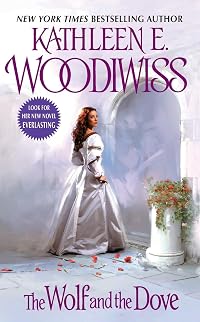
The Wolf and the Dove
by Kathleen E. Woodiwiss
On This Page
Description
From New York Times bestselling author Kathleen E. Woodiwiss comes one of her most beloved romances...The Wolf
Noble Aislinn grieves as the Iron Wolf and his minions storm through her beloved Darkenwald. And she burns with malice for the handsome Norman savage who would enslave her. . .even as she aches to know the rapture of the conqueror's kiss.
The Dove
For the first time ever, mighty Wulfgar has been vanquished - and by a bold and beautiful princess of Saxon blood. He must have the show more chaste, sensuous enchantress who is sworn to his destruction. And he will risk life itself to nurture with tender passion a glorious union born in the blistering heat of hatred and war.
. show less
Tags
Recommendations















Member Reviews
This is one of the first adult romances I ever read, and it is still one of my favorites. Yes, it is dated (published in 1974), and many of its components would not be used today. But in some ways, it is a more accurate portrayal of the time than some more modern works.
The story opens in 1066 as William the Conqueror fights his way to the throne of England. He prefers to offer the Saxons the option of surrendering and living to have to kill them and lose their potential as subjects. Some of his knights agree with him, but others do not. Wulfgar is one of his knights, charged with securing the lands of Darkenwald and Cregan. Wulfgar split his force and went to Cregan himself and sent one of his knights, Ragnor, to secure Darkenwald. show more Ragnor had precise instructions on the terms to offer but ignored them for his own goals. Instead, he used every means available to goad the lord of Darkenwald into fighting and then killed him and many others. He then took the lord's daughter, Aislinn, captive, with conquest on his mind.
Aislinn is an eighteen-year-old beauty with red hair and a temper to match. She watched her father struck down, her mother beaten, and life as she knew it crumble around her. But there was no way that she would give in to her father's murderer. I loved her spirit and determination, though it seemed a bit reckless to bait Ragnor the way she did, as the later events proved. Aislinn is also incredibly loyal and loving. Rather than flee the next morning while Ragnor slept, she tarried to bury her father. There she was discovered by Wulfgar when he arrived at Darkenwald.
Wulfgar is a knight with a fearsome reputation as a warrior. He was furious at the carnage he found, and his confrontation with Ragnor was blunt and to the point. But for all that fearsomeness, it is immediately apparent that he is neither unreasonable nor cruel. Aislinn expects the worst from him and is surprised at the fairness with which he treats her defeated countrymen. He also removes her from Ragnor's possession and takes her for himself. She's not happy about that but counts herself lucky to be away from Ragnor.
I loved the development of the relationship between Wulfgar and Aislinn. The sparks are there from the beginning, though initially, they were sparks of antagonism. Aislinn has no problem standing up to Wulfgar, hiding her fears behind anger. Instead of reacting with anger of his own, Wulfgar seems mostly amused by her. Aislinn is confused by his treatment of her and the way he makes her feel. Over the next days and weeks, Wulfgar works to bring order to his new lands, while Aislinn does her best to intercede for her people. I liked watching the tension build between them as the sparks of antagonism turned to sparks of attraction, with the inevitable result. Aislinn struggles with being a mistress when she was raised to be a wife.
Meanwhile, Wulfar has his own struggles. He has always been able to move from woman to woman, forgetting each one quickly. But when William sends for him to come to London for the coronation, Wulfar discovers that he misses Aislinn - her voice, her scent, the way she feels in his arms. So he sends for her to join him there. I thoroughly enjoyed the London section. Aislinn realizes that she has fallen in love with Wulfgar, but doesn't know if she'll ever reach his heart. Some things give her hope, such as his kind actions and his distinct pleasure in her company. When Ragnor does his best to stir up trouble, Wulfgar begins to understand just how much she means to him, but still resists admitting to his feelings. I really felt for Aislinn at this point because she began to lose hope that she will ever win against his stubborn refusal to see what they could have. I laughed to see her use her intelligence as well as her appeal to make her point. Wulfgar suffered through some miserable days and nights as he fought against himself but eventually saw the light. I loved the following scenes as a much happier Wulfgar spread that happiness around.
But all does not run smoothly for the happy couple. Wulfgar's half-sister and her father had arrived some months earlier, seeking refuge after losing their lands. While Bolsgar is a good man (despite the past between him and Wulfgar), Gwyneth is a spoiled, vindictive brat. She treated everyone, especially Aislinn as if they were far beneath her. She takes up with Ragnor, who uses her for his own ends while leading her on. Darkenwald is also plagued by thieves, bent on destroying everything that Wulfgar tries to build. I enjoyed seeing Wulfgar's efforts to bring an end to the raids, including the unexpected help he got from Aislinn.
But there was more behind the raids than Wulfgar knew. Someone was out for revenge, and there was a traitor within his walls. Even though I have read this book many times before, I was still on the edge of my seat during the pursuit. The final confrontation was intense with an unexpected resolution and a surprise revelation that changed Wulfgar's life. The ending was terrific, with the return to Darkenwald and the surprise waiting there. show less
The story opens in 1066 as William the Conqueror fights his way to the throne of England. He prefers to offer the Saxons the option of surrendering and living to have to kill them and lose their potential as subjects. Some of his knights agree with him, but others do not. Wulfgar is one of his knights, charged with securing the lands of Darkenwald and Cregan. Wulfgar split his force and went to Cregan himself and sent one of his knights, Ragnor, to secure Darkenwald. show more Ragnor had precise instructions on the terms to offer but ignored them for his own goals. Instead, he used every means available to goad the lord of Darkenwald into fighting and then killed him and many others. He then took the lord's daughter, Aislinn, captive, with conquest on his mind.
Aislinn is an eighteen-year-old beauty with red hair and a temper to match. She watched her father struck down, her mother beaten, and life as she knew it crumble around her. But there was no way that she would give in to her father's murderer. I loved her spirit and determination, though it seemed a bit reckless to bait Ragnor the way she did, as the later events proved. Aislinn is also incredibly loyal and loving. Rather than flee the next morning while Ragnor slept, she tarried to bury her father. There she was discovered by Wulfgar when he arrived at Darkenwald.
Wulfgar is a knight with a fearsome reputation as a warrior. He was furious at the carnage he found, and his confrontation with Ragnor was blunt and to the point. But for all that fearsomeness, it is immediately apparent that he is neither unreasonable nor cruel. Aislinn expects the worst from him and is surprised at the fairness with which he treats her defeated countrymen. He also removes her from Ragnor's possession and takes her for himself. She's not happy about that but counts herself lucky to be away from Ragnor.
I loved the development of the relationship between Wulfgar and Aislinn. The sparks are there from the beginning, though initially, they were sparks of antagonism. Aislinn has no problem standing up to Wulfgar, hiding her fears behind anger. Instead of reacting with anger of his own, Wulfgar seems mostly amused by her. Aislinn is confused by his treatment of her and the way he makes her feel. Over the next days and weeks, Wulfgar works to bring order to his new lands, while Aislinn does her best to intercede for her people. I liked watching the tension build between them as the sparks of antagonism turned to sparks of attraction, with the inevitable result. Aislinn struggles with being a mistress when she was raised to be a wife.
Meanwhile, Wulfar has his own struggles. He has always been able to move from woman to woman, forgetting each one quickly. But when William sends for him to come to London for the coronation, Wulfar discovers that he misses Aislinn - her voice, her scent, the way she feels in his arms. So he sends for her to join him there. I thoroughly enjoyed the London section. Aislinn realizes that she has fallen in love with Wulfgar, but doesn't know if she'll ever reach his heart. Some things give her hope, such as his kind actions and his distinct pleasure in her company. When Ragnor does his best to stir up trouble, Wulfgar begins to understand just how much she means to him, but still resists admitting to his feelings. I really felt for Aislinn at this point because she began to lose hope that she will ever win against his stubborn refusal to see what they could have. I laughed to see her use her intelligence as well as her appeal to make her point. Wulfgar suffered through some miserable days and nights as he fought against himself but eventually saw the light. I loved the following scenes as a much happier Wulfgar spread that happiness around.
But all does not run smoothly for the happy couple. Wulfgar's half-sister and her father had arrived some months earlier, seeking refuge after losing their lands. While Bolsgar is a good man (despite the past between him and Wulfgar), Gwyneth is a spoiled, vindictive brat. She treated everyone, especially Aislinn as if they were far beneath her. She takes up with Ragnor, who uses her for his own ends while leading her on. Darkenwald is also plagued by thieves, bent on destroying everything that Wulfgar tries to build. I enjoyed seeing Wulfgar's efforts to bring an end to the raids, including the unexpected help he got from Aislinn.
But there was more behind the raids than Wulfgar knew. Someone was out for revenge, and there was a traitor within his walls. Even though I have read this book many times before, I was still on the edge of my seat during the pursuit. The final confrontation was intense with an unexpected resolution and a surprise revelation that changed Wulfgar's life. The ending was terrific, with the return to Darkenwald and the surprise waiting there. show less
This has got to be the WORST HISTORICAL ROMANCE I HAVE EVER ATTEMPTED TO READ!
Argh! The conversation was so forced, it was like watching an old play, with, I shit you not a proper damsel in distress. And he is the classic mustache twisting villain.
The author has proven that she has the uncanny ability to overstate the obvious...
Example: "Join me and we shall dine, so we quench our hunger!"
Really, you're hungry? OH MY GOD!!!! I thought you want to eat for a completely different reason.....
She tries to imitate the old way of speech and fails miserably, making the the entire book grate on your brain...
And she's all like:
"Oh, nay i beg of you sir!!!" *swoons* "You will never have my heart, you fiend!" *blushes maidenly*
And I'm all like: show more
BARF!!!!!!!!!!!
I only got to about 20%, and could not for the life of me stomach more... I wanted to slap her silly...
The stuff that get's published.........jeez.... show less
Argh! The conversation was so forced, it was like watching an old play, with, I shit you not a proper damsel in distress. And he is the classic mustache twisting villain.
The author has proven that she has the uncanny ability to overstate the obvious...
Example: "Join me and we shall dine, so we quench our hunger!"
Really, you're hungry? OH MY GOD!!!! I thought you want to eat for a completely different reason.....
She tries to imitate the old way of speech and fails miserably, making the the entire book grate on your brain...
And she's all like:
"Oh, nay i beg of you sir!!!" *swoons* "You will never have my heart, you fiend!" *blushes maidenly*
And I'm all like: show more
BARF!!!!!!!!!!!
I only got to about 20%, and could not for the life of me stomach more... I wanted to slap her silly...
The stuff that get's published.........jeez.... show less
Primo libro letto di questa bravissima autrice di romance storici. Il Lupo e la Colomba è uno di quei romanzi che, una volta chiusi, ti spinge immediatamente a cercare altri titoli della stessa scrittrice, la curiosità di leggere altri scenari e altri personaggi da amare è incontenibile.
Cosa distingue un semplice romanzetto rosa da una BEL Romance Storico? Semplice. Oltre che uno scenario ben curato e il più attinente possibile alla realtà, quello che conferisce a un romance una marcia in più è la "capacità di far innamorare i protagonisti".
Un romanzo che ti fa innamorare i protagonisti in pochi colpi di Cupido e che poi, eventualmente, introduce qualche elemento negativo che vuole dividere i nostri neo piccioncini è un romanzo show more facile da scrivere. Magari carino, senza dubbio, ma pur sempre non troppo difficile da scrivere.
Un romanzo che si concentra attentamente sulla natura umana, sui sentimenti, sulle inclinazioni e le passioni dei protagonisti e li porta, pagina dopo pagina, a tramutare il loro rapporto iniziale in amore è un romanzo difficile da scrivere. Arrivare a far nascere una storia d'amore fra due personaggi, partendo da una situazione difficile come l'odio derivante dall'assassinio di un familiare è ancor più difficile. Due persone possono detestarsi per molti motivi, ma l'odio profondo di chi è stato privato della sua vita, dei suoi affetti, della sua indipendenza, del suo orgoglio e della sua dignità... Beh, la capacità mostrata dalla Woodiwiss, nel contesto, è davvero ammirevole. Non a caso "Il Lupo e la Colomba" è considerato uno dei suoi migliori romanzi, se non proprio il migliore in assoluto.
Ambientato nel Medioevo, Aislinn si ritrova prigioniera nelle sua stessa casa, passando di fatto da membro della nobiltà a semplice schiava, o peggio giocattolo sessuale del nuovo padrone, guerriero di Guglielmo il Conquistatore, del castello appartenuto a suo padre, Signore di Darkenwald.
Wulfgar è il nuovo padrone di Aislinn, padrone della sua vita e della sua umanità. Può fare di lei ciò che vuole e come vuole, è bottino di guerra, ne più ne meno. Aislinn, nonostante ciò, non si arrende e pur essendo il giocattolo sessuale del Padrone, continua tenacemente a proteggere tutti coloro che prima abitavano il castello da vera Signora qual'è sempre stata abituata a essere.
Lo scontro fisico fra i due è impari, Wulfgar la sovrasta e la annienta come e quando vuole ma è la forza della Colomba che lo attrae e lo diverte. Nulla sembra piegare la vecchia Signora del castello, nemmeno le angherie più disumane. Dritta come un fuso, orgogliosa e testarda continua a volersi liberare dal giogo a cui è stata costretta dalla circostanza.
Ed è qua che il romanzo si innalza, superiore, sopra agli altri. Se la trama di per se sembra ripercorrere un filo quasi scontato, è lo scontro continuo fra le due forti e appassionate personalità del Lupo e della Colomba che ci trattengono incollati alle pagine di questo romanzo.
Si sfidano, continuamente, in un eterno balletto che li porterà più volte a ferirsi l'anima a sangue per poi, inspiegabilmente, a curarsi a vicenda, rispettandosi. Ed è infatti il rispetto il primo stadio di questa trasformazione che li porterà dall'odio all'amore.
E seppur l'esito, fra i due, sembra scontato, sarà proprio questo processo di trasformazione a sconvolgere e coinvolgerà il lettore in ogni loro singola avventura dalle tinte forti della predominazione e della passione.
I lettori più disincantati potranno obiettare che, come sempre, sono pur sempre le protagoniste femminili a subire (o a dover subire) una trasformazione più radicale e che necessita inevitabilmente di un grande sacrificio di orgoglio. In effetti è così, la parte più sventurata, maltrattata e più giustificata per il suo odio è proprio Aislinn che, piano piano, si ritroverà innamorata di Wulfgar, nonostante tutto.
Effettivamente questo aspetto, se non fosse stata per la bravura dell'autrice, sarebbe risultato oltremodo grottesco. Come può una donna stuprata, ridotta in schiavitù e privata di ogni sua dignità innamorarsi di colui che ha contribuito alla morte del padre e alla follia della madre? No, logicamente non si può, ma la Woodiwiss è stata così brava nel coltivare questo sentimento impossibile che, alla fine, si finisce per giustificare questa forte ma dolcissima Cenerentola che, con tutta la dignità di una regnante, riuscirà a piegare un Guerriero nelle vesti di una semplice schiava. show less
Cosa distingue un semplice romanzetto rosa da una BEL Romance Storico? Semplice. Oltre che uno scenario ben curato e il più attinente possibile alla realtà, quello che conferisce a un romance una marcia in più è la "capacità di far innamorare i protagonisti".
Un romanzo che ti fa innamorare i protagonisti in pochi colpi di Cupido e che poi, eventualmente, introduce qualche elemento negativo che vuole dividere i nostri neo piccioncini è un romanzo show more facile da scrivere. Magari carino, senza dubbio, ma pur sempre non troppo difficile da scrivere.
Un romanzo che si concentra attentamente sulla natura umana, sui sentimenti, sulle inclinazioni e le passioni dei protagonisti e li porta, pagina dopo pagina, a tramutare il loro rapporto iniziale in amore è un romanzo difficile da scrivere. Arrivare a far nascere una storia d'amore fra due personaggi, partendo da una situazione difficile come l'odio derivante dall'assassinio di un familiare è ancor più difficile. Due persone possono detestarsi per molti motivi, ma l'odio profondo di chi è stato privato della sua vita, dei suoi affetti, della sua indipendenza, del suo orgoglio e della sua dignità... Beh, la capacità mostrata dalla Woodiwiss, nel contesto, è davvero ammirevole. Non a caso "Il Lupo e la Colomba" è considerato uno dei suoi migliori romanzi, se non proprio il migliore in assoluto.
Ambientato nel Medioevo, Aislinn si ritrova prigioniera nelle sua stessa casa, passando di fatto da membro della nobiltà a semplice schiava, o peggio giocattolo sessuale del nuovo padrone, guerriero di Guglielmo il Conquistatore, del castello appartenuto a suo padre, Signore di Darkenwald.
Wulfgar è il nuovo padrone di Aislinn, padrone della sua vita e della sua umanità. Può fare di lei ciò che vuole e come vuole, è bottino di guerra, ne più ne meno. Aislinn, nonostante ciò, non si arrende e pur essendo il giocattolo sessuale del Padrone, continua tenacemente a proteggere tutti coloro che prima abitavano il castello da vera Signora qual'è sempre stata abituata a essere.
Lo scontro fisico fra i due è impari, Wulfgar la sovrasta e la annienta come e quando vuole ma è la forza della Colomba che lo attrae e lo diverte. Nulla sembra piegare la vecchia Signora del castello, nemmeno le angherie più disumane. Dritta come un fuso, orgogliosa e testarda continua a volersi liberare dal giogo a cui è stata costretta dalla circostanza.
Ed è qua che il romanzo si innalza, superiore, sopra agli altri. Se la trama di per se sembra ripercorrere un filo quasi scontato, è lo scontro continuo fra le due forti e appassionate personalità del Lupo e della Colomba che ci trattengono incollati alle pagine di questo romanzo.
Si sfidano, continuamente, in un eterno balletto che li porterà più volte a ferirsi l'anima a sangue per poi, inspiegabilmente, a curarsi a vicenda, rispettandosi. Ed è infatti il rispetto il primo stadio di questa trasformazione che li porterà dall'odio all'amore.
E seppur l'esito, fra i due, sembra scontato, sarà proprio questo processo di trasformazione a sconvolgere e coinvolgerà il lettore in ogni loro singola avventura dalle tinte forti della predominazione e della passione.
I lettori più disincantati potranno obiettare che, come sempre, sono pur sempre le protagoniste femminili a subire (o a dover subire) una trasformazione più radicale e che necessita inevitabilmente di un grande sacrificio di orgoglio. In effetti è così, la parte più sventurata, maltrattata e più giustificata per il suo odio è proprio Aislinn che, piano piano, si ritroverà innamorata di Wulfgar, nonostante tutto.
Effettivamente questo aspetto, se non fosse stata per la bravura dell'autrice, sarebbe risultato oltremodo grottesco. Come può una donna stuprata, ridotta in schiavitù e privata di ogni sua dignità innamorarsi di colui che ha contribuito alla morte del padre e alla follia della madre? No, logicamente non si può, ma la Woodiwiss è stata così brava nel coltivare questo sentimento impossibile che, alla fine, si finisce per giustificare questa forte ma dolcissima Cenerentola che, con tutta la dignità di una regnante, riuscirà a piegare un Guerriero nelle vesti di una semplice schiava. show less
December 19, 2011
This is the first of Ms. Woodiwiss' books that I read. I loved the characters and the plot. This story moves smoothly and effortlessly from start to finish. Ms. Woodiwiss makes you feel like you are part of the story drawing you into the lives that she is writing about. She also put passion into her books. They were steamy and exciting. I was a hooked on her books from this point on. I have lost count of the number of times that I have read this book and I will continue to read it for as long as I can.
March 22, 2015
For me this is one of those timeless books that I have read over and over. In fact I have lost count of the number of times I have read this book since it came out 1974. Ms. Woodiwiss was the only author I show more read for a very long time mainly because her romances were hot and exciting and complicated. She never wrote many books in her career but those that she did were well written and well researched. She was a ground breaking author for her time and the fact that her books are stilled published eight years after her death says something about her popularity.
This book is set in late 1000 when William the Conqueror invades Saxon England from Normandy. The story begins with the killing of the heroine’s father and her capture by Ragnor. Aislinn never backs down from the fierce knight even when she might be raped by the villain. Yes, Ragnor is a villain of the highest order. She is rescued by Wulgar, favorite of William and a bastard. The story that follows is of the dove taming the wolf and showing it that love can be one of the greatest journeys of all. There is action throughout the story as well as scenes of being at William’s court, a joust of honor and battle scenes of Wulgar fighting to hold his estate from raiders and the foul villain Ragnor.
Wulgar is a product of his upbringing. He was sent away as a boy when his father learned that he was a bastard. Since it was his mother that instigated that banishment Wulfgar has little trust in woman. He has taken his ease with those that know that he will never offer a relationship. He is a little stunned when he meets Aislinn. While he treats her as if she means nothing to him he is always trying to make her life better. I like that he is honorable, trustworthy, caring and compassionate. He is strict but never cruel. He respects those that he holds under his guardianship.
Aislinn has been gently reared. Her mother and father loved each other and the death of her father at the Norman’s hands causes her great pain. She is proud and courageous to the point of being stupid sometimes. She is smart and wise, protective and fierce. There are a few scenes when she is protecting her son that she would give anyone pause. She loves with her whole heart and works very hard to get Wulgar to recognize that they are meant to be together. When Bolsgar and Gwyneth show up she is much more patient with Gwyneth than I would have ever been I would have thrown Gwyneth out and let her find her own way.
Ragnor is a coward and a liar. He plays Gwyneth to get to Aislinn and in the process ruins his life and loses his honor, what little he had. He stalks Aislinn trying over and over to win her over. He meets a just and fitting end.
Gwyneth is a whining, cruel woman. She only thinks of herself and her comfort. It is very sad that she is what she throws in Wulgar's face over and over. Even though she sees the error of her ways in the end and takes the life of Ragnor I am not sure I could have forgiven her.
This is a richly written tale with lots of interesting characters and detail that is sometimes lacking in the short stories that seem to be popping up all over. It is easy to see that a great deal of time was taken to make sure the dialogue was right and the clothing match the period. Ms. Woodiwiss makes you feel like you are living the lives of these people. There are few writers that are her equal and I can’t recommend her writing highly enough. If you love historical romances then you must read her books. show less
This is the first of Ms. Woodiwiss' books that I read. I loved the characters and the plot. This story moves smoothly and effortlessly from start to finish. Ms. Woodiwiss makes you feel like you are part of the story drawing you into the lives that she is writing about. She also put passion into her books. They were steamy and exciting. I was a hooked on her books from this point on. I have lost count of the number of times that I have read this book and I will continue to read it for as long as I can.
March 22, 2015
For me this is one of those timeless books that I have read over and over. In fact I have lost count of the number of times I have read this book since it came out 1974. Ms. Woodiwiss was the only author I show more read for a very long time mainly because her romances were hot and exciting and complicated. She never wrote many books in her career but those that she did were well written and well researched. She was a ground breaking author for her time and the fact that her books are stilled published eight years after her death says something about her popularity.
This book is set in late 1000 when William the Conqueror invades Saxon England from Normandy. The story begins with the killing of the heroine’s father and her capture by Ragnor. Aislinn never backs down from the fierce knight even when she might be raped by the villain. Yes, Ragnor is a villain of the highest order. She is rescued by Wulgar, favorite of William and a bastard. The story that follows is of the dove taming the wolf and showing it that love can be one of the greatest journeys of all. There is action throughout the story as well as scenes of being at William’s court, a joust of honor and battle scenes of Wulgar fighting to hold his estate from raiders and the foul villain Ragnor.
Wulgar is a product of his upbringing. He was sent away as a boy when his father learned that he was a bastard. Since it was his mother that instigated that banishment Wulfgar has little trust in woman. He has taken his ease with those that know that he will never offer a relationship. He is a little stunned when he meets Aislinn. While he treats her as if she means nothing to him he is always trying to make her life better. I like that he is honorable, trustworthy, caring and compassionate. He is strict but never cruel. He respects those that he holds under his guardianship.
Aislinn has been gently reared. Her mother and father loved each other and the death of her father at the Norman’s hands causes her great pain. She is proud and courageous to the point of being stupid sometimes. She is smart and wise, protective and fierce. There are a few scenes when she is protecting her son that she would give anyone pause. She loves with her whole heart and works very hard to get Wulgar to recognize that they are meant to be together. When Bolsgar and Gwyneth show up she is much more patient with Gwyneth than I would have ever been I would have thrown Gwyneth out and let her find her own way.
Ragnor is a coward and a liar. He plays Gwyneth to get to Aislinn and in the process ruins his life and loses his honor, what little he had. He stalks Aislinn trying over and over to win her over. He meets a just and fitting end.
Gwyneth is a whining, cruel woman. She only thinks of herself and her comfort. It is very sad that she is what she throws in Wulgar's face over and over. Even though she sees the error of her ways in the end and takes the life of Ragnor I am not sure I could have forgiven her.
This is a richly written tale with lots of interesting characters and detail that is sometimes lacking in the short stories that seem to be popping up all over. It is easy to see that a great deal of time was taken to make sure the dialogue was right and the clothing match the period. Ms. Woodiwiss makes you feel like you are living the lives of these people. There are few writers that are her equal and I can’t recommend her writing highly enough. If you love historical romances then you must read her books. show less
A notorious bodice-ripper from 1974, and alas, still in print. Let's see. Set during the Norman Conquest it starts with Wulfgar's men invading Aislinn's home, killing her father, beating her mother and making her into a slave who is raped before being chained to the floor at night. Wulfgar then claims her as spoils and says she should have no objection to his bedding her since she's no longer a virgin--what's one more man? He addresses her as "slave." I lasted only to the first rape by Wulfgar around page 123 or so, but turning to the end, yup, this is the one she falls in love with. I also hated the style, especially the pseudo-medieval stylings like "damsel" and "tis" and "nay"--which was said by the heroine a lot only to be ignored. show more And this according to what I've read is a much loved and reread book that turned many on to the romance genre and one of its first epic blockbuster bestsellers. Go figure. show less
Uf, leído hace décadas. Me acuerdo bastante bien de la historia, seguramente porque fue uno de los primeros libros de romance que leí, aunque lo de romance, hoy, me parece bastante cuestionable.
Yo evolucioné al ritmo de estos tiempos de creciente consciencia sobre géneros, igualdad, respeto y diversidad. Y, si bien no me lo pareció así en su momento (lo consideré como de casi 4 estrellas), desde esa consciencia este libro decididamente políticamente incorrecto.
Pero, si no se comete el error de pretender extrapolar con el presente tanto el momento de la escritura del libro (1970s) como el período histórico en que transcurre la historia, sigo rescatando la crudeza del retrato de una época -la que sigue a la batalla de show more Hastings-, el cual enmarca un romance plagado de clichés, de los cuales el que más detesté antes y ahora fue el de la mujer rencorosa que se redime antes de morir. show less
Yo evolucioné al ritmo de estos tiempos de creciente consciencia sobre géneros, igualdad, respeto y diversidad. Y, si bien no me lo pareció así en su momento (lo consideré como de casi 4 estrellas), desde esa consciencia este libro decididamente políticamente incorrecto.
Pero, si no se comete el error de pretender extrapolar con el presente tanto el momento de la escritura del libro (1970s) como el período histórico en que transcurre la historia, sigo rescatando la crudeza del retrato de una época -la que sigue a la batalla de show more Hastings-, el cual enmarca un romance plagado de clichés, de los cuales el que más detesté antes y ahora fue el de la mujer rencorosa que se redime antes de morir. show less
Abandoned at pg 64. I can't get into the writing or the characters, and I don't care what happens - I can't get over this treatment of the heroine and no romance would be believable later for me. Have no interest in finishing. You can't fall in love with a man who's part of killing your father, raping you and considering you a slave before a reasonable "connection", you just can't. It's hideous.
Members
- Recently Added By
Author Information

45 Works 12,064 Members
Kathleen E. Woodiwiss was born in Alexandria, Louisiana on June 3, 1939. Her first novel, The Flame and the Flower, was published in 1972. She wrote 13 historical romance novels during her lifetime including Shanna, A Rose in Winter, Come Love a Stranger, The Reluctant Suitor, and Everlasting. She died from cancer on July 6, 2007 at the age of 68. show more (Bowker Author Biography) show less
Awards and Honors
Notable Lists
Work Relationships
Has as a student's study guide
Common Knowledge
- Original title
- The Wolf and the Dove
- Original publication date
- 1974
- People/Characters
- Aislinn of Darkenwald; Wulfgar; Magda; King William I; Ragnor
- Important places
- England, UK; Normandy, France
- Important events
- Norman Invasion
- First words
- The clash of battle rang no more.
- Quotations
- Lest your head roll loose upon the village sod, I beseech you do not seek what must now be done by a coward's tool.
- Last words
- (Click to show. Warning: May contain spoilers.)Darkenwald had found a place for all.
Classifications
Statistics
- Members
- 1,199
- Popularity
- 20,739
- Reviews
- 22
- Rating
- (3.86)
- Languages
- 8 — Dutch, English, French, German, Hungarian, Italian, Portuguese, Spanish
- Media
- Paper, Audiobook, Ebook
- ISBNs
- 39
- ASINs
- 22