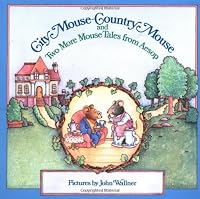
City Mouse - Country Mouse (And Two More Mouse Tales From Aesop) (An Easy-To-Read Folktale)
by Aesop
On This Page
Description
City mouse-country mouse -- The lion and the mouse -- Belling the cat.Tags
Recommendations







Member Reviews
**Reviewer's note: this review focuses on only "Belling the Cat."
"Belling the Cat," one of the stories featured in this short series of Aesop's mouse tales is about a group of mice who were meeting to see what action they could take against their enemy, the cat. A young mouse proposes to place a bell around the cat's neck so that all the mice would be alerted of the cat's presence at all times. However, when an older mouse interjects and asks who will "bell the cat," all the mice disappear, never to speak of belling the cat again.
The tale is retold as simply and directly as possible to the reader, ranging between 2-4 lines per page and using mostly high frequency words. Although the format is easy to read, the content remains engaging show more with a good balance of narration and dialogue - if read aloud, the reader can convey to the audience a sense of play and interactivity between the two elements. This story is well-suited for beginning readers ages 5-7, and sends an effective message about the young and inexperienced being idealistic, with ages comes being practical and wise. show less
"Belling the Cat," one of the stories featured in this short series of Aesop's mouse tales is about a group of mice who were meeting to see what action they could take against their enemy, the cat. A young mouse proposes to place a bell around the cat's neck so that all the mice would be alerted of the cat's presence at all times. However, when an older mouse interjects and asks who will "bell the cat," all the mice disappear, never to speak of belling the cat again.
The tale is retold as simply and directly as possible to the reader, ranging between 2-4 lines per page and using mostly high frequency words. Although the format is easy to read, the content remains engaging show more with a good balance of narration and dialogue - if read aloud, the reader can convey to the audience a sense of play and interactivity between the two elements. This story is well-suited for beginning readers ages 5-7, and sends an effective message about the young and inexperienced being idealistic, with ages comes being practical and wise. show less
This book is fun for children because it shows the different aspects of life for a mouse living in the city or the country. And then once they switch places, they realize that there is no place like home, suggesting to kids that they shouldn't wish for anything other than the life that they have because once they don't have it, they'll miss it! (That is, if it's a good life.)
Summary of book:
The book City Mouse – Country Mouse and two more mouse tales from Aesop has three stupendously written stories about mice and their abilities and conflicts. The first, City Mouse – Country Mouse is about two cousins who visit each home. The City mouse visits his cousin in the country and hates it. After discussing a possibility of visiting the city, Country mouse and City mouse are scared by two ginormous dogs and Country mouse decides to go back home to his plain food.
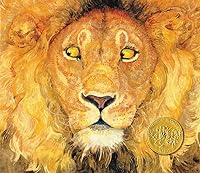
The second story, The Lion and the Mouse, the mouse gets caught by the lion. The tension that Aesop created for young readers grows as soon as the mouse is caught! The mouse quickly persuaded him to let him go; even though Lion laughed he indeed let show more the mouse go. Not long after, the mouse found the lion trapped my hunters. The mouse chewed through the ropes and let the lion loose, proving that little people can do big things.
Belling the Cat, the last story in the book, was an exciting protest held by the mice. Once gathered together, the mice agreed that their number one enemy was the cat. She always sneaked up on them and they could never hear her. One young mouse stood up and told the mice that they should put a bell around her neck so they could hear her whenever she came up. However, an elder mouse spoke up and asked who would do so. The brilliant idea was quickly forgotten.
Personal reaction to the book:
These stories are great short stories for children who enjoy animals. Aesop’s tales entertain the students who like tales, but if they are truly listening they will understand that there is a moral to each story. For The Lion and the Mouse, there is a big lion that seems strong and untouchable while the teeny tiny mouse appears to not be capable of doing anything. However, as Aesop clearly demonstrates little people can do great things to help those in need.
Extension ideas:
1. After being introduced to the letter “M”, the students can list other animals that begin with “m” and draw their favorite animal from that list. Some animals could be monkeys, mice, millipedes, moles, minnows, or moose.
2. Using the moral of the story from City Mouse – Country Mouse, that the grass is always greener on the other side, have the students write a paragraph on what they think they are missing out of their life right now. Once they have completed this, have them write a paragraph on what they would miss if they were to have what they want.
3. For a creative writing activity, the teacher could have the students write a fictional or non-fictional story about someone little who helped someone big. Important things for the students to remember are how the mouse helped the lion. Ask questions like “how can you help someone, like your mom or dad, today?”, “can you be a helper in class?”, or “have you ever been helped by someone like a younger sibling?” show less
The book City Mouse – Country Mouse and two more mouse tales from Aesop has three stupendously written stories about mice and their abilities and conflicts. The first, City Mouse – Country Mouse is about two cousins who visit each home. The City mouse visits his cousin in the country and hates it. After discussing a possibility of visiting the city, Country mouse and City mouse are scared by two ginormous dogs and Country mouse decides to go back home to his plain food.
The second story, The Lion and the Mouse, the mouse gets caught by the lion. The tension that Aesop created for young readers grows as soon as the mouse is caught! The mouse quickly persuaded him to let him go; even though Lion laughed he indeed let show more the mouse go. Not long after, the mouse found the lion trapped my hunters. The mouse chewed through the ropes and let the lion loose, proving that little people can do big things.
Belling the Cat, the last story in the book, was an exciting protest held by the mice. Once gathered together, the mice agreed that their number one enemy was the cat. She always sneaked up on them and they could never hear her. One young mouse stood up and told the mice that they should put a bell around her neck so they could hear her whenever she came up. However, an elder mouse spoke up and asked who would do so. The brilliant idea was quickly forgotten.
Personal reaction to the book:
These stories are great short stories for children who enjoy animals. Aesop’s tales entertain the students who like tales, but if they are truly listening they will understand that there is a moral to each story. For The Lion and the Mouse, there is a big lion that seems strong and untouchable while the teeny tiny mouse appears to not be capable of doing anything. However, as Aesop clearly demonstrates little people can do great things to help those in need.
Extension ideas:
1. After being introduced to the letter “M”, the students can list other animals that begin with “m” and draw their favorite animal from that list. Some animals could be monkeys, mice, millipedes, moles, minnows, or moose.
2. Using the moral of the story from City Mouse – Country Mouse, that the grass is always greener on the other side, have the students write a paragraph on what they think they are missing out of their life right now. Once they have completed this, have them write a paragraph on what they would miss if they were to have what they want.
3. For a creative writing activity, the teacher could have the students write a fictional or non-fictional story about someone little who helped someone big. Important things for the students to remember are how the mouse helped the lion. Ask questions like “how can you help someone, like your mom or dad, today?”, “can you be a helper in class?”, or “have you ever been helped by someone like a younger sibling?” show less
City Mouse-Country Mouse is a story about a mouse cousin from the city visiting his cousin in the country. When he gets to his cousin's country house, City mouse decides that there is nothing to eat, and that they should go to the city for a meal. When they arrive in the city, they find a table with all kinds of food. While they were eating, they heard growling and barking and had to escape from dogs. The country mouse decided what good is food if you can't enjoy it. This story is a folk fairy tale and easy for all children to read. I remember reading this book when I was younger and really enjoying it. This is a classic story and can really help children practice their reading.
This book has very good lessons about relationships between siblings and the extended family.
This book shows how two mice live very different lives. One mouse lives in the country and has not a lot of food to share. The other mouse lives in the city and has a lot of food at his disposal...but, he is surrounded by dangerous others who also want his food. When each mouse visits the other mouse they soon see that they love the lives which they are living in.
The City mouse visits the country mouse in the country and they had a nice and peaceful time no trouble getting good old country veggies, but then the country mouse goes back to the city with the city mouse and has quite the experience trying to get food it was a frightening experience for the country mouse when the cats and humans got after them for getting thier food.
I enjoyed hearing the differences of the city vs. country I am from the country and I love it.
Dicuss the differences of the city and the country in class and maybe the pros and cons of living in each place.
I enjoyed hearing the differences of the city vs. country I am from the country and I love it.
Dicuss the differences of the city and the country in class and maybe the pros and cons of living in each place.
Members
- Recently Added By
Author Information

1,049+ Works 24,131 Members
Though many modern scholars dispute his existence, Aesop's life was chronicled by first century Greek historians who wrote that Aesop, or Aethiop, was born into Greek slavery in 620 B.C. Freed because of his wit and wisdom, Aesop supposedly traveled throughout Greece and was employed at various times by the governments of Athens and Corinth. Some show more of Aesop's most recognized fables are The Tortoise and the Hare, The Fox and the Grapes, and The Ant and the Grasshopper. His simple but effective morals are widely used and illustrated for children. (Bowker Author Biography) show less
Some Editions
Awards and Honors
Common Knowledge
- Quotations
- The mice clapped and cheered--until an old mouse got up and said, "That is all very well. But which one of you is going to put the bell on the Cat?" The mice looked at one another in silence.
Classifications
- Genres
- Children's Books, Picture Books
- DDC/MDS
- 398.245293233 — Society, government, & culture Customs, etiquette & folklore Folklore & Folktales Folk literature Fables, Magical Creatures Animals Real animals Tales of mammals Rodents - folklore
- LCC
- PZ8.2 .C54 — Language and Literature Fiction and juvenile belles lettres Fiction and juvenile belles lettres Juvenile belles lettres
- BISAC
Statistics
- Members
- 1,636
- Popularity
- 13,686
- Reviews
- 10
- Rating
- (3.33)
- Languages
- English
- Media
- Paper, Audiobook
- ISBNs
- 11
- ASINs
- 7