On This Page
Description
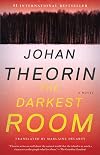
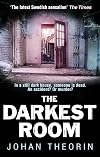
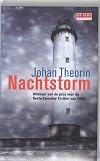
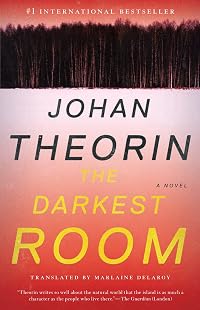
Joakim Westin, a grieving widower whose young daughter begins hearing ghostly voices, must solve a puzzle that includes a walled-in room and his community's mysterious glowing lighthouse.Tags
Recommendations





























Member Reviews
First Line: Valter Brommesson is sitting in a little stone house at Eel Point, praying to God with his hands clasped together.
Schoolteacher Joakim Westin has finally tied up all loose ends and has made the move from Stockholm to join his wife Katrine and their two small children in their new home on Eel Point on the island of Öland. Katrine has made great strides in remodeling the large home while Joakim was in Stockholm, and he's looking forward to joining with her to finish it up.
One day Joakim comes home to discover that Katrine has drowned in shallow water near Eel Point's twin lighthouses. Although the police proclaim it an accident, Tilda Davidsson, a cop new to the area, isn't convinced and conducts her own investigation in her show more free time. And while a burglary ring breaks into summer homes and Tilda quietly gathers information, the grieving Joakim and his children feel that Katrine is somehow still with them.
Once again the setting is Öland, an island that the author is very familiar with, having spent many childhood summers there. Theorin's family, sailors and farmers, has lived on the island for generations. His physical knowledge of the area has combined with the stories and the history of the place to make wonderfully atmospheric books. The Darkest Room, in many ways, is even more atmospheric and horripilating than his first book, Echoes From the Dead, which I also loved.
A thin thread links this second book to the first, since Tilda Davidsson is the great niece of Gerlof Davidsson who played such a large role in Echoes From the Dead. Joakim Westin grieves so much for his wife that it's not always certain whether what he's seeing and hearing is really there. The three burglars are unpredictable, and that increases the sense of unease. And then Theorin weaves in the stories and histories of Eel Point from several generations. Each story explains a bit more. Each history illuminates another small dusty corner.
"A house built with timber that dying sailors had clung to in despair before the sea took them-- should my mother and I have known better than to move in there at the end of the 1950s? Should you and your family really have moved there thirty-five years later, Katrine?"
If you don't believe in spirits or places that are haunted by their histories, you may very well undergo a sea change while reading The Darkest Room. Within the space of two superbly crafted books, Johan Theorin has become one of my favorite writers.
Now if I'd just stop sitting here looking over my shoulder.... show less
Schoolteacher Joakim Westin has finally tied up all loose ends and has made the move from Stockholm to join his wife Katrine and their two small children in their new home on Eel Point on the island of Öland. Katrine has made great strides in remodeling the large home while Joakim was in Stockholm, and he's looking forward to joining with her to finish it up.
One day Joakim comes home to discover that Katrine has drowned in shallow water near Eel Point's twin lighthouses. Although the police proclaim it an accident, Tilda Davidsson, a cop new to the area, isn't convinced and conducts her own investigation in her show more free time. And while a burglary ring breaks into summer homes and Tilda quietly gathers information, the grieving Joakim and his children feel that Katrine is somehow still with them.
Once again the setting is Öland, an island that the author is very familiar with, having spent many childhood summers there. Theorin's family, sailors and farmers, has lived on the island for generations. His physical knowledge of the area has combined with the stories and the history of the place to make wonderfully atmospheric books. The Darkest Room, in many ways, is even more atmospheric and horripilating than his first book, Echoes From the Dead, which I also loved.
A thin thread links this second book to the first, since Tilda Davidsson is the great niece of Gerlof Davidsson who played such a large role in Echoes From the Dead. Joakim Westin grieves so much for his wife that it's not always certain whether what he's seeing and hearing is really there. The three burglars are unpredictable, and that increases the sense of unease. And then Theorin weaves in the stories and histories of Eel Point from several generations. Each story explains a bit more. Each history illuminates another small dusty corner.
"A house built with timber that dying sailors had clung to in despair before the sea took them-- should my mother and I have known better than to move in there at the end of the 1950s? Should you and your family really have moved there thirty-five years later, Katrine?"
If you don't believe in spirits or places that are haunted by their histories, you may very well undergo a sea change while reading The Darkest Room. Within the space of two superbly crafted books, Johan Theorin has become one of my favorite writers.
Now if I'd just stop sitting here looking over my shoulder.... show less
Theorins erstes Buch Öland wurde als Geisterbuch angekündigt - zu Unrecht wie man beim Lesen feststellen musste. Doch dafür passt Nebelsturm, sein zweites Werk, unter diese Rubrik. Wobei man hinzufügen muss: auch in diese Rubrik. Denn es ist zugleich ebenso ein Krimi wie eine Familiengeschichte.
Joakim Westin zieht mit seiner Familie nach Öland in einen alten renovierungsbedürftigen Hof, um den sich viele Geschichten ranken. Doch bald nach ihrem Einzug stirbt ein Mitglied der Familie und Joakim ist im Gegensatz zur Polizei davon überzeugt, dass es kein Unfall war. Er beginnt auf eigene Faust zu ermitteln. Die Geschichte des Hofes, die ein grausames Geheimnis verbirgt, beginnt sich immer mehr mit dem seiner Familie zu show more verspinnen...
Theorin beschreibt glänzend die unheimliche Atmosphäre des Hofes, auf dem scheinbar mehr als die real existierenden Personen leben. Dazu die gespenstische Stimmung Ölands im Winter - schnell ist man versucht, auch an Geister zu glauben. Doch was mich am meisten begeisterte, ist seine Fähigkeit, trotz aller mysteriösen Umstände (und derer gibt es mehr als genug) für (fast) alles eine durchaus rationale Erklärung zu haben, so dass sich der 'moderne, rationale' Verstand nicht mit solchem 'Unsinn' wie Gespenstern herumschlagen muss. Und trotzdem - ein Rest Zweifel bleibt, der sich gerade deshalb nicht so schnell vertreiben lässt.
Spannend, gruselig, aufregend - einfach klasse! show less
Joakim Westin zieht mit seiner Familie nach Öland in einen alten renovierungsbedürftigen Hof, um den sich viele Geschichten ranken. Doch bald nach ihrem Einzug stirbt ein Mitglied der Familie und Joakim ist im Gegensatz zur Polizei davon überzeugt, dass es kein Unfall war. Er beginnt auf eigene Faust zu ermitteln. Die Geschichte des Hofes, die ein grausames Geheimnis verbirgt, beginnt sich immer mehr mit dem seiner Familie zu show more verspinnen...
Theorin beschreibt glänzend die unheimliche Atmosphäre des Hofes, auf dem scheinbar mehr als die real existierenden Personen leben. Dazu die gespenstische Stimmung Ölands im Winter - schnell ist man versucht, auch an Geister zu glauben. Doch was mich am meisten begeisterte, ist seine Fähigkeit, trotz aller mysteriösen Umstände (und derer gibt es mehr als genug) für (fast) alles eine durchaus rationale Erklärung zu haben, so dass sich der 'moderne, rationale' Verstand nicht mit solchem 'Unsinn' wie Gespenstern herumschlagen muss. Und trotzdem - ein Rest Zweifel bleibt, der sich gerade deshalb nicht so schnell vertreiben lässt.
Spannend, gruselig, aufregend - einfach klasse! show less
It's gotten to the point, after only two novels that Sweden's Johan Theorin is IMO the new standard bearer of Scandinavian crime fiction. What stands out more than anything and despite whatever the genre he writes in is that he is an outstanding storyteller. In some respects he reminds of the late great Icelandic Nobelian Halldor Laxness. For instance, one does not have to go very far on Theorin's island of Oland without some reference to its past dark history and the past is almost as present as the present. Theorin mixes in snippets of the supernatural to his novel of present day murder but he's not clumsy or heavy handed about it. His character of Gerlof seems familiar from his previous book 'Echoes from the dead'. Gerlof is a gimpy show more old man living in a nursing home and a local expert on the island's histories and myths. A former captain of sailing ships he also has astute insights into the human mind. He is the one who figures out that a murder has taken place when everyone including his niece the police officer Tilda Davidson believe Katrine Westin's death to be an accidental drowning or a case of suicide. Her grief stricken husband Joakim and their two children Livia and Gabriel, the housebreaking team of the local Henrik and the two satanist, ouija board carrying brothers Freddy and Tommy and Katrine's mother Mirja Rambe--a local artist are all fleshed out and intiriguing characters in their own rights.
What stands out as well is Theorin's control of not only the action but the pace. The story moves along effortlessly and is a real page turner. Combined with all the local color and history--the island becomes a character in its own right and at least for this reader I found myself imaging and imagining different parts of the island so often that I almost want to go there right now to see it in person. Theorin never loses control of his story and it has some surprising though very logical twists at the end.
I've been impressed with both of Theorin's books. He is a writer whose books I expect I'll buy sight unseen in the future. His two so far are both excellent and fun reads combining so many different elements into a crime story. Highly recommended. show less
What stands out as well is Theorin's control of not only the action but the pace. The story moves along effortlessly and is a real page turner. Combined with all the local color and history--the island becomes a character in its own right and at least for this reader I found myself imaging and imagining different parts of the island so often that I almost want to go there right now to see it in person. Theorin never loses control of his story and it has some surprising though very logical twists at the end.
I've been impressed with both of Theorin's books. He is a writer whose books I expect I'll buy sight unseen in the future. His two so far are both excellent and fun reads combining so many different elements into a crime story. Highly recommended. show less
När den kraftiga storm som kallas fåken drar in över Öland gör man bäst i att hålla sig hemma. Fåken som kommer med is, snö och dimma och som drar med sig allt i sin väg. I Johan Theorins nya bok har det blivit vinter på ön. Familjen Westin har nyligen flyttat dit från Stockholm, till en stor gammal ödegård som de tänker renovera. Snart får de höra en del ruskiga sägner om stället. Sådant som naturligtvis bara är skrock och vidskepelse ? eller?
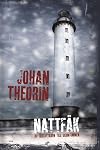
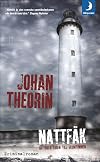
Det sägs att Åluddens gård är byggd av virke från ett skepp som förlist i havet utanför, vilket enligt folktron inte är särskilt lyckosamt. Och av de båda fyrarna som reser sig som tvillingtorn där ute i vattnet lyser bara det ena. Också kring detta finns det en show more legend. Men framför allt sägs det att det gamla fyrmästarbostället en gång om året ? på natten till julafton ? får besök av alla dem som levt på gården, men som nu är döda.
Nu är Joakim och Elin Westin knappast av den vidskepliga sorten. De är tvärtom moderna människor ? som har valt att flytta till ön för att de har tröttnat på det hektiska storstadslivet och för att barnen ska få växa upp med naturen runt knuten. När de är färdiga med den omsorgsfulla upprustningen av gården funderar de på att starta någon form av verksamhet där, ett sommarkafé eller kanske bed-and-breakfast.
Men familjen Westin är inte de enda nykomlingarna på norra delen av ön denna vinter. Polisstationen i Marnäs, som har varit stängd i flera år, ska återinvigas och få sin egen närpolis: den nyexaminerade Tilda Davidsson. Hon har sina rötter i trakten och passar på att bekanta sig med sin enda levande öländska släkting, den åldrade sjökaptenen Gerlof Davidsson (som vi känner igen från Skumtimmen). Som vanligt har Gerlof en hel del att berätta
På gården vid Åludden får drömmarna snart ge vika för katastrofen. En dag hittas Elin död i vattnet. Hon har lämnat barnen på daghemmet i byn, ensam vandrat hemåt längs kusten och, som det verkar, halkat och fallit från den gamla piren ut mot fyrarna. Hela Joakims tillvaro slås i spillror, och ändå fortsätter han frenetiskt med renoveringen av huset, kanske i ett försök att hålla kvar sin hustru. Till barnen, som är för små för att själva förstå vad som har hänt, säger han bara att Elin har rest bort. Men dottern Livia är övertygad om att hennes mamma kommer tillbaka. Åtminstone för att fira jul.
Nattfåk är den andra fristående delen i Johan Theorins planerade Ölandskvartett. Här får vi stifta bekantskap med en rad nya människor, men också möta några vi redan känner ? inte minst den pensionerade sjökaptenen Gerlof Davidsson. Precis som Skumtimmen är det en stark och oförglömlig läsupplevelse, en blandning av kriminalroman, spökhistoria och familjedrama med originella karaktärer, fängslande miljöer och en lika sorglig som spännande intrig show less
Det sägs att Åluddens gård är byggd av virke från ett skepp som förlist i havet utanför, vilket enligt folktron inte är särskilt lyckosamt. Och av de båda fyrarna som reser sig som tvillingtorn där ute i vattnet lyser bara det ena. Också kring detta finns det en show more legend. Men framför allt sägs det att det gamla fyrmästarbostället en gång om året ? på natten till julafton ? får besök av alla dem som levt på gården, men som nu är döda.
Nu är Joakim och Elin Westin knappast av den vidskepliga sorten. De är tvärtom moderna människor ? som har valt att flytta till ön för att de har tröttnat på det hektiska storstadslivet och för att barnen ska få växa upp med naturen runt knuten. När de är färdiga med den omsorgsfulla upprustningen av gården funderar de på att starta någon form av verksamhet där, ett sommarkafé eller kanske bed-and-breakfast.
Men familjen Westin är inte de enda nykomlingarna på norra delen av ön denna vinter. Polisstationen i Marnäs, som har varit stängd i flera år, ska återinvigas och få sin egen närpolis: den nyexaminerade Tilda Davidsson. Hon har sina rötter i trakten och passar på att bekanta sig med sin enda levande öländska släkting, den åldrade sjökaptenen Gerlof Davidsson (som vi känner igen från Skumtimmen). Som vanligt har Gerlof en hel del att berätta
På gården vid Åludden får drömmarna snart ge vika för katastrofen. En dag hittas Elin död i vattnet. Hon har lämnat barnen på daghemmet i byn, ensam vandrat hemåt längs kusten och, som det verkar, halkat och fallit från den gamla piren ut mot fyrarna. Hela Joakims tillvaro slås i spillror, och ändå fortsätter han frenetiskt med renoveringen av huset, kanske i ett försök att hålla kvar sin hustru. Till barnen, som är för små för att själva förstå vad som har hänt, säger han bara att Elin har rest bort. Men dottern Livia är övertygad om att hennes mamma kommer tillbaka. Åtminstone för att fira jul.
Nattfåk är den andra fristående delen i Johan Theorins planerade Ölandskvartett. Här får vi stifta bekantskap med en rad nya människor, men också möta några vi redan känner ? inte minst den pensionerade sjökaptenen Gerlof Davidsson. Precis som Skumtimmen är det en stark och oförglömlig läsupplevelse, en blandning av kriminalroman, spökhistoria och familjedrama med originella karaktärer, fängslande miljöer och en lika sorglig som spännande intrig show less
As in his first book, characters come first for Theorin, setting second, and then there's a plot, but it's happy to modestly hang about in the background, occasionally brushing past you with a touch that raises goosebumps. A man getting ready for a new life in a big old 'fixer-upper' house on the island of Oland gets horrible news when he's running some final errands in Stockholm: his wife and two children have been busy getting the house ready, and one of them has drowned. The rest of the book is about past inhabitants of the ill-fated house, the main character's halting and inept adjustment to loss, the memories he pushes away of his junkie sister who has died but keeps reminding him of his abdication of responsibility. There's also a show more young female cop starting to work on the island, her relationship with her elderly relative Gerlof (from Echoes from the Dead), a trio of young burglars headed for trouble, and lots of nasty weather, all nicely layered together in a leisurely-paced but engrossing read. In many ways each character is trying to figure out the past and what it means to events happening now. As Gerlof says 'I neither believe nor don't believe . . . I do collect ghost stories, but not in order to prove anything.' Then he tells the one time he really did have an encounter with a ghost - a story he (intriguingly) never wrote down. Though I'm woo-woo averse, after hearing Arnaldur Indridason say in a most level-headed way that Icelandic engineers will reroute roads to avoid bothering the trolls, I take a certain amount of lightly-handled stuff like this as part of the landscape and enjoy it. show less
Even though I read it alone and there wasn’t a campfire in sight reading The Darkest Room was a similar experience to having sat at the feet of an old-fashioned storyteller and become engrossed in his latest tale. Different threads and themes are woven together in a way that would be a disaster in a lesser craftsman’s hands but in Theorin’s, who is clearly a master of his craft, the sensitively translated product is deliciously atmospheric.
The novel centres on a house which was originally built from timber washed ashore after a shipwreck in 1846. The house, at Eel Point on the remote Swedish island of Öland, has seen many inhabitants in the subsequent decades and the book reveals what happened to some of them in between show more recounting the story of the house’s current owners Katrine and Joakim Westin. Just as they and their children are settling into their new home after moving from Stockholm tragedy strikes the family, as it has befallen many of the house’s previous occupants, and Theorin teases us by slowly revealing that things are not as they might first have seemed. Are there ghosts at Eel Point or does the danger that lurks take a more earthly form?
In addition to the Westins we meet Tilda Davidsson, a recently graduated police officer who is the sole officer operating full-time out of a newly re-opened station in one of the island’s towns. Her job is primarily a community liaison though she does have at least one more serious investigation to worry about as the island experiences a string of burglaries. As well as being an interesting character in her own right Tilda’s familial relationships offer a way for Theorin to include Gerlof Davidsson here, who was my favourite figure in the first book, Echoes from the Dead. There just aren’t enough clever octogenarians featured in fiction these days and even though Gerlof’s role is a more minor one I appreciated his insights as Tilda records his thoughts and stories in an informal oral history.
I know that saying that a book’s setting is a character is frowned upon in some reviewing circles but I can’t think of any other way to describe the presence in this story of the house in particular and the island in general. The action takes place in the Northern winter when the island is at its coldest, harshest and least inviting. Snow, ice and storms feature heavily and I can’t be the only reader to have reached for a warming cup of tea and another blanket as I lost myself in the tale. Aside from the natural environment the book also explores a theme that Theorin is clearly engaged by, namely the social changes the island has seen as Sweden has moved from being an agricultural based society to a more urbanised one.
There are plenty of other aspects of this absorbing book I could talk about but I’m wary of giving spoilers and frankly further discussion on my part is just taking you away from your next task which is to track down a copy of the book. Now. It is part historical fiction, part ghost story, part whodunit, and part sailor’s yarn. It is wholly enjoyable and recommended to all. show less
The novel centres on a house which was originally built from timber washed ashore after a shipwreck in 1846. The house, at Eel Point on the remote Swedish island of Öland, has seen many inhabitants in the subsequent decades and the book reveals what happened to some of them in between show more recounting the story of the house’s current owners Katrine and Joakim Westin. Just as they and their children are settling into their new home after moving from Stockholm tragedy strikes the family, as it has befallen many of the house’s previous occupants, and Theorin teases us by slowly revealing that things are not as they might first have seemed. Are there ghosts at Eel Point or does the danger that lurks take a more earthly form?
In addition to the Westins we meet Tilda Davidsson, a recently graduated police officer who is the sole officer operating full-time out of a newly re-opened station in one of the island’s towns. Her job is primarily a community liaison though she does have at least one more serious investigation to worry about as the island experiences a string of burglaries. As well as being an interesting character in her own right Tilda’s familial relationships offer a way for Theorin to include Gerlof Davidsson here, who was my favourite figure in the first book, Echoes from the Dead. There just aren’t enough clever octogenarians featured in fiction these days and even though Gerlof’s role is a more minor one I appreciated his insights as Tilda records his thoughts and stories in an informal oral history.
I know that saying that a book’s setting is a character is frowned upon in some reviewing circles but I can’t think of any other way to describe the presence in this story of the house in particular and the island in general. The action takes place in the Northern winter when the island is at its coldest, harshest and least inviting. Snow, ice and storms feature heavily and I can’t be the only reader to have reached for a warming cup of tea and another blanket as I lost myself in the tale. Aside from the natural environment the book also explores a theme that Theorin is clearly engaged by, namely the social changes the island has seen as Sweden has moved from being an agricultural based society to a more urbanised one.
There are plenty of other aspects of this absorbing book I could talk about but I’m wary of giving spoilers and frankly further discussion on my part is just taking you away from your next task which is to track down a copy of the book. Now. It is part historical fiction, part ghost story, part whodunit, and part sailor’s yarn. It is wholly enjoyable and recommended to all. show less
Joakim and Katrine Westin, along with their two small children, have decided to leave Stockholm to buy and renovate an old manor house at Eel Point on the island of Öland. Along with its two lighthouses, this area has a long history of shipwrecks and drownings, and it is said that the voices of the dead can still be heard. But for Joakim and Katrine, Eel Point offers a new beginning. For their children there are meadows and forests to play in, a definite change from urban life in Stockholm. But after only a couple of months, the idyllic setting becomes a place of dread after a terrible tragedy, which leaves Joakim shaken and inconsolable, unable to deal with his grief. He begins to become more interested in Eel Point's haunted history, show more wondering indeed if the dead inhabit the area, and the house begins to act on his damaged soul. He meets Tilda Davidsson, a newly-recruited police officer who has moved to the area to escape from the gossip involved with her affair with a married policeman, and because she has family there. Tilda's great-uncle is Gerlof Davidsson, who was a major character in Theorin's first novel, Echoes From the Dead, and she spends a lot of time with him, putting his memories of his life on Öland down on tape.
But there's more. As the Westin family is coping with its grief, the two Serelius brothers and their cohort in crime Henrik Jansson are busy breaking into vacation homes where the owners are away, stealing valuables and causing general mayhem. It's not long until their forays escalate and they start breaking into occupied houses and becoming violent, hopped up on meth before each job. Their activities have been reported to the police, but it isn't until Gerlof suggests to Tilda that she talk to a few of his old friends that anything really happens with the case.
These two plotlines, along with Gerlof's oral history of his family and of life on Öland, also combined with excerpts from a book written by Katrine's mother Mirja Rambe, all weave together into a perfectly-crafted thriller with a slight hint of gothic thrown into the mix. The sense of place is unbelievably eerie and helps to keep the tension and suspense from ebbing at any point in the story. The characters are meticulously and well constructed, especially in the cases of Katrine and Joakim, whose lives Theorin discloses in only small bits and pieces at a time. The pacing of the novel is just a little slow to begin with, but when it picks up, there is no way anyone can possibly put this book down until it's over.
I have to admit to being put off at first by the hint of the supernatural that figures into the story, but as all came to be revealed, my worries were put to rest and Theorin didn't let me down. It is tough to label The Darkest Room as simply a mystery or a novel of crime fiction, because it's also an examination of loss, grief and human nature in its most vulnerable and exposed state. And as in his earlier Echoes of the Dead, Theorin has created a story in which the past has meaning for and acts on the present -- one of my favorite types of novels. I highly recommend this one and considering I read it in 90+ degree heat with a near equal level of humidity, it made me shiver throughout. The Darkest Room is simply stellar. show less
But there's more. As the Westin family is coping with its grief, the two Serelius brothers and their cohort in crime Henrik Jansson are busy breaking into vacation homes where the owners are away, stealing valuables and causing general mayhem. It's not long until their forays escalate and they start breaking into occupied houses and becoming violent, hopped up on meth before each job. Their activities have been reported to the police, but it isn't until Gerlof suggests to Tilda that she talk to a few of his old friends that anything really happens with the case.
These two plotlines, along with Gerlof's oral history of his family and of life on Öland, also combined with excerpts from a book written by Katrine's mother Mirja Rambe, all weave together into a perfectly-crafted thriller with a slight hint of gothic thrown into the mix. The sense of place is unbelievably eerie and helps to keep the tension and suspense from ebbing at any point in the story. The characters are meticulously and well constructed, especially in the cases of Katrine and Joakim, whose lives Theorin discloses in only small bits and pieces at a time. The pacing of the novel is just a little slow to begin with, but when it picks up, there is no way anyone can possibly put this book down until it's over.
I have to admit to being put off at first by the hint of the supernatural that figures into the story, but as all came to be revealed, my worries were put to rest and Theorin didn't let me down. It is tough to label The Darkest Room as simply a mystery or a novel of crime fiction, because it's also an examination of loss, grief and human nature in its most vulnerable and exposed state. And as in his earlier Echoes of the Dead, Theorin has created a story in which the past has meaning for and acts on the present -- one of my favorite types of novels. I highly recommend this one and considering I read it in 90+ degree heat with a near equal level of humidity, it made me shiver throughout. The Darkest Room is simply stellar. show less
Members
- Recently Added By
Published Reviews
Den andre i en serie på fire kriminalromaner fra Öland Når den kraftige stormen som kalles fokk, feier inn over Öland, gjør man best i å holde seg innendørs. Fokket kommer fra nord med snø, is og kulde, og trekker alt med seg på sin vei. Den tidligere fyrvokterboligen Åludden gård med sine to fyrtårn har stått tom i mange år da Katrine og Joakim Westin fra Stockholm kjøper show more eiendommen. Husene er bygd av tømmer fra et skip som forliste i 1846, og ryktet vil ha det til at det nordre fyret kun lyser natten før noen skal dø. Ekteparet Westin, som har to små barn, har pusset opp boliger før og er ikke det minste overtroiske. Men utpå høsten får de høre en gammel historie om at gården hver jul får besøk av de døde. Nattefokker en blanding av kriminalroman og spøkelsesfortelling, men også en beretning om sorg -- med et like mørkt som spennende handlingsforløp, der trådene samles under et uvær på Åludden gård selveste julenatten.Johan Theorin (født 1963) er journalist. Han har tilbragt alle sine sommerferier på Öland. Nattefokk er den andre i en serie på fire bøker fra Öland. Den første, Skumringstimen, ble tildelt Svenska Deckarakademins pris for beste krimdebut i 2007. Johan Theorin utgis i seksten land. show less
added by kirstenlund
Lists

Scandinavian Crime Fiction
224 works; 37 members
Nordic Crime Fiction
66 works; 10 members

100 Hemskaste
81 works; 1 member
Author Information

24+ Works 2,794 Members
Some Editions
Awards and Honors
Awards
Distinctions
Series

Belongs to Publisher Series
Work Relationships
Is contained in
Common Knowledge
- Canonical title
- The Darkest Room
- Original title
- Nattfåk
- Original publication date
- 2008
- People/Characters
- Joakim Westin; Tilda Davidsson
- Important places
- Öland, Sweden
- Epigraph*
- "De döda samlas varje vinter för att fira jul. Men en gång blev de störda av en ogift gumma. Hennes klocka hade stannat, så hon gick upp för tidigt och kom mitt i lulnatten till kyrkan. Det sorlade av röster som om det... (show all) var gudstjänst där och det var fullt med folk. Plötsligt såg gumman sin fästman från unga dagar. Han hade drunknat många år tidigare, men nu satt han i en kyrkbänk bland de andra." - Svensk folksägen från 1800-talet
- First words*
- Hier begint mijn boek, Katrine, in het jaar waarin Aluddens hofstede is gebouwd.
- Last words*
- (Click to show. Warning: May contain spoilers.)Geister und Erinnerung.
- Original language
- Swedish
*Some information comes from Common Knowledge in other languages. Click "Edit" for more information.
Classifications
- Genres
- Fiction and Literature, Mystery
- DDC/MDS
- 839.738 — Literature & rhetoric German & related literatures Other Germanic literatures Swedish literature Swedish fiction 2000-
- LCC
- PT9877.3 .H46 .N3713 — Language and Literature German, Dutch and Scandinavian literatures Swedish literature Individual authors or works 2001-
- BISAC
Statistics
- Members
- 811
- Popularity
- 34,091
- Reviews
- 41
- Rating
- (3.84)
- Languages
- 16 — Czech, Danish, Dutch, English, Finnish, French, German, Icelandic, Italian, Japanese, Norwegian (Bokmål), Norwegian, Polish, Russian, Spanish, Swedish
- Media
- Paper, Audiobook, Ebook
- ISBNs
- 62
- ASINs
- 9