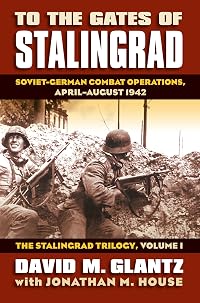
The Stalingrad Trilogy, Volume 1: To the Gates of Stalingrad: Soviet-German Combat Operations, April-August 1942
by David M. Glantz
The Stalingrad Trilogy (1), Modern War Studies (2009)
On This Page
Description
The world's foremost authority on the Soviet-German clash draws upon previously unseen, underused, and neglected Soviet and German sources to provide the definitive account of the major turning point for both the Eastern Front and World War II.Tags
Recommendations











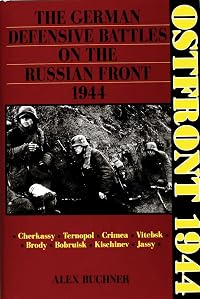

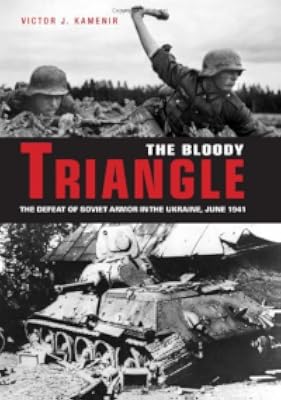
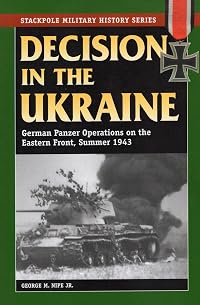
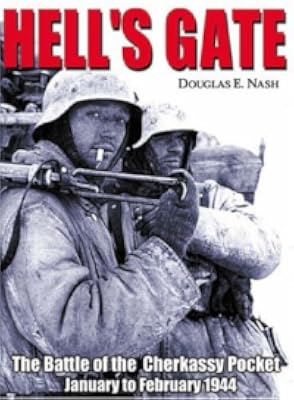



Member Reviews
If you been reading the work of David Glantz you'll know what to expect; ultra-close operational analysis of the titanic struggle between Nazi Germany and the Soviet Union in World War II. The background emphasis in this book is on the lurking strategic bankruptcy of the German war effort vis-a-vis the desperate Soviet effort to forge their military forces into an effective weapon. Glantz's particular point though is that the Soviet resistance was such that Paulus' Sixth Army was sufficiently mauled that Stalingrad was doomed to be a slugfest for the Germans; good stuff. Another virtue of this work is that it's well-larded with biographical detail on the German and Soviet commanders.
i haven't read this one yet, but should be a very detailed account of the germans' 1942 critical summer offensive, prior to 6th army's push to the volga and subsequent disaster. this campaign really exposed the many problems inherent in the german command structure, and was the last great strategic success for the germans against the red army.
Copy of information from a blog by the author about the first in a triology about Stalingrad:
Source: http://www.forosegundaguerra.com/viewtopic.php?f=21&t=9224&st=0&sk=t...
----- Original Message -----
From:
To:
Sent: Wednesday, December 17, 2008 9:00 PM
Subject: Re: Stalingrad Trilogy
Dear Jose:
The Stalingrad Trilogy, to be published by the University Press of Kansas, is a major effort on my part to rid the entire subject of its many "myths" contained in numerous previously published single-volume histories of the battle. It differs from After Stalingrad in that the latter is a fundamental revision of my older book, From the Don to the Dnepr, which I wrote before I learned about the many so-called "forgotten battles" that occurred during show more that period. By "forgotten," I mean military operations, mostly failures, which former Soviet historians have covered up or otherwise concealed. Therefore, After Stalingrad is actually a "fourth volume" in the trilogy.
As for the trilogy itself, it addresses the three periods of the Stalingrad campaign, as follows:
1) To the Gates of Stalingrad -- covering operations from 28 June-August 1942, including the preliminary operations in April-May 1942, the German advance on Stalingrad and into the Caucasus region (Operations Blau I, II, and III), and the battles on the distant flanks of Operation Blau;
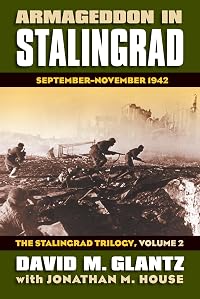
2) The Fight for Stalingrad City -- covering operations from September-18 November 1942, including Sixth Army's fighting with 62nd and 64th Armies in Stalingrad and along the adjacent flanks, German operation Edelweiss in the Caucasus, and the battles on the distant flanks; and
3) The Soviet Counteroffensive and Winter Campaign - covering operations from 19 November 1942-February 1943, including the Red Army's counteroffensive (Operation Uranus), German attempts to rescue encircled Sixth Army, and the subsequent Soviet expansion of the offensive to the West, with a summary chapter on the end of the Soviet's winter campaign (the same subject as After Stalingrad).
Unlike previous studies on military operations during the Soviet-German War, the trilogy, in particular, the second volume, is the first study containing what I call "ground truth," This means that it is based on the daily records of German Sixth Army, Soviet 62nd Army, and most of 62nd Armies' subordinate divisions and brigades. By virtue of these sources, we now know precisely who did what to whom and when on an hourly and street-by-street and building-by-building basis. Since I have decided to cover all of the fighting, both in the city and along the city's flanks, the second volume is very detailed and, frankly, must be studied rather than simply read. I have done this for two reasons: first, I know of no-one else who will make this effort and, second, someone else can use this information to write a more popular and less detailed account. Thus, it will be no "easy read."
In answer to your specific questions:
1) This work destroys the many myths associated with the "Battle for Stalingrad" and fundamentally alters previous facts and interpretations regarding the battle.
2) As such, the study is exhaustive and an attempt to be definitive.
3) The trilogy covers the fighting strategically, operationally, and tactically, that is, from German army group and Red Army front level down to battalion and company level regarding the fighting in the city.
4) After Stalingrad includes everything missing from Don to Dnepr, in particular, the role of the Southern Front in the February 1943 Donbas operation (operation Gallop), the major offensive by Rokossovsky's Central Front through Kursk toward the Dnepr River, the supporting offensives by the Western and Briansk Fronts, and Zhukov's failed Operation Polar Star, the Soviet offensive in February 1943 designed to defeat and destroy German Army Group North.
5) The major new points made by the trilogy include but are not limited to the following:
-- When confronted by German forces advancing in Operation Blau, Stalin ordered his Southwestern and Southern Fronts to stand and fight instead of conducting a general fighting withdrawal previous sources have claimed .
-- As a result of Stalin's belligerence, the fighting on the road to Stalingrad was far more intense and damaging to both sides than previously supposed.
-- The Stavka began attempting counteroffensive action as early as late July 1942, when it committed three tank armies into action, the 5th Tank Army near Voronezh, and the 1st and 4th Tank Armies in the "Great Bend" of the Don. Although this counteroffensive failed, it inflicted damaging losses on German Second and Sixth Armies.
-- Thereafter, the Stavka repeatedly attempted to organize new counteroffensives and counterstrokes against German forces in the Stalingrad region, primarily just northwest and south of the city. These occurred from late August to early October 12942.
-- During the fighting in the Donbas region, the Soviet lost the better part of six armies, including the 40th, 28th, 38th, 9th, 24th, and 57th Armies. However, despite encircling these armies, German Army Group B had insufficient infantry to "capture" the encircled forces, most of which escaped or simply "went to ground."
-- Paulus's Sixth Army was too weak to clear Soviet forces from the Great Bend of the Don within the period planned (one-two weeks). Thereafter, it took several more weeks of heavy combat and high losses for Sixth Army to reach the Don River, combat attrition that left Sixth Army too weak to seize Stalingrad from the march.
-- Paulus's plan to seize Stalingrad by envelopment from north to south (by XIV and XXXXVII Panzer Corps) failed because of heavy counterattacks the Stavka organized in the Kotluban' region northwest of the city. The four-five major counterstrokes in that region from late August through October prevented XIV Panzer Corps from seizing the city's factory district from the march and, later, joining the fight for the city in sufficient strength to make a difference.
-- The battle in Stalingrad city proper occurred in distinct stages, the earliest of which involved considerable maneuver in urban terrain. These stages unfolded in specific locations in the city and at specific times. In other words, rather than a generalized "urban brawl," the battle in the city was a genuine urban campaign.
-- The forces involved in the fight for Stalingrad city were far weaker than previously believed. For example, Sixth Army's forces which fought in the city comprised well under half the army's total strength and the divisions which fought in the city were well under 50 percent strength. This weakness applied in particular to combat forces such as infantry, panzer grenadiers, and combat engineers (sappers). The 62nd Army's (and 64th Army's) divisions and brigades were, in reality, regiments, battalions, and companies.
-- The Stavka authorized the Southeastern Front and, later, Stalingrad Front to commit just enough forces into the city fight to tie down Sixth Army's forces and prevent them from seizing the entire city -- and not a man more.
-- The newly available archival materials demonstrate that the order of battle for both sides contained in previous histories is inaccurate. For example, the German 76th Infantry Division never fought in the city. Instead, it was decimated in the fighting northwest of the city. These new materials also show the combat strength and losses of both German and Soviet forces throughout the city fight.
-- At the peak of the fighting in the city, during late October and early November 1942, approximately 50,000 German forces fought a slightly lower number of Soviet forces in the city. The final fight in the city's factory district in the first half of November involved a clash between of battalion-and company-size units rather than divisions, brigades, and regiments.
-- The decision by Hitler to attempt to seize the Caucasus region and Stalingrad, simultaneously, led to ultimate German defeat.
I hope these comments both answer your questions and kindle your interest.
All the best,
David
>>>>>>>>>>>>>>>>>>>> show less
Source: http://www.forosegundaguerra.com/viewtopic.php?f=21&t=9224&st=0&sk=t...
----- Original Message -----
From:
To:
Sent: Wednesday, December 17, 2008 9:00 PM
Subject: Re: Stalingrad Trilogy
Dear Jose:
The Stalingrad Trilogy, to be published by the University Press of Kansas, is a major effort on my part to rid the entire subject of its many "myths" contained in numerous previously published single-volume histories of the battle. It differs from After Stalingrad in that the latter is a fundamental revision of my older book, From the Don to the Dnepr, which I wrote before I learned about the many so-called "forgotten battles" that occurred during show more that period. By "forgotten," I mean military operations, mostly failures, which former Soviet historians have covered up or otherwise concealed. Therefore, After Stalingrad is actually a "fourth volume" in the trilogy.
As for the trilogy itself, it addresses the three periods of the Stalingrad campaign, as follows:
1) To the Gates of Stalingrad -- covering operations from 28 June-August 1942, including the preliminary operations in April-May 1942, the German advance on Stalingrad and into the Caucasus region (Operations Blau I, II, and III), and the battles on the distant flanks of Operation Blau;
2) The Fight for Stalingrad City -- covering operations from September-18 November 1942, including Sixth Army's fighting with 62nd and 64th Armies in Stalingrad and along the adjacent flanks, German operation Edelweiss in the Caucasus, and the battles on the distant flanks; and
3) The Soviet Counteroffensive and Winter Campaign - covering operations from 19 November 1942-February 1943, including the Red Army's counteroffensive (Operation Uranus), German attempts to rescue encircled Sixth Army, and the subsequent Soviet expansion of the offensive to the West, with a summary chapter on the end of the Soviet's winter campaign (the same subject as After Stalingrad).
Unlike previous studies on military operations during the Soviet-German War, the trilogy, in particular, the second volume, is the first study containing what I call "ground truth," This means that it is based on the daily records of German Sixth Army, Soviet 62nd Army, and most of 62nd Armies' subordinate divisions and brigades. By virtue of these sources, we now know precisely who did what to whom and when on an hourly and street-by-street and building-by-building basis. Since I have decided to cover all of the fighting, both in the city and along the city's flanks, the second volume is very detailed and, frankly, must be studied rather than simply read. I have done this for two reasons: first, I know of no-one else who will make this effort and, second, someone else can use this information to write a more popular and less detailed account. Thus, it will be no "easy read."
In answer to your specific questions:
1) This work destroys the many myths associated with the "Battle for Stalingrad" and fundamentally alters previous facts and interpretations regarding the battle.
2) As such, the study is exhaustive and an attempt to be definitive.
3) The trilogy covers the fighting strategically, operationally, and tactically, that is, from German army group and Red Army front level down to battalion and company level regarding the fighting in the city.
4) After Stalingrad includes everything missing from Don to Dnepr, in particular, the role of the Southern Front in the February 1943 Donbas operation (operation Gallop), the major offensive by Rokossovsky's Central Front through Kursk toward the Dnepr River, the supporting offensives by the Western and Briansk Fronts, and Zhukov's failed Operation Polar Star, the Soviet offensive in February 1943 designed to defeat and destroy German Army Group North.
5) The major new points made by the trilogy include but are not limited to the following:
-- When confronted by German forces advancing in Operation Blau, Stalin ordered his Southwestern and Southern Fronts to stand and fight instead of conducting a general fighting withdrawal previous sources have claimed .
-- As a result of Stalin's belligerence, the fighting on the road to Stalingrad was far more intense and damaging to both sides than previously supposed.
-- The Stavka began attempting counteroffensive action as early as late July 1942, when it committed three tank armies into action, the 5th Tank Army near Voronezh, and the 1st and 4th Tank Armies in the "Great Bend" of the Don. Although this counteroffensive failed, it inflicted damaging losses on German Second and Sixth Armies.
-- Thereafter, the Stavka repeatedly attempted to organize new counteroffensives and counterstrokes against German forces in the Stalingrad region, primarily just northwest and south of the city. These occurred from late August to early October 12942.
-- During the fighting in the Donbas region, the Soviet lost the better part of six armies, including the 40th, 28th, 38th, 9th, 24th, and 57th Armies. However, despite encircling these armies, German Army Group B had insufficient infantry to "capture" the encircled forces, most of which escaped or simply "went to ground."
-- Paulus's Sixth Army was too weak to clear Soviet forces from the Great Bend of the Don within the period planned (one-two weeks). Thereafter, it took several more weeks of heavy combat and high losses for Sixth Army to reach the Don River, combat attrition that left Sixth Army too weak to seize Stalingrad from the march.
-- Paulus's plan to seize Stalingrad by envelopment from north to south (by XIV and XXXXVII Panzer Corps) failed because of heavy counterattacks the Stavka organized in the Kotluban' region northwest of the city. The four-five major counterstrokes in that region from late August through October prevented XIV Panzer Corps from seizing the city's factory district from the march and, later, joining the fight for the city in sufficient strength to make a difference.
-- The battle in Stalingrad city proper occurred in distinct stages, the earliest of which involved considerable maneuver in urban terrain. These stages unfolded in specific locations in the city and at specific times. In other words, rather than a generalized "urban brawl," the battle in the city was a genuine urban campaign.
-- The forces involved in the fight for Stalingrad city were far weaker than previously believed. For example, Sixth Army's forces which fought in the city comprised well under half the army's total strength and the divisions which fought in the city were well under 50 percent strength. This weakness applied in particular to combat forces such as infantry, panzer grenadiers, and combat engineers (sappers). The 62nd Army's (and 64th Army's) divisions and brigades were, in reality, regiments, battalions, and companies.
-- The Stavka authorized the Southeastern Front and, later, Stalingrad Front to commit just enough forces into the city fight to tie down Sixth Army's forces and prevent them from seizing the entire city -- and not a man more.
-- The newly available archival materials demonstrate that the order of battle for both sides contained in previous histories is inaccurate. For example, the German 76th Infantry Division never fought in the city. Instead, it was decimated in the fighting northwest of the city. These new materials also show the combat strength and losses of both German and Soviet forces throughout the city fight.
-- At the peak of the fighting in the city, during late October and early November 1942, approximately 50,000 German forces fought a slightly lower number of Soviet forces in the city. The final fight in the city's factory district in the first half of November involved a clash between of battalion-and company-size units rather than divisions, brigades, and regiments.
-- The decision by Hitler to attempt to seize the Caucasus region and Stalingrad, simultaneously, led to ultimate German defeat.
I hope these comments both answer your questions and kindle your interest.
All the best,
David
>>>>>>>>>>>>>>>>>>>> show less
Ratings
Members
- Recently Added By
Lists

r/History Recommended Reading List
603 works; 12 members
Author Information

95+ Works 3,584 Members
David M. Glantz is founder and former director of the U.S. Army's Foreign Military Studies Office.
All Editions
Series


Belongs to Publisher Series
Common Knowledge
- Canonical title
- The Stalingrad Trilogy, Volume 1: To the Gates of Stalingrad: Soviet-German Combat Operations, April-August 1942
- Important places
- Russia; Stalingrad, USSR; USSR
- Important events
- World War II (1939 | 1945); World War II, Eastern Front (1941-06-22 | 1945-05-05)
Classifications
- Genres
- History, Nonfiction, General Nonfiction
- DDC/MDS
- 940.5421747 — History & geography History of Europe History of Europe 1918- Military history of World War II Campaigns and battles by theatre European theatre Soviet Union
- LCC
- D764.3 .S7 .G59 — History of Europe, Asia, Africa and Oceania History (General) World War II (1939-1945)
- BISAC
Statistics
- Members
- 179
- Popularity
- 183,366
- Reviews
- 3
- Rating
- (4.14)
- Languages
- English, Spanish
- Media
- Paper, Ebook
- ISBNs
- 3
- ASINs
- 2