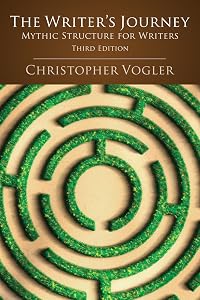
The Writer's Journey: Mythic Structure for Writers
by Christopher Vogler
On This Page
Description
"Writers are storytellers. The best of them have utilized the principles of myth to create masterful stories that are dramatic, entertaining and psychologically true. Based on the work of Joseph Campbell, this edition provides an insider's look at how writers (both fiction and non-fiction) can utilize mythic structure to create powerful narratives. Writers will discover step by step guidelines for structuring plots and creating realistic characters. This new 4th edition adds 30% new material"--Tags
Recommendations
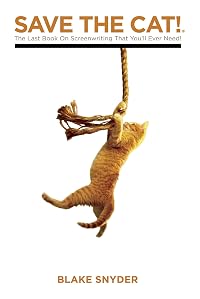

Member Recommendations
Member Reviews
One of the books they made us read in film school way back when was Christopher Vogler's book THE WRITER'S JOURNEY: MYTHIC STRUCTURE FOR WRITERS. Vogler has come out with a third edition, so I thought I'd take a read.Vogler is coming at story structure out of the Joseph Campbell HERO WITH A THOUSAND FACES tradition. Campbell theorized that hero stories have a similar structure across all human cultures, and that there are archetypes that we always see in them: the refusal of the call, the mentor, the inmost cave, etc. Vogler attempts to relate Campbell's character archetypes to successful movies. Who is the Shadow? Who is the Shapeshifter? Who is the Mentor? He also outlines a basic structure for the story:1. Ordinary World2. Call to show more Adventure3. Refusal of the Call4. Meeting with the Mentor5. Crossing the First Threshold6. Tests, Allies, Enemies7. Approach to the Inmost Cave8. Ordeal9. Reward10. The Road Back11. Resurrection12. Return with the ElixirWhen you try to apply this formula to some movies, it works quite well, e.g. STAR WARS. Bear in mind, though, these often seem to be movies written by writers who are consciously trying to apply Joseph Campbell to screenwriting, as George Lucas was. Back in film school, I tried a bunch of times to relate these steps to stories I was trying to tell, and I had trouble telling what step I was supposed to be on. Lisa pointed out that many of the steps applied to the series I'm working on (Natural World, Refusal of the Call) but later on it gets difficult to say which part is "The Road Back" and which is "Return with the Elixir". When Vogler tries to fit stories that aren't intended to be epic hero tales into his formula, the results aren't so neat. It can feel like he's shoehorning the facts into the theory, as when he looks at PULP FICTION. No "Shapeshifter" character? Claim that Vincent Vega and Mia's dance moves "reflect the SHAPESHIFTER archetype, as they try out various masks and identies in the APPROACH to love" (p. 275). Uh huh. I'm not a big fan of formula, myself. I'm agnostic about Blake Snyder's formula (see my earlier post on SAVE THE CAT!) because I can see how it might work. My problem with Vogler is that while it is an interesting way to look at movies, and to understand what they're doing for the audience, I don't see how it helps me write one. It looks like a way to analyze what is going on in a movie, rather than a way to write a movie.I should note that Christopher Vogler is not a professional writer, but a professional story analyst (if I understand his resume right). He shares credit on one German movie. Mostly, my impression is, he works with writers that the studio feels could use someone with a deeper understanding of story structure. In that case I would imagine that his approach, actually applied by him, might work.But if you want a mythic perspective on screenwriting -- and how it fits into the grand epic tradition of storytelling -- then you might well check out THE WRITER'S JOURNEY. show less
Talk about a journey. Over the course of this book the writing took a brutal tumble from informative and interesting to ridiculous fluff. I went from happily staying up late to boredom and eye-rolling to disgust and finally actual anger while reading. Vogler's 370-page supposed guide to story-writing, set on the solid foundation of Joseph Campbell's work (reviewed here in the worthwhile first 70 pages), is a joke. It's a waste of time and insult to the reader, with indulgently superficial skimming of truly profound fields to back up his vague and meandering ideas.
Vogler seems perfectly unaware of the worthlessness of his repeated example of an unspecific, universal and ancient tribe with vague traditions and rituals from which all our show more storytelling must follow. There are no citations for this tribe or their traditions, but the logic Vogler uses is that the story structure related here is valuable and intrinsic because these universal tribal forefathers used it. He folds in cheap quotes from Aristotle and others without embarrassment, using them in all their generality to back up his unsubstantial points. There are also unbelievably (and predictably uncited) general and vague scientific examples that say little of actual science and, worse, often little to support his claims. All this devolves into a chapter on how a good story should effect several bodily organs at a time and a superficial several pages on chakras. Vogler, with little understanding of the deep worlds he's visiting, just puts together a mishmash of cultures, philosophy, religions and science (with a scattered few engaging analyses of movies according to Campbell's structure that provoke the fleeting wonder of what this book could have been) and splats it against the wall like a monkey throwing shit.
Some favorite lines towards the end of the book:
"According to some modern Hindu sages, Hitler may have been very open in the power and throat chakras, making him an effective communicator who could stir the emotions and marshal power with his voice, but he was probably shut tight in most of the other chakras."
"My motto as a story evaluator became, 'If it isn't making at least two organs of my body squirt fluids, it's no good.'" show less
Vogler seems perfectly unaware of the worthlessness of his repeated example of an unspecific, universal and ancient tribe with vague traditions and rituals from which all our show more storytelling must follow. There are no citations for this tribe or their traditions, but the logic Vogler uses is that the story structure related here is valuable and intrinsic because these universal tribal forefathers used it. He folds in cheap quotes from Aristotle and others without embarrassment, using them in all their generality to back up his unsubstantial points. There are also unbelievably (and predictably uncited) general and vague scientific examples that say little of actual science and, worse, often little to support his claims. All this devolves into a chapter on how a good story should effect several bodily organs at a time and a superficial several pages on chakras. Vogler, with little understanding of the deep worlds he's visiting, just puts together a mishmash of cultures, philosophy, religions and science (with a scattered few engaging analyses of movies according to Campbell's structure that provoke the fleeting wonder of what this book could have been) and splats it against the wall like a monkey throwing shit.
Some favorite lines towards the end of the book:
"According to some modern Hindu sages, Hitler may have been very open in the power and throat chakras, making him an effective communicator who could stir the emotions and marshal power with his voice, but he was probably shut tight in most of the other chakras."
"My motto as a story evaluator became, 'If it isn't making at least two organs of my body squirt fluids, it's no good.'" show less
This is basically The Hero With a Thousand Faces turned into a self-help guide for aspiring screenwriters. Vogler is deeply experienced in how Hollywood makes stories, having worked as a professional narrative-smith for several major studios including Disney and Fox, and the advice is pragmatic, flexible, and surprisingly robust. Each chapter is concluded by a set of questions that a keen professor might ask of a story. Vogler would be the first to admit that the Hero's Journey is not a prescription for a good story, and that many films fall outside of its Archetypes and Steps, but if your story can't be described by the Hero's Journey, you probably have some work to do.
Some of the example movies are a little dated in the Year of Our show more Lord 2013 (Romancing the Stone, what's that?), and there isn't much said about the more complex stories typical of extended trilogies or television shows, but for all that, this is a critical book for writers looking to improve the structure of their stories. show less
Some of the example movies are a little dated in the Year of Our show more Lord 2013 (Romancing the Stone, what's that?), and there isn't much said about the more complex stories typical of extended trilogies or television shows, but for all that, this is a critical book for writers looking to improve the structure of their stories. show less
It took me awhile to get through this book. I put it down several times. Normally that would be a pretty good sign that I didn’t like the book. Not in this case.
When I first decided that I wanted to be a writer it didn’t take long before I stumbled upon the idea of the ‘Monomyth’ or ‘The Hero’s Journey’ popularized by the work of Joseph Campbell and it wasn’t much longer before I bought his book The Hero with a Thousand Faces. That book is dense, and meandering, and not meant to help you be a better writer. It is a text book about comparative mythology, essentially, chock full of examples and excerpts from the history of storytelling to help prove his points, but completely lacking in any actual advice on applying those show more concepts to your own stories. I didn’t get very far into it before boredom made me put it down.
The Writer’s Journey takes Campbell’s theories and makes them more accessible in several ways. First of all, Vogler often uses popular movies as examples to get you to understand the various concepts of the monomyth. Examples from works that most people are familiar with is important in helping you understand these concepts, in my opinion, and that’s something that was extremely lacking in Campbell’s book. Second of all, Vogler has come up with many of his own terms for the various stages of the journey that, to me at least, make a lot more inherent sense than Campbell’s terminology does. Third of all, and most important, he tells you exactly how these concepts apply to writing a cohesive story. He lays out when to use them, when not to use them, and how to think about them as relates to your own work.
However, even though this book is far more accessible and practical than Campbell’s, it’s still dense, and not exactly a page-turner. That’s the only excuse I have for taking so long to finish it, because it really is a great book. I also took notes while I read, so that didn't help. If someone asked me for recommendations on books about writing though, this would definitely be in my top three picks. I found it to be an invaluable resource for understanding story structure, and for diagnosing broken plots. show less
When I first decided that I wanted to be a writer it didn’t take long before I stumbled upon the idea of the ‘Monomyth’ or ‘The Hero’s Journey’ popularized by the work of Joseph Campbell and it wasn’t much longer before I bought his book The Hero with a Thousand Faces. That book is dense, and meandering, and not meant to help you be a better writer. It is a text book about comparative mythology, essentially, chock full of examples and excerpts from the history of storytelling to help prove his points, but completely lacking in any actual advice on applying those show more concepts to your own stories. I didn’t get very far into it before boredom made me put it down.
The Writer’s Journey takes Campbell’s theories and makes them more accessible in several ways. First of all, Vogler often uses popular movies as examples to get you to understand the various concepts of the monomyth. Examples from works that most people are familiar with is important in helping you understand these concepts, in my opinion, and that’s something that was extremely lacking in Campbell’s book. Second of all, Vogler has come up with many of his own terms for the various stages of the journey that, to me at least, make a lot more inherent sense than Campbell’s terminology does. Third of all, and most important, he tells you exactly how these concepts apply to writing a cohesive story. He lays out when to use them, when not to use them, and how to think about them as relates to your own work.
However, even though this book is far more accessible and practical than Campbell’s, it’s still dense, and not exactly a page-turner. That’s the only excuse I have for taking so long to finish it, because it really is a great book. I also took notes while I read, so that didn't help. If someone asked me for recommendations on books about writing though, this would definitely be in my top three picks. I found it to be an invaluable resource for understanding story structure, and for diagnosing broken plots. show less
I began reading The Writer's Journey in April 2019, then put it aside for a few years when I became busy with several short story projects, a new novel, and a few harrowing life changes. When I picked up The Writer's Journey again in late May 2021, I started from page one again and found Vogler's interpretation and application of Joseph Campbell's analysis of mythology useful. I approached it in much the same way I approach outlining my novels and short stories. It is a roadmap, not a strict rule book and even Vogler admits this. When developing any story, there are many avenues a writer can take and crafting the story is an organic process. Often while writing, I will have an epiphany that takes the story in an even better direction show more than what I had originally outlined.
Vogler's guide is no different. I know other reviewers accuse Vogler of diluting or cheapening Campbell's work. I've heard other writers at conventions and conferences deride The Hero's Journey as an obsolete model that no longer has a place in modern storytelling. To each their own. I enjoyed The Writer's Journey and found Vogler's voice and style easy to follow. Even after three novels and over 20 short stories in my young writing career, I never stop learning and will keep this book close at hand as I work through the latest revision of my next novel. show less
Vogler's guide is no different. I know other reviewers accuse Vogler of diluting or cheapening Campbell's work. I've heard other writers at conventions and conferences deride The Hero's Journey as an obsolete model that no longer has a place in modern storytelling. To each their own. I enjoyed The Writer's Journey and found Vogler's voice and style easy to follow. Even after three novels and over 20 short stories in my young writing career, I never stop learning and will keep this book close at hand as I work through the latest revision of my next novel. show less
Perhaps better for screenwriters than novelists, there is still much to admire in this work, especially since I'm an admirer of Joseph Campbell's work, to which Vogler acknowledges a huge debt. It's thought-provoking, especially in terms of plot. As I say, perhaps not wonderful for the prose writer, since almost all examples are taken from film. I love the exploration of archetypes -- a great leaping off place for any writer.
This book fully explains in detail the different parts of Joseph Campbell's monomyth structure. However, it can be a bit tedious if you're familiar with Campbell, and the appendices are over-written centered around singular ideas that do not need the embellishment that they're treated with. I also felt that there may be a strong new-age thread running through the whole especially where the author uses The Golden Bough by James George Frazer as a reference but fortunately, it doesn't move from the juxtaposition of comparative mythology to writing into the realm of hokum. There are a lot of good ideas scattered throughout this book. I would recommend this book if you are at all interested in exploring Campbell's monomyth.
Members
- Recently Added By
Lists

Best Books on Writing for Writers
36 works; 19 members

The Great Courses: How to View and Appreciate Great Movies
30 works; 1 member

The Great Courses: How to Write Best-Selling Fiction
36 works; 2 members
Author Information

11 Works 2,286 Members
Some Editions
Work Relationships
Was inspired by
Common Knowledge
- Canonical title
- The Writer's Journey: Mythic Structure for Writers
- Original title
- The writer's journey : mythic structure for writers
- Original publication date
- 1992-12; 1992
- Dedication
- for Mom and Dad
- First words
- Intro:
The waves are still rolling in from the pebbles in the pond that were the original Writer's Journey and its second edition. Since almost a decade has gone by since the second edition was launched, the ide... (show all)as in that volume have been strenuously tested in a number of story-making laboratories around the world.
In the long run, one of the most influential books of the 20th century may turn out to be Joseph Campbell's The Hero with a Thousand Faces. - Quotations
- There are only two or three human stories, and they go on repeating themselves as fiercely as if they had never happened before. -- Willa Cather, in O Pioneers!
- Last words
- (Click to show. Warning: May contain spoilers.)As Dante says, at the beginning of the Inferno, "In the midst of life's journey I found myself in a dark wood, for the right path was lost." I think we're all doing that, in our various ways, finding ourselves through the journey of our writing lives. Looking for our Selves in the dark wood. I wish you luck and adventure and I hope you find yourself on your journey. Bon voyage.
- Blurbers
- Berg, Gary A.; McKenna, David; Gilles, D. B.; Arch, Jeff; Lester, Meera; Fink, Charlie
- Original language
- English
- Canonical DDC/MDS
- 808.2'3-dc22
- Canonical LCC
- PN1996.V64
Classifications
Statistics
- Members
- 2,228
- Popularity
- 9,111
- Reviews
- 37
- Rating
- (4.03)
- Languages
- 7 — English, French, German, Italian, Polish, Portuguese, Spanish
- Media
- Paper, Ebook
- ISBNs
- 26
- ASINs
- 4