
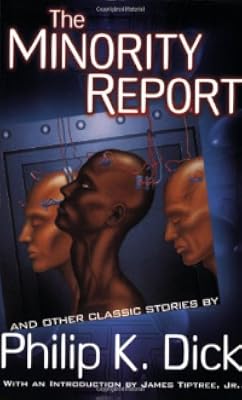
The Minority Report and Other Classic Stories
by Philip K. Dick
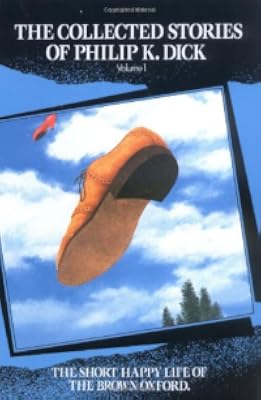
The Collected Stories Of Philip K. Dick (Underwood-Miller (1987) — 4)
On This Page
Description
A collection of eighteen science fiction short stories features "The Minority Report," in which Commissioner John Anderton's clever use of "precogs," people who can identify criminals before they can do any harm, turns against him when they identify him as the next criminal.Tags
Recommendations




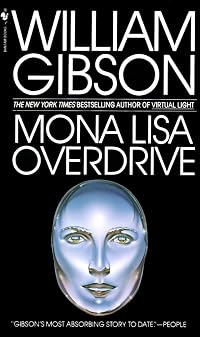
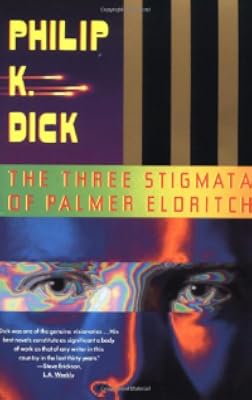

Member Recommendations
Member Reviews
I've been reading the complete Philip K. Dick short stories, one volume per year; this year that brings me to the fourth of its five volumes, which covers stories published from 1955 to 1964. (The stories are collected in order of composition, though, so it actually overlaps with volume three.) This volume was originally published under the title of The Days of Perky Pat, but when the Steven Spielberg film adaptation came out, it was retitled Minority Report.
Previous volumes of this series covered just two to three years of publication time; this one covers a whole decade, indicating a drop-off in how many short stories Dick wrote due to, I believe, his novel-writing career taking off. Perhaps thanks to that, this volume has the show more highest hit rate of any of these I've read before. I'll just give an overview of some of my favorites and other thoughts here.
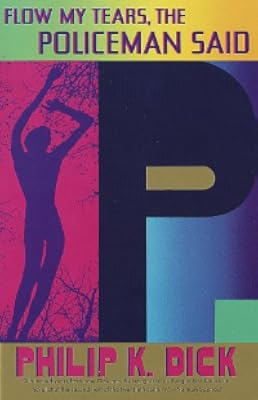
You can see Dick's emerging interest in the figure of the media celebrity who controls the thoughts of the populace, a figure who would be a key character in some of his later novels, particularly Flow My Tears, the Policeman Said (1974); here, they pop up in "The Mold of Yancy" (based on Eisenhower, according to Dick's note), "If There Were No Benny Cemoli," "Novelty Act" (where the First Lady controls America, and the President is selected on the basis of who she'd most like to be married to), and the linked pair of "Stand-By" and "What'll We Do with Ragland Park?", where a literal clown with a news broadcast runs for President and only loses thanks to dirty tricks by his opponents. Dick was not exactly right about which media figures would dominate in the future (I don't think newsreaders or variety show hosts carry the cachet now they did in the 1950s and '60s!), but right about our culture's increasing parasocial interest in hollow celebrities. Give me a Philip K. Dick story about TikTok, please.
To be honest, I didn't like the actual story of "Stand-By" very much, but I was tickled by its central conceit: in a future where a computer is the impartial President of the United States, as a concession to the unions over the fact that a human job had been taken by a machine, there'd be a stand-by president, a human being whose job is to sit around just in case the computer fails.
As the title of my edition indicates, the book contains "The Minority Report," a masterpiece of time travel fiction, and the only short story by Philip K. Dick I'd read before embarking on this project back in 2022. It's very cleverly plotted, and the mechanics of how precognition works and what the "minority report" actually is and what the main character chooses to do in the end are all much much more interesting and thought-provoking than in the mediocre Steven Spielberg film. It was interesting to learn that "The Minority Report" was just one of several stories about the mechanics of precognition; it's also the basis of "Recall Mechanism," where a psychiatrist who thinks he's uncovering a patient's suppressed past trauma ends up realizing it's their suppressed future trauma.
I wanted to like "What the Dead Men Say," whose opening premise is about a world where the dead can persist in a half-life; people can visit facilities to wake them and ask for their advice. This would make a great tie-in to my ongoing teaching about "technologies of immortality"... except that the story is barely about that idea! (Dick also used this idea in his 1969 novel Ubik, but again the story isn't really about it.) It's a decent story, but it has a rushed ending.
I didn't particularly get much out of "The Days of Perky Pat," but Dick's reflection on it in his notes was fascinating; the story comes out of his aversion to Barbies. Why are kids playing with adult dolls? Surely adults should be!
I really enjoyed "Oh, to Be a Blobel!", Dick's weird satire on how war changes people and societies—complete with an AI therapist. An Earth soldier infiltrated the enemy Blobels, and so had metamorphose into one, a blobby, protean life-form... and now that the war is over, he can't control and keeps doing it, as do many other vets, ruining his chance of reintegrating into society. The psychiatrist hooks him up with a Blobel who can't control her transformations into a human, and the story explores the ups and downs of their odd relationship, as well as his growing self-loathing over what he's become. Great sf take on the consequences of war.
My favorite story, though, was "Waterspider." In this story's future time, they believe that twentieth-century sf writers were precogs who could genuinely see the future; Dick himself is hailed for his prediction of World War III in "Second Variety." The future people need a precog, so on the basis of a story they read, they travel back in time to abduct Poul Anderson! I often hate "meta," self-indulgent stuff like this (David Gerrold wrote a very bad pastiche of Dick along these lines in "Jellyfish," which I will forever hold against him), but this story is genuinely hilarious and has a very clever time-travel twist; I loved it. Lots of good time travel stuff; I couldn't believe how brazen Dick was with Anderson as a character! "Orpheus with Clay Feet" is similar, if not quite as good, but still very fun—and gets quite weirdly meta by the end. These stories point toward Dick's increasing interest in the barrier between fiction and reality we see in novels like The Man in the High Castle (1962) and VALIS (1981). show less
Previous volumes of this series covered just two to three years of publication time; this one covers a whole decade, indicating a drop-off in how many short stories Dick wrote due to, I believe, his novel-writing career taking off. Perhaps thanks to that, this volume has the show more highest hit rate of any of these I've read before. I'll just give an overview of some of my favorites and other thoughts here.
You can see Dick's emerging interest in the figure of the media celebrity who controls the thoughts of the populace, a figure who would be a key character in some of his later novels, particularly Flow My Tears, the Policeman Said (1974); here, they pop up in "The Mold of Yancy" (based on Eisenhower, according to Dick's note), "If There Were No Benny Cemoli," "Novelty Act" (where the First Lady controls America, and the President is selected on the basis of who she'd most like to be married to), and the linked pair of "Stand-By" and "What'll We Do with Ragland Park?", where a literal clown with a news broadcast runs for President and only loses thanks to dirty tricks by his opponents. Dick was not exactly right about which media figures would dominate in the future (I don't think newsreaders or variety show hosts carry the cachet now they did in the 1950s and '60s!), but right about our culture's increasing parasocial interest in hollow celebrities. Give me a Philip K. Dick story about TikTok, please.
To be honest, I didn't like the actual story of "Stand-By" very much, but I was tickled by its central conceit: in a future where a computer is the impartial President of the United States, as a concession to the unions over the fact that a human job had been taken by a machine, there'd be a stand-by president, a human being whose job is to sit around just in case the computer fails.
As the title of my edition indicates, the book contains "The Minority Report," a masterpiece of time travel fiction, and the only short story by Philip K. Dick I'd read before embarking on this project back in 2022. It's very cleverly plotted, and the mechanics of how precognition works and what the "minority report" actually is and what the main character chooses to do in the end are all much much more interesting and thought-provoking than in the mediocre Steven Spielberg film. It was interesting to learn that "The Minority Report" was just one of several stories about the mechanics of precognition; it's also the basis of "Recall Mechanism," where a psychiatrist who thinks he's uncovering a patient's suppressed past trauma ends up realizing it's their suppressed future trauma.
I wanted to like "What the Dead Men Say," whose opening premise is about a world where the dead can persist in a half-life; people can visit facilities to wake them and ask for their advice. This would make a great tie-in to my ongoing teaching about "technologies of immortality"... except that the story is barely about that idea! (Dick also used this idea in his 1969 novel Ubik, but again the story isn't really about it.) It's a decent story, but it has a rushed ending.
I didn't particularly get much out of "The Days of Perky Pat," but Dick's reflection on it in his notes was fascinating; the story comes out of his aversion to Barbies. Why are kids playing with adult dolls? Surely adults should be!
I really enjoyed "Oh, to Be a Blobel!", Dick's weird satire on how war changes people and societies—complete with an AI therapist. An Earth soldier infiltrated the enemy Blobels, and so had metamorphose into one, a blobby, protean life-form... and now that the war is over, he can't control and keeps doing it, as do many other vets, ruining his chance of reintegrating into society. The psychiatrist hooks him up with a Blobel who can't control her transformations into a human, and the story explores the ups and downs of their odd relationship, as well as his growing self-loathing over what he's become. Great sf take on the consequences of war.
My favorite story, though, was "Waterspider." In this story's future time, they believe that twentieth-century sf writers were precogs who could genuinely see the future; Dick himself is hailed for his prediction of World War III in "Second Variety." The future people need a precog, so on the basis of a story they read, they travel back in time to abduct Poul Anderson! I often hate "meta," self-indulgent stuff like this (David Gerrold wrote a very bad pastiche of Dick along these lines in "Jellyfish," which I will forever hold against him), but this story is genuinely hilarious and has a very clever time-travel twist; I loved it. Lots of good time travel stuff; I couldn't believe how brazen Dick was with Anderson as a character! "Orpheus with Clay Feet" is similar, if not quite as good, but still very fun—and gets quite weirdly meta by the end. These stories point toward Dick's increasing interest in the barrier between fiction and reality we see in novels like The Man in the High Castle (1962) and VALIS (1981). show less
Familiar PKD tropes abound: paranoia, warped perceptions, altering reality. The stand out story was The Mold of Yancy.
One thing that was unexpected was the unrelenting misogyny. Men hate their wives and women in general; Women are of little value beyond domestic help and gratification, their intellect is inferior, they are helpless, they are shrill clinging harpies. The one exception to all this doesn't count for much as she turns out to be a drug addict with multiple personality disorder one of whom is trying to kill the other. This is all played entirely straight with no attempt to subvert or send up or disprove such archaic stereotypes.
Also manages to work some union bashing into a couple stories.
In the Mold of Yancy probably show more deserves 4 stars. show less
One thing that was unexpected was the unrelenting misogyny. Men hate their wives and women in general; Women are of little value beyond domestic help and gratification, their intellect is inferior, they are helpless, they are shrill clinging harpies. The one exception to all this doesn't count for much as she turns out to be a drug addict with multiple personality disorder one of whom is trying to kill the other. This is all played entirely straight with no attempt to subvert or send up or disprove such archaic stereotypes.
Also manages to work some union bashing into a couple stories.
In the Mold of Yancy probably show more deserves 4 stars. show less
This is the third collection of short stories I've read by Dick in the last couple of months, and I remain impressed at how good most of them are! I've described them before as "Twilight Zone" sci-fi, and that's how these roll out, especially "Explorers We"! And I love all of the themes/issues that are dealt with on these pages - post war stories, propaganda, time travel, anti-government, anti-war, etc.. The story "Autofac" makes me think of what Amazon.com might be headed toward! And, of course, I really enjoyed (again!) "The Minority Report"! Also, as a Bay Area resident, I loved the mention of so many local towns and locations, especially the city directly to my north, Petaluma! The longest story in here, "What The Dead Men Say" was show more my least favorite, and four of the last six in the collection didn't really do much for me. But the last story, "Oh, To Be A Blobel!" ended the book on a high, high note! Still, I do want to know, what is a swibble? show less
It's tempting to say that these stories from 1954, 1955, 1958, and 1963 represent great periods of prolific creativity for Dick and the working out of themes and ideas that later found their way into his more famous novels. But Dick was more often than not prolific and frequently recycled motifs and themes and even character names from stories into novels. What the Dick scholar will find here is a growing emphasis, at least in the short story format, on illusion and fakery, the seeds of some of Dick's novels, and, for the first time, stories which convey the frequent despair and desperation of those novels.
But the Dick fan and scholar is going to read this collection as a matter of course. What does it offer for those just discovering show more Dick or his casual readers?
Of course, there is the famous title story. However, with it, Dick seems more interested in posing a logic puzzle based on the implications of precognition than making a serious political statement even though the story features much more political intrigue than the movie based on it. Indeed, with it and several Dick stories here, one gets the sense that the political struggles between various government agencies owe a lot to a study of the Soviet Union or, more probably, the Third Reich. There are other minor stories: "Stand-By" and a rare sequel, "What'll We Do With Ragland Park?". Their main attraction is Dick's weird speculation on future media -- prophecies which don't seem far from the mark 40 years later. The "news clown" of these stories doesn't seem, apart from his makeup, that different from our late night comedy hosts in America. But then the listings in _TV Guide_ often remind me of Dick. They also show Dick's fondness for theorizing odd mutations of American government. Here the President has been replaced by computer.
In "Novelty Act", the nation is ruled by a permanent First Lady who inflicts her cultural tastes on America via public tv. She's mistress, wife, and mother to the nation, many of whom long to audition their talents at the White House. Later incorporated into the novel _The Simulacra_, it is the first story of Dick's that doesn't just mention the despair and desperation of its hero but induces them in the reader as effectively as many of his novels do.
There's also some political fakery afoot in the story and that theme is echoed in "The Mold of Yancy" (reworked for _The Penultimate Truth_), which features a culture built around a doggedly anodyne Eisenhowerish everyman, and "If There Were No Benny Cemoli". The latter is one of the book's highlights and, against a background of searching for war criminals on a devastated Earth, built around the proposition that reality is what the _New York Times_ says it is. The spirit of a dead businessman haunts the mediasphere and a political convention in "What the Dead Man Say". It reminded me of some of the loas in early William Gibson.
Fakery of a forensic sort is the idea of "The Unreconstructed M". The idea of a robot built to leave clues designed to frame someone for murder was intriguing. However, because the story goes on too long and into unnecessary tangents, this is also minor Dick.
At this point in the short story part of his career, Dick seems to be less interested in mutants and berserk machines than before. Still, we get an automated command and control economy that needs reprogramming in "Autofac", and "Recall Mechanism" explores the link between precognitive mutants and certain psychological tics.
The science fiction story device used most often here is time travel. "Service Call" has some engineers getting a disturbing glimpse at the future of conformity machinery. Or, as the ad says, "Why be half loyal?". "Captive Market" has a miserly shopkeeper who only sees a profit where others see a horrifying future.
Time travel gets mixed with meta-science fiction in a couple of uncharacteristic Dick stories. In "Waterspider", time travelers come back to snatch Dick's friend Poul Anderson because, you see, all science fiction writers are unconscious precognitives, and they need his help on an experimental space project. This story drops plenty of famous names and even mentions Dick's inspiration, A. E. van Vogt. "Orpheus with Clay Feet" works a witty variation on the idea of time travelers meeting famous artists of the past. Here uncreative people like our protagonist can take solace in inspiring great works of art if not creating them. At least, that's how it's supposed to work. Here the artist is the greatest science fiction writer of all time, Jack Dowland.
"Explorers We", somewhere in the middle range of quality, strikes one as a _Twilight Zone_ episode about aliens' failure to communicate. "Oh, To Be a Blobel!" is a story probably more famous then it deserves to be. Judging from Dick's notes as to his intentions, it's mostly a failure to illustrate the Nietzsche maxim about becoming a dragon when battling dragons. However, it works on other levels.
Along with "If There Were No Benny Cemoli", the gem of the collection is "The Days of Perky Pat". While children roam a landscape blighted by nuclear war and engage in useful pursuits like hunting and making knives, their parents are underground and expending their energy on making elaborate layouts for their Barbie-like Perky Pat dolls. Their infantile obsession with recreating the minutia of a vanished world is enabled by handy care packages dropped by benovelent Martians. Dick has some weirdly plausible things to say about play and the role of toys in our lives and mental health. This story also inspired Dick's The Three Stigmata of Palmer Eldritch.
In some ways, the variety of themes here dilutes the power of Dick's typical obsessions, especially the metaphor of machine as an anti-life force. There are also fewer really exceptional stories here than in the earlier volumes of this series. However, it is still as good an introduction to Dick as some of the collections he edited himself. show less
But the Dick fan and scholar is going to read this collection as a matter of course. What does it offer for those just discovering show more Dick or his casual readers?
Of course, there is the famous title story. However, with it, Dick seems more interested in posing a logic puzzle based on the implications of precognition than making a serious political statement even though the story features much more political intrigue than the movie based on it. Indeed, with it and several Dick stories here, one gets the sense that the political struggles between various government agencies owe a lot to a study of the Soviet Union or, more probably, the Third Reich. There are other minor stories: "Stand-By" and a rare sequel, "What'll We Do With Ragland Park?". Their main attraction is Dick's weird speculation on future media -- prophecies which don't seem far from the mark 40 years later. The "news clown" of these stories doesn't seem, apart from his makeup, that different from our late night comedy hosts in America. But then the listings in _TV Guide_ often remind me of Dick. They also show Dick's fondness for theorizing odd mutations of American government. Here the President has been replaced by computer.
In "Novelty Act", the nation is ruled by a permanent First Lady who inflicts her cultural tastes on America via public tv. She's mistress, wife, and mother to the nation, many of whom long to audition their talents at the White House. Later incorporated into the novel _The Simulacra_, it is the first story of Dick's that doesn't just mention the despair and desperation of its hero but induces them in the reader as effectively as many of his novels do.
There's also some political fakery afoot in the story and that theme is echoed in "The Mold of Yancy" (reworked for _The Penultimate Truth_), which features a culture built around a doggedly anodyne Eisenhowerish everyman, and "If There Were No Benny Cemoli". The latter is one of the book's highlights and, against a background of searching for war criminals on a devastated Earth, built around the proposition that reality is what the _New York Times_ says it is. The spirit of a dead businessman haunts the mediasphere and a political convention in "What the Dead Man Say". It reminded me of some of the loas in early William Gibson.
Fakery of a forensic sort is the idea of "The Unreconstructed M". The idea of a robot built to leave clues designed to frame someone for murder was intriguing. However, because the story goes on too long and into unnecessary tangents, this is also minor Dick.
At this point in the short story part of his career, Dick seems to be less interested in mutants and berserk machines than before. Still, we get an automated command and control economy that needs reprogramming in "Autofac", and "Recall Mechanism" explores the link between precognitive mutants and certain psychological tics.
The science fiction story device used most often here is time travel. "Service Call" has some engineers getting a disturbing glimpse at the future of conformity machinery. Or, as the ad says, "Why be half loyal?". "Captive Market" has a miserly shopkeeper who only sees a profit where others see a horrifying future.
Time travel gets mixed with meta-science fiction in a couple of uncharacteristic Dick stories. In "Waterspider", time travelers come back to snatch Dick's friend Poul Anderson because, you see, all science fiction writers are unconscious precognitives, and they need his help on an experimental space project. This story drops plenty of famous names and even mentions Dick's inspiration, A. E. van Vogt. "Orpheus with Clay Feet" works a witty variation on the idea of time travelers meeting famous artists of the past. Here uncreative people like our protagonist can take solace in inspiring great works of art if not creating them. At least, that's how it's supposed to work. Here the artist is the greatest science fiction writer of all time, Jack Dowland.
"Explorers We", somewhere in the middle range of quality, strikes one as a _Twilight Zone_ episode about aliens' failure to communicate. "Oh, To Be a Blobel!" is a story probably more famous then it deserves to be. Judging from Dick's notes as to his intentions, it's mostly a failure to illustrate the Nietzsche maxim about becoming a dragon when battling dragons. However, it works on other levels.
Along with "If There Were No Benny Cemoli", the gem of the collection is "The Days of Perky Pat". While children roam a landscape blighted by nuclear war and engage in useful pursuits like hunting and making knives, their parents are underground and expending their energy on making elaborate layouts for their Barbie-like Perky Pat dolls. Their infantile obsession with recreating the minutia of a vanished world is enabled by handy care packages dropped by benovelent Martians. Dick has some weirdly plausible things to say about play and the role of toys in our lives and mental health. This story also inspired Dick's The Three Stigmata of Palmer Eldritch.
In some ways, the variety of themes here dilutes the power of Dick's typical obsessions, especially the metaphor of machine as an anti-life force. There are also fewer really exceptional stories here than in the earlier volumes of this series. However, it is still as good an introduction to Dick as some of the collections he edited himself. show less
this is a book of his earlier short stories. some of them are pretty good, others just alright. i've never read him before and i suspect he's better to read in a collection of lots of authors - i found reading him all at once to be pretty repetitive. i guess if you are familiar with him and other stories coming out in the 50's and 60's it might be cool to see his progression of ideas, and how he'd keep trying a certain theme to get it right. i guess i was hoping for a little more evolution in the ideas since he was returning to them over and over, but didn't find that. still, i did like some of these, and i enjoyed his paying homage to other sci-fi authors in the stories. i especially enjoyed his personal commentary about the stories show more themselves. show less
I appreciate that Dick is building a world here and exploring it in the same way as Asimov does with his robots, but many of the stories felt a little same-y. However, one has to remember that this was written a long time ago and the concepts Dick was creating here have begun to become part of our real world, either in fact or accepted possibilities and that maybe just robs the book of it's "shock and awe" factor a little.
All of that said, plenty of good material in here and well worth a read.
All of that said, plenty of good material in here and well worth a read.
Cuarta entrega de los cuentos completos de Philip K. Dick. Se trata de dieciocho relatos que rozan a un nivel muy alto, donde se incluye una introducción de James Tiptree, Jr., además de notas del propio Dick a algunos de sus cuentos.
Entre los que más me han gustado se encuentran ‘Araña de agua’, donde el protagonista es el escritor Poul Anderson, donde será trasladado al futuro creyendo que tiene poderes precognitivos. Es un estupendo homenaje a los clásicos de la ciencia ficción. ‘Servicio técnico’ nos presenta a un empleado de reparaciones que comete un equívoco. ‘Autofab’ nos presenta a una sociedad humana abastecida por fábricas automatizadas. ‘El informe de la minoría’ es un increíble relato sobre una show more unidad pre crimen. ‘Mercado cautivo’ es un gran relato, que trata sobre una anciana que vende suministros a precios muy caros a unos viajeros perdidos.
En resumen, una antología muy recomendable, quizá para muy dickianos, con los temas comunes de este autor: viajes en el tiempo, conspiraciones, paranoia, capacidades psiónicas, hecatombes nucleares, etc. show less
Entre los que más me han gustado se encuentran ‘Araña de agua’, donde el protagonista es el escritor Poul Anderson, donde será trasladado al futuro creyendo que tiene poderes precognitivos. Es un estupendo homenaje a los clásicos de la ciencia ficción. ‘Servicio técnico’ nos presenta a un empleado de reparaciones que comete un equívoco. ‘Autofab’ nos presenta a una sociedad humana abastecida por fábricas automatizadas. ‘El informe de la minoría’ es un increíble relato sobre una show more unidad pre crimen. ‘Mercado cautivo’ es un gran relato, que trata sobre una anciana que vende suministros a precios muy caros a unos viajeros perdidos.
En resumen, una antología muy recomendable, quizá para muy dickianos, con los temas comunes de este autor: viajes en el tiempo, conspiraciones, paranoia, capacidades psiónicas, hecatombes nucleares, etc. show less
Members
- Recently Added By
Lists

Authors from the United States
245 works; 3 members
Author Information

669+ Works 146,585 Members
Phillip Kindred Dick was an American science fiction writer best known for his psychological portrayals of characters trapped in illusory environments. Born in Chicago, Illinois, on December 16, 1928, Dick worked in radio and studied briefly at the University of California at Berkeley before embarking on his writing career. His first novel, Solar show more Lottery, was published in 1955. In 1963, Dick won the Hugo Award for his novel, The Man in the High Castle. He also wrote a series of futuristic tales about artificial creatures on the loose; notable of these was Do Androids Dream of Electric Sheep?, which was later adapted into film as Blade Runner. Dick also published several collections of short stories. He died of a stroke in Santa Ana, California, in 1982. (Bowker Author Biography) show less
Some Editions
Series

Belongs to Publisher Series
Work Relationships
Is contained in
Contains
Common Knowledge
- Canonical title*
- Minority Report
- Original title
- The Days of Perky Pat
- Alternate titles
- Minority Report
- Original publication date
- 1954 - 1963 (short stories) (short stories); 1987-05
- Related movies
- Minority Report (2002 | IMDb)
- First words*
- Toen Anderton de jongeman zag binnenkomen, was zijn eerste gedachte: 'Ik word kaal. Kaal en dik en oud. '
- Last words*
- (Click to show. Warning: May contain spoilers.)De werkelijke brief zou waarschijnlijk niet lang op zich laten wachten.
- Original language
- English
- Disambiguation notice*
- This work is Volume 4 of the collected works of Philip K. Dick, and contains 18 stories. It was published under the following titles:
1. The Days of Perky Pat, 1987.
2. The Minority Report and Other Cl... (show all)assic Stories, US 1991.
3. Minority Report, UK 2000.
4. Volume IV: The Minority Report, unabridged Audiobook, US 2015.
This work should not be combined with:
1. Minority Report and Other Stories which is an audio production of only 5 stories (Minority Report, We Can Remember it for You Wholesale, Paycheck, Second Variety, and The Eyes Have It).
2. Minority Report [short story]
3. Minority Report, 0375421874, Pantheon 2002. This is a novelty hardback edition which contains only the single short story.
4. Minority Report (0575074787; 0575075201; 1857987381), a 2002 UK Gollancz film tie-in collection of 10 stories.
5. Minority Report [movie]
Correct ISBNs for Volume 4 include:
US: Underwood/Miller 0887330533; Citadel Twilight 0806512768; Citadel 0806523794; Citadel 0806521686
UK: Gollancz 0806523794; Grafton 0586207686; Millenium 1857989473;
Germany: Haffmans 9783861508113
*Some information comes from Common Knowledge in other languages. Click "Edit" for more information.
Classifications
Statistics
- Members
- 2,754
- Popularity
- 6,659
- Reviews
- 24
- Rating
- (3.90)
- Languages
- 12 — Czech, Dutch, English, French, German, Greek, Hungarian, Italian, Polish, Portuguese, Spanish, Turkish
- Media
- Paper, Audiobook, Ebook
- ISBNs
- 37
- ASINs
- 13