
James Tiptree, Jr. (1915–1987)
Author of Her Smoke Rose Up Forever
About the Author
James Tiptree, Jr., was the pseudonym that Alice Bradley Sheldon began to use for her writing in 1967. Born in Chicago, she grew up in Africa and India, worked for the CIA, and earned a Ph.D. in psychology. In 1987, when Tiptree and her husband became gravely ill, she killed him and herself
Image credit: Wikipedia
Series
Works by James Tiptree, Jr.
The Color of Neanderthal Eyes/And Strange at Ecbatan the Trees (1990) — Contributor — 121 copies, 3 reviews
The Only Neat Thing To Do [novella] 18 copies
A Momentary Taste of Being 15 copies
The Man Who Walked Home [short fiction] 14 copies
The Magazine of Fantasy and Science Fiction 69. Nacht in den Ruinen. Eine Auswahl der besten Erzählungen. (1984) — Contributor — 9 copies
Two Great Novels: Up the Walls of the World & Brightness Falls From the Air (2015) 8 copies, 1 review
Happiness is a Warm Spaceship 4 copies
Your Haploid Heart 4 copies
Timesharing Angel (short story) 3 copies
The Night-blooming Saurian 3 copies
Birth of a Salesman [short fiction] 3 copies
Fault 3 copies
Through A Lass Darkly 3 copies
Amberjack 3 copies
All The Kinds Of Yes 3 copies
We Who Stole The Dream Pt. 2 2 copies
We Who Stole The Dream Pt. 1 2 copies
Exposure 2 copies
Help [Pupa Knows Best] 2 copies
Mamma Come Home [short fiction] 2 copies
Trey of Hearts 1 copy
Collision [novella] 1 copy
Angel Fix 1 copy
Beaver Tears 1 copy
Excursion Fare 1 copy
Εμεις που κλέψαμε το όνειρο 1 copy
o brilho escorre do ar 1 copy
Selección de relatos 1 copy
Associated Works
The Minority Report and Other Classic Stories (1954) — Introduction, some editions — 2,756 copies, 24 reviews
Alien Sex: 19 Tales by the Masters of Science Fiction and Dark Fantasy (1990) — Contributor — 529 copies, 6 reviews
The Big Book of Science Fiction: The Ultimate Collection (2016) — Contributor — 522 copies, 8 reviews
The Norton Book of Science Fiction: North American Science Fiction, 1960-1990 (1993) — Contributor — 344 copies, 6 reviews
Sisters of the Revolution: A Feminist Speculative Fiction Anthology (2015) — Contributor — 344 copies, 8 reviews
The Locus Awards: Thirty Years of the Best in Science Fiction and Fantasy (2004) — Contributor — 290 copies, 11 reviews
The Future Is Female! 25 Classic Science Fiction Stories by Women, from Pulp Pioneers to Ursula K. Le Guin: A Library of America Special Publication (2018) — Contributor — 279 copies, 5 reviews
The Year's Best Science Fiction: Third Annual Collection (1986) — Contributor — 250 copies, 1 review
The New Women of Wonder: Recent Science Fiction Stories by Women about Women (1977) — Contributor — 197 copies, 5 reviews
Women of Wonder, the Classic Years: Science Fiction by Women from the 1940s to the 1970s (1995) — Contributor — 189 copies, 1 review
The Arbor House Treasury of Great Science Fiction Short Novels (1980) — Contributor — 188 copies, 1 review
Daughters of Earth: Feminist Science Fiction in the Twentieth Century (2006) — Contributor — 188 copies, 6 reviews
Worlds Apart: An Anthology of Lesbian and Gay Science Fiction and Fantasy (1986) — Contributor — 181 copies, 1 review
The James Tiptree Award Anthology 1: Sex, the Future, and Chocolate Chip Cookies (2005) — Contributor — 180 copies, 5 reviews
Lightspeed Magazine, Issue 49 • June 2014 (Women Destroy Science Fiction! special issue) (2014) — Contributor — 174 copies, 11 reviews
The Very Best of Fantasy & Science Fiction: Sixtieth Anniversary Anthology (2009) — Contributor — 151 copies, 6 reviews
The Year's Best Science Fiction: First Annual Collection (1984) — Contributor — 151 copies, 1 review
Despatches from the Frontiers of the Female Mind: An Anthology of Original Stories (1985) — Contributor — 132 copies, 2 reviews
The Science Fiction Hall of Fame, Volume Four: Nebula Winners 1970-1974 (1986) — Contributor — 132 copies, 1 review
The Future Is Female! Volume Two, The 1970s: More Classic Science Fiction Storie s By Women: A Library of America Special Publication (2022) — Contributor — 108 copies, 3 reviews
The James Tiptree Award Anthology 2: Stories for Men, Women, and the Rest of Us (2006) — Contributor — 101 copies, 3 reviews
The Prentice Hall Anthology of Science Fiction and Fantasy (2000) — Contributor — 100 copies, 2 reviews
The James Tiptree Award Anthology 3: Subversive Stories about Sex and Gender (2007) — Contributor — 98 copies, 2 reviews
The Magazine of Fantasy & Science Fiction: A 30-Year Retrospective (1980) — Contributor — 94 copies, 1 review
Best Science Fiction Stories of the Year First Annual Collection (1972) — Contributor — 89 copies, 2 reviews
New Eves: Science Fiction About the Extraordinary Women of Today and Tomorrow (1994) — Contributor — 71 copies, 3 reviews
Best Science Fiction Stories of the Year Second Annual Collection (1973) — Contributor — 68 copies, 1 review
Great Science Fiction Stories By the World's Greatest Scientists (1985) — Author — 56 copies, 2 reviews
This Way to the End Times: Classic Tales of the Apocalypse (2016) — Contributor — 52 copies, 2 reviews
Light Years and Dark: Science Fiction and Fantasy of and for Our Time (1984) — Contributor — 38 copies
Analog Science Fiction/Science Fact: Vol. XCVII, No. 6 (June 1977) (1977) — Contributor — 36 copies, 1 review
Women of Vision : Essays by Women Writing Science Fiction (1988) — Contributor, some editions — 34 copies, 1 review
Analog Science Fiction/Science Fact: Vol. LXXXI, No. 1 (March 1968) (1968) — Contributor — 21 copies
The Magazine of Fantasy and Science Fiction October 1982, Vol. 63, No. 4 (1982) — Author — 16 copies
Isaac Asimov's Science Fiction Magazine: Vol. 11, No. 7 [July 1987] (1987) — Contributor — 16 copies
The Magazine of Fantasy and Science Fiction March 1986, Vol. 70, No. 3 (1986) — Contributor — 13 copies
Isaac Asimov's Science Fiction Magazine: Vol. 7, No. 4 [April 1983] (1983) — Contributor — 13 copies
Womens Fantastic Adventures. Stories. ( Fremdsprachentexte). (Lernmaterialien) (1992) — Author — 11 copies
Die Fußangeln der Zeit. Die schönsten Zeitreise- Geschichten I. (1984) — Contributor, some editions — 11 copies
Heyne Science Fiction Jahresband 1991. 8 Romane und Erzählungen prominenter SF- Autoren. (1993) — Contributor — 8 copies
The Magazine of Fantasy and Science Fiction 68. Mythen der nahen Zukunft. (1984) — Contributor — 7 copies
I Premi Hugo 1976-1983 — Contributor — 4 copies
S-Fマガジン 1986年 10月号 — Contributor — 1 copy
S-Fマガジン 1986年 12月号 — Contributor — 1 copy
S-Fマガジン 1986年 06月号 — Contributor — 1 copy
S-Fマガジン 1987年 09月号 — Contributor — 1 copy
Friendly Aliens: Thirteen Stories of the Fantastic Set in Canada by Foreign Authors (1981) — Contributor — 1 copy
Tagged
Common Knowledge
- Canonical name
- Tiptree, James, Jr.
- Legal name
- Sheldon, Alice Bradley
- Other names
- Sheldon, Raccoona
Sheldon, Alice Hastings Bradley
Sheldon, Alice - Birthdate
- 1915-08-24
- Date of death
- 1987-05-19
- Gender
- female
- Education
- George Washington University (PhD|Experimental Psychology|1967)
American University (BA) - Occupations
- science fiction writer
novelist
short story writer
psychologist
army officer
psychologist (show all 8)
art critic
graphic artist - Organizations
- Science Fiction and Fantasy Writers of America
U.S. Army Air Forces
Central Intelligence Agency - Awards and honors
- Solstice Award (2011)
SF Hall of Fame (2012) - Agent
- Virigina Kidd Agency
- Relationships
- Bradley, Mary Hastings (mother)
Davey, William (first husband) - Short biography
- Alice Bradley Sheldon, better known as James Tiptree, Jr., was born in Chicago, Illinois. At age six, she was taken by her parents on safari in Africa. In 1934, Alice eloped with William Davey. The couple divorced in 1941 and Alice returned to Chicago, where she got a job as art critic of the Chicago Sun. During World War II, she joined the Women's Army Auxiliary Corps and worked at the Pentagon in photo intelligence. She married Colonel Huntington Sheldon, and in 1952, they both joined the CIA. She received a B.A. from American University in Washington, D.C., in 1959 and a Ph.D. in experimental psychology at George Washington University. She published science fiction under the pseudonym James Tiptree, Jr., in order to separate them from her academic career. Her true identity came to light in 1977. She killed herself and her second husband in 1987.
- Cause of death
- suicide
- Nationality
- USA
- Birthplace
- Chicago, Illinois, USA
- Places of residence
- Chicago, Illinois, USA
McLean, Virginia, USA - Place of death
- McLean, Virginia, USA
- Associated Place (for map)
- Virginia, USA
Members
Discussions
Is this story canon or cannon? in Good Show Sir! — bad science fiction and fantasy covers (February 24)
Reviews

First, a word about James Tiptree if you're not familiar. In the late 1960s, this author appeared on the science fiction scene, was prolific in his output of dark and compelling stories, received nominations for Nebula and Hugo Awards and won some of them—yet no one knew who this reclusive author who refused all interviews really was. About the only thing that was certain was that he wrote well and had a knack for female characters, although in-the-know figures in the SF world such as show more Silverberg and Ellison declared that they knew he was a "he". Yes, well…Alice Sheldon might be excused had she stolen from Twain to say, "Reports of my masculinity are greatly exaggerated."
Her Smoke Rose Up Forever is a collection of her better-known stories compiled after her death into a single volume. It includes the story that first brought her to everyone's attention, "The Last Flight of Doctor Ain"; her Hugo-winning "The Girl Who Was Plugged In"; her Nebula-winning "Love Is the Plan the Plan is Death"; her Hugo/Nebula/Jupiter-winning "Houston, Houston, Do You Read?" It also includes what I consider her best story, "The Screwfly Solution" (which won the Nebula and should have won the Hugo, in my opinion), as well as thirteen other tales.
While I don't think the stories in this collection are of equal caliber—some are quite good and some I'd term acceptable—Sheldon can really write. Her science is occasionally suspect but her words really make you feel what she is trying to convey. On that note, tackle this book when you're in a good mood because what Sheldon is trying to convey is not happiness and sunshine. Her universe is a dark and pessimistic place where Man's baser instincts hold sway and Fate is not waiting with a cookie. Some are cautionary tales; some are not simply because caution would be irrelevant in the face of "you are wired for your own destruction."
Sheldon's mark on the science fiction that came after is hard to ignore. "The Girl Who Was Plugged In" presages the coming cyberpunk movement. "The Last Flight of Doctor Ain" seems somewhat familiar simply because its central plot device has become the theme of many other books and movies. But, don't read her because of whom she influenced; read her because she was good, herself. In the short time span allotted by a demanding literary format, she reaches out and drags you willy-nilly into her own, particular view of what might be coming. Cherry-pick this if you must, but I recommend you give Sheldon a try. show less
Her Smoke Rose Up Forever is a collection of her better-known stories compiled after her death into a single volume. It includes the story that first brought her to everyone's attention, "The Last Flight of Doctor Ain"; her Hugo-winning "The Girl Who Was Plugged In"; her Nebula-winning "Love Is the Plan the Plan is Death"; her Hugo/Nebula/Jupiter-winning "Houston, Houston, Do You Read?" It also includes what I consider her best story, "The Screwfly Solution" (which won the Nebula and should have won the Hugo, in my opinion), as well as thirteen other tales.
While I don't think the stories in this collection are of equal caliber—some are quite good and some I'd term acceptable—Sheldon can really write. Her science is occasionally suspect but her words really make you feel what she is trying to convey. On that note, tackle this book when you're in a good mood because what Sheldon is trying to convey is not happiness and sunshine. Her universe is a dark and pessimistic place where Man's baser instincts hold sway and Fate is not waiting with a cookie. Some are cautionary tales; some are not simply because caution would be irrelevant in the face of "you are wired for your own destruction."
Sheldon's mark on the science fiction that came after is hard to ignore. "The Girl Who Was Plugged In" presages the coming cyberpunk movement. "The Last Flight of Doctor Ain" seems somewhat familiar simply because its central plot device has become the theme of many other books and movies. But, don't read her because of whom she influenced; read her because she was good, herself. In the short time span allotted by a demanding literary format, she reaches out and drags you willy-nilly into her own, particular view of what might be coming. Cherry-pick this if you must, but I recommend you give Sheldon a try. show less
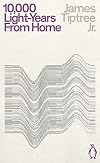
I read this collection of short stories fifty years ago, when I was eighteen. I knew then that it was exceptional. Re-reading it for the first time, fifty years later, I can see that it still is.
Not all of the stories are perfect.
Two of them THE PEACEFULNESS OF VIVYAN and MOTHER IN THE SKY WITH DIAMONDS, didn't work for me at all.
Many of them are funny, with humour that ranges from slapstick to satirical. I'LL BE WAITING FOR YOU WHEN THE SWIMMING POOL IS EMPTY stuck with me. It still show more makes me smile and its sharp-toothed satire has become more relevant rather than less.
But the stories that kept this book alive in my memory are the ones that made me think about what it means to be alien or to be human or to be male or female or neither. Science Fiction is the only mind-expanding drug I've ever needed. I believe that absorbing these stories when I was in my teens and early twenties shaped how I thought about the world.
Four of the fifteen stories in this collection are ones that opened my mind and stayed with me.
The most powerful (and the grimmest) are the stories that start and end this collection: AND I AWOKE AND FOUND ME HERE ON THE COLD HILL'S SIDE about aliens and sex and the ability of human culture to survive contact with the truly different; BEAM US HOME about the hopes of a young man trapped in a bad place. The other two stories are lighter in tone: MAMA COME HOME and HELP. They both feature a CIA Psyops team (although I didn't know what Psyops was when I first read this. Now, with Cambridge Analytica running a psyops campaign to get Brexit through, I'm more familiar with it than I'd like to be.) their both humourous, clever and uplifting. One is a First Contact story with a twist around gender politics and one is about the damage done by colonisation and religion.
I recommend this collection to anyone looking for Science Fiction stories that will make them think, laugh and cry.
Below, I've reviewed each story in the order they appear in the collection.
AND I AWOKE AND FOUND ME HERE ON THE COLD HILL'S SIDE
It must be fifty years since I read this story for the first time. I found it exciting and shocking and irresistibly different - rather like the reaction of the humans in the story to the aliens. The core idea, that our exogamous nature might doom us if aliens arrived, pushing us into the same decline that the Polynesians experienced, etched itself into my memory.
This time around I knew what was coming so I was able to appreciate the well-crafted brutal honesty of the storytelling.
THE SNOWS ARE MELTED, THE SNOWS ARE GONE
This is a bleak story from start to finish. It's a sparsely told post-apocalyptic story.. All action and observation. No interior monologues. Emotions and motivations are left to be guessed at. An empty world. An armless girl who is, nevertheless, hunting. No infodumps. No explanations even. It's a story that's as unforgiving as the world the girl is trying to survive in. It says to the reader: "This is what's happening. Work out for yourself what it means."
And yet... it gets under your skin. The grim practicality. The sweat and toil powered by a small pellet of hope. The determination to overcome limitations. All surrounded by an echoing, lifeless emptiness.
THE PEACEFULNESS OF VIVYAN
I gave up on this halfway through. I couldn't connect with the mystery or the main character.
MAMA COME HOME
This was clever and fun. It was a First Contact story with an ingenious twist that I relished: the casual disembowelling of male dominance by the arrival of beautiful human-looking female aliens who are over eight feet tall and think human males a cute playthings.
It was startling to see a CIA expert in Fake News in a story published in 1973, especially when the story was written by a former CIA agent.
I loved the ingenuity of the ending, It was smart, unexpected, just about plausible and showed that the pen (or at least the video) can be mightier than the sword.
HELP
We're back with the CIA unit from MAMA COME HOME, this time with a different set of aliens and a different analogue showing the catastrophic effect of colonisation on the people being colonised. This is quite subversive stuff. It's entertaining and easy to read but, beneath the surface, it's a muscular attack on the cost of colonialism and a reminder that we not only fail to learn from history but we whitewash it out of existence.
PAINWISE
This was very strange. A sort of thought experiment but about the nature and effect of sensation. Our hero has been altered to feel no pain. He's used to sample worlds on a long-range, long-term mission. He is often damaged and rebuilt but never feels the pain associated with it. He loses the will to live. Wants to return home. Then encounters pleasure-seeking empathic aliens who love his lack of pain and take him away in a spaceship version of a hippy bus. It could have been heaven but this is a Tiptree story so of course that didn't last. Our hero was brought down to earth in a painful way.
FAITHFUL TO THEE, TERRA, IN OUR FASHION
A boisterous, riotously imaginative story about a world where all the planets of the galaxy come together to compete in races. Most of the story feels like a backstage tour of an exotic circus given by a pressured-but-loving-it ringmaster who leads the troubleshooters who wrangle the acts and keep them honest. It's fast, colourful and fun. Under all of that is a more serious idea about the nature of identity and the preservation of a culture under threat. I liked that this idea was revealed as the solution to a tense problem rather than waved as a banner.
THE MAN DOORS SAID HELLO TO
This was whimsical. So whimsical that I have no idea what the point of it was.
THE MAN WHO WALKED HOME
This was a Science Fiction story that I admired but didn't enjoy. It is driven by a clever, science-based 'What if?' question about an experiment that goes wrong and causes global devastation. It's well-written. It turns complicated physics into a first-hand experience. It has a human tragedy at its heart. BUT it spans centuries - too long for it to feel real to me. It left my emotions untouched.
FOREVER TO A HUDSON BAY BLANKET
This was a playful time travel paradox story with a little lighthearted romance thrown in. Much is made of the niceness of the young Canadian man who is the star of this story and, despite the lightheartedness and the romance, it is ultimately his undoing. This is one of the most original meet-cute setups I've ever seen. It has a mix of innocence and lust and zest for life that I'd normally associate with 1940s RomComs.
I'LL BE WAITING FOR YOU WHEN THE SWIMMING POOL IS EMPTY
When I read this fifty years ago, it made me laugh. This time, it only made me smile. Nevertheless, it had stuck in my memory all that time. It's a satirical piece that imagines a privileged young man on his Wanderjahr landing on a blades-and-bows world in the middle of a battle and politely but firmly trying to 'improve' things... while respecting the local culture, of course. It's an object lesson in why the Federation in Star Trek imposed the Prime Directive. The phrase hadn't been coined when this was written but it shouts "Check Your Privilege".
I still have no idea what the title means.
I'M TOO BIG BUT I LOVE TO PLAY
This story thinks BIG about aliens. It imagines an alien so different from us that it initially sees life on planets as tiny pockets of dense anti-entropic energy and becomes fascinated by how they work. This almost non-corporeal being floats a solitary path between stars, amusing itself by playing games of Maxwell's Demon with energy fields. That description was fun in a Hard Science Fiction Thought Experiment way. But Tiptree took it further than that. Much further. Firstly by letting the alien become obsessed with (but not initially good at) copying humans and taking their place. This quickly gets messy both for the alien and for the humans it is playing with. Secondly, by adding an italicised top and tale to the story that I didn't understand the significance of until right at the end when a memorable city was named. THEN, I saw that while I'd been focusing on our impact on the alien, the real story was about the alien's impact on us. It was a stunning idea.
BIRTH OF A SALESMAN
This frenetic story was like watching the Marx Brothers organising a testing and shipping department: chaotic, exotic, filled with action but only funny if slapstick makes you laugh. I'd admired the creativity and the relentless application of Murphy's law but I thought it went on for too long.
MOTHER IN THE SKY WITH DIAMONDS
Nope. This didn't work for me. I felt like it was written in code and I wasn't sure that cracking the code was going to be worth the effort so I skipped it.
BEAM US HOME
This is another one that I remember from fifty years ago. It made me cry then. It still does. I won't spoil the story by talking about the plot except to say that it's about a young man in a bad place who is hugging to himself the unvocalised hope of his generation - that someone would come and take him away from the insane brutality of his world and let him live in somewhere clean and rational where everyone tries to do the right thing - like in Star Trek.
Reading this fifty years ago it felt like a hopeful prayer. I added a mental amen and wondered why everyone didn't see the world this way. Reading it now, it feels soaked in sadness. I also read the final scene differently. Back then I thought 'salvation'. Now, I think 'delusion'. The story hasn't changed but my belief in hopeful prayer as anything other than a necessary emotional relief is long gone. show less
Not all of the stories are perfect.
Two of them THE PEACEFULNESS OF VIVYAN and MOTHER IN THE SKY WITH DIAMONDS, didn't work for me at all.
Many of them are funny, with humour that ranges from slapstick to satirical. I'LL BE WAITING FOR YOU WHEN THE SWIMMING POOL IS EMPTY stuck with me. It still show more makes me smile and its sharp-toothed satire has become more relevant rather than less.
But the stories that kept this book alive in my memory are the ones that made me think about what it means to be alien or to be human or to be male or female or neither. Science Fiction is the only mind-expanding drug I've ever needed. I believe that absorbing these stories when I was in my teens and early twenties shaped how I thought about the world.
Four of the fifteen stories in this collection are ones that opened my mind and stayed with me.
The most powerful (and the grimmest) are the stories that start and end this collection: AND I AWOKE AND FOUND ME HERE ON THE COLD HILL'S SIDE about aliens and sex and the ability of human culture to survive contact with the truly different; BEAM US HOME about the hopes of a young man trapped in a bad place. The other two stories are lighter in tone: MAMA COME HOME and HELP. They both feature a CIA Psyops team (although I didn't know what Psyops was when I first read this. Now, with Cambridge Analytica running a psyops campaign to get Brexit through, I'm more familiar with it than I'd like to be.) their both humourous, clever and uplifting. One is a First Contact story with a twist around gender politics and one is about the damage done by colonisation and religion.
I recommend this collection to anyone looking for Science Fiction stories that will make them think, laugh and cry.
Below, I've reviewed each story in the order they appear in the collection.
AND I AWOKE AND FOUND ME HERE ON THE COLD HILL'S SIDE
It must be fifty years since I read this story for the first time. I found it exciting and shocking and irresistibly different - rather like the reaction of the humans in the story to the aliens. The core idea, that our exogamous nature might doom us if aliens arrived, pushing us into the same decline that the Polynesians experienced, etched itself into my memory.
This time around I knew what was coming so I was able to appreciate the well-crafted brutal honesty of the storytelling.
THE SNOWS ARE MELTED, THE SNOWS ARE GONE
This is a bleak story from start to finish. It's a sparsely told post-apocalyptic story.. All action and observation. No interior monologues. Emotions and motivations are left to be guessed at. An empty world. An armless girl who is, nevertheless, hunting. No infodumps. No explanations even. It's a story that's as unforgiving as the world the girl is trying to survive in. It says to the reader: "This is what's happening. Work out for yourself what it means."
And yet... it gets under your skin. The grim practicality. The sweat and toil powered by a small pellet of hope. The determination to overcome limitations. All surrounded by an echoing, lifeless emptiness.
THE PEACEFULNESS OF VIVYAN
I gave up on this halfway through. I couldn't connect with the mystery or the main character.
MAMA COME HOME
This was clever and fun. It was a First Contact story with an ingenious twist that I relished: the casual disembowelling of male dominance by the arrival of beautiful human-looking female aliens who are over eight feet tall and think human males a cute playthings.
It was startling to see a CIA expert in Fake News in a story published in 1973, especially when the story was written by a former CIA agent.
I loved the ingenuity of the ending, It was smart, unexpected, just about plausible and showed that the pen (or at least the video) can be mightier than the sword.
HELP
We're back with the CIA unit from MAMA COME HOME, this time with a different set of aliens and a different analogue showing the catastrophic effect of colonisation on the people being colonised. This is quite subversive stuff. It's entertaining and easy to read but, beneath the surface, it's a muscular attack on the cost of colonialism and a reminder that we not only fail to learn from history but we whitewash it out of existence.
PAINWISE
This was very strange. A sort of thought experiment but about the nature and effect of sensation. Our hero has been altered to feel no pain. He's used to sample worlds on a long-range, long-term mission. He is often damaged and rebuilt but never feels the pain associated with it. He loses the will to live. Wants to return home. Then encounters pleasure-seeking empathic aliens who love his lack of pain and take him away in a spaceship version of a hippy bus. It could have been heaven but this is a Tiptree story so of course that didn't last. Our hero was brought down to earth in a painful way.
FAITHFUL TO THEE, TERRA, IN OUR FASHION
A boisterous, riotously imaginative story about a world where all the planets of the galaxy come together to compete in races. Most of the story feels like a backstage tour of an exotic circus given by a pressured-but-loving-it ringmaster who leads the troubleshooters who wrangle the acts and keep them honest. It's fast, colourful and fun. Under all of that is a more serious idea about the nature of identity and the preservation of a culture under threat. I liked that this idea was revealed as the solution to a tense problem rather than waved as a banner.
THE MAN DOORS SAID HELLO TO
This was whimsical. So whimsical that I have no idea what the point of it was.
THE MAN WHO WALKED HOME
This was a Science Fiction story that I admired but didn't enjoy. It is driven by a clever, science-based 'What if?' question about an experiment that goes wrong and causes global devastation. It's well-written. It turns complicated physics into a first-hand experience. It has a human tragedy at its heart. BUT it spans centuries - too long for it to feel real to me. It left my emotions untouched.
FOREVER TO A HUDSON BAY BLANKET
This was a playful time travel paradox story with a little lighthearted romance thrown in. Much is made of the niceness of the young Canadian man who is the star of this story and, despite the lightheartedness and the romance, it is ultimately his undoing. This is one of the most original meet-cute setups I've ever seen. It has a mix of innocence and lust and zest for life that I'd normally associate with 1940s RomComs.
I'LL BE WAITING FOR YOU WHEN THE SWIMMING POOL IS EMPTY
When I read this fifty years ago, it made me laugh. This time, it only made me smile. Nevertheless, it had stuck in my memory all that time. It's a satirical piece that imagines a privileged young man on his Wanderjahr landing on a blades-and-bows world in the middle of a battle and politely but firmly trying to 'improve' things... while respecting the local culture, of course. It's an object lesson in why the Federation in Star Trek imposed the Prime Directive. The phrase hadn't been coined when this was written but it shouts "Check Your Privilege".
I still have no idea what the title means.
I'M TOO BIG BUT I LOVE TO PLAY
This story thinks BIG about aliens. It imagines an alien so different from us that it initially sees life on planets as tiny pockets of dense anti-entropic energy and becomes fascinated by how they work. This almost non-corporeal being floats a solitary path between stars, amusing itself by playing games of Maxwell's Demon with energy fields. That description was fun in a Hard Science Fiction Thought Experiment way. But Tiptree took it further than that. Much further. Firstly by letting the alien become obsessed with (but not initially good at) copying humans and taking their place. This quickly gets messy both for the alien and for the humans it is playing with. Secondly, by adding an italicised top and tale to the story that I didn't understand the significance of until right at the end when a memorable city was named. THEN, I saw that while I'd been focusing on our impact on the alien, the real story was about the alien's impact on us. It was a stunning idea.
BIRTH OF A SALESMAN
This frenetic story was like watching the Marx Brothers organising a testing and shipping department: chaotic, exotic, filled with action but only funny if slapstick makes you laugh. I'd admired the creativity and the relentless application of Murphy's law but I thought it went on for too long.
MOTHER IN THE SKY WITH DIAMONDS
Nope. This didn't work for me. I felt like it was written in code and I wasn't sure that cracking the code was going to be worth the effort so I skipped it.
BEAM US HOME
This is another one that I remember from fifty years ago. It made me cry then. It still does. I won't spoil the story by talking about the plot except to say that it's about a young man in a bad place who is hugging to himself the unvocalised hope of his generation - that someone would come and take him away from the insane brutality of his world and let him live in somewhere clean and rational where everyone tries to do the right thing - like in Star Trek.
Reading this fifty years ago it felt like a hopeful prayer. I added a mental amen and wondered why everyone didn't see the world this way. Reading it now, it feels soaked in sadness. I also read the final scene differently. Back then I thought 'salvation'. Now, I think 'delusion'. The story hasn't changed but my belief in hopeful prayer as anything other than a necessary emotional relief is long gone. show less
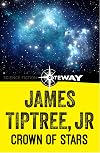
It’s probably long past time I acknowledge Tiptree as one of my favourite genre writers, given I’ve read almost everything she wrote and will happily reread many of her stories. I’d also classify some of her fiction as stone-cold genre classics.
Crown of Stars, a posthumous collection, is an odd book. Especially given how Tiptree died. The contents are a mixture of science fiction and fantasy and, to be honest, the fantasy ones feel more like extended jokes than actual fiction. Not that show more the sf stories are all entirely serious. They are all, however, pretty dark.
Telepathic aliens visit Earth but go away disappointed there are no gods. Poor single mothers give up their babies for adoption in a future where only the super-rich can afford “meat”. Heaven has gone bankrupt so Satan offers it space in Hell. A soldier on battle-drugs is sent to detox but finds a stash of the drugs and breaks out. A young woman is convinced the Earth is male and does her best to attract his interest. The most poignant story, however, has a teenage girl swap lives with herself at seventy, only to discover her family’s wealth had been lost, the USA consists of gated communities but is otherwise lawless, and in her attempt to make her life when she swaps back better, she inadvertently makes it worse.
These are quality stories, although none are perhaps as memorable as Tiptree’s best. ‘The Earth Like a Snake Doth Renew’, which is clearly in conversation with Tiptree’s own ‘The Last Flight of Doctor Ain’, is perhaps the top story here, or at least showcases those elements in her fiction for which she was most admired. To anyone new to Tiptree, I’d suggest starting somewhere else, perhaps her first anthology, Ten Thousand Light-Years from Home, or one of the later best of collection, such as Her Smoke Rose Up Forever, but exploring her oeuvre is certainly worth doing. show less
Crown of Stars, a posthumous collection, is an odd book. Especially given how Tiptree died. The contents are a mixture of science fiction and fantasy and, to be honest, the fantasy ones feel more like extended jokes than actual fiction. Not that show more the sf stories are all entirely serious. They are all, however, pretty dark.
Telepathic aliens visit Earth but go away disappointed there are no gods. Poor single mothers give up their babies for adoption in a future where only the super-rich can afford “meat”. Heaven has gone bankrupt so Satan offers it space in Hell. A soldier on battle-drugs is sent to detox but finds a stash of the drugs and breaks out. A young woman is convinced the Earth is male and does her best to attract his interest. The most poignant story, however, has a teenage girl swap lives with herself at seventy, only to discover her family’s wealth had been lost, the USA consists of gated communities but is otherwise lawless, and in her attempt to make her life when she swaps back better, she inadvertently makes it worse.
These are quality stories, although none are perhaps as memorable as Tiptree’s best. ‘The Earth Like a Snake Doth Renew’, which is clearly in conversation with Tiptree’s own ‘The Last Flight of Doctor Ain’, is perhaps the top story here, or at least showcases those elements in her fiction for which she was most admired. To anyone new to Tiptree, I’d suggest starting somewhere else, perhaps her first anthology, Ten Thousand Light-Years from Home, or one of the later best of collection, such as Her Smoke Rose Up Forever, but exploring her oeuvre is certainly worth doing. show less
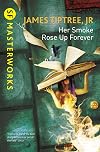
I refuse to call her "James Tiptree, Jr.," a name that tolls off the tongue like mud. Her name was Alice Sheldon. Alice Bradley Sheldon. She's no longer hiding in a genre ruled by masculinity, so we could and should forego the dated sexism, and celebrate her work and her ideas and her mind as they were.
I rarely fall for short stories, so I approached this collection with trepidation, digging through lists of classic sci-fi authors associated with the cyberpunk movement. Her Smoke Rose Up show more Forever wasn't just a pleasant surprise, but a constant state of shock and awe. With a fraction of the word count, Sheldon consistently put her peers to shame, creating believable characters of every gender and background, characters that oozed complexities, insecurities, prejudices, and all the signs of wonderful fiction.
Her Smoke Rose Up Forever, a posthumous (1990) anthology collecting the "best" of Sheldon's work from 1968 to her suicide in 1987, is the only collection of Sheldon's short stories still in print. While I can believe this represents many of her best stories, her later work, no less lauded, is conspicuously absent...:
The unusual mixture of delight and depression this collection instilled in me only makes me hunger for all the stories not represented here. Every single story collected in this best-of is worth remembering on their own merits.
"The Last Flight of Dr. Ain" (1969), originally collected in Warm Worlds and Otherwise (1975). ★★★★½
----------
A knock-outof an introduction to Sheldon's style, "the Last Flight of Dr. Ain" was also her first major success as a writer, being nominated for the 1969 Nebula Award. It's told, somewhat loosely, from the perspective of investigators of the titular professor, with points in time and space shifting as more information comes to light.
Dr. Ain is a biological, a cynical academic frustrated by the narrow, selfish goals of not just his fellow academics, but all of humanity. Foreseeing humans as the cause of a worldwide ecological collapse (e.g., the sixth extinction we're currently instigating), Dr. Ain manufactures a virus easily transmittable between any warm-blooded mammal, but a virus that only effectively kills human hosts. His virus affects nothing else, only the humanity he sees as the enemy of nature.
Dr. Ain's last flight is told in fragments, coldly observed from the data put together by those doomed investigators. As they uncover Dr. Ain's methods and movements to transmit the disease, so does the reader, in a style that has to be read to be believed.
"The Screwfly Solution" (1977), originally collected in Out of the Everywhere and Other Extraordinary Visions (1981). ★★★★★
----------
Among the most enthralling, uncomfortable yet beautiful stories I've ever read, "the Screwfly Solution" is an epistolary tale of a pandemic sweeping the world, causing men (and only men) to become emotionally unstable and violent. We learn through letters and articles how the virus is causing uncontrollable violence of men almost exclusively against women. The world is in an uproar trying to understand this uncontrollable behavior, and much of the story is dedicated to faux-journal articles that capture the style of science writing perfectly, never misusing jargon or overdoing it.
The virus, it seems, doesn't just make men blindly violent and murderous to women -- they don't turn into shambling zombies spuming at the mouth to kill -- but causes them to rationalize their violence, taking the act of victim-blaming to its ultimate conclusion. "She was asking for it," the men unanimously decry, slitting the throats of their loved ones for no reason whatsoever.
It's a brilliant take-down of free will and human instinct that holds up surprisingly well to our current neuroscience. The unfolding of the means of transport for the virus, and what causes the murderous inclinations is worth discovering. This was also one of two stories in the collection originally published under the name "Racoona Sheldon" rather than Tiptree.
A cute side note, I also love this story for featuring an accurate depiction of entomological fieldwork. The references to budworm research at the time (1977) accurately reflect the real scientific discussions in budworm science in the mid-to-late '70s -- discussions I used for my own graduate school research.
"And I Awoke and Found Me Here on the Cold Hill's Side" (1972), originally collected in Ten Thousand Light-Years from Home (1973). ★★★★
----------
First contact has come and gone, and humans are joining alien civilizations among the stars. The relationship between aliens and humanity is, however, unexpected -- they aren't saviors, they aren't villains: they just don't care. They've been through the motions before, and humanity is just another species to them.
We, on the other hand, are *obsessed* with alien life. Beyond celebrity worship, we're eager to join in any way we can, offering our services, doing jobs no one else will do. Alien species, for their part, don't care. They don't warn us we're on an unhealthy path. They don't even really take advantage of our eagerness to please them and fit in. Rather, they just. Don't. Care.
"And I Awoke and Found Me Here on the Cold Hill's Side" is the story of a journalist, eager to get their first glimpse of aliens. Instead, what they get is a depressed man who wasted his life away following the aliens, sexually obsessed with the aliens, who spent years watching others do the same and has come to a cynical revelation that these people aren't friends -- that it's the more powerful civilization raping and destroying us, rather t han vice versa.
An addictive, sad story that reigns in a few ideas and nails them, "And I Awoke..." is also notable for being the earliest story Tiptree wrote in the Rift universe, where she set many of her later '80s stories.
"The Girl Who Was Plugged In" (1973), originally collected in Warm Worlds and Otherwise (1975). ★★★★½
----------
One of the earliest cyberpunk stories published in 1973, and the reason I ever looked into James Tiptree, Jr., "the Girl Who Was Plugged In" is a brilliant look at consumerism-gone-wrong; of the need to worship not gods, but celebrities, taken to its most extreme conclusion.
Advertising is illegal in this future, and celebrities are manufactured to buck this law, inspiring worship to sell the products they're paid to use. Their celebrity status scripted with 24/7 reality TV shows. Many of the celebrities, including our plugged-in girl, are so deeply manufactured that their physical bodies are store-bought, controlled from across the world by a volunteer. The cost for these celebrities is loss of sensory input, and giving complete control of their bodies to the company: They plug into these cybernetic bodies, leaving their real bodies to turn to jelly under corporate's uncaring supervision.
One such celebrity, her real life a history of drugs, physical disabilities and suicide attempts, falls in love on-air, and attempts to escape her shell of an existence using that love.
It's remarkably fitting with the cyberpunk genre, along with other early tales like the Stars My Destination, Do Androids Dream of Electric Sheep?, and Dr. Adder. It also deserves a far wider readership than it has.
"The Man Who Walked Home" (1972), originally collected in Ten Thousand Light-Years fro Home (1973) and Byte Beautiful (1985). ★★★★½
----------
A catastrophe has wiped out our civilization, but over centuries humanity slowly bounces back and even thrives. "The Man Who Walked Home" is a puzzle of a time travel story, made up of fragments of history all centered around the location of the unknown catastrophe. While time marches forward, legends, religions and cities all grow around these brief moments in which a man, barely visible, appears from nothing, falling in the air for mere seconds before vanishing again.
The man is a time traveler, and his brief appearances are his travels back to his time -- to the moment of the catastrophe. It's a bombshell of creativity that was more recently used by Dr. Who (although not quite as well!). Interestingly, the earliest and fuzziest appearances of the man -- the appearances closest to the time of the catastrophe -- paint him as more of a monster, a dragon, rather than a man. It's unclear if there is some physical distortion of the traveler as the catastrophe slowly initiates, piece by piece, or if it's simply the imaginations of tale-tellers.
"And I Have Come Upon This Place by Lost Ways" (1972), originally collected in Warm Worlds and Otherwise (1975). ★★★½
----------
An early-career scientist struggles to make his mark among an intimidating group of peers, all of whom look down on him for his interest in anthropological fieldwork and fairy tales. On an alien world, over a primitive alien civilization, he and his peers quietly collect remotely-sensed data, observing the village and the surrounding mountains. Legend tells of a hidden, technologically-advanced culture somewhere on the highest peak above the nearby village, and it's this that interests only our budding scientist hero.
Effectively throwing his career away to pursue that unscientific belief, he casts off his technological heritage and attempts to climb the mountain on his own, with each step forward being driven by an empty feeling of abandoning his heritage and years of study.
His journey is a sad one -- of course, this is Tiptree. His people abandon him, the village below attempts to kill him, and the only thing guiding him is his desperate need to climb the mountain and validate his beliefs.
While I enjoyed this story as much as any other in the collection, I would say it just isn't particularly memorable, especially compared to those stories sharing themes.
"The Women Men Don't See" (1973), originally collected in Warm Worlds and Otherwise (1975). ★★★★
----------
A brutal takedown of sexism, "the Women Men Don't See" is one of many stories that made it clear James Tiptree, Jr. was either a woman or a feminist too far ahead of his time. (The 'masculinity' writers like Harlan Ellison saw and celebrated in Sheldon's work is bafffling to me.) It's also a far cry from Sheldon's typical sci-fi, with the genre only bleeding in over the last pages.
The story is narrated by a man on holiday, hoping to idle his time away catching fish and being, generally, quite manly in the Yucatan Peninsula. He, along with his bush pilot and two American women, crashland along an obscure sandbar. Stranded for days, the narrator comes to quickly distrust the two women, coming up with increasingly wild hypotheses and conspiracies about who they are, what they do, why they are the way they are (i.e., not feminine).
This is a story of men misunderstanding women, but using a place of power write the histories of women. That these Parsons women aren't driven into hysteria by their plight, but actually seem quite capable of taking care of themselves *and* the males of the story, drives the American man into his own fits of hysteria, desperately clinging to the idea that he's objectively analyzing suspcious, untrustworthy women.
I loved this story, though the twist into science fiction seems to come out of nowhere in the last few pages, and it never quite sat well with me.
"Your Faces, O My Sisters! Your Faces Filled of Light! (1976), originally collected in Out of the Everywhere and Other Extraordinary Visions (1981) and Byte Beautiful (1985). ★★★½
---------
Difficult to read both for its style and messages, "Your Faces, O My Sisters! Your Faces Filled of Light" is another feminist tragedy published not under the Tiptree name, but Raccoona Sheldon. Alternating viewpoints and occasionally dipping into stream-of-consciousness, this is the story of a courier walking along the roads of a post-apocalyptic future. This courier is also just a woman with mental instabilities who's escaped from the hospital where she was being treated. Or abused, depending on your view of her therapies or how her doctors viewed her.
In her mind, she's traveling a world of women, where all she meets are her family There are no men in the world, no concept of harm, even -- only the love between Sisters of like mind, of other Travelers. The narrative repeatedly shifts between her point of view as she travels on the road and encounters more friendly Sisters, and the increasingly-ominous view of those looking for her. The reality of her Sisters is startling in contrast to how she has been seeing the world: Her sisters are men and women, always miserable, untrustworthy. To them, this courier and her journey are just some crazy drug addict's trip -- just a foolish path taken by a foolish girl deserving of whatever harm she draws to herself by being so trusting.
How do you think it ends? With her Sisters caring for a fellow courier? Yeah, right.
"Houston, Houston, Do You Read?" (1976), originally collected in Star Songs of an Old Primate (1978). ★★★★★
----------
"Houston, Houston, Do You Read?" won both the Nebula and Hugo Awads in '76 and '77. Deservedly-so: This is possibly Sheldon's most brilliant take on the future of humanity, and on the ills of masculinity in particular. My favorite from the collection -- indeed, one of the most clever (and transgressive) short stories I've ever read -- this is a dark look at masculinity and leadership.
Three astronauts are rounding the sun on a circumsolar mission, and halfway through it they inexplicably find themselves cut off from communications with Houston. Instead, they're finding a ship just around the corner from them populated by what sounds like nothing but Australian women. The American astronauts know of no international or Australian missions, much less any that would be led exclusively by women, so the sudden change to their realities is nearly impossible to grasp.
This story is worth discovering on your own, so the next two paragraphs deserve a spoiler warning.
The teams eventually agree to meet, to come aboard the mystery ship, where we learn our three astronauts have somehow appeared 300 years into the future. In those 300 years, a virus has devastated all of Earth, wiping out men through sterility. Only a small colony of cloned women keep humanity going, although without much visible progress since the astronaut's time.
These three highly-trained, highly-educated men -- these three objective scientists -- break down at these prospects. They can''t comprehend, and even refuse to acknowledge, that a women-only world could mean anything. Humanity is progress: Competition: Social order dictated by men and innovation. That humanity is currently living in a utopia means nothing when there aren't men -- or God, or Jesus -- to educate and research and compete and fight.
"Houston, Houston, Do You Read?" was devastating, brutal, and utterly brilliant. One of the finest works of short fiction in the 20th century. Read it.
"With Delicate Mad Hands" (1981), originally collected in Out of the Everywhere and Other Extraordinary Visions (1981) and Byte Beautiful (1985). ★★★★
----------
Cold Pig and her story are unforgettable. I can't say "With Delicate Mad Hands" was a favorite of mine, but it's nearly impossible to get it out of my head. What a vicious story.
CP was born with nearly impossible dreams: Orphaned -- her mom died in childbirth and her dad, a politician, wanted nothing to do with it -- and with a physical disability that earned her the nickname "Cold Pig," CP's goal is to travel the stars on long-term flights. She lives a quiet, depressing life, defined primarily by abuse and loneliness, with only the voice of her dreams to keep her company.
Dedicating her life to traveling among the stars, she finally earns a career in long-term space travel chiefly because of her appearance -- her superiors think her pig-like nose will mean she'll be subservient to her male peers, and won't incite fights between men vying for her attention. Instead, she'll simply serve as a sexual and physical slave to the crews she works with.
The voice in her head that pushed her towards this dream never leaves her, however, and eventually she works for a captain that pushes her too far: He rapes, beats, and otherwise abuses her in every imaginable way until she snaps, killing the crew and setting off on a suicide mission into the unknown, with only the voice to keep her company and guide her path.
Somewhat miraculously, there is more to the voice than meets the eye, and Cold Pig's story winds down with a lot of tragedy and love.
It's as wonderful as any other Sheldon masterpiece on the surface, but I personally had issues with the pacing. "With Delicate Mad Hands" is too long, with scenes and ideas repeating themselves far too often before any gears can shift.
"A Momentary Taste of Being" (1975), originally collected in Star Songs of an Old Primate (1978). ★★★★½
----------
Like many of Sheldon's stories, 'a Momentary Taste of Being' is about the downfall of humanity. Also like much of her work, it comes with an uncomfortable twist.
Among the longest stories Sheldon wrote, this is a 90-page space odyssey among the last surviving remnants of humanity as they drift through space. Their decades-long mission is to find a suitable replacement for Earth, which lies decaying far behind them, with colony ships awaiting the hopeful discovery of a new home.
In this story, we've found a suitable planet at last -- the final option for a crew anxious to settle down and stop searching, to call their families to join them in a new, wondrous paradise -- but questions arise of safety, and of the other species that inhabit the planet already. Only one member of the surface crew returned, the others, she claims, opting to stay and start their lives on this perfect new world. To the rest of the crew, their reactions are an uncomfortable mixture of skepticism and desperation to believe: She -- Lory -- has no reason to lie to them, and her enthusiasm is genuine, but the idea that the rest of the crew remained behind without supplies just defeats all logic, particularly when Lory appears to have edited their footage from the surface.
It doesn't help that Lory's brought back some native plantlife for no reason at all, and seems anxious for the rest of the explorers to study it, or at least get a momentary glimpse of it.
"A Momentary Taste of Being" is such a fascinating, brilliant and original story. Every page oozes with the desperation of the crew, of the crumbling logic and objectivity that the survival of their crew -- and the entire human race -- rely on.
"We Who Stole the Dream" (1978), originally collected in Out of the Everywhere and Other Extraordinary Visions (1981). ★★★½
----------
Another early Rift story, "We Who Stole the Dream" is another fantastical sci-fi adventure, of humans and aliens at war. The "We" of the title refers to the Joliani, a humanoid alien species enslaved by mankind as physical and sexual servants. The species collectively dream of escaping under the thumb of humanity's (i.e., masculinity's) gross self-obsession and need to fuck everything in sight -- you know, for progress.
The Joliani, weak and abused (with some parallels to Native American subjugation), plot to fight back against their rapists, stealing a ship called the Dream. Using the coordinates for their homeworld -- now entering into mythology due to its distance and time away -- they travel back over generations to find the original Joliani are not old strong-willed, powerful, and brilliant, but just as blood-thirsty and hungry to fuck as humanity is and was.
"...Dream" is touching, enthralling -- depressing as ever -- but it does remind me that I prefer Sheldon's harder sci-fi.
"Her Smoke Rose Up Forever" (1974), originally collected in Star Songs of an Old Primate (1978). ★★★
----------
A record of insecurities Sheldon had about her own accomplishments against her heritage. Also a time travel story, where physical, sexual abuse is the cause of the time travel abilities. This was a challenging, stream-of-consciousness story, not one I took much from, and a difficult one to gauge without Michael Swanwick's 2004 introduction and access to the Internet explaining what I just read. I'm conflicted; this is one to revisit.
"Love is the Plan the Plan is Death" (1973), originally collected in Warm Worlds and Otherwise (1975) and Byte Beautiful (1985). ★★★½
----------
Fate and free will are again Sheldon's toys in "Love is the Plan the Plan is Death." An unusual story of the fantastic (and a difficult one to describe), "Love..." deviates from Sheldon's typical style by focusing on alien species and alien perspectives as they just start to evolve self-awareness and language. There's no humanity in this tale, not even on the edges.
"The Plan" of the title is the mating rituals of the alien species, with Love being the goal of free will, and Death the ultimatum handed by fate. The species in this tale are social critters, who want to meet and love others, to grow families, but their reactions to seeing their own species are themselves uncontrollable, based on the maturity of the individual. As the aliens age, their fur changes from color, with red or black fur initiating uncontrollable feelings of love or a need to devour. The narrating alien of this story is conscious of these urges, and attempts to desperately overcome her own vile, nonsensical instincts as she raises a child.
Considering this story is in this collect by this particular author, you probably know it can't end well.
"On the Last Afternoon" (1972), originally collected in Warm Worlds and Otherwise (1975). ★★★½
----------
Thirty years after crashlanding on an alien shore, human survivors have built a successful -- barely -- colony along the shore. Their farms and homes are rooted in an unusual area, an area that had been cleared before, around the time of their crashlanding. The reason for this clearing, for this area being so suitable for humans, is largely unknown, although the colony's leader has his ideas which prove true.
This is an unusual story of miscommunication between people. The leader refers to the noion, a creature or artifact found buried underground that telepathically speaks to him and only him. It's likely he's only speaking to himself, but, given a certain degree of willpower and prayer, the noion does seem to respond and occasionally help their colony survive harsh conditions.
A monstrous, lobsterlike species uses the colony's homelands for a mating ground roughly every 30 years -- hence the clearing earlier. This story is about their return, about the colonists struggles to accept it and each other, about the leader's communication with the noion to try to save both the monsters and the colonists.
This is a Tiptree tale. Nothing quite works out well for anyone.
Interesting, but not a favorite. The lobstrosities' mating habits are described in detail, and are utterly disturbing given their bulk. Like praying mantises wearing fat suits, both sexes suicidal and bloodthirsty.
"She Waits for All Men Born" (1976), originally collected in Star Songs of an Old Primate (1978). ★★★½
----------
Post-apocalyptic villages, radiation has led to deformities among people desperately trying to control their genes and survive. The ensure survival, settlements typically kill any babies born with physiological deformities due to the extra resources required to take care of them. One blind girl lives, however, and with her blindness comes other unseen mutations. She ages slowly, holding powers beyond her peers that don't manifest themselves until her late puberty: Powers of life and death over all living beings. Simply a look from her dead eyes can kill entire armies or cities.
She also has an insatiable desire for companionship with people who distrust her every move, simply because she's different.
"She Waits for All Men Born" lacks the nuance of Sheldon's most memorable stories, but it's still a great read, and a worthwhile addition to the collection.
"Slow Music" (1980), originally collected in Out of the Everywhere and Other Extraordinary Visions (1981). ★★★★
----------
A long and complicated story, but also one emanating a sad sort of peace, "Slow Music" was the last story Tiptree worked on before the unveiling of Alice B. Sheldon. We see only fragments of a post-apocalyptic world, where sex and reproduction are uncommon, chiefly arranged. The last remaining people tend to rely on pills to initiate sexual attraction, and companions form their relationships more or less without that interplay of domination.
At least, I think so. "Slow Music" really is a story of fragments, with little explained. The world of the River, of conniving, talking animals, of Jakko and Peachthief organizing a future family life and traveling towards or along the River -- a world where the dead can be communed with at certain points of the River -- is often an abstruse world.
A young man, Jakko, is on a spiritual journey to commune with his father's spirit. He meets a young woman, Peachthief, who has tossed aside a communal life to live isolated with her animal friends. Their relationship blossoms over an unusual twisting of sexual norms: The man is hardly masculine, only feeling our typical ideas of masculinity when on the pills or coming close to death -- another twisted aphrodisiac typical of Sheldon's writing. Peachthief, as well, is oddly detached from her sexuality and the expectations society places on her, wanting to live alone with her animals, and, if possible, raise a child on her own in a world without children.
A calm story worthy of meditation and re-reading, I had a hard time keeping up with "Slow Music," but its elements show the best of Sheldon.
"And So On, and So On" (1971), originally collected in Star Songs of an Old Primate (1978). ★★★
----------
A pretty standard sci-fi short story, which is all the more surprising for Sheldon. "And So On, and So On" is a brief four pages, mostly comprised of dialogue between passengers traveling through a wormhole. Older travelers mourn the younger generations, who are seemingly never good enough. The younger travelers are fascinated by the world outside, forever looping, forever repeating, forever being spoken down to by the same older generation. It's a clever idea that doesn't quite come out in its brief length.
----------
Her stories are worth reading not just as classic genre fiction, but as classic literature. It's important that we don't forget the name Tiptree, but we should always remember exactly what that name means for sci-fi, for LGBTQ, for feminism and equal rights, and for the world of literature as its own beast. Read this collection, then hunt obsessively for her many out-of-print collections, read James Tiptree, Jr. and Raccoona Sheldon and all the work of Alice B. Sheldon. She was a rare beacon of brilliance and compassion, an odd mixture of transgressive frustrations and scientific objectivity: Her observations on humanity, though cynical, have proved all too true.
* Also missing is the single original story from Byte Beautiful (1985), otherwise collecting previously-published tales, and any of the 'uncollected' stories found in Meet Me at Infinity (2000), a posthumous collection of her most obscure work and non-fiction. show less
I rarely fall for short stories, so I approached this collection with trepidation, digging through lists of classic sci-fi authors associated with the cyberpunk movement. Her Smoke Rose Up show more Forever wasn't just a pleasant surprise, but a constant state of shock and awe. With a fraction of the word count, Sheldon consistently put her peers to shame, creating believable characters of every gender and background, characters that oozed complexities, insecurities, prejudices, and all the signs of wonderful fiction.
Her Smoke Rose Up Forever, a posthumous (1990) anthology collecting the "best" of Sheldon's work from 1968 to her suicide in 1987, is the only collection of Sheldon's short stories still in print. While I can believe this represents many of her best stories, her later work, no less lauded, is conspicuously absent...:
- Ten Thousand Light-Years from Home (1973): 2 of 15 stories included...
- Warm Worlds and Otherwise (1975): 6 of 12 stories...
- Star Songs of an Old Primate (1978): 5 of 7 stories...
- Out of the Everywhere and Other Extraordinary Visions (1981): 5 of 10 stories...
- Byte Beautiful (1985): 0 of 1 stories...*
- Tales of the Quintana Roo (1986): 0 of 3 stories...
- The Starry Rift (1986): 0 of 5 stories...
- Crown of Stars (1988): 0 of 10 stories...
- Meet Me at Infinity (2000): 0 of 8 stories...*
The unusual mixture of delight and depression this collection instilled in me only makes me hunger for all the stories not represented here. Every single story collected in this best-of is worth remembering on their own merits.
"The Last Flight of Dr. Ain" (1969), originally collected in Warm Worlds and Otherwise (1975). ★★★★½
----------
A knock-outof an introduction to Sheldon's style, "the Last Flight of Dr. Ain" was also her first major success as a writer, being nominated for the 1969 Nebula Award. It's told, somewhat loosely, from the perspective of investigators of the titular professor, with points in time and space shifting as more information comes to light.
Dr. Ain is a biological, a cynical academic frustrated by the narrow, selfish goals of not just his fellow academics, but all of humanity. Foreseeing humans as the cause of a worldwide ecological collapse (e.g., the sixth extinction we're currently instigating), Dr. Ain manufactures a virus easily transmittable between any warm-blooded mammal, but a virus that only effectively kills human hosts. His virus affects nothing else, only the humanity he sees as the enemy of nature.
Dr. Ain's last flight is told in fragments, coldly observed from the data put together by those doomed investigators. As they uncover Dr. Ain's methods and movements to transmit the disease, so does the reader, in a style that has to be read to be believed.
"The Screwfly Solution" (1977), originally collected in Out of the Everywhere and Other Extraordinary Visions (1981). ★★★★★
----------
Among the most enthralling, uncomfortable yet beautiful stories I've ever read, "the Screwfly Solution" is an epistolary tale of a pandemic sweeping the world, causing men (and only men) to become emotionally unstable and violent. We learn through letters and articles how the virus is causing uncontrollable violence of men almost exclusively against women. The world is in an uproar trying to understand this uncontrollable behavior, and much of the story is dedicated to faux-journal articles that capture the style of science writing perfectly, never misusing jargon or overdoing it.
The virus, it seems, doesn't just make men blindly violent and murderous to women -- they don't turn into shambling zombies spuming at the mouth to kill -- but causes them to rationalize their violence, taking the act of victim-blaming to its ultimate conclusion. "She was asking for it," the men unanimously decry, slitting the throats of their loved ones for no reason whatsoever.
It's a brilliant take-down of free will and human instinct that holds up surprisingly well to our current neuroscience. The unfolding of the means of transport for the virus, and what causes the murderous inclinations is worth discovering. This was also one of two stories in the collection originally published under the name "Racoona Sheldon" rather than Tiptree.
A cute side note, I also love this story for featuring an accurate depiction of entomological fieldwork. The references to budworm research at the time (1977) accurately reflect the real scientific discussions in budworm science in the mid-to-late '70s -- discussions I used for my own graduate school research.
"And I Awoke and Found Me Here on the Cold Hill's Side" (1972), originally collected in Ten Thousand Light-Years from Home (1973). ★★★★
----------
First contact has come and gone, and humans are joining alien civilizations among the stars. The relationship between aliens and humanity is, however, unexpected -- they aren't saviors, they aren't villains: they just don't care. They've been through the motions before, and humanity is just another species to them.
We, on the other hand, are *obsessed* with alien life. Beyond celebrity worship, we're eager to join in any way we can, offering our services, doing jobs no one else will do. Alien species, for their part, don't care. They don't warn us we're on an unhealthy path. They don't even really take advantage of our eagerness to please them and fit in. Rather, they just. Don't. Care.
"And I Awoke and Found Me Here on the Cold Hill's Side" is the story of a journalist, eager to get their first glimpse of aliens. Instead, what they get is a depressed man who wasted his life away following the aliens, sexually obsessed with the aliens, who spent years watching others do the same and has come to a cynical revelation that these people aren't friends -- that it's the more powerful civilization raping and destroying us, rather t han vice versa.
An addictive, sad story that reigns in a few ideas and nails them, "And I Awoke..." is also notable for being the earliest story Tiptree wrote in the Rift universe, where she set many of her later '80s stories.
"The Girl Who Was Plugged In" (1973), originally collected in Warm Worlds and Otherwise (1975). ★★★★½
----------
One of the earliest cyberpunk stories published in 1973, and the reason I ever looked into James Tiptree, Jr., "the Girl Who Was Plugged In" is a brilliant look at consumerism-gone-wrong; of the need to worship not gods, but celebrities, taken to its most extreme conclusion.
Advertising is illegal in this future, and celebrities are manufactured to buck this law, inspiring worship to sell the products they're paid to use. Their celebrity status scripted with 24/7 reality TV shows. Many of the celebrities, including our plugged-in girl, are so deeply manufactured that their physical bodies are store-bought, controlled from across the world by a volunteer. The cost for these celebrities is loss of sensory input, and giving complete control of their bodies to the company: They plug into these cybernetic bodies, leaving their real bodies to turn to jelly under corporate's uncaring supervision.
One such celebrity, her real life a history of drugs, physical disabilities and suicide attempts, falls in love on-air, and attempts to escape her shell of an existence using that love.
It's remarkably fitting with the cyberpunk genre, along with other early tales like the Stars My Destination, Do Androids Dream of Electric Sheep?, and Dr. Adder. It also deserves a far wider readership than it has.
"The Man Who Walked Home" (1972), originally collected in Ten Thousand Light-Years fro Home (1973) and Byte Beautiful (1985). ★★★★½
----------
A catastrophe has wiped out our civilization, but over centuries humanity slowly bounces back and even thrives. "The Man Who Walked Home" is a puzzle of a time travel story, made up of fragments of history all centered around the location of the unknown catastrophe. While time marches forward, legends, religions and cities all grow around these brief moments in which a man, barely visible, appears from nothing, falling in the air for mere seconds before vanishing again.
The man is a time traveler, and his brief appearances are his travels back to his time -- to the moment of the catastrophe. It's a bombshell of creativity that was more recently used by Dr. Who (although not quite as well!). Interestingly, the earliest and fuzziest appearances of the man -- the appearances closest to the time of the catastrophe -- paint him as more of a monster, a dragon, rather than a man. It's unclear if there is some physical distortion of the traveler as the catastrophe slowly initiates, piece by piece, or if it's simply the imaginations of tale-tellers.
"And I Have Come Upon This Place by Lost Ways" (1972), originally collected in Warm Worlds and Otherwise (1975). ★★★½
----------
An early-career scientist struggles to make his mark among an intimidating group of peers, all of whom look down on him for his interest in anthropological fieldwork and fairy tales. On an alien world, over a primitive alien civilization, he and his peers quietly collect remotely-sensed data, observing the village and the surrounding mountains. Legend tells of a hidden, technologically-advanced culture somewhere on the highest peak above the nearby village, and it's this that interests only our budding scientist hero.
Effectively throwing his career away to pursue that unscientific belief, he casts off his technological heritage and attempts to climb the mountain on his own, with each step forward being driven by an empty feeling of abandoning his heritage and years of study.
His journey is a sad one -- of course, this is Tiptree. His people abandon him, the village below attempts to kill him, and the only thing guiding him is his desperate need to climb the mountain and validate his beliefs.
While I enjoyed this story as much as any other in the collection, I would say it just isn't particularly memorable, especially compared to those stories sharing themes.
"The Women Men Don't See" (1973), originally collected in Warm Worlds and Otherwise (1975). ★★★★
----------
A brutal takedown of sexism, "the Women Men Don't See" is one of many stories that made it clear James Tiptree, Jr. was either a woman or a feminist too far ahead of his time. (The 'masculinity' writers like Harlan Ellison saw and celebrated in Sheldon's work is bafffling to me.) It's also a far cry from Sheldon's typical sci-fi, with the genre only bleeding in over the last pages.
The story is narrated by a man on holiday, hoping to idle his time away catching fish and being, generally, quite manly in the Yucatan Peninsula. He, along with his bush pilot and two American women, crashland along an obscure sandbar. Stranded for days, the narrator comes to quickly distrust the two women, coming up with increasingly wild hypotheses and conspiracies about who they are, what they do, why they are the way they are (i.e., not feminine).
This is a story of men misunderstanding women, but using a place of power write the histories of women. That these Parsons women aren't driven into hysteria by their plight, but actually seem quite capable of taking care of themselves *and* the males of the story, drives the American man into his own fits of hysteria, desperately clinging to the idea that he's objectively analyzing suspcious, untrustworthy women.
I loved this story, though the twist into science fiction seems to come out of nowhere in the last few pages, and it never quite sat well with me.
"Your Faces, O My Sisters! Your Faces Filled of Light! (1976), originally collected in Out of the Everywhere and Other Extraordinary Visions (1981) and Byte Beautiful (1985). ★★★½
---------
Difficult to read both for its style and messages, "Your Faces, O My Sisters! Your Faces Filled of Light" is another feminist tragedy published not under the Tiptree name, but Raccoona Sheldon. Alternating viewpoints and occasionally dipping into stream-of-consciousness, this is the story of a courier walking along the roads of a post-apocalyptic future. This courier is also just a woman with mental instabilities who's escaped from the hospital where she was being treated. Or abused, depending on your view of her therapies or how her doctors viewed her.
In her mind, she's traveling a world of women, where all she meets are her family There are no men in the world, no concept of harm, even -- only the love between Sisters of like mind, of other Travelers. The narrative repeatedly shifts between her point of view as she travels on the road and encounters more friendly Sisters, and the increasingly-ominous view of those looking for her. The reality of her Sisters is startling in contrast to how she has been seeing the world: Her sisters are men and women, always miserable, untrustworthy. To them, this courier and her journey are just some crazy drug addict's trip -- just a foolish path taken by a foolish girl deserving of whatever harm she draws to herself by being so trusting.
How do you think it ends? With her Sisters caring for a fellow courier? Yeah, right.
"Houston, Houston, Do You Read?" (1976), originally collected in Star Songs of an Old Primate (1978). ★★★★★
----------
"Houston, Houston, Do You Read?" won both the Nebula and Hugo Awads in '76 and '77. Deservedly-so: This is possibly Sheldon's most brilliant take on the future of humanity, and on the ills of masculinity in particular. My favorite from the collection -- indeed, one of the most clever (and transgressive) short stories I've ever read -- this is a dark look at masculinity and leadership.
Three astronauts are rounding the sun on a circumsolar mission, and halfway through it they inexplicably find themselves cut off from communications with Houston. Instead, they're finding a ship just around the corner from them populated by what sounds like nothing but Australian women. The American astronauts know of no international or Australian missions, much less any that would be led exclusively by women, so the sudden change to their realities is nearly impossible to grasp.
This story is worth discovering on your own, so the next two paragraphs deserve a spoiler warning.
The teams eventually agree to meet, to come aboard the mystery ship, where we learn our three astronauts have somehow appeared 300 years into the future. In those 300 years, a virus has devastated all of Earth, wiping out men through sterility. Only a small colony of cloned women keep humanity going, although without much visible progress since the astronaut's time.
These three highly-trained, highly-educated men -- these three objective scientists -- break down at these prospects. They can''t comprehend, and even refuse to acknowledge, that a women-only world could mean anything. Humanity is progress: Competition: Social order dictated by men and innovation. That humanity is currently living in a utopia means nothing when there aren't men -- or God, or Jesus -- to educate and research and compete and fight.
"Houston, Houston, Do You Read?" was devastating, brutal, and utterly brilliant. One of the finest works of short fiction in the 20th century. Read it.
"With Delicate Mad Hands" (1981), originally collected in Out of the Everywhere and Other Extraordinary Visions (1981) and Byte Beautiful (1985). ★★★★
----------
Cold Pig and her story are unforgettable. I can't say "With Delicate Mad Hands" was a favorite of mine, but it's nearly impossible to get it out of my head. What a vicious story.
CP was born with nearly impossible dreams: Orphaned -- her mom died in childbirth and her dad, a politician, wanted nothing to do with it -- and with a physical disability that earned her the nickname "Cold Pig," CP's goal is to travel the stars on long-term flights. She lives a quiet, depressing life, defined primarily by abuse and loneliness, with only the voice of her dreams to keep her company.
Dedicating her life to traveling among the stars, she finally earns a career in long-term space travel chiefly because of her appearance -- her superiors think her pig-like nose will mean she'll be subservient to her male peers, and won't incite fights between men vying for her attention. Instead, she'll simply serve as a sexual and physical slave to the crews she works with.
The voice in her head that pushed her towards this dream never leaves her, however, and eventually she works for a captain that pushes her too far: He rapes, beats, and otherwise abuses her in every imaginable way until she snaps, killing the crew and setting off on a suicide mission into the unknown, with only the voice to keep her company and guide her path.
Somewhat miraculously, there is more to the voice than meets the eye, and Cold Pig's story winds down with a lot of tragedy and love.
It's as wonderful as any other Sheldon masterpiece on the surface, but I personally had issues with the pacing. "With Delicate Mad Hands" is too long, with scenes and ideas repeating themselves far too often before any gears can shift.
"A Momentary Taste of Being" (1975), originally collected in Star Songs of an Old Primate (1978). ★★★★½
----------
Like many of Sheldon's stories, 'a Momentary Taste of Being' is about the downfall of humanity. Also like much of her work, it comes with an uncomfortable twist.
Among the longest stories Sheldon wrote, this is a 90-page space odyssey among the last surviving remnants of humanity as they drift through space. Their decades-long mission is to find a suitable replacement for Earth, which lies decaying far behind them, with colony ships awaiting the hopeful discovery of a new home.
In this story, we've found a suitable planet at last -- the final option for a crew anxious to settle down and stop searching, to call their families to join them in a new, wondrous paradise -- but questions arise of safety, and of the other species that inhabit the planet already. Only one member of the surface crew returned, the others, she claims, opting to stay and start their lives on this perfect new world. To the rest of the crew, their reactions are an uncomfortable mixture of skepticism and desperation to believe: She -- Lory -- has no reason to lie to them, and her enthusiasm is genuine, but the idea that the rest of the crew remained behind without supplies just defeats all logic, particularly when Lory appears to have edited their footage from the surface.
It doesn't help that Lory's brought back some native plantlife for no reason at all, and seems anxious for the rest of the explorers to study it, or at least get a momentary glimpse of it.
"A Momentary Taste of Being" is such a fascinating, brilliant and original story. Every page oozes with the desperation of the crew, of the crumbling logic and objectivity that the survival of their crew -- and the entire human race -- rely on.
"We Who Stole the Dream" (1978), originally collected in Out of the Everywhere and Other Extraordinary Visions (1981). ★★★½
----------
Another early Rift story, "We Who Stole the Dream" is another fantastical sci-fi adventure, of humans and aliens at war. The "We" of the title refers to the Joliani, a humanoid alien species enslaved by mankind as physical and sexual servants. The species collectively dream of escaping under the thumb of humanity's (i.e., masculinity's) gross self-obsession and need to fuck everything in sight -- you know, for progress.
The Joliani, weak and abused (with some parallels to Native American subjugation), plot to fight back against their rapists, stealing a ship called the Dream. Using the coordinates for their homeworld -- now entering into mythology due to its distance and time away -- they travel back over generations to find the original Joliani are not old strong-willed, powerful, and brilliant, but just as blood-thirsty and hungry to fuck as humanity is and was.
"...Dream" is touching, enthralling -- depressing as ever -- but it does remind me that I prefer Sheldon's harder sci-fi.
"Her Smoke Rose Up Forever" (1974), originally collected in Star Songs of an Old Primate (1978). ★★★
----------
A record of insecurities Sheldon had about her own accomplishments against her heritage. Also a time travel story, where physical, sexual abuse is the cause of the time travel abilities. This was a challenging, stream-of-consciousness story, not one I took much from, and a difficult one to gauge without Michael Swanwick's 2004 introduction and access to the Internet explaining what I just read. I'm conflicted; this is one to revisit.
"Love is the Plan the Plan is Death" (1973), originally collected in Warm Worlds and Otherwise (1975) and Byte Beautiful (1985). ★★★½
----------
Fate and free will are again Sheldon's toys in "Love is the Plan the Plan is Death." An unusual story of the fantastic (and a difficult one to describe), "Love..." deviates from Sheldon's typical style by focusing on alien species and alien perspectives as they just start to evolve self-awareness and language. There's no humanity in this tale, not even on the edges.
"The Plan" of the title is the mating rituals of the alien species, with Love being the goal of free will, and Death the ultimatum handed by fate. The species in this tale are social critters, who want to meet and love others, to grow families, but their reactions to seeing their own species are themselves uncontrollable, based on the maturity of the individual. As the aliens age, their fur changes from color, with red or black fur initiating uncontrollable feelings of love or a need to devour. The narrating alien of this story is conscious of these urges, and attempts to desperately overcome her own vile, nonsensical instincts as she raises a child.
Considering this story is in this collect by this particular author, you probably know it can't end well.
"On the Last Afternoon" (1972), originally collected in Warm Worlds and Otherwise (1975). ★★★½
----------
Thirty years after crashlanding on an alien shore, human survivors have built a successful -- barely -- colony along the shore. Their farms and homes are rooted in an unusual area, an area that had been cleared before, around the time of their crashlanding. The reason for this clearing, for this area being so suitable for humans, is largely unknown, although the colony's leader has his ideas which prove true.
This is an unusual story of miscommunication between people. The leader refers to the noion, a creature or artifact found buried underground that telepathically speaks to him and only him. It's likely he's only speaking to himself, but, given a certain degree of willpower and prayer, the noion does seem to respond and occasionally help their colony survive harsh conditions.
A monstrous, lobsterlike species uses the colony's homelands for a mating ground roughly every 30 years -- hence the clearing earlier. This story is about their return, about the colonists struggles to accept it and each other, about the leader's communication with the noion to try to save both the monsters and the colonists.
This is a Tiptree tale. Nothing quite works out well for anyone.
Interesting, but not a favorite. The lobstrosities' mating habits are described in detail, and are utterly disturbing given their bulk. Like praying mantises wearing fat suits, both sexes suicidal and bloodthirsty.
"She Waits for All Men Born" (1976), originally collected in Star Songs of an Old Primate (1978). ★★★½
----------
Post-apocalyptic villages, radiation has led to deformities among people desperately trying to control their genes and survive. The ensure survival, settlements typically kill any babies born with physiological deformities due to the extra resources required to take care of them. One blind girl lives, however, and with her blindness comes other unseen mutations. She ages slowly, holding powers beyond her peers that don't manifest themselves until her late puberty: Powers of life and death over all living beings. Simply a look from her dead eyes can kill entire armies or cities.
She also has an insatiable desire for companionship with people who distrust her every move, simply because she's different.
"She Waits for All Men Born" lacks the nuance of Sheldon's most memorable stories, but it's still a great read, and a worthwhile addition to the collection.
"Slow Music" (1980), originally collected in Out of the Everywhere and Other Extraordinary Visions (1981). ★★★★
----------
A long and complicated story, but also one emanating a sad sort of peace, "Slow Music" was the last story Tiptree worked on before the unveiling of Alice B. Sheldon. We see only fragments of a post-apocalyptic world, where sex and reproduction are uncommon, chiefly arranged. The last remaining people tend to rely on pills to initiate sexual attraction, and companions form their relationships more or less without that interplay of domination.
At least, I think so. "Slow Music" really is a story of fragments, with little explained. The world of the River, of conniving, talking animals, of Jakko and Peachthief organizing a future family life and traveling towards or along the River -- a world where the dead can be communed with at certain points of the River -- is often an abstruse world.
A young man, Jakko, is on a spiritual journey to commune with his father's spirit. He meets a young woman, Peachthief, who has tossed aside a communal life to live isolated with her animal friends. Their relationship blossoms over an unusual twisting of sexual norms: The man is hardly masculine, only feeling our typical ideas of masculinity when on the pills or coming close to death -- another twisted aphrodisiac typical of Sheldon's writing. Peachthief, as well, is oddly detached from her sexuality and the expectations society places on her, wanting to live alone with her animals, and, if possible, raise a child on her own in a world without children.
A calm story worthy of meditation and re-reading, I had a hard time keeping up with "Slow Music," but its elements show the best of Sheldon.
"And So On, and So On" (1971), originally collected in Star Songs of an Old Primate (1978). ★★★
----------
A pretty standard sci-fi short story, which is all the more surprising for Sheldon. "And So On, and So On" is a brief four pages, mostly comprised of dialogue between passengers traveling through a wormhole. Older travelers mourn the younger generations, who are seemingly never good enough. The younger travelers are fascinated by the world outside, forever looping, forever repeating, forever being spoken down to by the same older generation. It's a clever idea that doesn't quite come out in its brief length.
----------
Her stories are worth reading not just as classic genre fiction, but as classic literature. It's important that we don't forget the name Tiptree, but we should always remember exactly what that name means for sci-fi, for LGBTQ, for feminism and equal rights, and for the world of literature as its own beast. Read this collection, then hunt obsessively for her many out-of-print collections, read James Tiptree, Jr. and Raccoona Sheldon and all the work of Alice B. Sheldon. She was a rare beacon of brilliance and compassion, an odd mixture of transgressive frustrations and scientific objectivity: Her observations on humanity, though cynical, have proved all too true.
* Also missing is the single original story from Byte Beautiful (1985), otherwise collecting previously-published tales, and any of the 'uncollected' stories found in Meet Me at Infinity (2000), a posthumous collection of her most obscure work and non-fiction. show less
Lists
Awards


You May Also Like


Associated Authors
Statistics
- Works
- 122
- Also by
- 172
- Members
- 6,915
- Popularity
- #3,532
- Rating
- 3.9
- Reviews
- 157
- ISBNs
- 115
- Languages
- 13
- Favorited
- 56

