
Cordwainer Smith (1913–1966)
Author of The Rediscovery of Man
About the Author
Disambiguation Notice:
Cordwainer Smith is the pseudonym of Paul Myron Anthony Linebarger. He also used "Carmichael Smith" (for his political thriller Atomsk), "Anthony Bearden" (for his poetry) and "Felix C. Forrest" (for the novels Ria and Carola).
Image credit: Cordwainer Smith (Paul Myron Anthony Linebarger), 1913-1966, courtesy of his daughter @ The Remarkable Science Fiction of Cordwainer Smith
Series
Works by Cordwainer Smith
The Rediscovery of Man: The Complete Short Science Fiction of Cordwainer Smith (1993) 601 copies, 11 reviews
Les seigneurs de l'instrumentalité, tome 3 : La mère Hitton et ses chatons et autres récits (1980) 18 copies, 1 review
Les seigneurs de l'instrumentalité, tome 2 : Le sous peuple la quête des Trois mondes (1980) 12 copies, 1 review
Il ciclo della strumentalita 4 copies
Store Of Heart's Desire 4 copies
Short Fiction 3 copies
The Boy Who Bought Old Earth 2 copies
Die Instrumentalität der Menschheit: Meisterwerke der Science-Fiction. Erzählungen (German Edition) 2 copies
Short Science Fiction Collection 053 2 copies
Lorzii instrumentalitatii 2 copies
Letters from Paul: Some letters from Paul Myron Anthony Linebarger, the man who wrote science fiction as Cordwainer (2018) 1 copy
Magazine of Fantasy & Science Fiction October 1961 Vol. II No. 11 Alpha Ralpha Boulevard (1961) 1 copy
La Planète Shayol - Projet éternité - Les Filoux de la Galaxie - Piège Mentale - Galaxie No 12 1 copy
General T'ang in Valley Dam 1 copy
nueva dimensión - 022 1 copy
The Boy Who Sold Old Earth 1 copy
Associated Works
The Science Fiction Hall of Fame, Volume One: The Greatest Science Fiction Stories of All Time (1970) — Contributor — 2,104 copies, 34 reviews
The Science Fiction Hall of Fame, Volume Two A: The Greatest Science Fiction Novellas of All Time (1973) — Contributor — 991 copies, 12 reviews
The Big Book of Science Fiction: The Ultimate Collection (2016) — Contributor — 522 copies, 8 reviews
The Norton Book of Science Fiction: North American Science Fiction, 1960-1990 (1993) — Contributor — 344 copies, 6 reviews
The Arbor House Treasury of Great Science Fiction Short Novels (1980) — Contributor — 188 copies, 1 review
A Century of Science Fiction 1950-1959 : The Greatest Stories of the Decade (1996) — Contributor — 63 copies, 2 reviews
Science Fiction Hall Of Fame Volume Two. The Greatest Science Fiction Stories Of All Time Chosen By The Members Of The Science Fiction Writers Of America (1970) — Contributor, some editions — 41 copies
Maailma mielen mukaan : yksitoista tieteisnovellia kolmeltatoista sci-fi -sarjan kirjailijalta (1986) — Contributor — 24 copies, 1 review
The Innocent Bystander | Atomsk | A Corpse in the Diplomacy | He's Late This Morning (1949) — Contributor — 1 copy
S-Fマガジン 1980年 05月号 — Contributor — 1 copy
海 1972年05月号 — Contributor — 1 copy
Tagged
Common Knowledge
- Canonical name
- Smith, Cordwainer
- Legal name
- Linebarger, Paul Myron Anthony
- Other names
- Smith, Carmichael
Bearden, Anthony
Forrest, Felix C. - Birthdate
- 1913-07-11
- Date of death
- 1966-08-06
- Gender
- male
- Education
- Johns Hopkins University (PhD)
- Occupations
- major (US Army, WWII)
professor (Asiatic Studies, Johns Hopkins University's School of Advanced International Studies)
colonel (US Army, Korean War)
advisor (to president John F. Kennedy) - Organizations
- United States Army
Central Intelligence Agency
Duke University - Agent
- Spectrum Literary
- Relationships
- Yat-Sen, Sun (godfather)
Linebarger, Paul Myron Wentworth (father)
Hart, Rosana (daughter) - Cause of death
- heart attack
- Nationality
- USA
- Birthplace
- Milwaukee, Wisconsin, USA
- Place of death
- Baltimore, Maryland, USA
- Burial location
- Arlington National Cemetery, Arlington, Virginia, USA
- Disambiguation notice
- Cordwainer Smith is the pseudonym of Paul Myron Anthony Linebarger. He also used "Carmichael Smith" (for his political thriller Atomsk), "Anthony Bearden" (for his poetry) and "Felix C. Forrest" (for the novels Ria and Carola).
- Associated Place (for map)
- USA
Members
Discussions
Gormenghast was never like this... in Good Show Sir! — bad science fiction and fantasy covers (January 10)
Hat tip to Thom in Good Show Sir! — bad science fiction and fantasy covers (November 2024)
Reviews
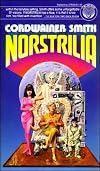
4/5
An absolute acid trip of a book. Cordwainer Smith packs the pages so full with fantastical, fun, and outlandish ideas that I have a hard time understanding how he made it fit into the svelte 275 page size. Every ten to twenty pages, Smith hits you with something new and wacky, that takes you the next ten to twenty pages just to absorb and half understand. Invisible palaces, massive sick sheep that produce an immortality drug, animal-human hybrids that act as servants for mankind, show more dehydrated space travel, bird assassins, and bird gods. If you can believe it, all of these ideas are used to explore wealth, and it's impacts on society. How does wealth and power corrupt the individual? Can society function when individuals are free from any adversity? What role does mutual hardship play in our lives?
I think if this book has a major flaw, it's that there's simply too much to tie together. It feels a little clumsy at points, as Smith tries his best to make sense of it all. I've heard that most of his short stories are set in this same universe, and precede the events in Norstrilia. I'm looking forward to diving into some of those other works, and then giving Norstrilia a re-read, which should give me way more perspective.
Even so, I highly recommend this one. I've never read anything like it, and I suspect I won't ever.
*Re-Read Update 2026*
I'm pleasantly surprised with how well Smith's imaginative world has held up against the many titles that I've read over the years. I think that some of my critiques about its clumsiness are warranted, though I think that most of that is due to its format; that being short stories tied up both into a novel and into a broader universe. There are many references to things that go completely unexplained, which I'm sure are explored more in his many other short stories. I'll wait to read Norstrilia again until after I have the broader context of the Instrumentality under my belt. Still, this was loads of fun to dive back into, and I'm maintaining the score I gave it initially. show less
An absolute acid trip of a book. Cordwainer Smith packs the pages so full with fantastical, fun, and outlandish ideas that I have a hard time understanding how he made it fit into the svelte 275 page size. Every ten to twenty pages, Smith hits you with something new and wacky, that takes you the next ten to twenty pages just to absorb and half understand. Invisible palaces, massive sick sheep that produce an immortality drug, animal-human hybrids that act as servants for mankind, show more dehydrated space travel, bird assassins, and bird gods. If you can believe it, all of these ideas are used to explore wealth, and it's impacts on society. How does wealth and power corrupt the individual? Can society function when individuals are free from any adversity? What role does mutual hardship play in our lives?
I think if this book has a major flaw, it's that there's simply too much to tie together. It feels a little clumsy at points, as Smith tries his best to make sense of it all. I've heard that most of his short stories are set in this same universe, and precede the events in Norstrilia. I'm looking forward to diving into some of those other works, and then giving Norstrilia a re-read, which should give me way more perspective.
Even so, I highly recommend this one. I've never read anything like it, and I suspect I won't ever.
*Re-Read Update 2026*
I'm pleasantly surprised with how well Smith's imaginative world has held up against the many titles that I've read over the years. I think that some of my critiques about its clumsiness are warranted, though I think that most of that is due to its format; that being short stories tied up both into a novel and into a broader universe. There are many references to things that go completely unexplained, which I'm sure are explored more in his many other short stories. I'll wait to read Norstrilia again until after I have the broader context of the Instrumentality under my belt. Still, this was loads of fun to dive back into, and I'm maintaining the score I gave it initially. show less
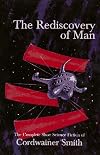
In a 2013 centennial assessment Cordwainer Smith, The Atlantic called him the “loosest cannon of all” in science fiction. It is not far off to call him science fiction’s William Blake. Like Blake, he created an elaborate grand myth epic that may have been transferring his fantasies and eidetic visions to print. Like Blake, his imagination is visual. Consider this opening to “When the People Fell” that inspired the cove of one of Smith’s collections: “Can you imagine a rain of show more people through an acid fog?” His underpeople and robots seem made to order for cosplay. His prose is unabashedly poetic. Just listen to some of his titles: “The Lady Who Sailed the Soul,” “Think Blue, Count Two,” “Golden the Ship Was—Oh! Oh! Oh!” “The Dead Lady of Clown Town,” “Alpha Ralpha Boulevard,” and “The Ballad of Lost C’mel.” I am always amused when someone tries to make a coherent future history from his Rediscovery of Man stories. Smith throws years around in the thousands without a care. He is more interested in recasting myths like Heloise and Abelard and Joan of Arc than he is in engineering. He invented future technologies that seem almost magical, but he ultimately rejects them as evolutionary dead ends. His is not usually a world of Blake’s “dark Satanic mills” but his layered, Edenic cities are equally dystopian. 5 stars. show less

I got this book in a Baen eBook Bundle-- for paying twice as much as I'd pay to get one book, I got five. I dimly knew Cordwainer Smith as someone who wrote classic sf, but I didn't have very specific memories of him except enjoying "The Crime and the Glory of Commander Suzdal." This book-- which collects about about half of Smith's short fiction, most of it set in the "Instrumentality of Mankind" future history-- won me over in short order. Even when the stories aren't plot- or show more character-interesting, the ideas are amazing and lyrical, the prose completely unlike anything else from 1950s sf, the narratives playful with stories layered inside stories. I mean, I love Isaac Asimov, but it's hard to imagine that at the same time that he was churning out robot and Foundation tales, Smith had come up with something as distinctive as this.
It's enough to make me do a story-by-story review, something I don't do much anymore.
"No, No, Not Rogov!"
One of several World War II-centric stories in the book, this is about a pair of Soviet scientists, their keepers, and the machine they built to read American brainwaves that connected them to something they couldn't have imagined. There's a tragedy of repression and detachment here, hidden under a (perfectly) perfunctory style.
"War No. 81-Q" (Rewritten Version)
In the future, wars are licensed and no one dies. The elaborate mechanics of this premise make the story a delightful and imaginative read, no matter what it actually does with the premise.
"Mark Elf" and "The Queen of the Afternoon"
These were probably my least favorite stories in the book. The ideas come thick and fast, but too much so: they feel random and arbitrary (though I can't be displeased with the talking bear) rather than part of an immense universe. They're about a couple of German girls launched into space during World War II who crash back down in the far future and end up leading a not-very-interesting revolution against not-well-defined bad guys.
"Scanners Live in Vain"
Apparently I read this before, as I called it a "highlight" in an old review, but I only remembered the vaguest of outlines. I can't tell why, as this story is amazing. The difficulties of love, an incredible and unique future with a cool civilization, a terrible choice. Like the best sf, it reveals to its reader both an unknown world and something of himself. Few stories are this good. And to think that having come up with such a premise, Smith only mined it for one story-- Asimov would have kept the Scanners going with increasingly unnecessary sequels for decades.
"The Lady Who Sailed The Soul"
About Helen America, the first woman to pilot a sleeper ship through space, and her strange love story. Pretty sweet.
"When the People Fell"
Despite giving its (great) title to the collection and some strong imagery, this one doesn't have a lot to offer for some reason. As close to perfunctory as Smith's stories come.
"Think Blue, Count Two"
One of those stories that makes you hate yourself for being a human being, but in a good way. A girl who has the right personality to make anyone think she's their daughter is guarded by a telepathic mouse brain in a plastic cube.
"The Colonel Came Back from the Nothing-at-All"
This one is all right again. It gets a little goofy, but I didn't mind too much.
"The Game of Rat and Dragon"
In the future, the only way for ships in deep space to protect themselves against telepathic mind-destroying dragons is to link human telepaths to cats who fly football-sized spaceships that launch light bombs. Yup, you read that right. Another great idea done well.
"The Burning of the Brain"
Somehow, less happens in this one than you would think.
"From Gustible's Planet"
Delightfully bonkers story about a race of aliens who inadvertently rekindle humanity's carnivorous instincts. Near-genocide has never been so hilarious.
"Himself in Anachron"
A man travels through time backwards, and Smith uses this as an excuse to mess up cause and effect. I'm surprise Steven Moffat hasn't ripped this off for Doctor Who, but it's smart.
"The Crime and the Glory of Commander Suzdal"
This one is still "so mad it has to be brilliant." I summarized the plot to my wife and her advisor while we were driving together, but that doesn't do it justice. Much love to the turtle people who crew Suzdal's spaceship for generations while he sleeps.
"Golden the Ship Was--Oh! Oh! Oh!"
Good, but not as good as the title.
"Drunkboat"
This is pretty similar to "The Colonel Came Back from the Nothing-at-All". One is a rewritten version of the other, but I'm not sure which way it goes. Maybe it's just because I read it earlier, but "The Colonel" was better. I'm not sure why they're both counted as in-continuity, unlike the two versions of "War No. 81-Q."
"A Planet Named Shayol"
The Instrumentality's prison-planet turns out to be the most horrifying thing I could have imagined: a planet where people are infected with a cancer that makes them grow body parts that can be harvested to use as spare organs-- and they live forever. Gross, but triumphant.
"On the Gem Planet"
The first of three stories about Casher O'Neill, a man wandering the galaxy to find the resources to reclaim his home planet from his dictator uncle. In this one, he helps some people figure out what a horse is for. There's more to than you'd expect from that description, I guess.
"On the Storm Planet"
Casher O'Neill returns in one of my favorite stories in the book, a harrowing journey into a house no one ever returns from... because no one ever wants to. The twists never stop, and Casher is a great protagonist, and he gets an ever greater companion here.
"On the Sand Planet"
The resolution to the Casher stories is not everything it could have been. There are some great moments, but then he discovers a secret telepath city which doesn't have anything to do with anything as far as I could tell. There is room for dozens of Casher adventures between "Gem Planet" and "Storm Planet"; someone should write them.
"Three to a Given Star"
Three people have their minds turned into the controls of a spaceship, a giant robot, and a terrible weapon. It's epic and heartfelt.
"Down to a Sunless Sea"
This is the only story in the book where looking at the title didn't remind when what it was about. Either it was bad, it was forgettable, or I was in a hurry because the book was almost over.
There are just a few non-Instrumentality stories at the end. "Western Science Is So Wonderful," about a Martian demon who tries to join the Chinese Communist Party but moves to Connecticut instead is the best, but the only uninteresting one is the original version of "War No. 81-Q." Despite not being set in the Instrumentality, most have the same feel, and I imagine its tiny things that keep them "out" of that continuity.
When I finished this, I immediately knew I needed to read more Cordwainer Smith; he's the first new writer I've read in a long time who provoked such a reaction. An sf great whose career was tragically short. show less
It's enough to make me do a story-by-story review, something I don't do much anymore.
"No, No, Not Rogov!"
One of several World War II-centric stories in the book, this is about a pair of Soviet scientists, their keepers, and the machine they built to read American brainwaves that connected them to something they couldn't have imagined. There's a tragedy of repression and detachment here, hidden under a (perfectly) perfunctory style.
"War No. 81-Q" (Rewritten Version)
In the future, wars are licensed and no one dies. The elaborate mechanics of this premise make the story a delightful and imaginative read, no matter what it actually does with the premise.
"Mark Elf" and "The Queen of the Afternoon"
These were probably my least favorite stories in the book. The ideas come thick and fast, but too much so: they feel random and arbitrary (though I can't be displeased with the talking bear) rather than part of an immense universe. They're about a couple of German girls launched into space during World War II who crash back down in the far future and end up leading a not-very-interesting revolution against not-well-defined bad guys.
"Scanners Live in Vain"
Apparently I read this before, as I called it a "highlight" in an old review, but I only remembered the vaguest of outlines. I can't tell why, as this story is amazing. The difficulties of love, an incredible and unique future with a cool civilization, a terrible choice. Like the best sf, it reveals to its reader both an unknown world and something of himself. Few stories are this good. And to think that having come up with such a premise, Smith only mined it for one story-- Asimov would have kept the Scanners going with increasingly unnecessary sequels for decades.
"The Lady Who Sailed The Soul"
About Helen America, the first woman to pilot a sleeper ship through space, and her strange love story. Pretty sweet.
"When the People Fell"
Despite giving its (great) title to the collection and some strong imagery, this one doesn't have a lot to offer for some reason. As close to perfunctory as Smith's stories come.
"Think Blue, Count Two"
One of those stories that makes you hate yourself for being a human being, but in a good way. A girl who has the right personality to make anyone think she's their daughter is guarded by a telepathic mouse brain in a plastic cube.
"The Colonel Came Back from the Nothing-at-All"
This one is all right again. It gets a little goofy, but I didn't mind too much.
"The Game of Rat and Dragon"
In the future, the only way for ships in deep space to protect themselves against telepathic mind-destroying dragons is to link human telepaths to cats who fly football-sized spaceships that launch light bombs. Yup, you read that right. Another great idea done well.
"The Burning of the Brain"
Somehow, less happens in this one than you would think.
"From Gustible's Planet"
Delightfully bonkers story about a race of aliens who inadvertently rekindle humanity's carnivorous instincts. Near-genocide has never been so hilarious.
"Himself in Anachron"
A man travels through time backwards, and Smith uses this as an excuse to mess up cause and effect. I'm surprise Steven Moffat hasn't ripped this off for Doctor Who, but it's smart.
"The Crime and the Glory of Commander Suzdal"
This one is still "so mad it has to be brilliant." I summarized the plot to my wife and her advisor while we were driving together, but that doesn't do it justice. Much love to the turtle people who crew Suzdal's spaceship for generations while he sleeps.
"Golden the Ship Was--Oh! Oh! Oh!"
Good, but not as good as the title.
"Drunkboat"
This is pretty similar to "The Colonel Came Back from the Nothing-at-All". One is a rewritten version of the other, but I'm not sure which way it goes. Maybe it's just because I read it earlier, but "The Colonel" was better. I'm not sure why they're both counted as in-continuity, unlike the two versions of "War No. 81-Q."
"A Planet Named Shayol"
The Instrumentality's prison-planet turns out to be the most horrifying thing I could have imagined: a planet where people are infected with a cancer that makes them grow body parts that can be harvested to use as spare organs-- and they live forever. Gross, but triumphant.
"On the Gem Planet"
The first of three stories about Casher O'Neill, a man wandering the galaxy to find the resources to reclaim his home planet from his dictator uncle. In this one, he helps some people figure out what a horse is for. There's more to than you'd expect from that description, I guess.
"On the Storm Planet"
Casher O'Neill returns in one of my favorite stories in the book, a harrowing journey into a house no one ever returns from... because no one ever wants to. The twists never stop, and Casher is a great protagonist, and he gets an ever greater companion here.
"On the Sand Planet"
The resolution to the Casher stories is not everything it could have been. There are some great moments, but then he discovers a secret telepath city which doesn't have anything to do with anything as far as I could tell. There is room for dozens of Casher adventures between "Gem Planet" and "Storm Planet"; someone should write them.
"Three to a Given Star"
Three people have their minds turned into the controls of a spaceship, a giant robot, and a terrible weapon. It's epic and heartfelt.
"Down to a Sunless Sea"
This is the only story in the book where looking at the title didn't remind when what it was about. Either it was bad, it was forgettable, or I was in a hurry because the book was almost over.
There are just a few non-Instrumentality stories at the end. "Western Science Is So Wonderful," about a Martian demon who tries to join the Chinese Communist Party but moves to Connecticut instead is the best, but the only uninteresting one is the original version of "War No. 81-Q." Despite not being set in the Instrumentality, most have the same feel, and I imagine its tiny things that keep them "out" of that continuity.
When I finished this, I immediately knew I needed to read more Cordwainer Smith; he's the first new writer I've read in a long time who provoked such a reaction. An sf great whose career was tragically short. show less

The thing one must state up front is that, based on the evidence of Norstrilia anyway, Smith was a much better short story writer than novelist (he did write three non-sf novels under other names). Norstrilia has a lot of captivating scenes and chapters, the kind of raw material I can imagine Smith weaving a highly effective short story out of. As a novel, though, I'm not entirely sure it hangs together. Clearly Smith is going for a sort of bildungsroman structure. It focuses on a show more young man named Rod from the planet Old North Australia, whose inhabitants manufacture "stroon," the drug that grants immortality; he hears that a rival is coming for him, so he engages in an economic counteroffensive that ends in him purchasing Old Earth. He then travels to the Earth to view his purchase; there he encounters the "Underpeople" (elevated animals with human characteristics) and must navigate attempts on his life while also trying to learn something about himself.
There's a lot of stuff going on in this book. Maybe I'm imposing a structure on it Smith didn't intend, but if it's meant to be a bildungsroman, I'm not sure how it all adds up in the end. What is Rod meant to learn that takes him from boyhood to manhood? The book seems pretty aimless; Rod kind of lurches from circumstance to circumstance and then the book wraps up.
Yet I can't deny that Smith probably had more imagination and more poetry in his little finger than many sf writers have in their whole bodies. I loved the history of the temple on Rod's family estate; I loved the story of how Rod acquired the Earth by accident; I loved the idea of there being a whole army of Rod duplicates sent to the Earth to draw Rod's enemies off his trail, and one of them falling in love. There was a lot going on in this book, and even if I don't quite know what the destination even was, the journey was never not interesting. But it's also hard to imagine ever rereading it, while I can much more imagine going back to his collected short fiction in The Rediscovery of Man time and again. show less
There's a lot of stuff going on in this book. Maybe I'm imposing a structure on it Smith didn't intend, but if it's meant to be a bildungsroman, I'm not sure how it all adds up in the end. What is Rod meant to learn that takes him from boyhood to manhood? The book seems pretty aimless; Rod kind of lurches from circumstance to circumstance and then the book wraps up.
Yet I can't deny that Smith probably had more imagination and more poetry in his little finger than many sf writers have in their whole bodies. I loved the history of the temple on Rod's family estate; I loved the story of how Rod acquired the Earth by accident; I loved the idea of there being a whole army of Rod duplicates sent to the Earth to draw Rod's enemies off his trail, and one of them falling in love. There was a lot going on in this book, and even if I don't quite know what the destination even was, the journey was never not interesting. But it's also hard to imagine ever rereading it, while I can much more imagine going back to his collected short fiction in The Rediscovery of Man time and again. show less
Lists
Read These Too (1)
Awards


You May Also Like


Associated Authors
Statistics
- Works
- 99
- Also by
- 90
- Members
- 6,268
- Popularity
- #3,911
- Rating
- 3.9
- Reviews
- 111
- ISBNs
- 160
- Languages
- 11
- Favorited
- 54