On This Page
Description
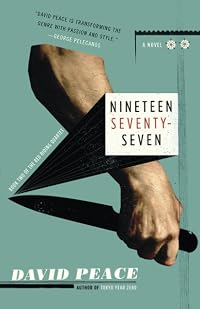
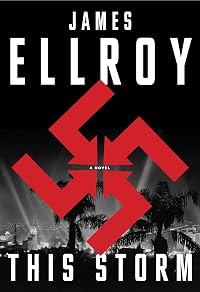
Summer, 1968. Martin Luther King and Robert Kennedy are dead. The assassination conspiracies have begun to unravel. A dirty-tricks squad is getting ready to deploy at the Democratic Convention in Chicago. Black militants are warring in southside L.A. The Feds are concocting draconian countermeasures. And fate has placed three men at the vortex of history. A stand-alone sequel to The Cold Six Thousand.Tags
Recommendations






Member Reviews
With Spring busily springing and the ice gradually thawing from our hair and the feeling coming back to our fingers and toes, it would, perhaps, behoove us to recommend something of a bright and cheerful nature to our readers, something warm and sparkly and happy and such. Well, maybe next time.
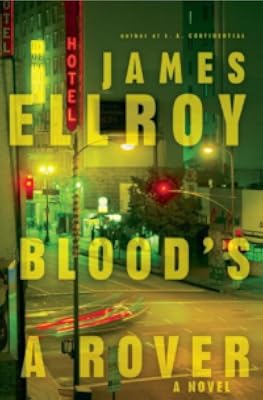
Blood’s A Rover is the third book in James Ellroy’s Underworld USA trilogy, which has charted the dark and murky underbelly of American history, from JFK to Nixon. The current volume brings us up to the seventies on a wave of drugs, racism, violence and corruption on a massive scale. Ellroy pulls no punches and spares no sacred cows. Everyone’s dirty, everyone’s scamming and nobody’s innocent.
Dwight Holly, Wayne Tedrow Jnr and Don show more Crutchfield are Ellroy’s damaged, morally compromised antiheroes, charting a course between the depraved paranoia of J Edgar Hoover, the insane profligacy of Howard Hughes and the scheming unctuousness of Richard Nixon. While working to build mob-financed casinos in the Dominican Republic, the must also engage in a clandestine race war, targeting black power organisations in Los Angeles. They find themselves drawn to women on the opposite side of the political spectrum, and these obsessions spell their doom.
Epic in scope, relentlessly paced and written in terse, pared down, hard-boiled staccato sentences, this is a hyped-up, pumped-up journey through a vision of social and personal damnation, which will be immensely satisfying to readers of previous volumes. New readers may want to go back to American Tabloid and The Cold Six Thousand, though be aware that the middle volume is also the weakest of the three.
So yes, it’s grim and violent and straddles the line between unflinching realism and outright voyeurism, but
it’s also a hell of a thriller that will glue itself to your eyeballs. show less
Blood’s A Rover is the third book in James Ellroy’s Underworld USA trilogy, which has charted the dark and murky underbelly of American history, from JFK to Nixon. The current volume brings us up to the seventies on a wave of drugs, racism, violence and corruption on a massive scale. Ellroy pulls no punches and spares no sacred cows. Everyone’s dirty, everyone’s scamming and nobody’s innocent.
Dwight Holly, Wayne Tedrow Jnr and Don show more Crutchfield are Ellroy’s damaged, morally compromised antiheroes, charting a course between the depraved paranoia of J Edgar Hoover, the insane profligacy of Howard Hughes and the scheming unctuousness of Richard Nixon. While working to build mob-financed casinos in the Dominican Republic, the must also engage in a clandestine race war, targeting black power organisations in Los Angeles. They find themselves drawn to women on the opposite side of the political spectrum, and these obsessions spell their doom.
Epic in scope, relentlessly paced and written in terse, pared down, hard-boiled staccato sentences, this is a hyped-up, pumped-up journey through a vision of social and personal damnation, which will be immensely satisfying to readers of previous volumes. New readers may want to go back to American Tabloid and The Cold Six Thousand, though be aware that the middle volume is also the weakest of the three.
So yes, it’s grim and violent and straddles the line between unflinching realism and outright voyeurism, but
it’s also a hell of a thriller that will glue itself to your eyeballs. show less
Found this secondhand and hadn't read the previous two books, so I was a bit lost at first, but this still definitely works as a standalone novel. Can't really say much more without having read the rest of the trilogy, but to my mind this was very different to the Ellroy I've read before, with a lot more in the way of international intrigue, conspiracy, sorcery and general political skullduggery, whilst still oozing noir attitude and immersing you in the dank underbellies of the cities it's set in - primarily LA, but there are some more exotic locales as well.
Might shock or open a few wounds for some readers, given its basis in modern history and its utter refusal to pull any punches as far as I could see, but for those who can stomach show more all that it's an interesting read on multiple levels. show less
Might shock or open a few wounds for some readers, given its basis in modern history and its utter refusal to pull any punches as far as I could see, but for those who can stomach show more all that it's an interesting read on multiple levels. show less
Whatever your view about James Ellroy, his Underworld USA trilogy is quite a piece of work and Blood's A Rover, its culmination, is one hell of a way to go out. He may have had the indelicacy to say it, but having closed the cover it's hard to disagree with Ellroy's own assessment of this novel's matchless quality. This is a really, really outstanding novel from an outstanding and unique writer.
Many of Ellroy's stylistic hallmarks, love 'em or hate 'em (for the record, I love 'em) are here: grandiloquent authorial claims to greatness, unremittingly bleak Hobbesian worldview (though here it is ultimately, if brutally, suffused with a sort of redemption), casual and unsettlingly entertaining violence and depravity, assorted strands of show more bigotry and a Byzantine, conspiracy-theory-goosing plot - all counterpointed with almost unbearably sparse, non-adjectival prose. It's all here. Most remarkable is the book's style and economy. James Ellroy says the plot outline for Blood's A Rover ran to 400 pages; the finished article is well shy of 650. In the hands of any other writer, this sort of enterprise would never get done short of 1500.
On that score, many detractors bitterly and bizarrely complain about Ellroy's prose style. On this site, the weaker ones lampoon it poorly. I find this complaint particularly absurd. If you like your prose style conventional, stay away: there are literally millions of workaday writers whose published works will keep you happy in your reading till your dying day. If there are millions of elegant stylists; there's only one James Ellroy; I can't think of another author (perhaps Cormac McCarthy) with as singular a stylistic vision, let alone such a stubbornness and bloody-minded commitment to his craft. Celebrate a writer with the talent, attitude and fortitude to do something different.
Ellroy's writing generally, and the Underworld USA series particularly, take some getting used to, for sure - it's virtually a dialect: a condensed, shorthand patois where half as many words carry twice as much content as conventional sentence. The temptation is to study every word hard, so as not to miss a vital clue. But to do this is to miss the vibrancy, the flow, the rhythm - the *vibe* - which is as important to grasp as the content itself. Like waterskiing, you need to aquaplane through the text to manage it.
And when you do, it's just exhilarating reading - short passages magically concertina into complex images. On the other hand, Ellroy's narrative method counterpoints the curtness of his prose: he tends to reframe the same information from multiple perspectives (the book is told from the point of view of three principle protagonists, together with diaries, reports and transcripts of conversations between half a dozen others), so if you keep the speed up, the shorthand argot miraculously and brilliantly coheres. At times it's like beat poetry; it syncopates, it grooves.
For all that (and despite some claims to the contrary) James Ellroy *has* eased up his prose styling from the three-word sentence limit on display in The Cold Six Thousand. Particularly with some helpful expository diaries, this is an easier - but no less rewarding - read.
The book's unusual title, taken from an A E Housman poem, jars at first - difficult at first glance to see the resonance between late 20th century American high-political intrigue and 19th century English poem cycle called A Shropshire Lad, conjuring as it does images of a cloth-capped teen in tweed plus-fours wheeling an iron bicycle up a narrow country lane. But Housman's work, in its way, was as unrelentingly grim an essay on the waste of life as is Ellroy's: a sort of grim inversion of a carpe diem where the moral is "don't lie a-bed, lad - get up and get out there ... But, come to think of it, while you're hard at it fighting Boers and so forth, most likely your best mate will be busily stealing your sweetheart away".
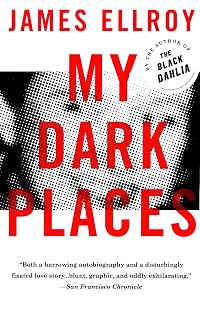
Now there is a "lad" herein - Don Crutchfield - who in his ascribed habits and history (a small time private eye with a missing mother and a penchant for popping pills and peeping windows) bears no small resemblance to a certain J Ellroy (as revealed in the autobiographical My Dark Places), so you do wonder whether the title and character are some sort of note to self.
In any case it's an extraordinary note. Without a doubt one of the best books of the decade. show less
Many of Ellroy's stylistic hallmarks, love 'em or hate 'em (for the record, I love 'em) are here: grandiloquent authorial claims to greatness, unremittingly bleak Hobbesian worldview (though here it is ultimately, if brutally, suffused with a sort of redemption), casual and unsettlingly entertaining violence and depravity, assorted strands of show more bigotry and a Byzantine, conspiracy-theory-goosing plot - all counterpointed with almost unbearably sparse, non-adjectival prose. It's all here. Most remarkable is the book's style and economy. James Ellroy says the plot outline for Blood's A Rover ran to 400 pages; the finished article is well shy of 650. In the hands of any other writer, this sort of enterprise would never get done short of 1500.
On that score, many detractors bitterly and bizarrely complain about Ellroy's prose style. On this site, the weaker ones lampoon it poorly. I find this complaint particularly absurd. If you like your prose style conventional, stay away: there are literally millions of workaday writers whose published works will keep you happy in your reading till your dying day. If there are millions of elegant stylists; there's only one James Ellroy; I can't think of another author (perhaps Cormac McCarthy) with as singular a stylistic vision, let alone such a stubbornness and bloody-minded commitment to his craft. Celebrate a writer with the talent, attitude and fortitude to do something different.
Ellroy's writing generally, and the Underworld USA series particularly, take some getting used to, for sure - it's virtually a dialect: a condensed, shorthand patois where half as many words carry twice as much content as conventional sentence. The temptation is to study every word hard, so as not to miss a vital clue. But to do this is to miss the vibrancy, the flow, the rhythm - the *vibe* - which is as important to grasp as the content itself. Like waterskiing, you need to aquaplane through the text to manage it.
And when you do, it's just exhilarating reading - short passages magically concertina into complex images. On the other hand, Ellroy's narrative method counterpoints the curtness of his prose: he tends to reframe the same information from multiple perspectives (the book is told from the point of view of three principle protagonists, together with diaries, reports and transcripts of conversations between half a dozen others), so if you keep the speed up, the shorthand argot miraculously and brilliantly coheres. At times it's like beat poetry; it syncopates, it grooves.
For all that (and despite some claims to the contrary) James Ellroy *has* eased up his prose styling from the three-word sentence limit on display in The Cold Six Thousand. Particularly with some helpful expository diaries, this is an easier - but no less rewarding - read.
The book's unusual title, taken from an A E Housman poem, jars at first - difficult at first glance to see the resonance between late 20th century American high-political intrigue and 19th century English poem cycle called A Shropshire Lad, conjuring as it does images of a cloth-capped teen in tweed plus-fours wheeling an iron bicycle up a narrow country lane. But Housman's work, in its way, was as unrelentingly grim an essay on the waste of life as is Ellroy's: a sort of grim inversion of a carpe diem where the moral is "don't lie a-bed, lad - get up and get out there ... But, come to think of it, while you're hard at it fighting Boers and so forth, most likely your best mate will be busily stealing your sweetheart away".
Now there is a "lad" herein - Don Crutchfield - who in his ascribed habits and history (a small time private eye with a missing mother and a penchant for popping pills and peeping windows) bears no small resemblance to a certain J Ellroy (as revealed in the autobiographical My Dark Places), so you do wonder whether the title and character are some sort of note to self.
In any case it's an extraordinary note. Without a doubt one of the best books of the decade. show less
I have very mixed feelings about this book. On the one hand, it took me months to get through the first half or two thirds; on the other, the final sections sped past because everything suddenly clicked. It took a while to readjust to Ellroy's clipped writing style, but it worked well for the most dramatic moments. I was tempted to DNF after a hundred pages, and again after nearly three hundred; I'm glad I stuck with it as it means finishing the trilogy, but if I return to Ellroy in the future, it will be to go back over some of his earlier work before the style took over.
Fairly disappointing Ellroy. Still an exhilirating ride, but the pay-off was very unsatisfying. This is the conclusion to his American Tabloid trilogy. The first part was based around the assassination of JFK, and the second around those of Bobby Kennedy and Martin Luther King. Ellroy, justifiably, decided not to cover the Watergate scandal in the third volume, but that left no comparable historic events to anchor this book, making it feel a far less significant work. This sadly drags down the two preceding tomes by association and leads to the question of whether he should have bothered making the series into a trilogy.
All of the major mysteries - set up in the early part of the book, and driving much of the plot throughout - fizzle show more out into perfunctory and largely unbelievable (even by Ellroy standards) conclusions. It really felt like he hadn't plotted the book fully enough and ended up writing himself into a corner. If he had been using them just to drive along the plot he really shouldn't have built them up so much.
It's a shame, because the Ellroy roller-coaster or misanthropy does still deliver. And he has curbed some of his more annoying tics, while maintaining his kinetic, punchy prose. His conflicted and compromised anti-heroes are still compelling (although his propensity to kill his characters off - while admirably shocking - does mean that you feel seen his archetypes several times before), and the hallucinatory passages, particularly in Haiti, are immersive. He still delivers a convincing vision of a familiar world refracted through a prism of violence, fear and hate. Perhaps best of all, he introduces a young and ingenuous (as far as an Ellroy character can be) character that seems to have a lot of the young and wayward Ellroy, and hence feels particularly believable. I would like to read more about him.
Unfortunately, by the end of what should have been the crowning work of an impressive and challenging trilogy, I felt that Ellroy had over-indulged himself, and perhaps believed his own hype a little too much. show less
All of the major mysteries - set up in the early part of the book, and driving much of the plot throughout - fizzle show more out into perfunctory and largely unbelievable (even by Ellroy standards) conclusions. It really felt like he hadn't plotted the book fully enough and ended up writing himself into a corner. If he had been using them just to drive along the plot he really shouldn't have built them up so much.
It's a shame, because the Ellroy roller-coaster or misanthropy does still deliver. And he has curbed some of his more annoying tics, while maintaining his kinetic, punchy prose. His conflicted and compromised anti-heroes are still compelling (although his propensity to kill his characters off - while admirably shocking - does mean that you feel seen his archetypes several times before), and the hallucinatory passages, particularly in Haiti, are immersive. He still delivers a convincing vision of a familiar world refracted through a prism of violence, fear and hate. Perhaps best of all, he introduces a young and ingenuous (as far as an Ellroy character can be) character that seems to have a lot of the young and wayward Ellroy, and hence feels particularly believable. I would like to read more about him.
Unfortunately, by the end of what should have been the crowning work of an impressive and challenging trilogy, I felt that Ellroy had over-indulged himself, and perhaps believed his own hype a little too much. show less
In the past, I've enjoyed Ellroy's writing. I've read this trilogy with an increasing sense of disappointment each step of the way. The conspiracy theories behind these novels are derivative and tired. The characters unlikable and unlikely. The language, more and more, a kind of faux-gritty ("so contrived, it's hyper-real!" we hear the announcer bark) that achieves a level of unintended humor in this last novel. Though it's not even funny for long.
Ellroy's writing now seems to come out of a place where Ellroy says he knows what's real, he knows the truth behind the illusion. He knows how people really live & talk & how the big events really come down.
But the sad truth behind these books is that what Ellroy really knows is a very little, show more very circumscribed world akin to a masturbatory fantasy. And he knows that some people will be sucker enough to buy into it. Sad. show less
Ellroy's writing now seems to come out of a place where Ellroy says he knows what's real, he knows the truth behind the illusion. He knows how people really live & talk & how the big events really come down.
But the sad truth behind these books is that what Ellroy really knows is a very little, show more very circumscribed world akin to a masturbatory fantasy. And he knows that some people will be sucker enough to buy into it. Sad. show less
FBI, Pantere nere e altre organizzazioni dell'orgoglio afroamericano, droga, intrighi internazionali, infiltrazioni, depistaggi, vodoo, mafia, JFK, MLK e altri omicidi politici, poi di nuovo droga e intrighi, figli dei fiori e attivisti comunisti, Haiti, Cuba, schiavitù, colpi di stato, oppressione, violenza, droga e ancora droga e pestaggi, poliziotti corrotti e poliziotti idealisti e doppiogiochisti, Hoover “la checca” e “dracula” Hughes, e attraverso tutto questo un ragazzo che perde la propria innocenza e alla fine la ritrova, in fondo a un abisso di orrore.
Una ricetta cucinata dal magistrale Ellroy, l'unico che può scrivere un romanzo come questo.
Una ricetta cucinata dal magistrale Ellroy, l'unico che può scrivere un romanzo come questo.
Members
- Recently Added By
Published Reviews
ThingScore 89
This is lurid material treated luridly, but with beauty and heft.
added by Shortride
If this sounds confusing, it's also classic noir, which isn't about plot so much as drawing the reader into an entire world—from Communist Cuba to the seedy underbelly of Vegas.
added by Shortride
The prose has calmed down, too; it’s gone off the caffeine. It needed to—Blood’s a Rover is a more thoughtful, searching book than its predecessors.
added by Shortride
Lists

Books With Body Parts in the Title
153 works; 9 members
Author Information

97+ Works 31,165 Members
James Ellroy was born in Los Angeles in 1948. His L. A. Quartet novels - "The Black Dahlia", "The Big Nowhere", "L. A. Confidential", & "White Jazz" - were international best-sellers. His novel "American Tabloid" was Time magazine's Novel of the Year for 1995; his memoir, "My Dark Places", was a "Time" Best Book of the Year & a "New Yorker Times" show more Notable Book for 1996. He lives in Kansas City. (Publisher Provided) James Ellroy was born in Los Angeles, California on March 4, 1948. His parents were divorced and he moved in with his father after his mother was murdered in 1958. The story of his mother's unsolved murder would become the basis for his 1996 nonfiction work entitled My Dark Places. He attended Fairfax High School, where he sent Nazi pamphlets to girls he liked and criticized JFK, while advocating the reinstatement of slavery. He was eventually expelled for preaching Nazism in his English class. He joined the army after his expulsion from school, but after realizing that he did not belong there, he faked a stutter and convinced the army psychologist that he was not mentally fit for combat. After three months, he received a dishonorable discharge and returned home. His father died soon thereafter. He was thrown in juvenile hall for stealing a steak from the local market. When he got out, his father's friend became his guardian, but by the age of eighteen, he was back on the streets. He was sleeping outside, stealing, drinking and experimenting with drugs. It wasn't long before he was thrown in jail for breaking into a vacant apartment. When he got out of jail, he started a job at an adult book store, his addictions growing progressively larger. He was misusing the drug Benzedrex, a sinus inhalent which nearly drove him to Schizophrenia and his drinking was ruining his health. He contracted pneumonia twice as well as a condition called post-alchohol brain syndrome. Fearing for his sanity, he joined AA, became sober and found a job as a golf caddy. At the age of 30, he wrote his first novel entitled Brown's Requiem, which was published in 1981. His other works include Clandestine, Blood on the Moon, Because the Night, Suicide Hill, Killer on the Road, and The Cold Six Thousand. His works The Black Dahlia and L. A. Confidential were adapted into feature films. Ellroy's title, Perfidia, made the New York Times bestseller list in 2014. 030i show less
Some Editions
Awards and Honors
Series

Belongs to Publisher Series
Common Knowledge
- Canonical title
- Blood's a Rover
- Original title
- Blood's a Rover
- Original publication date
- 2009-09-22
- People/Characters
- Dwight Holly; Wayne Tedrow, Jr.; Donald Crutchfield; Joan Rosen Klein; Karen Sifakis; J. Edgar Hoover (show all 13); Richard M. Nixon; Howard Hughes; Jack Leahy; Sonny Liston; Sal Mineo; Marshall Bowen; Scotty Bennett
- Important places
- Dominican Republic; Los Angeles, California, USA
- Important events
- Democratic National Convention (1968-08-26 | 1968-08-29, Chicago)
- Epigraph
- Clay lies still, but blood's a rover;
Breath's a ware that will not keep.
Up, lad: when the journey's over
There'll be time enough for sleep.
A. E. Housman - Dedication
- To
J.M.
Comrade: For Everything You Gave Me - First words
- HEROIN: He'd rigged a lab in his hotel suite. Beakers, vats and Bunsen burners filled up wall shelves. A three-burner hot plate juked small-batch conversions. He was cooking painkiller-grade product. He hadn't cooked dope sin... (show all)ce Saigon.
- Last words
- (Click to show. Warning: May contain spoilers.)Here is my gift in lieu of a reunion - my lost mother, my lost child and the Red Goddess Joan.
- Original language*
- Inglese
*Some information comes from Common Knowledge in other languages. Click "Edit" for more information.
Classifications
- Genres
- Fiction and Literature, General Fiction, Mystery, Historical Fiction
- DDC/MDS
- 813.54 — Literature & rhetoric American literature in English American fiction in English 1900-1999 1945-1999
- LCC
- PS3555 .L6274 .B57 — Language and Literature American literature American literature Individual authors 1961-
- BISAC
Statistics
- Members
- 1,160
- Popularity
- 21,757
- Reviews
- 25
- Rating
- (3.81)
- Languages
- 11 — Danish, Dutch, English, Finnish, French, German, Italian, Polish, Spanish, Swedish, Portuguese (Portugal)
- Media
- Paper, Audiobook, Ebook
- ISBNs
- 40
- ASINs
- 14