
James Ellroy
Author of The Black Dahlia
About the Author
James Ellroy was born in Los Angeles in 1948. His L. A. Quartet novels - "The Black Dahlia", "The Big Nowhere", "L. A. Confidential", & "White Jazz" - were international best-sellers. His novel "American Tabloid" was Time magazine's Novel of the Year for 1995; his memoir, "My Dark Places", was a show more "Time" Best Book of the Year & a "New Yorker Times" Notable Book for 1996. He lives in Kansas City. (Publisher Provided) James Ellroy was born in Los Angeles, California on March 4, 1948. His parents were divorced and he moved in with his father after his mother was murdered in 1958. The story of his mother's unsolved murder would become the basis for his 1996 nonfiction work entitled My Dark Places. He attended Fairfax High School, where he sent Nazi pamphlets to girls he liked and criticized JFK, while advocating the reinstatement of slavery. He was eventually expelled for preaching Nazism in his English class. He joined the army after his expulsion from school, but after realizing that he did not belong there, he faked a stutter and convinced the army psychologist that he was not mentally fit for combat. After three months, he received a dishonorable discharge and returned home. His father died soon thereafter. He was thrown in juvenile hall for stealing a steak from the local market. When he got out, his father's friend became his guardian, but by the age of eighteen, he was back on the streets. He was sleeping outside, stealing, drinking and experimenting with drugs. It wasn't long before he was thrown in jail for breaking into a vacant apartment. When he got out of jail, he started a job at an adult book store, his addictions growing progressively larger. He was misusing the drug Benzedrex, a sinus inhalent which nearly drove him to Schizophrenia and his drinking was ruining his health. He contracted pneumonia twice as well as a condition called post-alchohol brain syndrome. Fearing for his sanity, he joined AA, became sober and found a job as a golf caddy. At the age of 30, he wrote his first novel entitled Brown's Requiem, which was published in 1981. His other works include Clandestine, Blood on the Moon, Because the Night, Suicide Hill, Killer on the Road, and The Cold Six Thousand. His works The Black Dahlia and L. A. Confidential were adapted into feature films. Ellroy's title, Perfidia, made the New York Times bestseller list in 2014. 030i show less
Series
Works by James Ellroy
Crime Wave: Reportage and Fiction from the Underside of L.A. (1999) — Author — 631 copies, 4 reviews
The L.A. Quartet (The Black Dahlia | The Big Nowhere | L.A. Confidential | White Jazz) (1992) 135 copies, 2 reviews
[unidentified works] 7 copies
High Darktown 3 copies
Hollywood Death Trip 2 copies
Fiction Crime 2 copies
Gravy Train 2 copies
LA Quartet 04: White Jazz 1 copy
Dial Axminster 6-400 1 copy
Six Years 1 copy
LA Quartet 01: Black Dahlia 1 copy
Since I Don't Have You 1 copy
Torch Number 1 copy
Tabloid 1 copy
American Noir — Editor — 1 copy
The Art of Fiction No. 201 1 copy
Associated Works
The Black Dahlia (1) — Story — 16 copies
The Graphic Canon of Crime & Mystery, Vol. 2: From Salome to Edgar Allan Poe to The Silence of the Lambs (2021) — Contributor — 14 copies
Conversations with James Ellroy (Literary Conversations Series) (2012) — Associated Name — 7 copies, 1 review
Satan's Summer in the City of Angels: The Social Impact of the Night Stalker (2018) — Foreword, some editions — 4 copies
Murder by the Book [2006, season 1] 2 copies
Tagged
Common Knowledge
- Legal name
- Ellroy, Lee Earle
- Birthdate
- 1948-03-04
- Gender
- male
- Occupations
- golf caddy
crime novelist
essayist - Awards and honors
- Robert Kirsch Award (2022)
- Agent
- Nat Sobel (Sobel Weber Associates, Inc.)
- Relationships
- Knode, Helen (former spouse)
- Nationality
- USA
- Birthplace
- Los Angeles, California, USA
- Places of residence
- Los Angeles, California, USA
Mission Hills, Kansas, USA
El Monte, California, USA - Associated Place (for map)
- California, USA
Members
Reviews

LA Confidential was Ellroy going into overdrive. Stylistically clipped, allergic to the definite article, psychologically compressed to the point of claustrophobia and psychosis, it has a massively complex plot that's tightly controlled under all the fireworks, but those fireworks to spray the story wide and loud. Ugly violence, characters that are near-universally loathesome (softened considerably in the iconic adaptaion) with the exceptions being largely compromised and/or weak and show more ineffectual. The Bloody Christmas beatings and the Nite Owl Massacre unleash consequences and investigations that tear at the underbelly of LA like the wolverines in The Big Nowhere. Jack, Ed and Bud are an unholy unheroic trinity enmeshed in violence, corruption and cowardice, united, eventually, only by a destire to solve the case, whatever the cost. Toxic masculinity rules - literally, it's everywhere and it's in charge - occasionally they feel bad about something horrific they've done, and while the book doesn't exonerate, it sure as hell isn't interested in the victims. Buzz Meeks checks out early, probably for the best. Still compelling and propulsive, though.
Merged review:
LA Confidential was Ellroy going into overdrive. Stylistically clipped, allergic to the definite article, psychologically compressed to the point of claustrophobia and psychosis, it has a massively complex plot that's tightly controlled under all the fireworks, but those fireworks to spray the story wide and loud. Ugly violence, characters that are near-universally loathesome (softened considerably in the iconic adaptaion) with the exceptions being largely compromised and/or weak and ineffectual. The Bloody Christmas beatings and the Nite Owl Massacre unleash consequences and investigations that tear at the underbelly of LA like the wolverines in The Big Nowhere. Jack, Ed and Bud are an unholy unheroic trinity enmeshed in violence, corruption and cowardice, united, eventually, only by a destire to solve the case, whatever the cost. Toxic masculinity rules - literally, it's everywhere and it's in charge - occasionally they feel bad about something horrific they've done, and while the book doesn't exonerate, it sure as hell isn't interested in the victims. Buzz Meeks checks out early, probably for the best. Still compelling and propulsive, though. show less
Merged review:
LA Confidential was Ellroy going into overdrive. Stylistically clipped, allergic to the definite article, psychologically compressed to the point of claustrophobia and psychosis, it has a massively complex plot that's tightly controlled under all the fireworks, but those fireworks to spray the story wide and loud. Ugly violence, characters that are near-universally loathesome (softened considerably in the iconic adaptaion) with the exceptions being largely compromised and/or weak and ineffectual. The Bloody Christmas beatings and the Nite Owl Massacre unleash consequences and investigations that tear at the underbelly of LA like the wolverines in The Big Nowhere. Jack, Ed and Bud are an unholy unheroic trinity enmeshed in violence, corruption and cowardice, united, eventually, only by a destire to solve the case, whatever the cost. Toxic masculinity rules - literally, it's everywhere and it's in charge - occasionally they feel bad about something horrific they've done, and while the book doesn't exonerate, it sure as hell isn't interested in the victims. Buzz Meeks checks out early, probably for the best. Still compelling and propulsive, though. show less
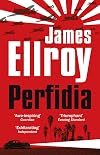
Epic reprise of Ellroy's favourite time and setting, a return to 1940s Los Angeles and Dudley Smith and Will Parker and Kay Lake and introducing Hideo Ashida, native-born of Japanese descent, brilliant police chemist whose life is made beyond uncomfortable when the Japanese bomb Pearl Harbour and anti-Japanese sentiment ignites across the country, and in LA, there's talk of round-ups and internment. On the day before the attack, a Japanese family of four is horribly murdered in a gory, show more ritualistic fashion. The investigation, in the midst of war-time hysteria, racial hatred, crazed eugenics, fascist politics, police corruption and brutality, opportunistic players from every level of society moving in to exploit the coming confusion and officially mandated injustice, proves nightmarish for all involved. Someone will have to take the fall, but will the guilty get away with it?
Written mostly in the terse, hard-boiled tough-cop drawl that Ellroy has perfected, this falls somewhere between LA Confidential and American Tabloid in terms of style, and aspires to be a return to LA Confidential in terms of being a sprawling but tightly-plotted murder mystery. Of course, the most amazing thing about LA Confidential when you first read it, is that there was nothing else like LA Confidential, not even in the LA Quartet. So there's that. Familiarity doesn't exactly breed contempt, but when one of the attractions of Ellroy is his originality, it tends to be missed. On the other hand, Ellroy's been clawing his way back from over-extending his style and his theme in Cold Six Thousand. So: compulsively readable, paced like an express train, twisty and turny and packed with profanity and racism and horrible violence and more depravity than you could believe even a near 800 page crime saga could contain. show less
Written mostly in the terse, hard-boiled tough-cop drawl that Ellroy has perfected, this falls somewhere between LA Confidential and American Tabloid in terms of style, and aspires to be a return to LA Confidential in terms of being a sprawling but tightly-plotted murder mystery. Of course, the most amazing thing about LA Confidential when you first read it, is that there was nothing else like LA Confidential, not even in the LA Quartet. So there's that. Familiarity doesn't exactly breed contempt, but when one of the attractions of Ellroy is his originality, it tends to be missed. On the other hand, Ellroy's been clawing his way back from over-extending his style and his theme in Cold Six Thousand. So: compulsively readable, paced like an express train, twisty and turny and packed with profanity and racism and horrible violence and more depravity than you could believe even a near 800 page crime saga could contain. show less

"I never knew her in life. She exists for me through others, in evidence of the ways her death drove them. Working backwards, seeking only facts."
So begins 'The Black Dahlia' , a novel loosely based upon a real case, the murder of Elizabeth Short that the press nicknamed the Black Dahlia. She was born in Boston in 1924 and was murdered in Los Angeles in 1947. Her case became famous because her body was horribly mutilated and is still unsolved. Ellroy uses the case as a basis to write a show more complex story of Los Angeles in the 1940s.
Dwight “Bucky” Bleichert, our narrator, is a former boxer and LAPD officer. Bucky is the son of a German immigrant who doesn’t hide his racist tendencies and during WWII agreed to give his Japanese neighbours up to keep his job with the LAPD. Lee Blanchard is another ex-boxer and LAPD officer famous for solving a hold-up case and then shacking up with the criminal’s girlfriend, Kay, after the trial.
As semi-famous former boxers, they are asked by their bosses to fight against each other to promote a bill that will increase the wages of all of LAPD's staff. They agree to it and the fight is highly publicized earning them the nicknamed 'Fire' and 'Ice'. After the bout they become patrol partners and they form a bond based upon mutual respect as well as a shared love of Kay. They find themselves attached to the taskforce dedicated to solving the Betty Short murder.
As Ellroy follows the thread of a murder investigation he also shows corruption and power politics prevalent in the LAPD, he takes pleasure in describing brothels, underground lesbian meeting points and seedy hotels. He describes the almost routine violence against suspects and police procedures, they will do almost anything to get a conviction. He also takes the reader to rich neighbourhoods where cruelty and ugliness is present behind polished manners, greed. sex and betrayal in a burgeoning city where aspiring actresses often live an existence of hopelessness prey for powerful men.
This novel is about friendship and obsession and how they can sometimes blind us to what is right in front of us. In some respects I found it a difficult book to read; the 'good guys' are corrupt, violent, drug-fuelled misogynists whilst the 'bad guys' hide their own vices behind a veneer of respectability. I realised very early on into this book that the real-life crime is still unsolved and was curious to discover if Ellroy would make his characters solve it, and was curious as to know what would happen to Bucky once it came to it's conclusion one way or the other. But whilst this is undoubtedly a powerful piece of writing that started really well I came away from it feeling somewhat short-changed. In the end I simply got fed up with all the gore and sleaze, whilst the final chapters was a rather bizarre kitsch noir. What was Bucky on? show less
So begins 'The Black Dahlia' , a novel loosely based upon a real case, the murder of Elizabeth Short that the press nicknamed the Black Dahlia. She was born in Boston in 1924 and was murdered in Los Angeles in 1947. Her case became famous because her body was horribly mutilated and is still unsolved. Ellroy uses the case as a basis to write a show more complex story of Los Angeles in the 1940s.
Dwight “Bucky” Bleichert, our narrator, is a former boxer and LAPD officer. Bucky is the son of a German immigrant who doesn’t hide his racist tendencies and during WWII agreed to give his Japanese neighbours up to keep his job with the LAPD. Lee Blanchard is another ex-boxer and LAPD officer famous for solving a hold-up case and then shacking up with the criminal’s girlfriend, Kay, after the trial.
As semi-famous former boxers, they are asked by their bosses to fight against each other to promote a bill that will increase the wages of all of LAPD's staff. They agree to it and the fight is highly publicized earning them the nicknamed 'Fire' and 'Ice'. After the bout they become patrol partners and they form a bond based upon mutual respect as well as a shared love of Kay. They find themselves attached to the taskforce dedicated to solving the Betty Short murder.
As Ellroy follows the thread of a murder investigation he also shows corruption and power politics prevalent in the LAPD, he takes pleasure in describing brothels, underground lesbian meeting points and seedy hotels. He describes the almost routine violence against suspects and police procedures, they will do almost anything to get a conviction. He also takes the reader to rich neighbourhoods where cruelty and ugliness is present behind polished manners, greed. sex and betrayal in a burgeoning city where aspiring actresses often live an existence of hopelessness prey for powerful men.
This novel is about friendship and obsession and how they can sometimes blind us to what is right in front of us. In some respects I found it a difficult book to read; the 'good guys' are corrupt, violent, drug-fuelled misogynists whilst the 'bad guys' hide their own vices behind a veneer of respectability. I realised very early on into this book that the real-life crime is still unsolved and was curious to discover if Ellroy would make his characters solve it, and was curious as to know what would happen to Bucky once it came to it's conclusion one way or the other. But whilst this is undoubtedly a powerful piece of writing that started really well I came away from it feeling somewhat short-changed. In the end I simply got fed up with all the gore and sleaze, whilst the final chapters was a rather bizarre kitsch noir. What was Bucky on? show less
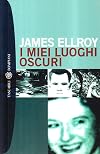
Ho comprato questo libro dopo aver ascoltato un'intervista con Ellroy. Poi l'ho lasciato lì perché ho un'allergia per le storie vere, dichiaratamente autobiografiche. Ora l'ho letto, e posso dire che è più romanzo che documento. Ellroy scrive dannatamente bene, Ellroy sa universalizzare in maniera superba la sua personale vicenda, ma non è solo questo. E' che queste pagine sono di un'onestà umana e intellettuale che lascia allibiti. Talmente allibiti da dimenticare che è una storia show more vera, la sua, perché non ti pare possibile che qualcuno abbia la forza di mostrarsi così. Più che nudo: inerme. Ellroy ha deciso di scriverla, questa storia, e lo fa fino in fondo, senza risparmiarsi nulla, senza nascondersi.
Davvero notevole. show less
Davvero notevole. show less
Lists
hopes (1)
Unread books (1)
My TBR (1)
2015 UpROOTed (1)
Null (1)
Read These Too (1)
Favourite Books (1)
to get (1)
Global Mysteries (1)
1980s (1)
1990s (2)
Page Turners (2)
The "A" List (1)
Boy Protagonists (1)
Five star books (1)
Awards


You May Also Like


Associated Authors
Statistics
- Works
- 96
- Also by
- 23
- Members
- 31,056
- Popularity
- #637
- Rating
- 3.8
- Reviews
- 481
- ISBNs
- 1,051
- Languages
- 23
- Favorited
- 130


