On This Page
Description
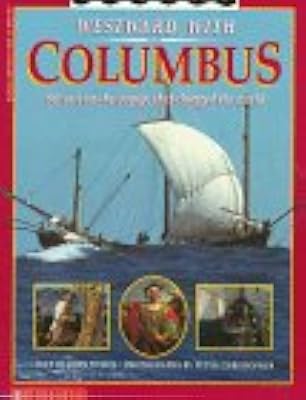
A brief account of the life and accomplishments of Christopher Columbus.Tags
Recommendations















Member Reviews
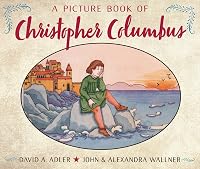
David A. Adler, an American author of children’s fiction and nonfiction, has apparently produced 265 books. More than 30 of them were for a biography series, “A Picture Book of . . .”, written over a period of 17 years from 1989 to 2006. They focus mainly on historically significant Americans: presidents, civil rights icons, and inventors. A few, including this book, provide short biographies of notable Europeans.
Many years ago, when there were few very short picture book biographies to choose from, I used this book at school as an introduction to Columbus. It’s almost certain it wouldn’t be a first choice today, although it would be interesting for kids to encounter the biography alongside other less sanitized works show more presenting the explorer’s story. Students could consider what has changed in the way Columbus is depicted and why.
Adler does present basic facts about his subject: his place of birth, his family, an early adventure at sea when he was a young man and the ship he served on was sunk by French pirates off the coast of Portugal (he made it to shore by clinging to pieces of wood), his marriage, two sons, his repeated efforts to be funded by Portuguese and Spanish royalty, and a few white-washed details about his experiences over four voyages on various Caribbean islands.
Adler is fairly good on a few things. He makes clear that the educated of Columbus’s day were well aware of the Earth’s spherical shape. He also suggests that people had some trouble appreciating the planet’s size. (In fact, some other kids’ books state that Columbus’s petitions to kings were rejected because his mileage calculations were so badly off. Recall: he was proposing to find a new, faster western route to the East Indies, the area around the Indian subcontinent and the Indochinese peninsula. Advisors to the monarchs informed them that his figures were implausible.) Adler also indicates that upon Columbus’s return from his successful first voyage, King Ferdinand and Queen Isabella initially believed he’d discovered Asian islands. He’d brought back “Indians” to prove it. While their view apparently changed, his never did. He never renounced the idea that he’d made it to the Indies.
Adler is not so good on a lot—and much of what he does not include would have been available to him in source material during the early 1990s when this book was first published. For one thing, the ten indigenous people he “brought back” to Spain had been captured. Most of them subsequently became ill or died, having no immunity to European infectious diseases. Adler does mention that on that first voyage, Columbus left men behind on Hispaniola (now Haiti and the Dominican Republic) to begin work on a settlement and that they had been “cruel” to the Indians, who subsequently killed them. Adler also admits that in time Columbus was no longer seen as a hero, but the author fails to mention the explorer’s enslavement of indigenous people or the fact that he was arrested in 1500 and returned to Spain due to his brutality and mismanagement.
Most of us understand that a children’s picture book is not the place to detail human greed and violence. However, the withholding of some basic unsavoury facts about Columbus—his actual motivations for exploration (to acquire wealth and convert savages) and his mistreatment of humans different from himself—is not respectful of children’s intelligence.
Having said all of this, I think this picture book—which, by the way, is attractively illustrated and accessible—shouldn’t be banned or tossed by the wayside. It’s a worthwhile educational exercise to look at it as a product of its times, just as an explorer is, and consider why humans’ views of the past change over time. show less
Many years ago, when there were few very short picture book biographies to choose from, I used this book at school as an introduction to Columbus. It’s almost certain it wouldn’t be a first choice today, although it would be interesting for kids to encounter the biography alongside other less sanitized works show more presenting the explorer’s story. Students could consider what has changed in the way Columbus is depicted and why.
Adler does present basic facts about his subject: his place of birth, his family, an early adventure at sea when he was a young man and the ship he served on was sunk by French pirates off the coast of Portugal (he made it to shore by clinging to pieces of wood), his marriage, two sons, his repeated efforts to be funded by Portuguese and Spanish royalty, and a few white-washed details about his experiences over four voyages on various Caribbean islands.
Adler is fairly good on a few things. He makes clear that the educated of Columbus’s day were well aware of the Earth’s spherical shape. He also suggests that people had some trouble appreciating the planet’s size. (In fact, some other kids’ books state that Columbus’s petitions to kings were rejected because his mileage calculations were so badly off. Recall: he was proposing to find a new, faster western route to the East Indies, the area around the Indian subcontinent and the Indochinese peninsula. Advisors to the monarchs informed them that his figures were implausible.) Adler also indicates that upon Columbus’s return from his successful first voyage, King Ferdinand and Queen Isabella initially believed he’d discovered Asian islands. He’d brought back “Indians” to prove it. While their view apparently changed, his never did. He never renounced the idea that he’d made it to the Indies.
Adler is not so good on a lot—and much of what he does not include would have been available to him in source material during the early 1990s when this book was first published. For one thing, the ten indigenous people he “brought back” to Spain had been captured. Most of them subsequently became ill or died, having no immunity to European infectious diseases. Adler does mention that on that first voyage, Columbus left men behind on Hispaniola (now Haiti and the Dominican Republic) to begin work on a settlement and that they had been “cruel” to the Indians, who subsequently killed them. Adler also admits that in time Columbus was no longer seen as a hero, but the author fails to mention the explorer’s enslavement of indigenous people or the fact that he was arrested in 1500 and returned to Spain due to his brutality and mismanagement.
Most of us understand that a children’s picture book is not the place to detail human greed and violence. However, the withholding of some basic unsavoury facts about Columbus—his actual motivations for exploration (to acquire wealth and convert savages) and his mistreatment of humans different from himself—is not respectful of children’s intelligence.
Having said all of this, I think this picture book—which, by the way, is attractively illustrated and accessible—shouldn’t be banned or tossed by the wayside. It’s a worthwhile educational exercise to look at it as a product of its times, just as an explorer is, and consider why humans’ views of the past change over time. show less
Part of David A. Adler's Picture Book Biographies series, telling the stories of famous people throughout history for younger children, this title explores the life and achievements of Christopher Columbus, the Italian explorer who, on October 12, 1492, made land on the island of San Salvador, ushering in a new era of contact between Europe and the Americas. The narrative here is quite simple, and covers the basic outline of Columbus' life, from his birth in Genoa in 1451 to his life as a sailor and his efforts to interest the monarchs of Europe in funding his westward voyages. His historic voyage in 1492, in which he 'discovered' (or rediscovered, if one prefers) the Americas, as well as his subsequent voyages, are covered. A brief show more timeline is included at the rear...
Today, as I write this review of A Picture Book of Christopher Columbus, it is Columbus Day, marking the 528th year since modern contact was made between the peoples of Europe and those of the Americas. It is a holiday that has become controversial of late, dividing opinion between those who feel we should not celebrate the day, given the disastrous consequences that first contact had for the native peoples of this hemisphere, and those who believe that, however flawed the man, he did achieve something unprecedented in human history, and laid the groundwork for the modern world we know today. Some cities have replaced Columbus Day with an 'Indigenous Peoples' Day,' while other communities continue to honor the great explorer. Complicating the matter is the fact that Columbus Day has become intertwined with Italian-American identity in many quarters, and is one of the few moments in the national calendar when this community is honored and remembered. For my part, I have little sympathy with the cultural and historical vandalism currently consuming the (so-called) left, but also have no interest in whitewashing history. I tend to believe that historical achievements should be remembered and honored, even when those who achieved them were far from perfect, recalling that old phrase that "we see further than our ancestors because we stand on their shoulders." With that in mind, and given my all-consuming interest in children's literature, I decided to read and review a number of different picture-book biographies of Christopher Columbus, as a means of marking the day. The titles I chose include David A. Adler's A Picture Book of Christopher Columbus (1991), Peter Sís' Follow the Dream: The Story of Christopher Columbus (1991) and Demi's Columbus (2012).
I began with this title from Adler because I think it is the youngest of the three, in terms of intended audience. I am familiar with Adler largely through his Cam Jansen Mysteries series for beginning chapter-book readers, and was curious to see what he would do with the story of Columbus. It is worth noting that this is also the first of his Picture Book Biographies series that I have read. For the most part, I found it a serviceable book, one which could be used to introduce the topic of Columbus and his voyages of discovery to younger audiences, six years old and under, I would say. The basic outline of the story is there, and is told in an engaging enough way, accompanied by fairly sweet illustrations from John and Alexandra Wallner, who have also worked on other titles in Adler's series. There is very little here about the consequences of Columbus' voyage for the native peoples of the Caribbean, something other reviewers have noted. The sole mention of this reality is the statement that "Christopher found that the men who stayed behind after the first voyage had been cruel to the Indians. The Indians had killed them all." On the whole, I think this approach is suitable for very young children, acknowledging that bad things happened, but not describing them or dwelling upon them in a way that would be inappropriate and traumatic, given their age. That said, I also feel that this approach would be inadequate for older children, who are better able to handle the fuller picture. In sum: recommended to readers looking for picture-book biographies for the younger range of children, ages four to six. show less
Today, as I write this review of A Picture Book of Christopher Columbus, it is Columbus Day, marking the 528th year since modern contact was made between the peoples of Europe and those of the Americas. It is a holiday that has become controversial of late, dividing opinion between those who feel we should not celebrate the day, given the disastrous consequences that first contact had for the native peoples of this hemisphere, and those who believe that, however flawed the man, he did achieve something unprecedented in human history, and laid the groundwork for the modern world we know today. Some cities have replaced Columbus Day with an 'Indigenous Peoples' Day,' while other communities continue to honor the great explorer. Complicating the matter is the fact that Columbus Day has become intertwined with Italian-American identity in many quarters, and is one of the few moments in the national calendar when this community is honored and remembered. For my part, I have little sympathy with the cultural and historical vandalism currently consuming the (so-called) left, but also have no interest in whitewashing history. I tend to believe that historical achievements should be remembered and honored, even when those who achieved them were far from perfect, recalling that old phrase that "we see further than our ancestors because we stand on their shoulders." With that in mind, and given my all-consuming interest in children's literature, I decided to read and review a number of different picture-book biographies of Christopher Columbus, as a means of marking the day. The titles I chose include David A. Adler's A Picture Book of Christopher Columbus (1991), Peter Sís' Follow the Dream: The Story of Christopher Columbus (1991) and Demi's Columbus (2012).
I began with this title from Adler because I think it is the youngest of the three, in terms of intended audience. I am familiar with Adler largely through his Cam Jansen Mysteries series for beginning chapter-book readers, and was curious to see what he would do with the story of Columbus. It is worth noting that this is also the first of his Picture Book Biographies series that I have read. For the most part, I found it a serviceable book, one which could be used to introduce the topic of Columbus and his voyages of discovery to younger audiences, six years old and under, I would say. The basic outline of the story is there, and is told in an engaging enough way, accompanied by fairly sweet illustrations from John and Alexandra Wallner, who have also worked on other titles in Adler's series. There is very little here about the consequences of Columbus' voyage for the native peoples of the Caribbean, something other reviewers have noted. The sole mention of this reality is the statement that "Christopher found that the men who stayed behind after the first voyage had been cruel to the Indians. The Indians had killed them all." On the whole, I think this approach is suitable for very young children, acknowledging that bad things happened, but not describing them or dwelling upon them in a way that would be inappropriate and traumatic, given their age. That said, I also feel that this approach would be inadequate for older children, who are better able to handle the fuller picture. In sum: recommended to readers looking for picture-book biographies for the younger range of children, ages four to six. show less
All I knew was that Christopher Columbus "sailed the ocean blue", but I never wondered how! This book gives great detail about just how he did that. I really like the style of this biography, story-form. This is a great biography and I will definitely include it in a history lesson in my future classroom.
This biography of Christopher Columbus’s life is in story form with illustrations on each page. I think this book would be an excellent attention grabber for elementary students at the beginning of lessons on Christopher Columbus. With this book being is story form, the students are more likely to be engaged with the information at the elementary level. What I found problematic about this book is that it perpetuates a rosy picture of Christopher Columbus as a “good guy.” However, it does not idolize him either. I believe it would be a useful paired text in a series of texts about Columbus where the students analyze the information and form their own claim about Columbus’s character.
This book would be really great for a discussion starter! We cover the concept of what travel was like in the 1400s, european monarchies, dealing with cultural relations, what it is like to persevere towards a goal, and lastly, what it is like to be wrong about ones beliefs. All of these things covered in a short book that could be really simplistic in its goal--usually Columbus is over glorified in Western Culture. It is well written and the illustrations do a nice job.
Just like any David Adler biography picture book, the story of Christopher Columbus was just as entertaining and beneficial. The organization of the text in this book and every other book is great for the books young audience. Every detail goes in chronological order, including dates and specifics. The information given is accurate and child friendly. However, I will mention I did not agree with how the interaction between the Native Americans and Christopher Columbus' crew is depicted but then again children reading this story wouldn't grasp such a deep concept. Nonetheless, the illustrations are detailed and follow along with the text. The main message behind this biography is to inform children on the history of Christopher Columbus.
I had mixed feelings about this book. I enjoyed the writing, the story flowed well together starting from the beginning of his life and then going through all of the information about how he grew up to become the man he ended up being, and then ended up with the basic information of his death. It made sure to tell the important information like the three ships he used in his explorations was the Nina, Pinta, and Santa Maria. What I had a problem with was that even though this book was nonfiction, there wasn't much accurate information on how he was supposedly extremely nice to the natives and that others weren't nice, but they only barely brushed over that information. It is just troubling that I myself went though school thinking he show more was a hero but he ended up failing my expectations when I heard the true story as I got older. In my opinion this book's main point was to inform children about Christopher Columbus. show less
Members
- Recently Added By
Lists

The Story of the World: History for the Classical Child: Activity Book Two
415 works; 2 members
Author Information

311 Works 92,808 Members
David A. Adler was born in New York City. He attended Queen's College in New York City and later, earned an MBA in Marketing from New York University. He writes both fiction and non-fiction. He is the author of Cam Jansen mysteries and the Andy Russell titles. His titles has earned him numerous awards including a Sydney Taylor Book Award for his show more title "The Number on My Grandfather's Arm," "A Picture Book of Jewish Holidays" was named a Notable Book of 1981 by the American Library Association and "Our Golda" was named a Carter G. Woodson Award Honor Book. (Bowker Author Biography) show less
All Editions
Awards and Honors
Series

Common Knowledge
- Canonical title
- A Picture Book of Christopher Columbus
- People/Characters
- Christopher Columbus
Classifications
Statistics
- Members
- 1,117
- Popularity
- 22,730
- Reviews
- 38
- Rating
- (3.55)
- Languages
- English, Spanish
- Media
- Paper, Audiobook, Ebook
- ISBNs
- 18
- ASINs
- 4