
Alexandra Wallner
Author of Betsy Ross
About the Author
Alexandra Wallner went to college at Pratt Institute in Brooklyn, N. Y. where she earned a B.F.A. and an M.F.A. She also met her husband, artist John Wallner. Together they created Greywood Studios. She has written and illustrated children's picture book biographies of famous writers, artists and show more historical figures focusing on their childhoods. What events made them who they became? She has also taught at library conferences, in international women's writing groups and done many school visits. Greywood Studios has relocated several times: Brooklyn Heights, Upstate New York, Philadelphia, Maine, Florida and now, Mexico. (Bowker Author Biography) show less
Works by Alexandra Wallner
Associated Works
Tagged
Common Knowledge
- Birthdate
- 1946
- Gender
- female
- Education
- Pratt Institute
- Occupations
- illustrator
teacher - Relationships
- Wallner, John (husband)
- Nationality
- Germany (birth)
USA - Birthplace
- Germany
- Places of residence
- Germany
Brooklyn Heights, Brooklyn, New York, USA
New York, USA
Philadelphia, Pennsylvania, USA
Maine, USA
Florida, USA (show all 7)
Mexico - Associated Place (for map)
- USA
Members
Reviews
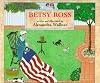
This biography starts off by immediately introducing Betsy’s love and go to activity when it is said that she enjoys quilts and sewing. Being born into a family of Quakers, this makes the story even more interesting because of the time period. Set in a time during the Revolutionary War, Betsy faces serious hardships while not only losing John but having to take over the family business. This leads to the introduction of women's empowerment during this time period. This book is really good show more for younger women and even older women to see an example of a young woman’s story of evolving into something great. show less
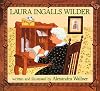
This is a short and simple biography illustrating Laura Ingalls Wilder’s pioneer experiences, and how her writing was inspired by her own life. Having read her Pioneer Girl book, published as an annotated autobiography, I know that this biography is a very sanitized version of what pioneer life was truly like. I also think covering such a broad range of time in such a small book made it lack a lot of substance. However, I know the book is for children and the details given can give them a show more general introduction to her life and works. show less
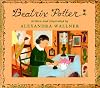
This picture book is the biography of my favorite children’s author, Beatrix Potter, who was responsible for publishing the famous children’s book, The Tale of Peter Rabbit. Although Beatrix lived a lonely life in the countryside of London and sometimes Scotland, she created art and writing of things she found beautiful in nature as a coping mechanism. Beatrix came from a very wealthy yet emotionally detached family with just one younger brother five years her junior that kept her show more company. Together, they collected animals and plants in secret and would inspect, draw, and research their findings. Over the next couple of years, Beatrix would go through multiple spouts of depression, often due to feeling loneliness with no companions. When she felt this way, she would turn to her writings. On a particular occasion, she decided to write to an old friend’s son. She wasn’t quite sure what to write, so she made up a story about four rabbits playing in the forest reminiscent of her time spent in the countryside. This letter would soon turn in the famous, The Tale of Peter Rabbit. Although Ms. Potter was known for her twenty-three tales, she spent a great deal of time studying mushrooms because she believed mushrooms could possibly be a cure for cancer. However, women in the late 1800s were not taken seriously, especially in the medical field. I was pleasantly surprised when I began reading this picture book. I had chosen this book based on the beautiful woodland theme illustrations. I had no idea that this book would be about my favorite childhood author. I was also surprised to know just how depressed she was. She spent most of her life in solitude, but she had such an exquisite imagination and brought a whimsical take on science. show less
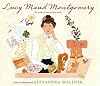
This picture book biography, both written and illustrated by Alexandra Wallner, is for the most part well-researched and informative (textually dense and recommended for older children, it is a solid, readable introduction to L. M. Montgomery's life and work, showing both Maud's triumphs and some of her many struggles, like the legal wrangling between her and her American publisher, L. C. Page Company). Although I generally quite enjoyed Lucy Maud Montgomery, the narrative flow does feel a show more bit plodding in places, reading more like a textbook than an actual story. The emotional connection to the characters, to Maud herself, often feels rather tenuous, making the reader feel more like a dispassionate observer than an active, involved participant; Maud's story is interestingly depicted, but is told in a rather distancing, unemotional manner.
I do have a bit of a problem with the fact that I believe the author has either deliberately or inadvertently omitted or changed some of the more problematic details of Maud's life story, possibly to make her at times tense and emotionally difficult family situation more acceptable, more appropriate for a younger audience. Now I realise that L. M. Montgomery's problems with mental illness, her often intense unhappiness with her husband, the fact that she had major issues with her oldest boy Chester and so on, might not necessarily be appropriate in a picture book biography for children, but I think that Alexandra Wallner has gone a bit too far at times. For example, Wallner states that when young Maud was staying with her father and stepmother in Prince Albert, Saskatchewan, her father took her back to Prince Edward Island when it became clear that Maud missed the island and could not get along with her stepmother. However, that is only partially correct. Maud's father did not actually take her back to the island, he sent his daughter back; Maud (a teenage girl at the time) had to board a train and cross Canada by herself and unchaperoned (I don't really expect Alexandra Wallner to have described all of this in detail, but she certainly should have written that Maud's father sent his daughter back to P.E.I. because he most definitely did not personally escort her back to the island). Similarly, I strongly believe that Wallner should also have mentioned that Maud's husband Ewan often suffered from severe depression, instead of just stating that "Ewan's spirits were low and he needed care." That in no way comes even remotely close to the truth, and I don't think that it would have been either inappropriate or problematic for the author to have made mention of the fact that Ewan MacDonald (and Maud herself for that matter) suffered from depression, even in a picture book biography for children and young adults. For the most part, I do believe that Alexandra Wallner has tried to show in an informative, yet gentle manner both L. M. Montgomery's triumphs and struggles, but there were/are a few aspects that I personally feel should have been mentioned or at least not explained away with somewhat of a euphemism.
As for the illustrations, although they work well enough with the text, they are simply too pink and girly for my own personal tastes. I have never imagined L. M. Montgomery as wearing primarily pink and/or baby blue dresses, so the depiction of Maud clad primarily (or at least often) in outfits of these types of colours was and is a bit jarring and esthetically unpleasing. In fact, for me, the illustrations on the whole are simply much too pink and pastel-like (even many of the buildings are illustrated using pinkish or light pastel hues, just not my cup of tea at all). And the illustration of the invalid Evan MacDonald in a chair (the Evan MacDonald requiring care) with Maud reading to him, I have to admit that I find that particular picture rather uncanny, with Evan appearing more like an elderly woman than a man (when I first saw the illustration, I actually assumed that Maud was tending to an invalid woman, only by reading the text itself did I realise that this was supposed to be Evan). The illustrations are generally bright and cheery enough, but they really do not work all that well for me (in fact, I think that I would have preferred this book without the illustrations). show less
I do have a bit of a problem with the fact that I believe the author has either deliberately or inadvertently omitted or changed some of the more problematic details of Maud's life story, possibly to make her at times tense and emotionally difficult family situation more acceptable, more appropriate for a younger audience. Now I realise that L. M. Montgomery's problems with mental illness, her often intense unhappiness with her husband, the fact that she had major issues with her oldest boy Chester and so on, might not necessarily be appropriate in a picture book biography for children, but I think that Alexandra Wallner has gone a bit too far at times. For example, Wallner states that when young Maud was staying with her father and stepmother in Prince Albert, Saskatchewan, her father took her back to Prince Edward Island when it became clear that Maud missed the island and could not get along with her stepmother. However, that is only partially correct. Maud's father did not actually take her back to the island, he sent his daughter back; Maud (a teenage girl at the time) had to board a train and cross Canada by herself and unchaperoned (I don't really expect Alexandra Wallner to have described all of this in detail, but she certainly should have written that Maud's father sent his daughter back to P.E.I. because he most definitely did not personally escort her back to the island). Similarly, I strongly believe that Wallner should also have mentioned that Maud's husband Ewan often suffered from severe depression, instead of just stating that "Ewan's spirits were low and he needed care." That in no way comes even remotely close to the truth, and I don't think that it would have been either inappropriate or problematic for the author to have made mention of the fact that Ewan MacDonald (and Maud herself for that matter) suffered from depression, even in a picture book biography for children and young adults. For the most part, I do believe that Alexandra Wallner has tried to show in an informative, yet gentle manner both L. M. Montgomery's triumphs and struggles, but there were/are a few aspects that I personally feel should have been mentioned or at least not explained away with somewhat of a euphemism.
As for the illustrations, although they work well enough with the text, they are simply too pink and girly for my own personal tastes. I have never imagined L. M. Montgomery as wearing primarily pink and/or baby blue dresses, so the depiction of Maud clad primarily (or at least often) in outfits of these types of colours was and is a bit jarring and esthetically unpleasing. In fact, for me, the illustrations on the whole are simply much too pink and pastel-like (even many of the buildings are illustrated using pinkish or light pastel hues, just not my cup of tea at all). And the illustration of the invalid Evan MacDonald in a chair (the Evan MacDonald requiring care) with Maud reading to him, I have to admit that I find that particular picture rather uncanny, with Evan appearing more like an elderly woman than a man (when I first saw the illustration, I actually assumed that Maud was tending to an invalid woman, only by reading the text itself did I realise that this was supposed to be Evan). The illustrations are generally bright and cheery enough, but they really do not work all that well for me (in fact, I think that I would have preferred this book without the illustrations). show less
Awards


You May Also Like


Associated Authors
Statistics
- Works
- 26
- Also by
- 16
- Members
- 2,027
- Popularity
- #12,684
- Rating
- 3.9
- Reviews
- 103
- ISBNs
- 44