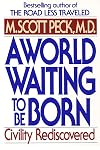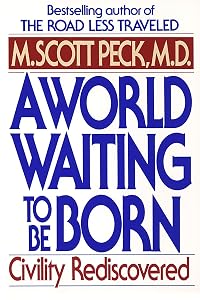
A World Waiting to be Born: Civility Rediscovered
by M. Scott Peck
On This Page
Description
"M. Scott Peck is known for the profound psychological and spiritual journey on which he has guided millions of readers in his earlier bestselling books." "A WORLD WAITING TO BE BORN is his long-awaited major new work of nonfiction, and it brings us the most urgent messages and the most important guidance toward change Dr. Peck has ever offered." "We are a deeply ailing society. Our illness is incivility, by which Dr. Peck means conduct far more serious than a want of politeness - and going show more back in time much further than the blatantly gluttonous 1980s. Morally destructive patterns of self-absorption, callousness, manipulativeness, and materialism are so ingrained in our routine behavior that we often do not recognize them. In multiple ways we engage in subtle forms of unconscious hurtfulness toward ourselves and others - ways that have come to be accepted as the norm in American society." "Yet there is a growing awareness that something is seriously wrong. If one of the many powerful themes in this book is that civil behavior has largely vanished from our lives - between individuals, in marriage and family life, in the workplace, and in organizations and businesses - another theme is that change is not only possible, it is achievable. We can learn to restore civility to ourselves and our institutions. We can make the spiritual commitment that is a cornerstone of civility. We have the power and the knowledge to become a truly civil society. This book slows us how." "Using examples from his own life, case histories of patients who sought his psychiatric counsel, and dramatic scenarios of businesses that have made a conscious decision to bring civility to their organizations, Dr. Peck demonstrates where we have gone wrong and how change can be effected. The process is likely to be painful - change hurts - but without change there is no growth, and without growth we are half alive." "Dr. Peck offers a concrete, step-by-step program to restore our organizations and ourselves to health. The key to generating organizational health is developing community, which, like civility itself, is an explicit concept with explicit components including spiritual commitment. This wise, radical, and practical book is a blueprint for change - for individuals, partners in marriage, parents, managers, and corporations themselves. Indeed, Dr. Peck proposes that restoring our institutions to civility may create the brightest prospects for both our personal and our societal well-being"--Jacket. show lessTags
Recommendations

















Member Reviews
[Review written by my younger self]
Peck’s A World Waiting to Be is an important book. No doubt about that. As always, this man makes a great contribution in speaking his mind and dissecting and explaining the woes of the world. Still, there is some contradictions and confusions in this book that lessen its value. The book is still important, but there are some things to know from the start before you open that first page. It is with this that I warn potential readers….
The Author’s Purpose in Question
“An illness is abroad in the land.” The world is at the apex of a crisis, where incivility reigns. Peck makes this broad statement known from the very beginning of the book, thus influencing the tone the rest of the book takes. show more Altogether more aggressive than his well-known and acclaimed Road Less Traveled, Peck’s A World Waiting to Be Born is almost a survival guide and a tactical plan for living and combating a world wrought with incivility.
Throughout the book, Peck emphasizes that his purpose in writing his book was to get readers to surmise their own definition of civility. It is possible that, in doing so, Peck made one of the biggest contractions of all in his book. Of course, no one is required to follow anything they read in books, yet Peck constructs the novel in such a way that it becomes more of a tool to follow his own version of civility rather than to guide readers in developing their own definition.
If Peck had hoped for individualized definitions of civility to flourish among his readers, why did he devote most of his pages to exposition on how to advance in his definition of civility? Why did he use such words as “impertinent” and “necessary” towards his own definition, if he were not trying to push it forward? No doubt, Peck’s grand call to civility is admirable, regardless of his intentions.
Still, more clarity and balance needs to be given to this issue, and readers should be forewarned of even the own unintentional and unwitting machinations of the author himself. As Peck himself points out, civility in some cases should not give way to a compromise of one’s convictions. Here, then, is the import of devising your own definition of civility, independent of Peck’s provisions. Every situation is unique, and it is with this in mind that readers should apply the tools Peck so graciously offers us.
God and Her Purposes
While Peck’s book is replete with academic citations and statistics, his religious beliefs certainly shine through, and he brings out various disclaimers for them throughout the book (like the fact that he refers to God as a “she” at various points). Unusual, indeed, especially since I cannot for once in my various readings of this book figure out exactly what religious derivations he may be writing from.
The various convictions and contradictions that follow his religious disclaimers can be smoothed over in readers’ minds to some extent, though sometimes his claims are held up solely by this mysterious religious foundation of Holy Spirit and other convictions. These latter claims are the hardest to swallow, and have caused me to (unfairly) question the worth of a book as a whole.
Still, despite this, I have learned a valuable lesson from my reading that was never so obviously noticeable before: Just because it’s published, that doesn’t mean it is always accurate, understandable, or superior. Indeed, when Peck isn’t confusing readers with his religious convictions and the reasoning that they support, Peck pushes readers to their own empowerment.
The Power is Yours!
Captain Planet? Hardly. Peck isn’t one to fly around with his environmentally sound cohorts ridding the world of incivility. However, even when he’s pushing his version of civility on us, or telling us what is true and good, he empowers his readers. Indeed, he states that we are, to some extent, slaves of our unconscious mind (he also calls this the “Holy Spirit”), which is “always one step ahead of the conscious mind in the right or the wrong direction”.
Still, this does not mean that civility is failing because only the unconscious mind is in control, or always going in the wrong direction. Peck believes that the cure for this civility comes from developing personal definitions of civility (ahem), and making sure that all people have a “conscious intention [or] awareness” towards civility. He does not doubt the existence of people capable of controlling their lives and bringing positive influence to themselves and others, and this is where the power of the book, and its readership, lies.
By the way, for a less confusing, more basic look at the world through Peck's eyes, try his tried and true Road Less Traveled. It is sure to change anyone who reads it. show less
Peck’s A World Waiting to Be is an important book. No doubt about that. As always, this man makes a great contribution in speaking his mind and dissecting and explaining the woes of the world. Still, there is some contradictions and confusions in this book that lessen its value. The book is still important, but there are some things to know from the start before you open that first page. It is with this that I warn potential readers….
The Author’s Purpose in Question
“An illness is abroad in the land.” The world is at the apex of a crisis, where incivility reigns. Peck makes this broad statement known from the very beginning of the book, thus influencing the tone the rest of the book takes. show more Altogether more aggressive than his well-known and acclaimed Road Less Traveled, Peck’s A World Waiting to Be Born is almost a survival guide and a tactical plan for living and combating a world wrought with incivility.
Throughout the book, Peck emphasizes that his purpose in writing his book was to get readers to surmise their own definition of civility. It is possible that, in doing so, Peck made one of the biggest contractions of all in his book. Of course, no one is required to follow anything they read in books, yet Peck constructs the novel in such a way that it becomes more of a tool to follow his own version of civility rather than to guide readers in developing their own definition.
If Peck had hoped for individualized definitions of civility to flourish among his readers, why did he devote most of his pages to exposition on how to advance in his definition of civility? Why did he use such words as “impertinent” and “necessary” towards his own definition, if he were not trying to push it forward? No doubt, Peck’s grand call to civility is admirable, regardless of his intentions.
Still, more clarity and balance needs to be given to this issue, and readers should be forewarned of even the own unintentional and unwitting machinations of the author himself. As Peck himself points out, civility in some cases should not give way to a compromise of one’s convictions. Here, then, is the import of devising your own definition of civility, independent of Peck’s provisions. Every situation is unique, and it is with this in mind that readers should apply the tools Peck so graciously offers us.
God and Her Purposes
While Peck’s book is replete with academic citations and statistics, his religious beliefs certainly shine through, and he brings out various disclaimers for them throughout the book (like the fact that he refers to God as a “she” at various points). Unusual, indeed, especially since I cannot for once in my various readings of this book figure out exactly what religious derivations he may be writing from.
The various convictions and contradictions that follow his religious disclaimers can be smoothed over in readers’ minds to some extent, though sometimes his claims are held up solely by this mysterious religious foundation of Holy Spirit and other convictions. These latter claims are the hardest to swallow, and have caused me to (unfairly) question the worth of a book as a whole.
Still, despite this, I have learned a valuable lesson from my reading that was never so obviously noticeable before: Just because it’s published, that doesn’t mean it is always accurate, understandable, or superior. Indeed, when Peck isn’t confusing readers with his religious convictions and the reasoning that they support, Peck pushes readers to their own empowerment.
The Power is Yours!
Captain Planet? Hardly. Peck isn’t one to fly around with his environmentally sound cohorts ridding the world of incivility. However, even when he’s pushing his version of civility on us, or telling us what is true and good, he empowers his readers. Indeed, he states that we are, to some extent, slaves of our unconscious mind (he also calls this the “Holy Spirit”), which is “always one step ahead of the conscious mind in the right or the wrong direction”.
Still, this does not mean that civility is failing because only the unconscious mind is in control, or always going in the wrong direction. Peck believes that the cure for this civility comes from developing personal definitions of civility (ahem), and making sure that all people have a “conscious intention [or] awareness” towards civility. He does not doubt the existence of people capable of controlling their lives and bringing positive influence to themselves and others, and this is where the power of the book, and its readership, lies.
By the way, for a less confusing, more basic look at the world through Peck's eyes, try his tried and true Road Less Traveled. It is sure to change anyone who reads it. show less
Scott Peck's call for community in the workplace is powerful, original, inspirational, and timely. Only with this kind of humanistic underpinning can organizations work effectively in the long run.
Peck’s A World Waiting to Be is an important book. No doubt about that. As always, this man makes a great contribution in speaking his mind and dissecting and explaining the woes of the world. Still, there is some contradictions and confusions in this book that lessen its value. The book is still important, but there are some things to know from the start before you open that first page. It is with this that I warn potential readers….The Author’s Purpose in Question“An illness is abroad in the land.” The world is at the apex of a crisis, where incivility reigns. Peck makes this broad statement known from the very beginning of the book, thus influencing the tone the rest of the book takes. Altogether more aggressive than his show more well-known and acclaimed Road Less Traveled, Peck’s A World Waiting to Be Born is almost a survival guide and a tactical plan for living and combating a world wrought with incivility.Throughout the book, Peck emphasizes that his purpose in writing his book was to get readers to surmise their own definition of civility. It is possible that, in doing so, Peck made one of the biggest contractions of all in his book. Of course, no one is required to follow anything they read in books, yet Peck constructs the novel in such a way that it becomes more of a tool to follow his own version of civility rather than to guide readers in developing their own definition. If Peck had hoped for individualized definitions of civility to flourish among his readers, why did he devote most of his pages to exposition on how to advance in his definition of civility? Why did he use such words as “impertinent” and “necessary” towards his own definition, if he were not trying to push it forward? No doubt, Peck’s grand call to civility is admirable, regardless of his intentions. Still, more clarity and balance needs to be given to this issue, and readers should be forewarned of even the own unintentional and unwitting machinations of the author himself. As Peck himself points out, civility in some cases should not give way to a compromise of one’s convictions. Here, then, is the import of devising your own definition of civility, independent of Peck’s provisions. Every situation is unique, and it is with this in mind that readers should apply the tools Peck so graciously offers us.God and Her PurposesWhile Peck’s book is replete with academic citations and statistics, his religious beliefs certainly shine through, and he brings out various disclaimers for them throughout the book (like the fact that he refers to God as a “she” at various points). Unusual, indeed, especially since I cannot for once in my various readings of this book figure out exactly what religious derivations he may be writing from. The various convictions and contradictions that follow his religious disclaimers can be smoothed over in readers’ minds to some extent, though sometimes his claims are held up solely by this mysterious religious foundation of Holy Spirit and other convictions. These latter claims are the hardest to swallow, and have caused me to (unfairly) question the worth of a book as a whole.Still, despite this, I have learned a valuable lesson from my reading that was never so obviously noticeable before: Just because it’s published, that doesn’t mean it is always accurate, understandable, or superior. Indeed, when Peck isn’t confusing readers with his religious convictions and the reasoning that they support, Peck pushes readers to their own empowerment.The Power is Yours!Captain Planet? Hardly. Peck isn’t one to fly around with his environmentally sound cohorts ridding the world of incivility. However, even when he’s pushing his version of civility on us, or telling us what is true and good, he empowers his readers. Indeed, he states that we are, to some extent, slaves of our unconscious mind (he also calls this the “Holy Spirit”), which is “always one step ahead of the conscious mind in the right or the wrong direction”. Still, this does not mean that civility is failing because only the unconscious mind is in control, or always going in the wrong direction. Peck believes that the cure for this civility comes from developing personal definitions of civility (ahem), and making sure that all people have a “conscious intention [or] awareness” towards civility. He does not doubt the existence of people capable of controlling their lives and bringing positive influence to themselves and others, and this is where the power of the book, and its readership, lies.By the way, for a less confusing, more basic look at the world through Peck's eyes, try his tried and true Road Less Traveled. It is sure to change anyone who reads it. show less
Years ago, this book contributed my formative understanding of organizational dynamics. I don't entirely share Peck's rather pessimistic assessment of society (despite its shortcomings), but I did benefit from his constructive ideas on nurturing community intentionally.
Scott Peck retired from psychiatry when his classic book, The Road Less Traveled, and its sequels and spin-offs took off with the self-help crowd. In his latest offering, Peck explains his concept of community. Peck then describes community in terms of his philosophy of love, discipline and evil, and applies all this to corporate settings.
Ratings
Members
- Recently Added By
Lists

Books on My Journey
18 works; 1 member
Author Information

79+ Works 15,468 Members
M. Scott Peck was born on May 22, 1936 in New York City. He attended Phillips Exeter Academy and was attending Middlebury College before being expelled for refusing to attend mandatory R.O.T.C. sessions. He transferred to Harvard University, where he received a bachelor's degree in 1958, and then received a medical degree in 1963 from Case Western show more Reserve University School of Medicine. He was a psychiatrist in the United States Army for nearly 10 years, was the director of the New Milford Hospital Mental Health Clinic, and worked in a private psychiatric practice in Connecticut. In 1984, he helped establish the Foundation for Community Encouragement, whose mission is to promote and teach the principles of Community. He was among the founding fathers of the self-help genre of books. His works include The Road Less Traveled, Further Along the Road Less Traveled, The Road Less Traveled and Beyond, People of the Lie, and The Different Drum. He also wrote a novel entitled A Bed by the Window. He received the 1984 Kaleidoscope Award for Peacemaking, the 1994 Temple International Peace Prize, and the Learning, Faith and Freedom Medal from Georgetown University in 1996. He died from complications of pancreatic and liver duct cancer on September 25, 2005 at the age of 69. (Bowker Author Biography) show less
Awards and Honors
Distinctions
Common Knowledge
- Canonical title
- A World Waiting to be Born: Civility Rediscovered
- Original publication date
- 1993
Classifications
Statistics
- Members
- 571
- Popularity
- 51,851
- Reviews
- 5
- Rating
- (3.41)
- Languages
- 6 — Chinese, Czech, English, French, German, Portuguese (Portugal)
- Media
- Paper, Audiobook, Ebook
- ISBNs
- 17
- ASINs
- 3