
On This Page
Description
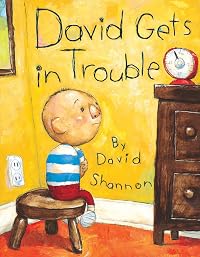
When David gets in trouble, he has excuses right up until bedtime, when he realizes he really is sorry.Tags
Recommendations

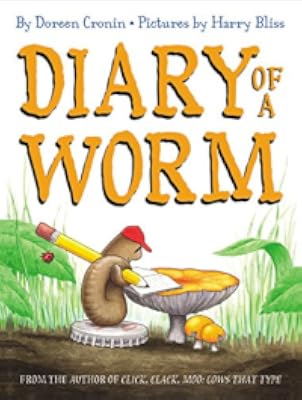




Member Recommendations
madu Stripes is a better book, both in terms of story and illustration.

Member Reviews
There are 3 reasons that I like this book. First, it is easy for young kids to read or memorize. It is a great book for very young beginning readers, and when parents read this book to young children, the children can easily remember and recite this book. Second, the illustrations in this book look like a child could have drawn and colored them which appeals to young children. The pictures always relate perfectly to the words in the story and help to develop the story greatly. Since each page simply states an excuse such as “I couldn’t help it,” it is necessary to look at the illustrations to see why David is getting in trouble. Third, the words in the book are printed in children’s handwriting. This helps children relate to the show more story, realizing that David is a child just like them. I particularly like the very obvious message in this book. The big idea is to take responsibility for your actions. The book begins by saying, “When David gets in trouble he always says…No! It’s not my fault!” At the end, David says, “Yes! It WAS me! I’m sorry. I love you, Mom.” From this, children can understand that making excuses for what you’ve done wrong will only make you feel guilty. show less
David is a little boy who is always coming up with excuses when he gets in trouble, which is very frequently, and it is not until the end of the story when he finally says, “I’m sorry”. The reader does not see the adults who are reprimanding David. Instead, we only see him defending himself. As a result, there is a minimal amount of text. The text is very large and looks like a child’s handwriting. Each spread is saturated with color; the large, somewhat eerie cartoons cover all of the pages and have text sprawled out on top of them. The illustrations also resemble children’s drawings in that the lines are imperfect and messy. Reading this book you may think there will be a huge lesson to be learned at the end, but it is much show more more subtle: David wakes up in the middle of the night, probably feeling guilty, and admits that it was him and says he is sorry. Then, after his guilty conscious has presumably been cleared, he says “I love you, mom” and falls asleep. With this book readers can see all the excuses that kids come up with when they get in trouble. show less
The "David" book series is a must have. Each and every one is special in its own way. Clever and colorful illustrations. About this book: In a series of hilarious snapshots of trouble-in-progress, David hurtles from one scrape to another. Anyone can sympathize with David's trials and tribulations, whether he is scowling at his breakfast ("Do I have to?"), pulling the cat's tail ("But she likes it!") or sitting sullenly on the bathroom floor, soap wedged firmly in mouth ("But Dad says it!"). The exuberant artwork crackles with energy and color (including backdrops in lime green and bittersweet orange), as Shannon carefully hews to a child's-eye view of the world (adults appear only as limbs and torsos). This memorable character is show more nothing short of a force of nature, from his scribbled eyes and hair to his shark-sharp teeth. In the end, it's a confession ("Yes! It was me!") that allows him a peaceful night's sleep, with a woman's tender hand and an "I love you, mom" hovering over his angelic (for now at least) round head. show less
Even though there are not a lot words in this book, I really enjoyed it. The pictures really drew me in, and made me giggle throughout the entire book. Each page is filled with illustrations, and there is ever hardly any white space left. I also really love all of David’s facial expressions. The word choice in this book is also fantastic. Though there are few words, the words that are used, are words that you would expect a little kid to say when he or she gets into trouble. I like that the font of the text is unique, and it looks like a child wrote it. The central message of this book is to own up to your mistakes when it happens, and to not make excuses.
Throughout the book, David makes excuses for his behavior, saying things like “It’s not my fault!” or “I didn’t mean to!”—something many children can relate to. The story has a great message about taking responsibility for our actions and learning to say “I’m sorry.” The colorful illustrations and simple text make it perfect for young readers. I really like how it teaches an important life lesson in a fun and engaging way.
¿Quién no quiere a David? I didn’t appreciate the original No, David (oh, sure, it was cute and all) until I saw someone use it in storytime. The illustrations pop right out at the listeners, even from a great distance. I bought this one in Spanish for our bi-lingual storytimes. It is so hard to replicate the vitality of a first book about a particular character, which is a shame because kids are drawn to the familiar. Not a day goes by that someone doesn’t ask for a series book. I was addicted to the Nancy Drew stories when I was young (although, and it is probably telling that I preferred the ones written twenty years earlier when she drove the “sporty red roadster,” because now I prefer period mysteries) and I turned out show more all right, didn’t I? Didn’t I? Anyway, David is holding up in book after book (which is more than I can say about Martin Waddell’s Big Bear and Little Bear and some others) and … who doesn’t love David? show less
David Gets in Trouble
By David Shannon (2002)
I liked David Gets in Trouble by David Shannon for three reasons. First, I liked the parallelism between David, the character in the story, and most young children. For example, every child goes through a phase where they believe nothing is their fault no matter what the situation is. Like David, children make up excuses such as, “It was an accident,” “I forgot,” or “I couldn’t help it!” Thus, most children and their parents can relate to David’s ‘innocent’ attitude. Second, I liked the author’s note; specifically, readers find out that David Gets in Trouble is based on a book that David Shannon, the author made as a child, which is neat. Lastly, I liked the simple text show more and big font. I believe that it is more appealing to the young readers eye. Overall, the “big idea” of David Gets in Trouble is to exemplify that no matter what you do as a child or the excuses you make your parents will always love you, which is seen at the end of the story when David’s Mother is comforting him. show less
By David Shannon (2002)
I liked David Gets in Trouble by David Shannon for three reasons. First, I liked the parallelism between David, the character in the story, and most young children. For example, every child goes through a phase where they believe nothing is their fault no matter what the situation is. Like David, children make up excuses such as, “It was an accident,” “I forgot,” or “I couldn’t help it!” Thus, most children and their parents can relate to David’s ‘innocent’ attitude. Second, I liked the author’s note; specifically, readers find out that David Gets in Trouble is based on a book that David Shannon, the author made as a child, which is neat. Lastly, I liked the simple text show more and big font. I believe that it is more appealing to the young readers eye. Overall, the “big idea” of David Gets in Trouble is to exemplify that no matter what you do as a child or the excuses you make your parents will always love you, which is seen at the end of the story when David’s Mother is comforting him. show less
Members
- Recently Added By
Author Information

64+ Works 53,522 Members
David Shannon was born October 5, 1960, Washington, D.C. He is an American author and illustrator. He graduated from the Art Center College of Design and now lives in Los Angeles. In 1998 he won the Caldecott Honor for his No, David!. He also wrote A Bad Case of Stripes, How Georgie Radbourn Saved Baseball, and The Amazing Christmas Extravaganza. show more He has also illustrated Audrey Wood's The Bunyans, various books by Jane Yolen including The Ballad of the Pirate Queens and Encounter, as well as Melinda Long's How I Became a Pirate and Pirates Don't Change Diapers. Shannon currently lives in Los Angeles with his wife and daughter. (Bowker Author Biography) show less
Awards and Honors
Series

Common Knowledge
- Canonical title
- David Gets in Trouble
- Alternate titles
- David Gets in Trouble
- People/Characters
- David
Classifications
Statistics
- Members
- 4,307
- Popularity
- 3,485
- Reviews
- 112
- Rating
- (4.04)
- Languages
- Chinese, English, Spanish
- Media
- Paper, Audiobook, Ebook
- ISBNs
- 19
- ASINs
- 5