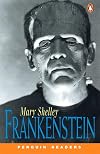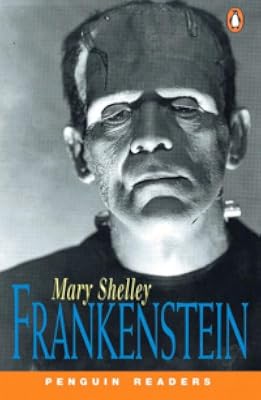
Frankenstein (adapted, Longman Classics, Stage 3)
by Mary Shelley, Deborah Tempest (Retold by)
Longman Classics (Stage 3)
On This Page
Description
Frankenstein is probably the most famous horror story in the world. Victor Frankenstein is a young scientist who creates a monster from parts of dead bodies. At first the monster looks for love and wants to be kind. But soon, he learns to hate people and becomes evil. Frankenstein has learnt how to create life. But will this life destroy him?Tags
Recommendations











Member Reviews
I had thought that Frankenstein is the monster's name for long time. But I learned it is wrong.
I felt pity for Dr.Frankenstein and the monster. They lost all of their happiness.
They killed their important person and hated each other.
I felt pity for Dr.Frankenstein and the monster. They lost all of their happiness.
They killed their important person and hated each other.
It's mistaken well that Frankenstein is the monster's name. Vitor Frankenstein is developer of that monster. That monster made from dead bodies, and he was so clever. This story is sad for Frankenstein, his family, his friend, and his monster.
The monster's story was terrible. He was hated all of people because he was monster. But because of he had good intelligent, he could understand suffering.
The monster's story was terrible. He was hated all of people because he was monster. But because of he had good intelligent, he could understand suffering.
I didn't know that Frankenstein was not the monster's name but a man's name who made him.
It was very sad story.I felt sorry for the monster. But it was very horrible that the monster killed people who Frankenstein loved one after another.
It was very sad story.I felt sorry for the monster. But it was very horrible that the monster killed people who Frankenstein loved one after another.
this story is about Dr.Frankenstein and the monstermade by him.
It is sad story for Frankenstein and his monster. Frankenstein had better not to go away seeing his monster moving.
It is sad story for Frankenstein and his monster. Frankenstein had better not to go away seeing his monster moving.
idioma anglés
May 9, 2018Catalan
Ratings
Members
- Recently Added By
Author Information

437+ Works 73,543 Members
Mary Wollstonecraft Shelley was born in England on August 30, 1797. Her parents were two celebrated liberal thinkers, William Godwin, a social philosopher, and Mary Wollstonecraft, a women's rights advocate. Eleven days after Mary's birth, her mother died of puerperal fever. Four motherless years later, Godwin married Mary Jane Clairmont, bringing show more her and her two children into the same household with Mary and her half-sister, Fanny. Mary's idolization of her father, his detached and rational treatment of their bond, and her step-mother's preference for her own children created a tense and awkward home. Mary's education and free-thinking were encouraged, so it should not surprise us today that at the age of sixteen she ran off with the brilliant, nineteen-year old and unhappily married Percy Bysshe Shelley. Shelley became her ideal, but their life together was a difficult one. Traumas plagued them: Shelley's wife and Mary's half-sister both committed suicide; Mary and Shelley wed shortly after he was widowed but social disapproval forced them from England; three of their children died in infancy or childhood; and while Shelley was an aristocrat and a genius, he was also moody and had little money. Mary conceived of her magnum opus, Frankenstein, or the Modern Prometheus, when she was only nineteen when Lord Byron suggested they tell ghost stories at a house party. The resulting book took over two years to write and can be seen as the brilliant creation of a powerful but tormented mind. The story of Frankenstein has endured nearly two centuries and countless variations because of its timeless exploration of the tension between our quest for knowledge and our thirst for good. Shelley drowned when Mary was only 24, leaving her with an infant and debts. She died from a brain tumor on February 1, 1851 at the age of 54. (Bowker Author Biography) show less
Series

Work Relationships
Is an adaptation of
Common Knowledge
- Canonical title
- Frankenstein (adapted, Longman Classics, Stage 3) (adapted, Longman Classics, Stage 3)
- Disambiguation notice
- Not original novel, but text adapted for Penguin Readers Level 3 by Deborah Tempest. (76 pp.)
Longman Classics are a series of abridged and simplified works for those learning English. Please do not combine with the original work.
Penguin readers are abridged versions for those learning English. Please no not combine with the original work.
Classifications
Statistics
- Members
- 105
- Popularity
- 308,344
- Reviews
- 5
- Rating
- (3.46)
- Languages
- English
- Media
- Paper
- ISBNs
- 5
- ASINs
- 1