On This Page
Description
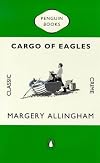
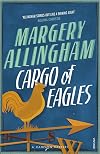
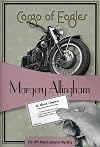
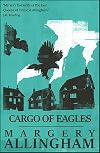
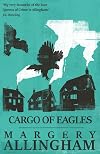
A lively British mystery from "one of the greatest mid-20th-century practitioners of the detective novel" (Alexander McCall Smith). Strange things are happening in Saltey. The little village on the Essex coast is invaded by bikers and a parade of peculiar visitors, a newly released prisoner is rumored to be in the area, Mr. Lugg has bought a bungalow there, the Saltey Demon is on the loose again . . . and Albert Campion is looking for the disappearance of thousands of pounds of gold coinage. show more This is Margery Allingham's final novel featuring her famous gentleman sleuth, overflowing with evil arch-villains and classic thuggery against the atmospheric backdrop of postwar England. "Allingham has that rare gift in a novelist, the creation of characters so rich and so real that they stay with the reader forever." -Sara Paretsky "Margery Allingham stands out like a shining light." -Agatha Christie. show lessTags
Recommendations






















Member Reviews
Summary: Poison pen letters, a released smuggler, a murder, a motorcycle gang and a treasure in Allingham’s last Campion.
This is the last Campion story written by Margery Allingham. Actually, her husband, Philip Youngman Carter completed the book after her death. For whatever reason, I found it one of her better works.
Campion aged with his author. While in the background for much of the story, he functions as a kind of “director” for the whole. His interest centers on the Essex coastal village of Saltey, which seems to have as “salty” a reputation as its name. He sends his manservant Lugg ahead to embed in the village by buying a bungalow.
While Campion pursues behind the scenes investigations, he recruits a young historian, show more Mortimer (“Morty”) Kelsey to be his eyes on the ground. Ostensibly, he is researching Saltey’s colorful history as a hub for smuggling. In reality, he is taken with Saltey’s newest resident, Dido, a doctor who inherited a house from a patient. The residents do not welcome her with open arms. Instead, she received a number of poison pen letters. Then they find her agent, Hector Askew, murdered.
Meanwhile, rumors abound that a recently released convict, James Teague, released from prison and his accomplice, are back in the area to recover a hidden treasure. All this occurs amid the village’s “salty” history, and an invasion of a raucous motorcycle gang led by a hardbitten woman.
However, as readers, we wonder where is Teague? will they find Askew’s murderer? who is behind the letters? and is there a treasure? After finding several of the previous stories disappointing, this one represented a strong finish for Allingham, and for her hero Campion. show less
This is the last Campion story written by Margery Allingham. Actually, her husband, Philip Youngman Carter completed the book after her death. For whatever reason, I found it one of her better works.
Campion aged with his author. While in the background for much of the story, he functions as a kind of “director” for the whole. His interest centers on the Essex coastal village of Saltey, which seems to have as “salty” a reputation as its name. He sends his manservant Lugg ahead to embed in the village by buying a bungalow.
While Campion pursues behind the scenes investigations, he recruits a young historian, show more Mortimer (“Morty”) Kelsey to be his eyes on the ground. Ostensibly, he is researching Saltey’s colorful history as a hub for smuggling. In reality, he is taken with Saltey’s newest resident, Dido, a doctor who inherited a house from a patient. The residents do not welcome her with open arms. Instead, she received a number of poison pen letters. Then they find her agent, Hector Askew, murdered.
Meanwhile, rumors abound that a recently released convict, James Teague, released from prison and his accomplice, are back in the area to recover a hidden treasure. All this occurs amid the village’s “salty” history, and an invasion of a raucous motorcycle gang led by a hardbitten woman.
However, as readers, we wonder where is Teague? will they find Askew’s murderer? who is behind the letters? and is there a treasure? After finding several of the previous stories disappointing, this one represented a strong finish for Allingham, and for her hero Campion. show less
Well here it is, the last Campion novel written by Margery Allingham, although it was actually finished by her husband.
Like the previous book in the series, we're leaning on the Campion is (not) a spy plot. (Unlike the pervious book, we have returned to normal genres, so that weird science fiction jaunt really was a blip.) Campion worked for Intelligence during the war but returned to civilian life afterwards, however he has in the past acted a lot like a spy anyway, being hired by someone important and anonymous to fiddle around with events to stop a bad guy getting some item or land or whatnot, and in this and the previous novel his old spy boss calls on him to help out. So he's not a spy, but he basically is a spy.
Anyway, as happens show more in all the Campion books that I don't like so much, Campion keeps dropping out of the story to let some boring headstrong love-mad young man take the lead. These characters are all the exact same (see The China Governess and Hide My Eyes for recent examples) and I don't know why I am expected to want to spend time with them rather than Campion who is much more interesting. In this case our surrogate lead is Morty, an American who knows Campion's son. No, we can't see Campion's son. The last three books all dealt with situations or characters who could have been Campion's son but weren't. I don't know why Allingham wouldn't write about him. If Campion is too old to be the hero then surely his son makes more sense than some rando.
Anyway as it turns out, Morty is just here to hide the fact that as often happens, Campion is working in the background investigating, calling on contacts and setting up traps and if he were in the forefront and we were allowed to see what he was doing then the story would be much shorter. But I KNOW Allingham COULD write stories where Campion was at the centre of the story because I have read them. My two favourite books in fact are the two that are entirely from his perspective (The Case Of The Late Pig and Traitor's Purse).
The mystery that needs resolving here is similar to the one in the previous book in that the resolution is that there is much less of a mystery here than you thought. An anti-climax if you will. Kind of a let down really, but hey, at least both Oates AND Lugg show up, so if you can ignore boring young Morty, it is almost like old times!
Anyway, I will go on to read the two novels that her husband wrote after this. I am hoping that maybe he actually wanted to write about Campion? You know, as the main character? We'll see. show less
Like the previous book in the series, we're leaning on the Campion is (not) a spy plot. (Unlike the pervious book, we have returned to normal genres, so that weird science fiction jaunt really was a blip.) Campion worked for Intelligence during the war but returned to civilian life afterwards, however he has in the past acted a lot like a spy anyway, being hired by someone important and anonymous to fiddle around with events to stop a bad guy getting some item or land or whatnot, and in this and the previous novel his old spy boss calls on him to help out. So he's not a spy, but he basically is a spy.
Anyway, as happens show more in all the Campion books that I don't like so much, Campion keeps dropping out of the story to let some boring headstrong love-mad young man take the lead. These characters are all the exact same (see The China Governess and Hide My Eyes for recent examples) and I don't know why I am expected to want to spend time with them rather than Campion who is much more interesting. In this case our surrogate lead is Morty, an American who knows Campion's son. No, we can't see Campion's son. The last three books all dealt with situations or characters who could have been Campion's son but weren't. I don't know why Allingham wouldn't write about him. If Campion is too old to be the hero then surely his son makes more sense than some rando.
Anyway as it turns out, Morty is just here to hide the fact that as often happens, Campion is working in the background investigating, calling on contacts and setting up traps and if he were in the forefront and we were allowed to see what he was doing then the story would be much shorter. But I KNOW Allingham COULD write stories where Campion was at the centre of the story because I have read them. My two favourite books in fact are the two that are entirely from his perspective (The Case Of The Late Pig and Traitor's Purse).
The mystery that needs resolving here is similar to the one in the previous book in that the resolution is that there is much less of a mystery here than you thought. An anti-climax if you will. Kind of a let down really, but hey, at least both Oates AND Lugg show up, so if you can ignore boring young Morty, it is almost like old times!
Anyway, I will go on to read the two novels that her husband wrote after this. I am hoping that maybe he actually wanted to write about Campion? You know, as the main character? We'll see. show less
This is the final book in the Albert Campion series; it was actually completed by Allingham's husband after her death. The book features Campion at the end of his career, and unlike earlier books he takes a backseat in the investigation of this case. Campion acts more as an adviser to a young American, Morty Kelsey, and his love interest, an attractive young doctor who has just inherited a country house in a seaside town. The town has quite a history of ghosts and pirates, among other things.
I enjoyed seeing Campion late in his career. He is world-weary in this book, happy to leave the actual investigating to younger associates. The end brings a surprising twist, and finally reveals to the reader the meaning of the title. As with other show more Campion books this one relies heavily on space and time- who was where when. Also like other books in the series this can get overwhelming. Still, it's interesting to see the gentleman sleuth in old age, and the books makes for a satisfying mystery. show less
I enjoyed seeing Campion late in his career. He is world-weary in this book, happy to leave the actual investigating to younger associates. The end brings a surprising twist, and finally reveals to the reader the meaning of the title. As with other show more Campion books this one relies heavily on space and time- who was where when. Also like other books in the series this can get overwhelming. Still, it's interesting to see the gentleman sleuth in old age, and the books makes for a satisfying mystery. show less
Cargo of Eagles was finished after Margery Allingham's death by her husband Youngman Carter, who apparently completed it based on notes that Allingham left behind. Sadly, the last of the original series (if you count this one because Allingham started it) leaves a lot to be desired. I think it suffers from too many tangents leading to a bit of tedium for the reader. I found myself wanting to just get through it (which is really sad, if you think about it for a minute). The basic plot was good, but it took SO long to get to a resolution that at the end I actually didn't care about it.
Brief decription, no spoilers: The small village of Saltey captures the interest of quite a few characters: a doctor who has recently inherited a house from show more a near stranger; an American historian who is spending a year in Britain doing research on approaches to London in the 17th and 18th centuries; several motorcycle gangs, and some unsavory characters as well. Saltey used to be home to smugglers and pirates, and at one time was "visited by a demon." Now it seems it is also home to a murderer who has a secret to keep -- but it's one that Campion must figure out to help solve his own secret mission.
I would recommend it probably to people who are working on finishing the series, but likely not to others. It normally doesn't take me long to finish one of these novels, but this one was just not up to par with most of the other books in the series. show less
Brief decription, no spoilers: The small village of Saltey captures the interest of quite a few characters: a doctor who has recently inherited a house from show more a near stranger; an American historian who is spending a year in Britain doing research on approaches to London in the 17th and 18th centuries; several motorcycle gangs, and some unsavory characters as well. Saltey used to be home to smugglers and pirates, and at one time was "visited by a demon." Now it seems it is also home to a murderer who has a secret to keep -- but it's one that Campion must figure out to help solve his own secret mission.
I would recommend it probably to people who are working on finishing the series, but likely not to others. It normally doesn't take me long to finish one of these novels, but this one was just not up to par with most of the other books in the series. show less
Enjoyable read. Finished post mortem by the author's husband this book brings Campion into the sixties (more successfully than Allingham's contemporaries!). One for the fans.
Ratings
Members
- Recently Added By
Lists

Favorite Books from the 1960s
34 works; 3 members
Author Information

131+ Works 20,378 Members
Margery Allingham, one of England's leading mystery writers, was born on May 20, 1904, in Ealing, a western suburb of London, but grew up in a remote village in Essex. Both of her parents were writers, and Margery carried on that tradition when she sold her first short story as an eight-year-old. At the Regent Street Polytechnic, she continued show more writing and studied drama and speech. While there, she wrote a verse play, Dido and Aeneas, in which she had a starring role during performances in London. At age 19, Allington published her first novel, Blackkerchief Dick. She wrote another novel, The White Cottage Mystery, before creating her most famous character, Albert Campion, in The Black Dudley Murder (published in England as The Crime at Black Dudley) in 1929. Allington went on to create twenty-eight more Campion mysteries, including several collections. She wrote more than 10 other novels, some under the pseudonym Maxwell March, as well as four novellas and sixty-four short stories. During World War II, Allingham served as First Aid Commandant for her district, organized the billeting and care of evacuees from London, and allowed her house to be turned into a temporary military base for eight officers and two hundred men of the Cameronians. The war greatly deepened Allingham's passion for her country, as evidenced in her later works. Allingham died of cancer on June 30, 1966. (Bowker Author Biography) show less
1+ Work 506 Members
Awards and Honors
Awards
Series

Work Relationships
Is abridged in
Common Knowledge
- Original publication date
- 1968
- People/Characters
- Albert Campion; Magersfontein Lugg
- First words
- The rain was falling in a sweet relentless fashion as it does in spring in London and it was all very peaceful and pleasant, if uncompromisingly wet.
- Last words
- (Click to show. Warning: May contain spoilers.)He rang to say, 'Mission accomplished.'"
- Original language
- English
Classifications
Statistics
- Members
- 507
- Popularity
- 59,660
- Reviews
- 5
- Rating
- (3.50)
- Languages
- English, German
- Media
- Paper, Audiobook, Ebook
- ISBNs
- 21
- ASINs
- 21