
Margery Allingham (1904–1966)
Author of The Tiger in the Smoke
About the Author
Margery Allingham, one of England's leading mystery writers, was born on May 20, 1904, in Ealing, a western suburb of London, but grew up in a remote village in Essex. Both of her parents were writers, and Margery carried on that tradition when she sold her first short story as an eight-year-old. show more At the Regent Street Polytechnic, she continued writing and studied drama and speech. While there, she wrote a verse play, Dido and Aeneas, in which she had a starring role during performances in London. At age 19, Allington published her first novel, Blackkerchief Dick. She wrote another novel, The White Cottage Mystery, before creating her most famous character, Albert Campion, in The Black Dudley Murder (published in England as The Crime at Black Dudley) in 1929. Allington went on to create twenty-eight more Campion mysteries, including several collections. She wrote more than 10 other novels, some under the pseudonym Maxwell March, as well as four novellas and sixty-four short stories. During World War II, Allingham served as First Aid Commandant for her district, organized the billeting and care of evacuees from London, and allowed her house to be turned into a temporary military base for eight officers and two hundred men of the Cameronians. The war greatly deepened Allingham's passion for her country, as evidenced in her later works. Allingham died of cancer on June 30, 1966. (Bowker Author Biography) show less
Series
Works by Margery Allingham
The Crime at Black Dudley; or, The Black Dudley Murder [abridged audiobook] (2010) 11 copies, 1 review
The Essential Margery Allingham Collection: Sweet Danger, Traitor's Purse, The Tiger in the Smoke (2016) 10 copies
Flowers for the Judge, Death of a Ghost, and The Case of the Late Pig (The Albert Campion Mysteries) (2016) 6 copies
Three is a Lucky Number 4 copies
L'amnesia del signor Campion 3 copies
The Introductory Allingham Box Set: Look to the Lady, Police at the Funeral, Sweet Danger 2 copies, 1 review
The Case is Altered [short story] 2 copies
Albert Campton 2 copies
Casi da manuale 1 copy
Tredici volte Campion 1 copy
The Gyrth Chalice Mystery 1 copy
The Best Mysteries of All Time Book Set : A Great Deliverance / Ashenden or The British Agent / The Tiger in the Smoke (2005) 1 copy
The Same to Us [Short story] 1 copy
Ullstein-Kriminalmagazin 1 1 copy
Word in Season 1 copy
Take Two at Bedtime, etc 1 copy
Bluebeard's Bathtub 1 copy
Evidence in Camera 1 copy
Tied up in Tinsel 1 copy
The Widow [short story] 1 copy
Markýz a smrt 1 copy
Author: Margery Allingham 1 copy
Associated Works
Miraculous Mysteries: Locked Room Mysteries and Impossible Crimes (2017) — Contributor — 162 copies, 11 reviews
101 Years' Entertainment: The Great Detective Stories 1841-1941 (1941) — Contributor — 111 copies, 1 review
Bodies from the Library 2: Forgotten Stories of Mystery and Suspense by the Queens of Crime and other Masters of Golden Age Detection (2019) — Contributor — 96 copies, 3 reviews
Ghosts from the Library: Lost Tales of Terror and the Supernatural (2023) — Contributor — 75 copies, 1 review
Murder at Teatime: Mysteries in the Classic Cozy Tradition (1996) — Contributor — 56 copies, 2 reviews
Grande Dames of Detection: Two Centuries of Sleuthing Stories by the Gentle Sex (1973) — Contributor — 35 copies
Christmas Crimes: Stories from Ellery Queen's Mystery Magazine and Alfred Hitchcock Mystery M (1996) — Contributor — 28 copies
Campion: The Complete Series — Author — 15 copies
The Case of the Golddigger's Purse | Died in the Wool | Pearls Before Swine (1945) 10 copies, 1 review
Sylvia Plath's Tomato Soup Cake: A Compendium of Classic Authors' Favourite Recipes (2024) — Contributor — 6 copies
For love or money; the 1957 anthology of the mystery writers of America (1957) — Contributor — 4 copies
Readers Digest Condensed Books: Flowers for Mrs. Harris • The Hunt for Kimathi • By Love Possessed • Hide My Eyes (1957) 3 copies
More Work for the Undertaker | Spin Your Web Lady | The Innocent Bottle — Contributor — 1 copy
Classic Crime Gift Set--Police At the Funeral, the Moving Toyshop, Death At the President's Lodging (1988) — Contributor — 1 copy
Argosy (UK) [Vol. IV No. 5, June 1943] — Contributor — 1 copy
Tagged
Common Knowledge
- Legal name
- Carter, Margery Louise Allingham
- Other names
- Allingham, Margery
March, Maxwell - Birthdate
- 1904-05-20
- Date of death
- 1966-06-30
- Gender
- female
- Education
- Regent Street Polytechnic, London
- Occupations
- crime novelist
- Relationships
- Allingham, Emmie (mother)
Allingham, Herbert (father)
Carter, Youngman (husband) - Cause of death
- cancer (breast)
- Nationality
- UK
- Birthplace
- Ealing, London, Middlesex, England, UK
- Places of residence
- Layer Breton, Essex, England, UK
London, Middlesex, England, UK
Mersea Island, Essex, England, UK - Place of death
- Colchester, Essex, England, UK
- Burial location
- St. Nicholas Churchyard, Tolleshunt D'Arcy, Essex, England, UK
- Map Location
- England, UK
Members
Reviews
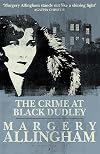
It's perhaps a bit unfair to chastise a book that's almost a hundred years old for being dated, especially when Margery Allingham was one of the coterie of writers in the Twenties and Thirties who helped to establish many of the conventions of detective/murder mystery fiction that seem familiar and even clichéd to us now. (Although The Crime at Black Dudley is only sort of incidentally an English Country House Murder Mystery, and more Bright Young Things Do Scooby Doo, with the Pesky Kids show more foiling the melodramatic schemes of an international crime ring run by men who run the gamut of stereotypes from xenophobic to plain old anti-Semitic.)
But Allingham's characters often act and think in ways that make me struggle to imagine how even her contemporaries could have thought them psychologically convincing: the emotional equivalent of a kiss in a Thirties Hays Code movie, where the couple mash their lips together without moving for 2.9 seconds in a vague facsimile of passion. The gender politics here are awful.
And even then I might have given this two stars—tosh, but of the readable-on-an-airline variety—if not for the ending, which breaks the cardinal rule of this kind of book. In other words, while it may be possible for the reader to work out whodunit, that's only through using the process of elimination—not because of any actual clues given, while all the information needed to understand whydunit is not given until the last chapter.
That, friends, is a cheat—and that, combined with the fact that the whydunit is what I will tactfully call bonkers bananas, is why I have no plans to pick up another Margery Allingham novel. show less
But Allingham's characters often act and think in ways that make me struggle to imagine how even her contemporaries could have thought them psychologically convincing: the emotional equivalent of a kiss in a Thirties Hays Code movie, where the couple mash their lips together without moving for 2.9 seconds in a vague facsimile of passion. The gender politics here are awful.
And even then I might have given this two stars—tosh, but of the readable-on-an-airline variety—if not for the ending, which breaks the cardinal rule of this kind of book. In other words, while it may be possible for the reader to work out whodunit, that's only through using the process of elimination—not because of any actual clues given, while all the information needed to understand whydunit is not given until the last chapter.
That, friends, is a cheat—and that, combined with the fact that the whydunit is what I will tactfully call bonkers bananas, is why I have no plans to pick up another Margery Allingham novel. show less

After the wonderful humour of The Case of the Late Pig and the brooding introspection of Dancers in Mourning this book was a shock - once again we see a completely different side to Albert Campion. And it's not pleasant.
We enter the world of fashion in the 1930s; Campion's sister Valentine is a very successful fashion designer and Georgia Wells, the famous actress, is one of her largest clients (as well as being one of her closest friends). Georgia is charming and fascinating but seems to show more have no idea of the effect she can have on other people, so when she steals Valentine's lover no-one really bats an eyelid. But when Georgia's husband dies in a suspiciously convenient manner and Georgia seems to be spreading rumours that implicate Valentine in her husband's death, Albert Campion steps in to try and solve the mystery and protect his sister.
In this book we see another side to Albert Campion. Throughout most of the gruesome and dangerous cases he's looked into before, Campion has remained unruffled by events; murder and danger don't seem to have an emotional impact on him. But here we see him unsettled by the job he's been asked to do, unsettled by his sister and unsettled by the reappearance of Lady Amanda Fitton; it's not something he copes with well. Although it's clear he cares for Valentine there are passages in the novel where he thinks about hitting or shaking her and one conversation/argument where he says things to her that would be almost unforgivable by today's standards. Unlike some reviewers, I didn't see this as symptomatic of his general attitude towards women, or as Allingham saying that this sort of behaviour was acceptable, but rather an indication of Campoin's own extreme discomfort with the situation. Nothing in his behaviour towards women in earlier books prepared me for the way he behaved towards Valentine (and occasionally other women) in this book.
According to the frontispiece of my copy, an Observer review of The Fashion in Shrouds said that 'to Albert Campion has fallen the honour of being the first detective to feature in a story which is also by any standard a distinguished novel'. From following Liz's reading for the last couple of years, I'm very wary of someone declaring something to be a 'first', but I think it is fair to say that this book is more than just a good detective novel (although I don't think there's anything wrong with being just a good detective novel either). Allingham uses the world of fashion and the characters of Valentine, Georgia and to some extent, Lady Amanda, to explore the position of women in society in the 1930s, in particular the position of women who had careers. This aspect of the book has generated a lot of controversy, which is completely understandable given the views some of the characters express. From my reading of the novel, I don't think that Allingham is saying she agrees with the controversial statements that her characters make, but I'm also not sure I would agree with Allingham's views on femininity and women either. From a first reading I would say that Allingham thinks women have equal abilities to men's in the field of work but that they are disadvantaged by being more emotional beings, particularly where romance is concerned. I don't think this is fundamentally very different from the views a lot of people hold today, although modern views wouldn't be expressed in the same way Allingham's are. I found this element of the book fascinating and it hugely increased my enjoyment of the novel, but I can understand that others may either not be interested or find these ideas make the novel almost repulsive to them.
One of the less controversial quotes:
'They were two fine ladies of a fine modern world, in which their status had been raised until they stood as equals with their former protectors. Their several responsibilities were far heavier than most men's and their abilities greater. Their freedom was limitless. There they were at two o'clock in the morning, driving back in their fine carriage to lonely little houses, bought, made lovely and maintained by the proceeds of their own labours. They were both mistress and master, little Liliths, fragile but powerful in their way, since the livelihood of a great number of their fellow beings depended directly upon them, and yet, since they had not relinquished their femininity, within them, touching the very core and foundation of their strength, was the dreadful primitive weakness of the female of any species. Byron, who knew something about ladies if little enough about poetry, once threw off the whole shameful truth about the sex, and, like most staggeringly enlightening remarks, it degenerated into a truism and became discountenanced when it was no longer witty.
"Love really can rot any woman up," Georgia observed contentedly. "Isn't it funny?"
"Dear God, isn't it dangerous!" said Val.' show less
We enter the world of fashion in the 1930s; Campion's sister Valentine is a very successful fashion designer and Georgia Wells, the famous actress, is one of her largest clients (as well as being one of her closest friends). Georgia is charming and fascinating but seems to show more have no idea of the effect she can have on other people, so when she steals Valentine's lover no-one really bats an eyelid. But when Georgia's husband dies in a suspiciously convenient manner and Georgia seems to be spreading rumours that implicate Valentine in her husband's death, Albert Campion steps in to try and solve the mystery and protect his sister.
In this book we see another side to Albert Campion. Throughout most of the gruesome and dangerous cases he's looked into before, Campion has remained unruffled by events; murder and danger don't seem to have an emotional impact on him. But here we see him unsettled by the job he's been asked to do, unsettled by his sister and unsettled by the reappearance of Lady Amanda Fitton; it's not something he copes with well. Although it's clear he cares for Valentine there are passages in the novel where he thinks about hitting or shaking her and one conversation/argument where he says things to her that would be almost unforgivable by today's standards. Unlike some reviewers, I didn't see this as symptomatic of his general attitude towards women, or as Allingham saying that this sort of behaviour was acceptable, but rather an indication of Campoin's own extreme discomfort with the situation. Nothing in his behaviour towards women in earlier books prepared me for the way he behaved towards Valentine (and occasionally other women) in this book.
According to the frontispiece of my copy, an Observer review of The Fashion in Shrouds said that 'to Albert Campion has fallen the honour of being the first detective to feature in a story which is also by any standard a distinguished novel'. From following Liz's reading for the last couple of years, I'm very wary of someone declaring something to be a 'first', but I think it is fair to say that this book is more than just a good detective novel (although I don't think there's anything wrong with being just a good detective novel either). Allingham uses the world of fashion and the characters of Valentine, Georgia and to some extent, Lady Amanda, to explore the position of women in society in the 1930s, in particular the position of women who had careers. This aspect of the book has generated a lot of controversy, which is completely understandable given the views some of the characters express. From my reading of the novel, I don't think that Allingham is saying she agrees with the controversial statements that her characters make, but I'm also not sure I would agree with Allingham's views on femininity and women either. From a first reading I would say that Allingham thinks women have equal abilities to men's in the field of work but that they are disadvantaged by being more emotional beings, particularly where romance is concerned. I don't think this is fundamentally very different from the views a lot of people hold today, although modern views wouldn't be expressed in the same way Allingham's are. I found this element of the book fascinating and it hugely increased my enjoyment of the novel, but I can understand that others may either not be interested or find these ideas make the novel almost repulsive to them.
One of the less controversial quotes:
'They were two fine ladies of a fine modern world, in which their status had been raised until they stood as equals with their former protectors. Their several responsibilities were far heavier than most men's and their abilities greater. Their freedom was limitless. There they were at two o'clock in the morning, driving back in their fine carriage to lonely little houses, bought, made lovely and maintained by the proceeds of their own labours. They were both mistress and master, little Liliths, fragile but powerful in their way, since the livelihood of a great number of their fellow beings depended directly upon them, and yet, since they had not relinquished their femininity, within them, touching the very core and foundation of their strength, was the dreadful primitive weakness of the female of any species. Byron, who knew something about ladies if little enough about poetry, once threw off the whole shameful truth about the sex, and, like most staggeringly enlightening remarks, it degenerated into a truism and became discountenanced when it was no longer witty.
"Love really can rot any woman up," Georgia observed contentedly. "Isn't it funny?"
"Dear God, isn't it dangerous!" said Val.' show less

This is a dark, dank, hard-edged book, and with it, Allingham completes her transformation from a simple mystery-adventure writer to a social commentator and psychoanalyst. There are occasional criticisms that her characters are too big and broad, but that just gives them room to breathe; they feel far more alive than any of those written by Agatha Christie, for example. Here, we've got Chief Inspecotr Luke, a moral man stuck in an immoral world; Canon Avril, Campion's uncle, whose saintly show more outlook is both a benefit and a curse; and Jack Havoc (what a name!), who can really only be called by a couple of very modern terms: serial killer and psychopath. They all get their moments in the spotlight, and their actions play out against a harsh backdrop of drippy, wet, smoggy, post-war London. The Folio Society edition looks almost tobacco-stained, with each of the illustrations cast in sickly brown and yellow tones, and that only adds to the effect. This isn't a nice place. This isn't a nice story. There is no "mystery-adventure" here.
The one element that really feels out of place is Albert Campion, and it's pretty telling that while he's present for most of the investigation, he has almost no impact on its outcome. I'm guessing that Allingham wasn't brazen enough to borrow Christie's late-stage technique (where Hercule Poirot would barely cameo at the beginning and end of several novels); she felt she needed to give the public their due if the book had "A Campion mystery!" emblazoned across the front. He really doesn't add anything, though, and Allingham's disinterest is obvious; there's a wide-open invitation to involve him in the book's denouement, and she skirts straight around it.
It's hard to say that I liked The Tiger in the Smoke. It's not an inviting book, and much of it is permeated by a sense that something awful is about to happen. It is, however, a very skillful piece of writing, all the more astonishing if you have any sense at all of where Allingham was twenty-five years earlier. This is a grown-up thriller for grown-up readers. And there are a couple of places, in particular, where it will make the hairs stand up on the back of your neck. show less
The one element that really feels out of place is Albert Campion, and it's pretty telling that while he's present for most of the investigation, he has almost no impact on its outcome. I'm guessing that Allingham wasn't brazen enough to borrow Christie's late-stage technique (where Hercule Poirot would barely cameo at the beginning and end of several novels); she felt she needed to give the public their due if the book had "A Campion mystery!" emblazoned across the front. He really doesn't add anything, though, and Allingham's disinterest is obvious; there's a wide-open invitation to involve him in the book's denouement, and she skirts straight around it.
It's hard to say that I liked The Tiger in the Smoke. It's not an inviting book, and much of it is permeated by a sense that something awful is about to happen. It is, however, a very skillful piece of writing, all the more astonishing if you have any sense at all of where Allingham was twenty-five years earlier. This is a grown-up thriller for grown-up readers. And there are a couple of places, in particular, where it will make the hairs stand up on the back of your neck. show less
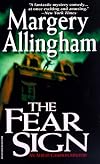
This is one of the odder mysteries of the classic British period. It isn't so much a mystery as a political thriller-cum-treasure hunt. Agatha Christie also wrote some political mysteries about high-stakes international tensions, but this is not really similar to those at all--they are usually much more traditional procedurals in which the political element comes out in the motive. In some ways I would say it is closer to Dorothy L. Sayers's masterpiece The Nine Tailors because it's not as show more much about the mystery as about the development of interesting and strange characters as an excuse for an anthropological examination of archaic British lifeways. It might be my favorite Campion book. show less
Lists
Books Read in 2023 (12)
Favorite Series (1)
Next in Series (1)
Awards


You May Also Like


Associated Authors
Statistics
- Works
- 131
- Also by
- 109
- Members
- 20,342
- Popularity
- #1,067
- Rating
- 3.6
- Reviews
- 538
- ISBNs
- 762
- Languages
- 13
- Favorited
- 52


