On This Page
Description
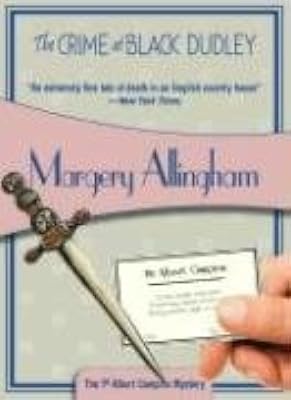
"Margery Allingham stands out like a shining light. And she has another quality, not usually associated with crime stories, elegance." -Agatha Christie Timothy Kinnit is rich, handsome, and successful, but his past is a mystery to him. When he learns, on the eve of his elopement, that he is adopted, he must question everything he thought he knew. In desperate search of answers, Kinnit calls on private detective Albert Campion to shed some light on his past, and how it connects him to the show more notorious Turk Street Mile slum. Meanwhile, his illustrious adopted family has a sinister secret of its own-involving a murderous nineteenth-century governess-that must also be brought to light by Campion's investigations. "Allingham is very, very good and those who are not familiar with her have a discovery awaiting them."-Los Angeles Times. show lessTags
Recommendations




















Member Reviews
Young Timothy Kinnet is all set to marry the girl of his dreams, when he finds out that he's not who he thought he was. He had always believed that he was an illegitimate relation of the Kinnets, taken in when the Blitz destroyed east London. But he finds out that he was in fact, a foundling. So he sets off to uncover his true identity.
But Allingham's books are never that simple. When Timothy becomes the chief suspect in a housebreaking and later a suspicious death, his fiance enlists the help of Albert Campion. This is Allingham at her best. Nothing is ever quite as simple as it seems, but the gang is all here--Lugg, Charlie Luke,--only Amanda is missing. But the story goes at a fast pace and is a pleasure to read.
But Allingham's books are never that simple. When Timothy becomes the chief suspect in a housebreaking and later a suspicious death, his fiance enlists the help of Albert Campion. This is Allingham at her best. Nothing is ever quite as simple as it seems, but the gang is all here--Lugg, Charlie Luke,--only Amanda is missing. But the story goes at a fast pace and is a pleasure to read.
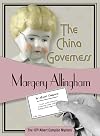
This is slightly complicated and you need to pay attention. The title is taken from a china statuette and the back story of the china collectable has significant implications to the rest of the story, which I hadn't realised until it was presented to me on a plate.
In this we have a young couple on the verge of an engagement, only the lady's father wants to make some enquiries about the young gentleman's past. Tim Kinnett isn't actually a Kinnett, he's adopted. In an evacuation, he turned up at the Kinnett's country residence, seemed to be left unclaimed and so the family acquired him. But he seems to have been evacuated from one of the worst slums in London, which is now no more, having been bombed in the war. Julia's father, a rich show more businessman, wants to ensure that there's nothing untoward in Tim's parentage, which is difficult when who is parents are in unknown. The Kinnett family turn to a detective firm they used when they adopted Tim, while Julia's father calls in Campion.
There is a parallel story of a distant relative, who has turned up at the house with a governess in tow and things are not necessarily what they appear there. The family are a bit two dimensional, whereas Nanny Broome is depicted in full colour, with all her strange ways and foibles. Julia has her wits about her and a fair bit of gumption, dealing with Tim who's head goes into a bit of a spin when he finds out he isn't who he thought he was.
Campion doesn't so much detect the answer as serve as a means of retelling it to us. Which we need, as I said, it gets complicated! show less
In this we have a young couple on the verge of an engagement, only the lady's father wants to make some enquiries about the young gentleman's past. Tim Kinnett isn't actually a Kinnett, he's adopted. In an evacuation, he turned up at the Kinnett's country residence, seemed to be left unclaimed and so the family acquired him. But he seems to have been evacuated from one of the worst slums in London, which is now no more, having been bombed in the war. Julia's father, a rich show more businessman, wants to ensure that there's nothing untoward in Tim's parentage, which is difficult when who is parents are in unknown. The Kinnett family turn to a detective firm they used when they adopted Tim, while Julia's father calls in Campion.
There is a parallel story of a distant relative, who has turned up at the house with a governess in tow and things are not necessarily what they appear there. The family are a bit two dimensional, whereas Nanny Broome is depicted in full colour, with all her strange ways and foibles. Julia has her wits about her and a fair bit of gumption, dealing with Tim who's head goes into a bit of a spin when he finds out he isn't who he thought he was.
Campion doesn't so much detect the answer as serve as a means of retelling it to us. Which we need, as I said, it gets complicated! show less
Imagine starting to write a series in the 1920s and STILL writing it in the 1960s. Has any era changed so much in so little time? Of course people of the sixties were not interested in golden age mysteries, so Allingham's style and genre adapted, but she was still writing about the same character (not sure if that was her choice). So here we have an Albert Campion presumably now in his early sixties, brought in to help a couple of youngsters sort out a past mystery so they can marry.
Allingham's later Campion books were sometimes hardly Campion books at all, but then she'd swing back with a bit of fan service. Following on from Hide My Eyes, in which Campion is only seen about four times, I was excited when Campion was actually hired to show more be a detective in this one. He even goes back to Bottle Street and sees Lugg! (Who must be about eighty by now.) But that was just for one chapter. Again Campion drifts in and out of the story and even when he is here, he doesn't really sound like himself any more. This story, about young men, seemed like a perfect opportunity to revisit his son, but no such luck, not even mentioned that he is a father. The mystery of this story pretty much works itself out without Campion doing anything. I think she regretted making him so clever so that she would often have to just not write about him because he always knew what was going on long before anyone else. In fact, in the later books it seems clear that she would rather write about her police character Charles Luke and I have no idea why. Luke has never sounded any different to the original police character of Oates to me and he never monopolised Campion's stories. So this is still not a strong Campion Campion story.
How is it as a mystery? Well, pretty disappointing. A young man is trying to trace his heritage, having just learned that he was adopted. This gets cleared up but at the same time not resolved way too easily. Meanwhile an evil scheme is uncovered, directly involving his heritage, and that is not sorted out. And oh yeah maybe this is a murder mystery after all but you don't find out it was until the end, so it is not that kind of murder mystery. It's very readable but almost like Allingham was bored of mystery as a genre. It also contains some horrible outdated derogatory attitudes towards learning disabilities etc which really revolted me. The idea of 'breeding' I suppose has come up before since Campion tends to hang out with toffs, but it feels here that Allingham believed in that sort of discriminatory stuff. show less
Allingham's later Campion books were sometimes hardly Campion books at all, but then she'd swing back with a bit of fan service. Following on from Hide My Eyes, in which Campion is only seen about four times, I was excited when Campion was actually hired to show more be a detective in this one. He even goes back to Bottle Street and sees Lugg! (Who must be about eighty by now.) But that was just for one chapter. Again Campion drifts in and out of the story and even when he is here, he doesn't really sound like himself any more. This story, about young men, seemed like a perfect opportunity to revisit his son, but no such luck, not even mentioned that he is a father. The mystery of this story pretty much works itself out without Campion doing anything. I think she regretted making him so clever so that she would often have to just not write about him because he always knew what was going on long before anyone else. In fact, in the later books it seems clear that she would rather write about her police character Charles Luke and I have no idea why. Luke has never sounded any different to the original police character of Oates to me and he never monopolised Campion's stories. So this is still not a strong Campion Campion story.
How is it as a mystery? Well, pretty disappointing. A young man is trying to trace his heritage, having just learned that he was adopted. This gets cleared up but at the same time not resolved way too easily. Meanwhile an evil scheme is uncovered, directly involving his heritage, and that is not sorted out. And oh yeah maybe this is a murder mystery after all but you don't find out it was until the end, so it is not that kind of murder mystery. It's very readable but almost like Allingham was bored of mystery as a genre. It also contains some horrible outdated derogatory attitudes towards learning disabilities etc which really revolted me. The idea of 'breeding' I suppose has come up before since Campion tends to hang out with toffs, but it feels here that Allingham believed in that sort of discriminatory stuff. show less
Summary: An engaged orphan adopted by the Kinnits hires Campion to find his roots, stirring up a crime spree and a family secret.
Tim Kinnit is engaged to marry Julia, the daughter of a wealthy tycoon. There is one problem. Tim is a war orphan, rescued from a district of “ill repute,” the Turk Street Mile, during the war and adopted by the Kinnits, another well-to-do family. The worry is that there may be some mental defect in his background, whatever it is. He recruits Albert to investigate.
All of a sudden, a crime spree arises on Turk Street, now renovated. An apartment is ransacked and someone commits arson. Meanwhile, Campion’s investigations uncover a skeleton in the Kinnits’ closet. Thyrza Caleb was a governess to the show more family in the nineteenth century, accused of murder, and who reputedly took her own life.
Campion and inspector Luke try to figure out how the crimes on Turk Street are connected to Tim’s paternity, And what further danger does the criminal pose? Amid all the puzzlement, one thing is sure. Tim’s childhood nanny, Nanny Broome, believes in him and that he’ll make a good husband to Julia.
Allingham has always had complicated plots, but I found this one particularly hard to follow. The “China Governess” part of the plot seemed extraneous. And Campion, once eccentric, seems muted and uninteresting, in contrast to Lugg and Luke who seem to grow more interesting as the stories go on. show less
Tim Kinnit is engaged to marry Julia, the daughter of a wealthy tycoon. There is one problem. Tim is a war orphan, rescued from a district of “ill repute,” the Turk Street Mile, during the war and adopted by the Kinnits, another well-to-do family. The worry is that there may be some mental defect in his background, whatever it is. He recruits Albert to investigate.
All of a sudden, a crime spree arises on Turk Street, now renovated. An apartment is ransacked and someone commits arson. Meanwhile, Campion’s investigations uncover a skeleton in the Kinnits’ closet. Thyrza Caleb was a governess to the show more family in the nineteenth century, accused of murder, and who reputedly took her own life.
Campion and inspector Luke try to figure out how the crimes on Turk Street are connected to Tim’s paternity, And what further danger does the criminal pose? Amid all the puzzlement, one thing is sure. Tim’s childhood nanny, Nanny Broome, believes in him and that he’ll make a good husband to Julia.
Allingham has always had complicated plots, but I found this one particularly hard to follow. The “China Governess” part of the plot seemed extraneous. And Campion, once eccentric, seems muted and uninteresting, in contrast to Lugg and Luke who seem to grow more interesting as the stories go on. show less
Albert Campion finds himself called upon to help find the true parentage of a young man on the brink of marriage.
Adopted by the Kinnet family, during the evacuation of London at the beginning of WWII, there was no record of the birth parents or birth place of Timothy. The Kinnets had the money and position to give him a good upbringing and education. But now, Timothy is set to marry the daughter of a captain of industry, who wants to know more about Timothy’s background.
In searching for his background, Timothy finds some disturbing history involving a murder that may have involved the family, and the possibility of his birth place being a one of the roughest slums of that era, Turk Street Mile. These negatives tie in with the show more philosophy of the stock you come from determines the type of person you will be, regardless of your upbringing and position in life.
Allingham didn’t write simple cozy mysteries. There are complicated plots, developed characters and a good number of twists, turns, distractions and sometimes loops. Her Campion isn’t flashy, but his analyzing and observations keep me reading. For me she is not an author to be read quickly. show less
Adopted by the Kinnet family, during the evacuation of London at the beginning of WWII, there was no record of the birth parents or birth place of Timothy. The Kinnets had the money and position to give him a good upbringing and education. But now, Timothy is set to marry the daughter of a captain of industry, who wants to know more about Timothy’s background.
In searching for his background, Timothy finds some disturbing history involving a murder that may have involved the family, and the possibility of his birth place being a one of the roughest slums of that era, Turk Street Mile. These negatives tie in with the show more philosophy of the stock you come from determines the type of person you will be, regardless of your upbringing and position in life.
Allingham didn’t write simple cozy mysteries. There are complicated plots, developed characters and a good number of twists, turns, distractions and sometimes loops. Her Campion isn’t flashy, but his analyzing and observations keep me reading. For me she is not an author to be read quickly. show less
A late Campion, with some similarities to but not as good as the brilliant "Tiger in the Smoke". Sometimes I find Allingham's writing rather opaque, as she lets characters express their emotions in a very oblique way and I'm not always sure I understand her meaning... however the story and characters held my interest. Don't start with this one, again it's one for the fans...
This was my first Allingham and I am totally smitten. Dense like Dorothy Sayers but more playful. I really had fun with this book. I had a way cuter copy though - a vintage classic Crime Penguin.
Members
- Recently Added By
Lists

Female Author
1,235 works; 67 members

Books Read in 2023
5,547 works; 145 members
Author Information

131+ Works 20,320 Members
Margery Allingham, one of England's leading mystery writers, was born on May 20, 1904, in Ealing, a western suburb of London, but grew up in a remote village in Essex. Both of her parents were writers, and Margery carried on that tradition when she sold her first short story as an eight-year-old. At the Regent Street Polytechnic, she continued show more writing and studied drama and speech. While there, she wrote a verse play, Dido and Aeneas, in which she had a starring role during performances in London. At age 19, Allington published her first novel, Blackkerchief Dick. She wrote another novel, The White Cottage Mystery, before creating her most famous character, Albert Campion, in The Black Dudley Murder (published in England as The Crime at Black Dudley) in 1929. Allington went on to create twenty-eight more Campion mysteries, including several collections. She wrote more than 10 other novels, some under the pseudonym Maxwell March, as well as four novellas and sixty-four short stories. During World War II, Allingham served as First Aid Commandant for her district, organized the billeting and care of evacuees from London, and allowed her house to be turned into a temporary military base for eight officers and two hundred men of the Cameronians. The war greatly deepened Allingham's passion for her country, as evidenced in her later works. Allingham died of cancer on June 30, 1966. (Bowker Author Biography) show less
Series

Belongs to Publisher Series
SaPo (84)
Work Relationships
Is contained in
Is abridged in
Common Knowledge
- Canonical title
- The China Governess
- Original title
- The China Governess
- Original publication date
- 1962
- People/Characters
- Albert Campion; Timothy Kinnet; Magersfontein Lugg
- Important places
- London, England, UK
- Important events
- World War II (1939-1945)
- Epigraph
- Why each atom knows its own,/How in spite of woe and death/Gay is life and sweet is breath. - Robert Bridges
- First words
- 'It was called the wickedest street in London and the entrance was just here. I imagine the mouth of the road lay between this lamp standard and the second from the next down there.'
- Quotations*
- '(...) I do want to belong to someone's line.'
- Last words
- (Click to show. Warning: May contain spoilers.)The sound faded into a murmur and was lost in the general noises of the busy household.
- Original language
- English
*Some information comes from Common Knowledge in other languages. Click "Edit" for more information.
Classifications
Statistics
- Members
- 708
- Popularity
- 40,164
- Reviews
- 17
- Rating
- (3.46)
- Languages
- 6 — English, Finnish, German, Japanese, Portuguese (Brazil), Swedish
- Media
- Paper, Audiobook, Ebook
- ISBNs
- 25
- ASINs
- 25