On This Page
Description
"A top-notch mystery full of keen characterization, humor, old English atmosphere, a charmingly decadent family, and a few sudden deaths." -The New York Times A beggarwoman on a bench arouses Albert Campion's curiosity-and helps Scotland Yard lure him into a case of family dysfunction. The seemingly destitute woman is none other than a member of the eccentric Palinode family, which has recently lost two of its members. The police suspect a poisoner is on the loose, which is why Campion is show more willing to go undercover as a lodger in the boardinghouse where they live. As the recently deceased are exhumed, Campion becomes acquainted with the old-fashioned, out-of-the-ordinary family members, who talk in crossword puzzle clues, sneak out at night, and cook vats of stinky food in the basement to save money. And if that's not enough to keep Campion on his toes, the local undertaker seems to be digging himself into a hole . . . Praise for Margery Allingham "Margery Allingham stands out like a shining light." -Agatha Christie "The best of mystery writers." -The New Yorker "Don't start reading these books unless you are confident that you can handle addiction." -The Independent "One of the finest Golden-Age crime novelists." -The Sunday Telegraph "Spending an evening with Campion is one of life's pure pleasures." -The Sunday Times. show lessTags
Recommendations




















Member Reviews
Summary: When two boarding house residents from the same family die, Albert Campion is persuaded to become a boarder to discover what’s afoot.
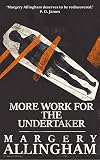
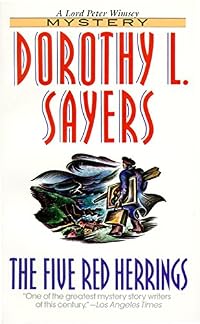
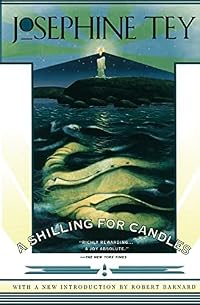
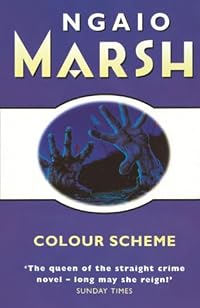
I’m a “Queens of Crime” fan, having read many of the mysteries of Agatha Christie, Dorothy L. Sayers, and Ngaio Marsh. There is a fourth “queen” I’ve not read until now, Margery Allingham, whose main character is the aristocratic Albert Campion. I picked at random one that was available inexpensively as an e-book, which happens to be number 13 in the series, More Work for the Undertaker.
Campion has been persuaded by the Chief of Scotland Yard, Stanislaus Oates to become an “undercover” boarder at the boarding house of Renee Roper, a faded actress. The house once belonged to the show more Palinode family, a professor and his eccentric children. Two have died recently under suspicious circumstances, both Edward and Ruth, from apparent strokes. Three remain, the moody Lawrence, the fashionable Evadne, and the eccentric herbalist, Jessica.
Exhumations reveal that Ruth, who had a gambling problem, had been poisoned, but not Edward. Ruth also had willed seemingly worthless shares to another boarder, Captain Seton. Except that there is evidence that the shares are about to become very valuable. Who would want her dead? A family member? Or someone else with an interest.
There are funny things happening on Apron Street, where the Palinodes live. The “skinny” among is that some of their number are disappearing “up Apron Street.” Campion has his suspicions of the undertaker when he sees him and his son carrying a coffin from Renee’s boarding house basement to their business across the road but everything about them seems on the up and up. As Campion and DDI Charlie Luke, with whom he is working pursue investigations, an interview with the pharmacist results in a suicide by cyanide. Then there is the banker, Congreve, who goes missing. Meanwhile, a young man dating a girl at the boarding house is found badly concussed in a shed where he stored his motorbike.
There are so many threads going on that it is not always easy to keep track of it all and one wonders how it all connects. I don’t know if this is characteristic of all of Allingham’s works, but her plot here is the most complicated of those I’ve encountered among the Queens of Crime. A list of characters would certainly be helpful. But the characters are quirky enough to be really interesting and the culminating events make both an exciting finish and tie up all the loose ends. It feels to me that Allingham demands more of the reader, but rewards that with a truly complicated and fascinating mystery. I may well try a few more! show less
I’m a “Queens of Crime” fan, having read many of the mysteries of Agatha Christie, Dorothy L. Sayers, and Ngaio Marsh. There is a fourth “queen” I’ve not read until now, Margery Allingham, whose main character is the aristocratic Albert Campion. I picked at random one that was available inexpensively as an e-book, which happens to be number 13 in the series, More Work for the Undertaker.
Campion has been persuaded by the Chief of Scotland Yard, Stanislaus Oates to become an “undercover” boarder at the boarding house of Renee Roper, a faded actress. The house once belonged to the show more Palinode family, a professor and his eccentric children. Two have died recently under suspicious circumstances, both Edward and Ruth, from apparent strokes. Three remain, the moody Lawrence, the fashionable Evadne, and the eccentric herbalist, Jessica.
Exhumations reveal that Ruth, who had a gambling problem, had been poisoned, but not Edward. Ruth also had willed seemingly worthless shares to another boarder, Captain Seton. Except that there is evidence that the shares are about to become very valuable. Who would want her dead? A family member? Or someone else with an interest.
There are funny things happening on Apron Street, where the Palinodes live. The “skinny” among is that some of their number are disappearing “up Apron Street.” Campion has his suspicions of the undertaker when he sees him and his son carrying a coffin from Renee’s boarding house basement to their business across the road but everything about them seems on the up and up. As Campion and DDI Charlie Luke, with whom he is working pursue investigations, an interview with the pharmacist results in a suicide by cyanide. Then there is the banker, Congreve, who goes missing. Meanwhile, a young man dating a girl at the boarding house is found badly concussed in a shed where he stored his motorbike.
There are so many threads going on that it is not always easy to keep track of it all and one wonders how it all connects. I don’t know if this is characteristic of all of Allingham’s works, but her plot here is the most complicated of those I’ve encountered among the Queens of Crime. A list of characters would certainly be helpful. But the characters are quirky enough to be really interesting and the culminating events make both an exciting finish and tie up all the loose ends. It feels to me that Allingham demands more of the reader, but rewards that with a truly complicated and fascinating mystery. I may well try a few more! show less
Albert Campion, the most humble and likable of the Golden Age detectives, boards in a house with an eccentric family who may or may not have poisoned an irritating relative. While learning about the inhabitants of the house, he also notices strange goings-on at the funeral parlor across the street, where his assistant Lugg is boarding.
I read the Albert Campion mysteries that were gathered into two omnibuses, three titles each, when I was young. I read "The Tiger in the Smoke" later and didn't like it. Reading a fresh Campion at this late date, I was pleased not only by the fairly clever mystery but by the sharp, unconventional characters. Most writers of the period presented eccentrics as wise fools enjoying pleasures normal people show more could only dream. Miss Allingham more convincingly shows them as sad misfits, dependent on the kindness of others to survive. In this story, of course, one of the others isn't kind at all. show less
I read the Albert Campion mysteries that were gathered into two omnibuses, three titles each, when I was young. I read "The Tiger in the Smoke" later and didn't like it. Reading a fresh Campion at this late date, I was pleased not only by the fairly clever mystery but by the sharp, unconventional characters. Most writers of the period presented eccentrics as wise fools enjoying pleasures normal people show more could only dream. Miss Allingham more convincingly shows them as sad misfits, dependent on the kindness of others to survive. In this story, of course, one of the others isn't kind at all. show less
It's quite an exciting journey as I move into the latter-day Campion novels, the ones that were not adapted for the TV series, because I have no idea where they are going. I just hope they don't end up like Hide My Eyes (1958), in which Campion only appeared in one scene. Anyway, that's not the case yet. More Work For The Undertaker was published in 1949 (the first of the post-war books), which marks 20 YEARS since Campion's first appearance. The books are set roughly when they were written, so the characters have aged and matured along with the author. Despite that, this particular book has a fairly familiar set-up as some of the first Campion novels. There's something fishy going on in Apron Street and an old family involved, so our show more hero moves into a boarding house there to figure it out. I was extremely pleased that there was no 'puppet-master' character for once, which is a trope that Allingham got stuck in for a while. Not sure who the killer is? Look for the overbearing character who is controlling everyone's lives. Not so here. In fact, I had no idea whatsoever what was going on and just let the story unfurl itself in front of me without trying to figure it out for myself, which is very unlike me. But Campion always does play his cards close to his chest.
Oates and Yeo make brief appearances before handing off to a new cop character: Charlie Luke. Allingham seems incredibly pleased with her new character. He is very expressive and every scene involving him has him pantomiming his stories and Campion observing how vividly this paints a picture. This felt a little bit over done by the end. Lugg is around in the background but doesn't make much of an impression, and for some reason Amanda doesn't show up at all (except for a brief note at the end). This omission felt weird. By this point in his life Campion is married with a son, but the whole novel plays out like he's still a bachelor. What married father can just move into a boarding house on no notice to root out a killer? Amanda and son are never mentioned to the reader during the bulk of the novel, even though Campion must be thinking about them. It almost felt like this was an earlier draft of Allingham's from Campion's bachelor days that she quickly updated to fit into continuity. The only hint we get of what Campion's life is like these days is a joke at the start where he is finally having to accept responsibility for his titled heritage and become respectable as a governor of an island.... but is gleefully sucked back into the world of crime instead.
My only real quibble with this story is that there were so many characters - or rather names - that I couldn't keep up with them all. Each character is vividly described and then practically dropped from the plot, so I could never remember which was which. This was particularly difficult as the story started to wind up and suspects were discussed because I couldn't remember who they were. I could have done with a cast of characters list, which I'm pretty sure some of the earlier books actually had.
Anyway, this was a good read and clearly bridging the way between the old and new eras of the Campion series. show less
Oates and Yeo make brief appearances before handing off to a new cop character: Charlie Luke. Allingham seems incredibly pleased with her new character. He is very expressive and every scene involving him has him pantomiming his stories and Campion observing how vividly this paints a picture. This felt a little bit over done by the end. Lugg is around in the background but doesn't make much of an impression, and for some reason Amanda doesn't show up at all (except for a brief note at the end). This omission felt weird. By this point in his life Campion is married with a son, but the whole novel plays out like he's still a bachelor. What married father can just move into a boarding house on no notice to root out a killer? Amanda and son are never mentioned to the reader during the bulk of the novel, even though Campion must be thinking about them. It almost felt like this was an earlier draft of Allingham's from Campion's bachelor days that she quickly updated to fit into continuity. The only hint we get of what Campion's life is like these days is a joke at the start where he is finally having to accept responsibility for his titled heritage and become respectable as a governor of an island.... but is gleefully sucked back into the world of crime instead.
My only real quibble with this story is that there were so many characters - or rather names - that I couldn't keep up with them all. Each character is vividly described and then practically dropped from the plot, so I could never remember which was which. This was particularly difficult as the story started to wind up and suspects were discussed because I couldn't remember who they were. I could have done with a cast of characters list, which I'm pretty sure some of the earlier books actually had.
Anyway, this was a good read and clearly bridging the way between the old and new eras of the Campion series. show less
This got rather complicated at times, with an extensive cast of characters and a very eccentric house at it's core. Campion wasn;t going to get involved in this one, but there comes a time when it's clear that fate wants you to take a hand and when 3 separate ties pull him in, well he gives in and gets involved. The Palinode family houe is now owned by Renee, and old friend of Campion's who has a stage past. The family still live there, as lodgers, and with the elder siblings having died, we start with Ruth being exhumed and found to have been poisoned. Campion takes up residence as a lodger and starts to investigate the rather eccentric cast of characters that people the house and the street on which they live.
It's a complicated plot, show more involving smuggling things in coffins - because who would be so rude as to open a coffin accompanied by a grieving widow? It's a neat ruse, but the cause of the deaths is a different story.
There's a large cast of characters and working them out took some time - still not sure where some of them fit. Having said that, it was enjoyable enough and the end slid to a speedy conclusion. show less
It's a complicated plot, show more involving smuggling things in coffins - because who would be so rude as to open a coffin accompanied by a grieving widow? It's a neat ruse, but the cause of the deaths is a different story.
There's a large cast of characters and working them out took some time - still not sure where some of them fit. Having said that, it was enjoyable enough and the end slid to a speedy conclusion. show less
Almost too much plot convolution makes this a rather difficult entry in the Campion series.
Campion rooms at a boarding house to discover exactly why several people have died, bodies have been mixed up, etc. Lugg, in perhaps his best outing, stays with his brother-in-law to help the investigation from a different angle.
The rather messy plot is redeemed by Campion’s relationship with his landlady, an old friend from his checkered past.
Entertaining enough but hard to follow.
Campion rooms at a boarding house to discover exactly why several people have died, bodies have been mixed up, etc. Lugg, in perhaps his best outing, stays with his brother-in-law to help the investigation from a different angle.
The rather messy plot is redeemed by Campion’s relationship with his landlady, an old friend from his checkered past.
Entertaining enough but hard to follow.
Campion returns after three years to investigate a murder within a very idiosyncratic family. Lugg's undertaker brother-in-law asks for the investigation so that things can be cleared up quickly and let him get back to his shady dealings. This one seemingly reverts back to a classic murder investigation for Campion, rather than a thriller of giant conspiracy, but the ending fails to follow through on this. The resolution did not seem to follow the rest of novel, and was rather a disappointment. The characters are well formed and interesting, but the book is somewhat slow-moving with no suspense.
Enjoyable (and more coherent than Coroner's Pidgin) mystery where a familiy of Edwardian relics are thrown into confusion when one member is poisoned. Albert Campion is called in to investigate. Introduces Detective Inspector Luke.
Members
- Recently Added By
Lists

501 Must-Read Books
508 works; 72 members

H.R.F. Keating's 100 Best Crime & Mystery Books
100 works; 8 members

Books mentioned in Julian Symons’ Bloody Murder
438 works; 6 members

Books Read in 2023
5,547 works; 145 members

Must Read Detective Stories (Nick Fuller)
278 works; 2 members
Author Information

132+ Works 20,314 Members
Margery Allingham, one of England's leading mystery writers, was born on May 20, 1904, in Ealing, a western suburb of London, but grew up in a remote village in Essex. Both of her parents were writers, and Margery carried on that tradition when she sold her first short story as an eight-year-old. At the Regent Street Polytechnic, she continued show more writing and studied drama and speech. While there, she wrote a verse play, Dido and Aeneas, in which she had a starring role during performances in London. At age 19, Allington published her first novel, Blackkerchief Dick. She wrote another novel, The White Cottage Mystery, before creating her most famous character, Albert Campion, in The Black Dudley Murder (published in England as The Crime at Black Dudley) in 1929. Allington went on to create twenty-eight more Campion mysteries, including several collections. She wrote more than 10 other novels, some under the pseudonym Maxwell March, as well as four novellas and sixty-four short stories. During World War II, Allingham served as First Aid Commandant for her district, organized the billeting and care of evacuees from London, and allowed her house to be turned into a temporary military base for eight officers and two hundred men of the Cameronians. The war greatly deepened Allingham's passion for her country, as evidenced in her later works. Allingham died of cancer on June 30, 1966. (Bowker Author Biography) show less
Some Editions
Awards and Honors
Series

Belongs to Publisher Series
Penguin Books (864)
Work Relationships
Common Knowledge
- Canonical title*
- L'ora del becchino
- Original title
- More Work for the Undertaker
- Original publication date
- 1949; 1948
- People/Characters
- Albert Campion; Stanislaus Oates (Chief of Scotland Yard); Magersfontein Lugg; Superintendent Yeo; Charles Luke; Lawrence Palinode (show all 22); Evadne Palinode; Jessica Palinode; Clytie White; Alastair Seton (The Captain); Renee Roper; Henry James; Clarence Grace (Clarrie); Mike Dunning; James Bowels; Rowley Bowels (son of James); Mr. Congreve (Bloblip); Sergeant Dice; Bella Musgrave; Howard Edgar Wyndham Dunning (Mike); Mr. Drudge; Sir William Glossop
- Important places
- London, England, UK
- Related movies
- The Case of the Late Pig: Part 1 (1989 | IMDb); The Case of the Late Pig: Part 2 (1989 | IMDb); Detective: The Case of the Late Pig (1968 | IMDb)
- Epigraph
- Now listen to the tale I'm going to tell you,
You'll laugh until you feel you want some breath,
For people often think it very funny
When you tell them of a vi-hi-o-lent death!
More work for the Undertaker,
Ano... (show all)ther little job for the Tombstone Maker,
At the local cem-e-tery they've
Been very very busy on a brand new grave:
He won't be cold this winter!
Music Hall song sung by the late T.E. DUNVILLE, circa 1890 - Dedication
- To all old and valued clients this book is dedicated with respect and apologies for unavoidable delay in delivery of goods
- First words
- 'I found a stiff in there once, down at the back just behind the arch,' said Stanislaus Oates, pausing before the shop window.
- Quotations
- In the intervals Adrian Siddons recited.
When telling the story afterwards, Harold Lines used to lower his voice on that statement and stare deeply into his glass. - Last words
- (Click to show. Warning: May contain spoilers.)It sounded ominously like Lugg.
- Original language
- English
*Some information comes from Common Knowledge in other languages. Click "Edit" for more information.
Classifications
Statistics
- Members
- 868
- Popularity
- 31,069
- Reviews
- 16
- Rating
- (3.67)
- Languages
- 7 — Danish, English, French, German, Italian, Polish, Spanish
- Media
- Paper, Audiobook, Ebook
- ISBNs
- 28
- UPCs
- 1
- ASINs
- 32