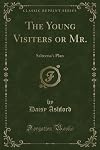
The Young Visiters
by Daisy Ashford
On This Page
Description
This, "the greatest novel written by a nine-year-old, " had been in print in Britain since the '20s, but had been out of print in the U.S. for 35 years. It has two hilarious themes: love and social climbing..
Tags
Recommendations





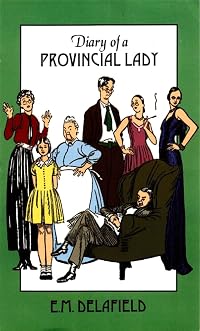
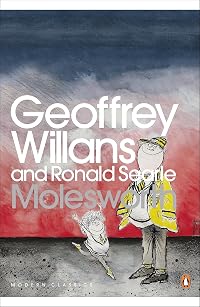

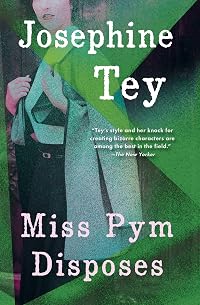
















Member Recommendations

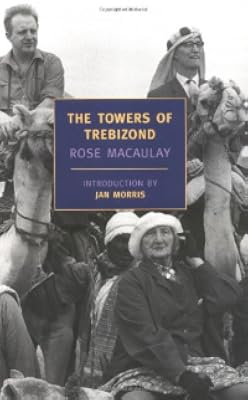
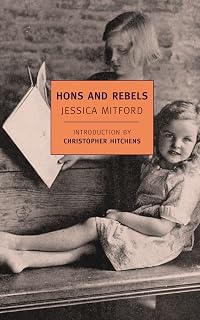
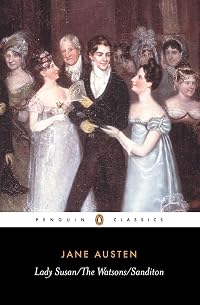
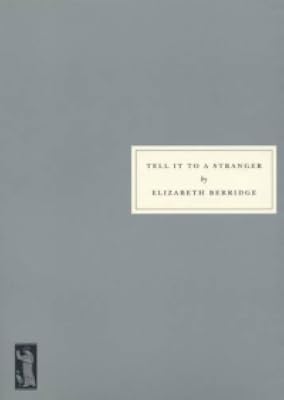
wandering_star Another charming, childs-eye view of the world, although this time it's a real childhood - a memoir by Charles Darwin's granddaughter.
Sylak Nancy started to write her first book when she was eleven, and completed it a year later. It was published by HarperCollins after she emailed it directly to the CEO.
Sylak Alec was nine when he wrote How to Talk to Girls. He found a publisher for it after making one of his three appearances on The Ellen Show.

Sylak At the age of 9 years, Jayne was the youngest author to ever write for Ladybird Books. Her writing and illustrating has been an inspiration to others.

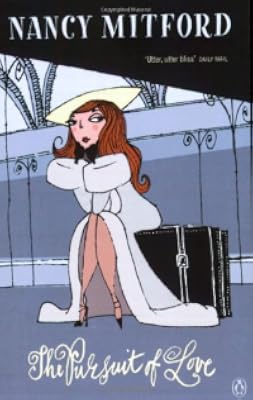
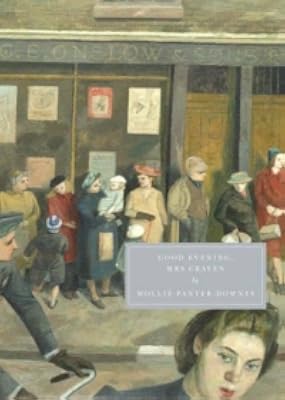
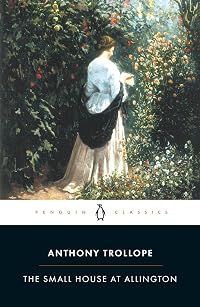
nessreader Young V is a bodice-ripper romance written by a child. Miss G's Secret is a Russian doll of a book, the core of which is a bodice ripper romance, the bastard of pinsk,very funny, by a terrifyingly innocent 16 yr old miss Granby. The outer shells framing b of p are the miss granby's death, legacy and the story of her great niece's half hearted effort to find out the TRUTH.
Member Reviews
That rare creature, the truly hilarious book. Young authoress Daisy Ashford has apparently been reading quite a bit above her age level and attempted to create her own novel without quite understanding the way the world works. It's a delight from start to finish ... slightly wearing nearer the end, but it's awfully short, so it's fine. It's the only thing like it (I'm sure lots of other young writers have turned out something similar, but without being quite so charming, and without getting published!) Also turned into quite a faithful film with Tracy Ullmann, if you're so inclined.
The young visiters or, Mr. Salteena’s plan is a novella-length story written in 1890 by then-9-year-old Daisy Ashford. It wasn’t published until 1919, when the then-adult author could be convinced to make this particular piece of juvenilia available to the public.
This was such enormous fun to read. It’s a romantic story about social climbers; Ashford at nine was clearly familiar with Victorian literature. The main characters, Ethel Monticue and Mr. Salteena, would very much like to be part of the upper class, though they take different pathways there.
To start with, the story is obviously written by a child. The characters read like petulant children that talk in a mixture of child-speak and phrases the author has picked up from show more books and from adults around her, all of it presented in its original clumsy spelling. Their behaviour is erratic: the logic behind their behaviour is that of children who don’t quite understand why adults do and say the things they do. Also, the author thinks it is of the utmost importance that every character has their name mentioned (even the extras), and that all of their clothes are described in detail, to the point where several characters change outfits multiple times per day. Taken together, that means the story is a great example of unintentional hilarity. On the other hand, the whole thing exudes such confidence and such seriousness -- it demands to be considered on its own terms. And in some ways the writing is pretty competent, too: there’s a narrative arc with higher stakes and increased tension, and there are two separate storylines whose interplay is handled just fine. And while the story may be told clumsily and naively, the romance and the social climbing are most definitely grown-up book material.
And that is why I loved this book so much: awkwardly spelled, clumsily imagined and naively characterised it may be, but it’s done with with such earnestness and, frankly, skill that I cannot but call it extremely charming. It’s a genuinely endearing booklet that cannot but command goodwill. It works because the discrepancy is only obvious to adult readers: the author simply does their best.
My e-copy was free, from Project Gutenberg, and came with an introduction by J. M. Barrie. Yes, him. I gather it’s been turned into a stage play and a musical, as well as a a 2003 BBC movie. The latter features Hugh Laurie, Lyndsey Marshal, Jim Broadbent, and Bill Nighy, and it looks like it’s a genuinely funny flick.
Go read it. It’ll take less than an hour and I guarantee you’ll feel enriched after. show less
This was such enormous fun to read. It’s a romantic story about social climbers; Ashford at nine was clearly familiar with Victorian literature. The main characters, Ethel Monticue and Mr. Salteena, would very much like to be part of the upper class, though they take different pathways there.
To start with, the story is obviously written by a child. The characters read like petulant children that talk in a mixture of child-speak and phrases the author has picked up from show more books and from adults around her, all of it presented in its original clumsy spelling. Their behaviour is erratic: the logic behind their behaviour is that of children who don’t quite understand why adults do and say the things they do. Also, the author thinks it is of the utmost importance that every character has their name mentioned (even the extras), and that all of their clothes are described in detail, to the point where several characters change outfits multiple times per day. Taken together, that means the story is a great example of unintentional hilarity. On the other hand, the whole thing exudes such confidence and such seriousness -- it demands to be considered on its own terms. And in some ways the writing is pretty competent, too: there’s a narrative arc with higher stakes and increased tension, and there are two separate storylines whose interplay is handled just fine. And while the story may be told clumsily and naively, the romance and the social climbing are most definitely grown-up book material.
And that is why I loved this book so much: awkwardly spelled, clumsily imagined and naively characterised it may be, but it’s done with with such earnestness and, frankly, skill that I cannot but call it extremely charming. It’s a genuinely endearing booklet that cannot but command goodwill. It works because the discrepancy is only obvious to adult readers: the author simply does their best.
My e-copy was free, from Project Gutenberg, and came with an introduction by J. M. Barrie. Yes, him. I gather it’s been turned into a stage play and a musical, as well as a a 2003 BBC movie. The latter features Hugh Laurie, Lyndsey Marshal, Jim Broadbent, and Bill Nighy, and it looks like it’s a genuinely funny flick.
Go read it. It’ll take less than an hour and I guarantee you’ll feel enriched after. show less
I'm extremely fond of literary curiosities, books whose very existence we owe to a set of extraordinary events, texts that are quirky and special without particularly trying.
"Mr Salteena was an elderly man of 42 and was fond of asking peaple [sic] to stay with him." So begins this charming piece of juvenilia, the work of an unusually perceptive and persistent nine-year-old girl. We have to admire the young author's perseverance - how many manuscripts drafted at such a tender age actually see completion? Admittedly, we are talking about nothing more than twelve rather short chapters, but our authoress still manages to weave an entertaining narrative, and even takes the time to carefully describe the clothes worn by each character in each show more scene. Her characters are portrayed in enough detail so as to be fairly distinct from each other and to inspire enough interest in their fate to keep the reader curious enough to follow through to the end. J. M. Barrie, in his preface to the book, even remarks on the writer's knack for knowing just when to end a chapter, both in the sense of separating the text into coherent logical units, and especially in that there is always a little suspense before she returns to either Ethel or Mr. Salteena.
The many spelling mistakes, far from rendering the text unreadable, actually serve as a constant reminder of who the author is, form her own peculiar idiolect and even, one might argue, style, and are, quite simply, hilarious. It is evident that our wordsmith has done her research, albeit subconsciously - the influence of popular novels of her day has apparently been significant enough for her to memorise the formulae of her chosen form and genre. Her writing is never dry, because adjectives and adverbs are used liberally throughout, often in the most fantastic constructions and combinations. What I personally find most remarkable about the entire piece is the almost awe-inspiring sense that this girl is fully aware that she is god to her characters and their fates, that she indubitably values her own work and is ready to assume the responsibility of standing behind her tale and to address those on the other side as "my readers".
How lucky we are that Ms. Ashford opened a particular drawer containing a particular exercise book (now seventeen years old!) on a particular day, how lucky that her friend was recovering from an illness and wanted to be entertained, how lucky that it finally reached a publishing house willing to print a text that wasn't even divided into paragraphs!
If you have a little time to spare, seek out this singular read (you can find it for free on Project Gutenberg). It's a tiny, but bright gem of semi-obscure literature that is well worth anyone's time.
So I will end my review. show less
"Mr Salteena was an elderly man of 42 and was fond of asking peaple [sic] to stay with him." So begins this charming piece of juvenilia, the work of an unusually perceptive and persistent nine-year-old girl. We have to admire the young author's perseverance - how many manuscripts drafted at such a tender age actually see completion? Admittedly, we are talking about nothing more than twelve rather short chapters, but our authoress still manages to weave an entertaining narrative, and even takes the time to carefully describe the clothes worn by each character in each show more scene. Her characters are portrayed in enough detail so as to be fairly distinct from each other and to inspire enough interest in their fate to keep the reader curious enough to follow through to the end. J. M. Barrie, in his preface to the book, even remarks on the writer's knack for knowing just when to end a chapter, both in the sense of separating the text into coherent logical units, and especially in that there is always a little suspense before she returns to either Ethel or Mr. Salteena.
The many spelling mistakes, far from rendering the text unreadable, actually serve as a constant reminder of who the author is, form her own peculiar idiolect and even, one might argue, style, and are, quite simply, hilarious. It is evident that our wordsmith has done her research, albeit subconsciously - the influence of popular novels of her day has apparently been significant enough for her to memorise the formulae of her chosen form and genre. Her writing is never dry, because adjectives and adverbs are used liberally throughout, often in the most fantastic constructions and combinations. What I personally find most remarkable about the entire piece is the almost awe-inspiring sense that this girl is fully aware that she is god to her characters and their fates, that she indubitably values her own work and is ready to assume the responsibility of standing behind her tale and to address those on the other side as "my readers".
How lucky we are that Ms. Ashford opened a particular drawer containing a particular exercise book (now seventeen years old!) on a particular day, how lucky that her friend was recovering from an illness and wanted to be entertained, how lucky that it finally reached a publishing house willing to print a text that wasn't even divided into paragraphs!
If you have a little time to spare, seek out this singular read (you can find it for free on Project Gutenberg). It's a tiny, but bright gem of semi-obscure literature that is well worth anyone's time.
So I will end my review. show less
This short book is rather a novelty, having been written by the author as a 9 year old in 1890, though not published until 1919. While obviously displaying the inexperienced in life approach one might expect, it shows an understanding of narrative and plot, and an eye for descriptive detail unusual for one so young, The author wrote other stories at a young age, including one when even younger than when she wrote this one, some of which have been lost. Don't expect great drama, obviously, but this shows some familiarity with, and ability to laugh at, some of the habits of the time.
This 1890 book, "the greatest novel written by a nine-year-old", chronicles the adventures of Mr. Salteena and his friends Edith and Bernard as the first attempts to climb the social ladder and the latter two fall madly in love. Of course, having been written by a nine-year-old, it's comical in that way that kids can be when they're deadly serious about something. The author evidently incorporated her favorite phrases from books and overheard conversations, but still retained the spelling and grammar of a child, which leads to such sentences as "I am stopping with his Lordship said Mr Salteena and have a set of compartments in the basement so there." The crowning moment of the book comes when Bernard proposes to Edith during a picnic show more next to a river; Ms. Ashford really pulled out all the stops and packed in just about every 19th century romantic cliche in existence, to hilarious effect. As J.M. Barrie writes in the preface, "It seems to me to be a remarkable work for a child, remarkable even in its length and completeness, for when children turn author they usually stop in the middle, like the kitten when it jumps." show less
Evidently the first attempt of a 9-year-old Victorian child at novel-writing, forgotten about for several years, then rediscovered when she was grown up and circulated amongst her friends to provide some amusement. A charming amount of misspelling. It has a few giggles in it, like when Bernard Clark "always had a few prayers in the hall and some whiskey afterwards as he was rarther pious" or when he decides that he must not propose marriage in the city, but in a country setting, where they can be surrounded by "the gay twittering of the birds and the smell of the cows."
Or when Ethel announces that she's almost ready to go out, since she had her bath last night and doesn't need to wash much this morning and Bernard replies, "No dont... show more you are fresher than the rose my dear no soap could make you fairer."
But, all things told, it really provides no more than a few minutes' amusement, and it is about as short as it should be. show less
Or when Ethel announces that she's almost ready to go out, since she had her bath last night and doesn't need to wash much this morning and Bernard replies, "No dont... show more you are fresher than the rose my dear no soap could make you fairer."
But, all things told, it really provides no more than a few minutes' amusement, and it is about as short as it should be. show less
A Charming Phantasy
A review of the Revelation Press eBook (August 29, 2023) of the Chatto & Windus hardcover original (1919) of a manuscript written in 1890 when the author was 9-years-old.
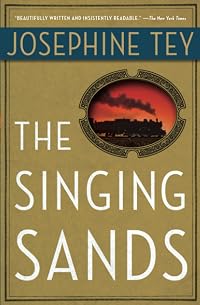
I had never previously heard of The Young Visiters until I recently came across this passage in Josephine Tey's [book:Miss Pym Disposes|243399] (1946). The writer Lucy Pym is selecting a night-time reading book from the library at the Girl's Academy where she is guest lecturing.
With further research, I discovered that the book had been written when the author Daisy Ashford was only 9-years-old, although only published when discovered almost 30-years later. Author [author:J.M. Barrie|5255014] (writer of Peter Pan (1906) a.o.) wrote the original introduction and affirmed its authenticity and also stated that the original spelling had been retained (except for the title which had been "The Young Viseters") and breaking the one paragraph length chapters into more readable segments.
See manuscript page at https://upload.wikimedia.org/wikipedia/commons/a/a6/The_Young_Visiters_-_first_p...
The opening page of the 1890 manuscript. Image sourced from Wikipedia.
Although the first sentence does come across as shocking in the present day of "grooming" alerts, the book quickly settles in as a child's fantasy which combines her imagined adult world with partly understood words and phrases which she has read or overheard in her growing up.
Both Mr. Salteena and his guest Ethel Monticue look to rise in the world and visit Salteena's friend Bernard Clark. Salteena yearns to become a gentleman and goes to visit the lords who live in the "compartements" of the Crystal Palace in hopes of gaining a mentor. Ethel meanwhile continues her journey in the company of Clark. It all ends happily for everyone of course.
It was all very naive and charming, but yes, it did make me smile 😊.
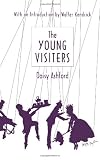
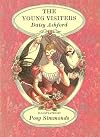
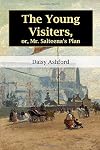
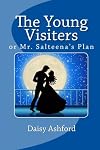
The cover of my eBook used an anachronistic image of several mediaeval waifs for its cover. The original cover design portraying the various characters as shadow puppet silhouettes seemed more appropriate.
See cover at https://m.media-amazon.com/images/S/compressed.photo.goodreads.com/books/1697717...
Front and back covers of the 1919 original hardcover edition. Image sourced from Goodreads.
Trivia and Links
The Young Visiters was adapted twice for feature length films.
The first adaptation was the theatrical film The Young Visiters (1984) directed by David Hill and starring Tracey Ullman as Ethel Monticue. I could not find a trailer or a complete copy of the film.
The second adaptation was for BBC Television as The Young Visiters (2003) directed by David Yates and starring Jim Broadbent as Mr. Salteena. You can see that entire film on YouTube here.
Presumably both adaptations are reasonably faithful to the book but include added portrayals of Daisy Ashford herself and both actresses playing Ethel Monticue are a more age appropriate 25-years-old at the time of filming.
The Young Visiters is in the Public Domain and can be read online at various sources such as Wikisource, Standard EBooks, and Project Gutenberg. show less
A review of the Revelation Press eBook (August 29, 2023) of the Chatto & Windus hardcover original (1919) of a manuscript written in 1890 when the author was 9-years-old.
I had never previously heard of The Young Visiters until I recently came across this passage in Josephine Tey's [book:Miss Pym Disposes|243399] (1946). The writer Lucy Pym is selecting a night-time reading book from the library at the Girl's Academy where she is guest lecturing.
Lucy took The Young Visiters. It was a long time since she had read it last, but she found that she was smiling at the very sight of it. A sort of reflex action; quite involuntary. And when she looked up she found that Lux was smiling too.show more
"Well, that is one thing I shall never
do," Lucy said regretfully.
"What?"
"Write a book that makes all the world smile."
With further research, I discovered that the book had been written when the author Daisy Ashford was only 9-years-old, although only published when discovered almost 30-years later. Author [author:J.M. Barrie|5255014] (writer of Peter Pan (1906) a.o.) wrote the original introduction and affirmed its authenticity and also stated that the original spelling had been retained (except for the title which had been "The Young Viseters") and breaking the one paragraph length chapters into more readable segments.
See manuscript page at https://upload.wikimedia.org/wikipedia/commons/a/a6/The_Young_Visiters_-_first_p...
The opening page of the 1890 manuscript. Image sourced from Wikipedia.
Mr Salteena was an elderly man of 42 and was fond of asking peaple to stay with him. He had quite a young girl staying with him of 17 named Ethel Monticue.
Although the first sentence does come across as shocking in the present day of "grooming" alerts, the book quickly settles in as a child's fantasy which combines her imagined adult world with partly understood words and phrases which she has read or overheard in her growing up.
Both Mr. Salteena and his guest Ethel Monticue look to rise in the world and visit Salteena's friend Bernard Clark. Salteena yearns to become a gentleman and goes to visit the lords who live in the "compartements" of the Crystal Palace in hopes of gaining a mentor. Ethel meanwhile continues her journey in the company of Clark. It all ends happily for everyone of course.
It was all very naive and charming, but yes, it did make me smile 😊.
The cover of my eBook used an anachronistic image of several mediaeval waifs for its cover. The original cover design portraying the various characters as shadow puppet silhouettes seemed more appropriate.
See cover at https://m.media-amazon.com/images/S/compressed.photo.goodreads.com/books/1697717...
Front and back covers of the 1919 original hardcover edition. Image sourced from Goodreads.
Trivia and Links
The Young Visiters was adapted twice for feature length films.
The first adaptation was the theatrical film The Young Visiters (1984) directed by David Hill and starring Tracey Ullman as Ethel Monticue. I could not find a trailer or a complete copy of the film.
The second adaptation was for BBC Television as The Young Visiters (2003) directed by David Yates and starring Jim Broadbent as Mr. Salteena. You can see that entire film on YouTube here.
Presumably both adaptations are reasonably faithful to the book but include added portrayals of Daisy Ashford herself and both actresses playing Ethel Monticue are a more age appropriate 25-years-old at the time of filming.
The Young Visiters is in the Public Domain and can be read online at various sources such as Wikisource, Standard EBooks, and Project Gutenberg. show less
Members
- Recently Added By
Published Reviews
ThingScore 94
'A tale as remarkable for its mixture of innocence and sophistication as for its completeness.'
added by Sylak — edited by booksaplenty1949
'A marvel almost too good to be true... Even while the grown-up part of us is helpless with laughter we leap back with her into our nine-year-old self where the vision is completely real and satisfying.'
added by Sylak
'A splendid spontaneous display of talent, a gem of naive humour, entertaining for its period allusion and inventive distortion of sicial manners.'
added by Sylak
Lists

A Novel Cure
742 works; 23 members

Books With Our Favorite First Lines
168 works; 104 members

Michael Dirda's 100 Best Comic Novels
100 works; 1 member
Author Information

5+ Works 670 Members
Some Editions
Awards and Honors
Work Relationships
Common Knowledge
- Canonical title
- The Young Visiters
- Original title
- The Young Visiters or, Mr. Salteenas Plan
- Original publication date
- 1919-05-22
- People/Characters
- Alfred Salteena; Bernard Clark; Ethel Monticue; Francis Minnit; Norman Wilkinson; Earl of Clincham (show all 13); Edward Procurio; Lord Hyssops; Prince of Wales; Lady Gay Finchling; Lady Helena Herring; Bessie Topp; Ignatius Bernard
- Important places
- Rickamere Hall; Crystal Palace; London, England, UK; Windsor, England, UK; Westminster Abbey; Hyde Park, London, England, UK (show all 7); Picadilly
- First words
- Mr Salteena was an elderly man of 42 and was fond of asking peaple [sic] to stay with him.
- Quotations
- "I shall put on some red ruge [sic] on my face said Ethel because I am very pale owing to the drains in this house."
- Last words
- (Click to show. Warning: May contain spoilers.)So now my readers we will say farewell to the characters in this book.
- Original language
- English
Classifications
Statistics
- Members
- 603
- Popularity
- 48,469
- Reviews
- 21
- Rating
- (3.83)
- Languages
- 5 — Danish, English, French, German, Italian
- Media
- Paper, Audiobook, Ebook
- ISBNs
- 44
- ASINs
- 51