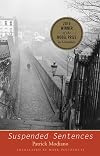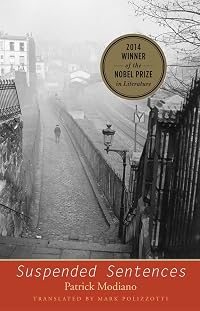
Suspended Sentences: Three Novellas
by Patrick Modiano
On This Page
Description
A trio of intertwined novellas from the 2014 Nobel laureate for literature In this essential trilogy of novellas by the winner of the 2014 Nobel Prize in Literature, French author Patrick Modiano reaches back in time, opening the corridors of memory and exploring the mysteries to be encountered there. Each novella in the volume--Afterimage, Suspended Sentences, and Flowers of Ruin-represents a sterling example of the author's originality and appeal, while Mark Polizzotti's superb show more English-language translations capture not only Modiano's distinctive narrative voice but also the matchless grace and spare beauty of his prose. Although originally published separately, Modiano's three novellas form a single, compelling whole, haunted by the same gauzy sense of place and characters. Modiano draws on his own experiences, blended with the real or invented stories of others, to present a dreamlike autobiography that is also the biography of a place. Orphaned children, mysterious parents, forgotten friends, enigmatic strangers-each appears in this three-part love song to a Paris that no longer exists. Shadowed by the dark period of the Nazi Occupation, these novellas reveal Modiano's fascination with the lost, obscure, or mysterious: a young person's confusion over adult behavior; the repercussions of a chance encounter; the search for a missing father; the aftershock of a fatal affair. To read Modiano's trilogy is to enter his world of uncertainties and the almost accidental way in which people find their fates. show lessTags
Recommendations




Member Recommendations
Member Reviews
As I was reading the three novellas that make up Suspended Sentences, It was as if I were reading paintings. Modiano’s dream-like sequences had my mind flashing with images from paintings such as those of Monet and other Impressionists . His descriptions are so detailed, that although I am familiar with Paris, I realize I only know only a small part of the city. I wish I could go there now, and trace the places that Modiano so exquisitely describes.
The novellas are classified as fiction but are clearly autobiographical. The narrator looks back at his past and there are events that are distorted or possibly missing, suspended in time.
Afterimage (Chien de printemps)
The narrator is a young man who volunteers to catalog a photographer’s show more works. There is an illusive quality here, and it feels at times that we are in a world blurred like a half-developed photo. Only the place-names are solid.
The narrator loses touch with the photographer, who eventually disappears never to be found. Only the box of photos he leaves behind confirms his reality.
Suspended Sentences (Quartier perdu)
Here the child Patoche and his brother Rudy are growing up parentless in a large house in Saint-Leu-la-Forêt. They are cared for by a motley group of women.The brothers try to make sense of what they observe, and invent names for their carers such as “Snow White”. They are innocents in an environment that the reader will see as seedy. When Snow White takes them to warehouses and tells them to wait they do so unaware of what is happening inside. Various men come and go,bringing expensive presents for the boys. But the boys see only a fairy land-like place and believe that the Parisian strip clubs are circuses in canvas tents.
Abruptly, like photographer in Afterimage, the adults disappear completely, and Patoche is thrown into the streets of Paris alone. At this stage, we lose sight of Rudy.
Flowers of Ruin (Fleurs de ruine)
Like its title, this novella embraces darkness and ruin. The narrator is suspicious of the past and decides to investigate the unsolved deaths of a couple that occurred in 1933. Although at the time many believed that their deaths were suicides, a strange waiter may have misled the police. The narrator is convinced that this very waiter may have shown up when he was in Paris in the sixties. There is again, reference to warehouses and black-marketing. Perhaps the man was a Nazi collaborator. Or had someone stolen his identity? The men of the Suspended Sentences novella are reimagined. The warehouses, the corruption, the unclear identities.
He meets a man who leads a double-life, who is not as he seems. Could he be the waiter? He claims he is a marquis. The narrator comes across him for the last time where the so-called marquis is a tour guide for submissive Japanese tourists.
The sunny Paris of the AfterImage has gone, and the dark suspicious men of Suspended Sentences return to narrator’s fractured memories. The lightness of the photographer’s photos in Afterimage has gone. The narrator has only one choice; that is to escape France. And there the story ends, suspended in time.
As for the book that contains the novellas, there is no defining plot or logical narrative. Rather the three novellas merge splatter -like into something resembling a Jackson Pollock painting.
Highly recommended. show less
The novellas are classified as fiction but are clearly autobiographical. The narrator looks back at his past and there are events that are distorted or possibly missing, suspended in time.
Afterimage (Chien de printemps)
The narrator is a young man who volunteers to catalog a photographer’s show more works. There is an illusive quality here, and it feels at times that we are in a world blurred like a half-developed photo. Only the place-names are solid.
The narrator loses touch with the photographer, who eventually disappears never to be found. Only the box of photos he leaves behind confirms his reality.
Suspended Sentences (Quartier perdu)
Here the child Patoche and his brother Rudy are growing up parentless in a large house in Saint-Leu-la-Forêt. They are cared for by a motley group of women.The brothers try to make sense of what they observe, and invent names for their carers such as “Snow White”. They are innocents in an environment that the reader will see as seedy. When Snow White takes them to warehouses and tells them to wait they do so unaware of what is happening inside. Various men come and go,bringing expensive presents for the boys. But the boys see only a fairy land-like place and believe that the Parisian strip clubs are circuses in canvas tents.
Abruptly, like photographer in Afterimage, the adults disappear completely, and Patoche is thrown into the streets of Paris alone. At this stage, we lose sight of Rudy.
Flowers of Ruin (Fleurs de ruine)
Like its title, this novella embraces darkness and ruin. The narrator is suspicious of the past and decides to investigate the unsolved deaths of a couple that occurred in 1933. Although at the time many believed that their deaths were suicides, a strange waiter may have misled the police. The narrator is convinced that this very waiter may have shown up when he was in Paris in the sixties. There is again, reference to warehouses and black-marketing. Perhaps the man was a Nazi collaborator. Or had someone stolen his identity? The men of the Suspended Sentences novella are reimagined. The warehouses, the corruption, the unclear identities.
He meets a man who leads a double-life, who is not as he seems. Could he be the waiter? He claims he is a marquis. The narrator comes across him for the last time where the so-called marquis is a tour guide for submissive Japanese tourists.
The sunny Paris of the AfterImage has gone, and the dark suspicious men of Suspended Sentences return to narrator’s fractured memories. The lightness of the photographer’s photos in Afterimage has gone. The narrator has only one choice; that is to escape France. And there the story ends, suspended in time.
As for the book that contains the novellas, there is no defining plot or logical narrative. Rather the three novellas merge splatter -like into something resembling a Jackson Pollock painting.
Highly recommended. show less
Memory and loss haunt these three novellas. The three narrator’s memories of Paris as boys or younger men are of a city that no longer exists intact. “All those streets were wiped off the map when they built the peripherique, taking with them all their garages and their secrets.”
In the title novella a boy barely sees or knows his travelling parents. On his father: “One evening when I was fifteen, when I was alone with him and he’d strayed very close to confiding a few things.” Modiano’s narrators are searching for and through the past. For parts of the city that hold memories and have been destroyed. For people that have disappeared. Near the end of “Flowers of Ruin” a man standing in the rain appears to dissolve. show more “He had vanished in that sudden way that I’d later notice in other people, like my father, which leaves you so puzzled that you have no choice but to look for proofs and clues to convince yourself these people had really existed.”
At times this same narrator seems to accept that it’s impossible to unearth the past: “Why bother chasing ghosts and trying to solve insoluble mysteries, when life was there, in all its simplicity, beneath the sun?” But it doesn’t stop Modiano from trying. show less
In the title novella a boy barely sees or knows his travelling parents. On his father: “One evening when I was fifteen, when I was alone with him and he’d strayed very close to confiding a few things.” Modiano’s narrators are searching for and through the past. For parts of the city that hold memories and have been destroyed. For people that have disappeared. Near the end of “Flowers of Ruin” a man standing in the rain appears to dissolve. show more “He had vanished in that sudden way that I’d later notice in other people, like my father, which leaves you so puzzled that you have no choice but to look for proofs and clues to convince yourself these people had really existed.”
At times this same narrator seems to accept that it’s impossible to unearth the past: “Why bother chasing ghosts and trying to solve insoluble mysteries, when life was there, in all its simplicity, beneath the sun?” But it doesn’t stop Modiano from trying. show less
Disengagement and inconclusiveness is what Mark Polizzotti, the translator, writes in the introduction to describe the three novellas included in this volume. Although I tend to like to KNOW, somehow I was carried along on this meandering journey that led to nowhere, or at least nowhere you could define. And I loved it. I was in Paris, the people were colorful yet elusive, their colors muted. The places were all exactly named and precisely described. And yet I was lost. But I didn't mind. I loved it. It was, as Polizzotti, says, like Edith Piaf's smoky laments, or Brassai's nocturnal photographs.
These three short novellas — “Afterimage,” “Suspended Sentences,” and “Flowers of Ruin” — originally published over a five year period in the 1990s, share a mood of wistful nostalgia, fleeting and uncertain memory, with an undercurrent of menace. Modiano appears to draw upon his own life, especially his childhood immediately before the years of the Occupation in Paris. On the surface it seems as though he is recounting specific events, drawing together memories. But nothing solid coalesces, as least in terms of plot. Rather we see the city of Paris emerging out of layer after layer of different moments in mid-century, with a steady recitation of street names, addresses, business establishments, and sometimes people, many show more of which no longer exist. It is a Paris that corresponds, perhaps, only to the author’s own memory and imagination. And certainly what, precisely, that Paris evokes is elusive at best.
This is the Paris of noir films, of George Brassai photographs, of fog and shadow, before the construction of the périphérique wiped out whole neighbourhoods and histories, when France was not yet reconciled to its collaborative past during the Occupation, and identities might be lost, invented, or exchanged merely through the theft of someone’s identity papers. That Patrick Modiano can’t settle on a clear image of this time is rather the point. Like his contemporary, W.G. Sebald, he endlessly mines an ineffable recent history in which memory and guilt, culpability and innocence, blur. Unlike Sebald, Modiano is teasing out the threads of familial responsibility rather than national shame. And thus there is always an undertone of accusation, especially against his father and whatever unsavoury acts he may have participated in, either willingly or through coercion, in those dark days.
The writing is almost picaresque as it catches the frothy tops of these waves of memory. It never bogs down or sinks in an effort to explicate fully or justify. Which is not to say that the inconclusive inevitably leads to the unsettled. Rather, Modiano’s embrace of the elusive suggests a wider, more encompassing, comprehension of the whole and an unwillingness to judge it prematurely. Certainly fascinating and definitely recommended. show less
This is the Paris of noir films, of George Brassai photographs, of fog and shadow, before the construction of the périphérique wiped out whole neighbourhoods and histories, when France was not yet reconciled to its collaborative past during the Occupation, and identities might be lost, invented, or exchanged merely through the theft of someone’s identity papers. That Patrick Modiano can’t settle on a clear image of this time is rather the point. Like his contemporary, W.G. Sebald, he endlessly mines an ineffable recent history in which memory and guilt, culpability and innocence, blur. Unlike Sebald, Modiano is teasing out the threads of familial responsibility rather than national shame. And thus there is always an undertone of accusation, especially against his father and whatever unsavoury acts he may have participated in, either willingly or through coercion, in those dark days.
The writing is almost picaresque as it catches the frothy tops of these waves of memory. It never bogs down or sinks in an effort to explicate fully or justify. Which is not to say that the inconclusive inevitably leads to the unsettled. Rather, Modiano’s embrace of the elusive suggests a wider, more encompassing, comprehension of the whole and an unwillingness to judge it prematurely. Certainly fascinating and definitely recommended. show less
Recently I’ve been wondering if I haven't read enough of these "novels" that seem more memoir than fiction. The first person narrative where the narrator just happens to have the same first name as the author; the narrator's brother with the same name as the author's brother; the author and narrator are the same age (maybe even went to the same schools, churches, vacation spots, etc.); all very autobiographical and all--like much of our memory--fictionalized.
Then I come across another gem and none of those things matter at all. Suspended Sentences is one of these gems. The stories are good, the writing is sublime, and the place is Paris. The three novellas are somewhat connected: the setting is post World II Paris, some of the show more characters appear in more than one of the stories, and they are all the memories of a man trying to piece together mysterious things that happened in his childhood and youth.
The characters are fascinating, the stories are intriguing, and I was overwhelmed with the detailed descriptions of Parisian neighborhoods. This is one of those books that had me keeping a Google Map open on my laptop while I read, following the story through the streets. These stories could only have happened in Paris.
Library copy. show less
Then I come across another gem and none of those things matter at all. Suspended Sentences is one of these gems. The stories are good, the writing is sublime, and the place is Paris. The three novellas are somewhat connected: the setting is post World II Paris, some of the show more characters appear in more than one of the stories, and they are all the memories of a man trying to piece together mysterious things that happened in his childhood and youth.
The characters are fascinating, the stories are intriguing, and I was overwhelmed with the detailed descriptions of Parisian neighborhoods. This is one of those books that had me keeping a Google Map open on my laptop while I read, following the story through the streets. These stories could only have happened in Paris.
Library copy. show less
SUSPENDED SENTENCES: THREE NOVELLAS, by Patrick Modiano. Translated from the French by Mark Polizzotti.
Although the three novellas presented here were published separately over a five year period, they blend easily and seamlessly into a unified story of one man's life, from his troubled and unusual childhood well into his adult years. This is probably because of the first person narrative that runs through all three pieces, and also because of the peculiarly autobiographical nature of Modiano's fiction. Indeed the narrator in the stories is even named Patrick (or the diminutive 'Patoche' when he is a child.)
Modiano is apparently a perennially best-selling author in his native France, and yet, at least until he won the Nobel Prize for show more Literature just last year, he has been virtually unnoticed here in the U.S. Various translators are now hard at work in remedying this situation, and Mark Polizzotti's translation here is a beautiful example of bringing Modiano's work to fruition in English.
Modiano's milieu is, for the most part, Paris - but a Paris that has been nearly erased in the past fifty-some years. The sights, sounds and smells of the city from the forties through the sixties and later are nearly characters in these stories, giving them a specificity of setting seldom scene in modern literature.
And that Paris is the scene of Patrick's childhood, one in which his parents are most often absent, and he and his younger brother Rudy are brought up by friends of his parents - has-been circus performers and misfits, often visited by shadowy gangster types and black marketers. His father, who may or may not have been a collaborator during the German occupation of Paris, and was briefly interned in a camp, comes and goes occasionally. His mother, an entertainer, always on tour, is hardly seen at all. Patrick and Rudy are often left to their own devices, raising themselves. Later, you get glimpses of Patrick as a struggling young writer, one who (like the author) continues to write his own life, trying to understand it, and a father who eventually disappears completely from his life.
The overall tone in Modiano's fiction seems to be one of not so much nostalgia, but of longing, a yearning for a Paris that is no longer there. There is a circular, dreamlike kind of style at work here, as the narrator shifts often between past and and present as he meditates on the transience and fragility of life, both his own and that of others. There is the innocence of his childhood self, wondering about adult behavior, juxtaposed with his older self, looking back and still sorting out his parents' lives and behavior and trying to make connections with the still shadowy figures that helped to raise him and passed in and out of his life.
I tried to think of American writers I might compare to Modiano, and I thought of Ward Just, and his novel, THE TRANSLATOR, as well as a more obscure book I read not long ago, Richard Stern's IN ANY CASE, a novel about the French resistance and the Vichy government. And yet Modiano, given the twisting autobiographical nature of his work, remains, I think, in a class by himself. I enjoyed this book very much. Enough so that I expect to read more Modiano as additional works become available in English. Kudos to Mark Polizzotti, his translator here. I will recommend this book highly. show less
Although the three novellas presented here were published separately over a five year period, they blend easily and seamlessly into a unified story of one man's life, from his troubled and unusual childhood well into his adult years. This is probably because of the first person narrative that runs through all three pieces, and also because of the peculiarly autobiographical nature of Modiano's fiction. Indeed the narrator in the stories is even named Patrick (or the diminutive 'Patoche' when he is a child.)
Modiano is apparently a perennially best-selling author in his native France, and yet, at least until he won the Nobel Prize for show more Literature just last year, he has been virtually unnoticed here in the U.S. Various translators are now hard at work in remedying this situation, and Mark Polizzotti's translation here is a beautiful example of bringing Modiano's work to fruition in English.
Modiano's milieu is, for the most part, Paris - but a Paris that has been nearly erased in the past fifty-some years. The sights, sounds and smells of the city from the forties through the sixties and later are nearly characters in these stories, giving them a specificity of setting seldom scene in modern literature.
And that Paris is the scene of Patrick's childhood, one in which his parents are most often absent, and he and his younger brother Rudy are brought up by friends of his parents - has-been circus performers and misfits, often visited by shadowy gangster types and black marketers. His father, who may or may not have been a collaborator during the German occupation of Paris, and was briefly interned in a camp, comes and goes occasionally. His mother, an entertainer, always on tour, is hardly seen at all. Patrick and Rudy are often left to their own devices, raising themselves. Later, you get glimpses of Patrick as a struggling young writer, one who (like the author) continues to write his own life, trying to understand it, and a father who eventually disappears completely from his life.
The overall tone in Modiano's fiction seems to be one of not so much nostalgia, but of longing, a yearning for a Paris that is no longer there. There is a circular, dreamlike kind of style at work here, as the narrator shifts often between past and and present as he meditates on the transience and fragility of life, both his own and that of others. There is the innocence of his childhood self, wondering about adult behavior, juxtaposed with his older self, looking back and still sorting out his parents' lives and behavior and trying to make connections with the still shadowy figures that helped to raise him and passed in and out of his life.
I tried to think of American writers I might compare to Modiano, and I thought of Ward Just, and his novel, THE TRANSLATOR, as well as a more obscure book I read not long ago, Richard Stern's IN ANY CASE, a novel about the French resistance and the Vichy government. And yet Modiano, given the twisting autobiographical nature of his work, remains, I think, in a class by himself. I enjoyed this book very much. Enough so that I expect to read more Modiano as additional works become available in English. Kudos to Mark Polizzotti, his translator here. I will recommend this book highly. show less
Thanks to Yale University Press and NetGalley for a free copy of Suspended Sentences in exchange for my honest review.
There are many similarities among the three novellas in Suspended Sentences: Three Novellas, thus the thematic aggregation makes sense. However, I would have rated the book higher, based on the first two pieces, as the third had two major problems: one, that the rambling memories told in staggering jumps between now and then and sometime in between that made the first two pieces (Afterimage and Suspended Sentences) intriguing and engaging took a rather repetitive and lost shape in the last piece (Flowers of Ruin), which made the third part of the book seem to drag; two, that the Suspended Sentences and Flower of Ruin show more pieces had some parts that were almost exactly the same, which added to the drag towards the end of the book for me.
Beyond this, the collection is a gem. The stories are about identity and memory and the difference point of view makes in our personal even national reality. They are also about forgetting, fading away, becoming invisible, and disappearing. Every story has a narrator who knew little about what was actually going on around him, who tries hard to remember and reconstruct what was and what wasn't, who was and who wasn't, and who could it have been. As the fragmented memories paint an incomplete, often unsure picture of France under occupation and after, there is something dark and sinister lurking behind the canvas, threatening to surface every now and then, but ultimately remains unseen. Modiano also presents one of the most haunting uses of a simple list of things, things past, things gone, things unsure and unknown, listed across the page like a shopping list of insignificant items...
The translation is successful in yielding a clear and effective prose that evokes the full range of emotions required by the stories. Modiano's prose is haunting, as are his characters.
Suspended Sentences is a great read for anyone who likes haunting memories wrapped up in mysteries that are long forgotten. show less
There are many similarities among the three novellas in Suspended Sentences: Three Novellas, thus the thematic aggregation makes sense. However, I would have rated the book higher, based on the first two pieces, as the third had two major problems: one, that the rambling memories told in staggering jumps between now and then and sometime in between that made the first two pieces (Afterimage and Suspended Sentences) intriguing and engaging took a rather repetitive and lost shape in the last piece (Flowers of Ruin), which made the third part of the book seem to drag; two, that the Suspended Sentences and Flower of Ruin show more pieces had some parts that were almost exactly the same, which added to the drag towards the end of the book for me.
Beyond this, the collection is a gem. The stories are about identity and memory and the difference point of view makes in our personal even national reality. They are also about forgetting, fading away, becoming invisible, and disappearing. Every story has a narrator who knew little about what was actually going on around him, who tries hard to remember and reconstruct what was and what wasn't, who was and who wasn't, and who could it have been. As the fragmented memories paint an incomplete, often unsure picture of France under occupation and after, there is something dark and sinister lurking behind the canvas, threatening to surface every now and then, but ultimately remains unseen. Modiano also presents one of the most haunting uses of a simple list of things, things past, things gone, things unsure and unknown, listed across the page like a shopping list of insignificant items...
The translation is successful in yielding a clear and effective prose that evokes the full range of emotions required by the stories. Modiano's prose is haunting, as are his characters.
Suspended Sentences is a great read for anyone who likes haunting memories wrapped up in mysteries that are long forgotten. show less
Members
- Recently Added By
Lists

Top Five Books of 2014
1,064 works; 398 members

french letters
18 works; 1 member
Author Information

82+ Works 11,079 Members
Paul Modiano is a French writer who was born on July 30, 1945, in Boulogne-Billancourt. He won the Nobel Prize for Literature in 2014 for his lifetime body of work. He previously won the Austrian State Prize for European Literature in 2012 and the Prix mondial Cino Del Duca from the Institut de France for his lifetime achievement in 2010. His show more other awards include the Prix Goncourt in 1978 for his novel Rue des boutiques obscures and the Grand prix du roman de l'Académie française in 1972 for Les Boulevards de ceinture. Modiano's works explore the traumas of the Nazi occupation of France and the puzzle of identity. His preoccupation with the theme of identity can be seen throughout many of his works including his 2005 memoir entitled Un Pedigree. Modiano was greatly influenced by his parents' relationship. His mother and father began their clandestine relationship during occupied France. Growing up, his father was absent for most of his life and his mother was away frequently while on tour acting. He was alone much of the time and went to school because of government aid. His younger brother died of a disease at age 10 and this added to his "lost identity" feelings while growing up. Modiano first came to prominence in France when he wrote the 1968 book La Place de L'Étoile. He has published over 30 works which include novels, screenplays and children's books. His other works include: La Ronde de nuit (1969), English translation: Night Rounds; Rue des boutiques obscures (1978), English translation: Missing Person; and Quartier Perdu (1984), English translation: A Trace of Malice. Although he is well known in France, only about 12 of his works have been translated into English. (Bowker Author Biography) show less
Some Editions
Series
Belongs to Publisher Series
Work Relationships
Common Knowledge
- Canonical title
- Suspended Sentences: Three Novellas
- Original title
- Remise de peine; Fleurs de ruine; Chien de printemps
- Original language
- French
- Disambiguation notice
- This work is an omnibus edition containing « Remise de peine », « Fleurs de ruine » and « Chien de printemps ». Do NOT combine with the individual constituent works.
This omnibus was published in English in 2014 ... (show all)as “Suspended Sentences”
Cette édition contient « Remise de peine », « Fleurs de ruine » et « Chien de printemps ». Ne doit pas être fusionnée avec les romans individuels qui composent cette édition.
Classifications
Statistics
- Members
- 552
- Popularity
- 53,665
- Reviews
- 22
- Rating
- (3.81)
- Languages
- English, French
- Media
- Paper, Audiobook, Ebook
- ISBNs
- 10
- ASINs
- 2