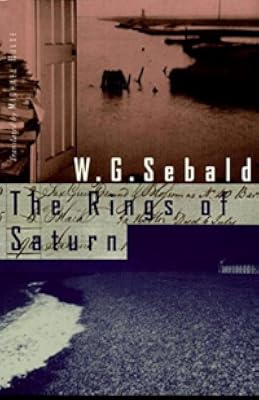
The Rings of Saturn: An English Pilgrimage
by W. G. Sebald 
On This Page
Description
A fictional account of a walking tour through England's East Anglia whose sights and sounds conjure up images of Britain's imperial past. They range from the slave trade to the Battle of Britain. By the author of The Emigrants.Tags
Recommendations


























Member Recommendations

TMrozewski Books about walking, history, and reflection. Similar narrative tropes.
by defaults
by anonymous user
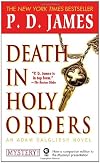
thorold You can't get much more conventional than an English murder mystery, or much more experimental than Sebald's unclassifiable prose works, but these two books do seem to have a bit more in common than their setting on the Suffolk coast. An odd mixture of gloom and playfulness, a refusal quite to reveal what's in the writer's mind...
02
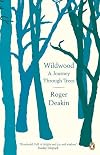
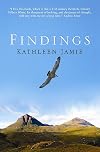
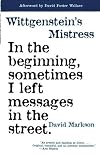
michaeljohn Both novels—each nontraditional and singular in form—feature a narrator wandering in a desolate landscape. Both narrators also show a similar propensity for historical digression.
11
Member Reviews
A most beautiful scrapbook, a wormhole of memories, a way to trap the mind in a maze which delights it. This travel story is joy-killing at the same time it brings a quiet humor to everything, even the most dead of ends, the most morose ruins and the agentless way they fall from their height and grace. Sebald shows how everything is destroyed through the agency of human cruelty, human inattention, and the will of nature.
“Where a short while ago the dawn chorus had at times reached such a pitch that we had to close the bedroom windows, where larks had risen on the morning air above the fields and where, in the evenings, we occasionally even heard a nightingale in the thicket, its pure and penetrating song punctuated by theatrical show more silences, there was now not a living sound.”
It is these descriptions, and the photos, and the winding topics, and the impossibility and needlessness of getting a straight-on look at the narrator (a true fictional travel narrative if I've ever seen one) that give this book the invisible scaffolding for which it deserves the abundant praise it has received. show less
“Where a short while ago the dawn chorus had at times reached such a pitch that we had to close the bedroom windows, where larks had risen on the morning air above the fields and where, in the evenings, we occasionally even heard a nightingale in the thicket, its pure and penetrating song punctuated by theatrical show more silences, there was now not a living sound.”
It is these descriptions, and the photos, and the winding topics, and the impossibility and needlessness of getting a straight-on look at the narrator (a true fictional travel narrative if I've ever seen one) that give this book the invisible scaffolding for which it deserves the abundant praise it has received. show less
Haunting is a term that keeps appearing in popular and critical discourse of late. This makes sense to me. We live in a time when things disappear or become irrelevant very quickly, because of the feedback loop that’s been established between technological change and an economic system that expands as a result of it. The real consequence of this is not just the emergence of the new, or what might better be called the pseudo-new, but the disappearance of a large number of things and ideas that were not that old. However, things that disappear from the physical world are not lost to our minds, if we had some experience of them. Lost things, people, places, concepts, haunt our minds. If we felt some strong emotion for them, they haunt us show more more powerfully, because somehow affect plants things in our brains in a way that intellect or sensory perception alone cannot.
If there ever was a writer, or a book, to illustrate the power of this kind of haunting, it is WG Sebald and it is The Rings of Saturn. Walking through one small part of Europe, but ranging far beyond it in time and space, he writes of modern Europe's ghostliness, and you begin to see it as the only possible state for a society where layers and layers of the past drift far deeper than any future it is likely to have. At the vacant center of those layers of time is the Holocaust, but one grim apocalypse after another has piled up along the way, and you sense another one, a holocaust of nature, is in the wings. And all of this is presented with that most elusive of modern qualities, a kind of lyricism that makes it charming, in the almost magical sense of that word.
If great writers either "found a tradition or abolish one," Sebald is now among our greats. He has created his own genre. I can't believe he doesn't have a school of followers, but, at the same time, I'm tremendously glad. show less
If there ever was a writer, or a book, to illustrate the power of this kind of haunting, it is WG Sebald and it is The Rings of Saturn. Walking through one small part of Europe, but ranging far beyond it in time and space, he writes of modern Europe's ghostliness, and you begin to see it as the only possible state for a society where layers and layers of the past drift far deeper than any future it is likely to have. At the vacant center of those layers of time is the Holocaust, but one grim apocalypse after another has piled up along the way, and you sense another one, a holocaust of nature, is in the wings. And all of this is presented with that most elusive of modern qualities, a kind of lyricism that makes it charming, in the almost magical sense of that word.
If great writers either "found a tradition or abolish one," Sebald is now among our greats. He has created his own genre. I can't believe he doesn't have a school of followers, but, at the same time, I'm tremendously glad. show less
I had already intended to read The Rings of Saturn after my LT friend Janet* read and reviewed it last year, saying among other things, that if she had become a writer, this was how she would have wanted to write. Her praise bumped it up my list considerably. Somehow Janet was very much in my mind as I read occasionally making it hard not to feel quite emotional. For the book is about loss and change, about the way things and people and events are intertwined and overlapped and connected in eerie and unexpected ways - which you find out the minute you begin to explore anything in depth. As a result I found myself spending hours on line, looking at photographs of Dunwich, the town along the Suffolk (I think) coast of many churches, for a show more short while a major port, that began to be eaten by the sea in the 13th century until it was altogether given up on in the 19th. Or reading about Edward FitzGerald the first translator into English of the Rubaiyat or the story behind the story of Roger Casement, put to death for his part in the Irish Rebellion. Sebald walked about this area of the English coast extensively and the book is put together as one long walk, and perhaps the bones of it were this one long walk in 1995, but almost everywhere he goes he either says or implies that he has been there before. To return though, to the threads (a significant word choice, as one of the constant subjects is trade, weaving, silk cultivation) is violence and loss from this stems a sense of his sorrow at finding these themes everywhere, even in his adopted land, England. The war and all of the Nazi horrors are a dark theme, an undercurrent running through the text - surfacing here and there, as in the description of a Major LeStrange, who never recovered from being one of the first to witness the Belsen camp, and ended up leading an utterly eccentric and isolated life. Sebald resonates and identifies with this area which has changed beyond recognition in this age - no more windmills, no more grand estates, no more silk cultivation and weaving..... indeed..... no more anything really, not even trees after the terrible hurricane of 1987. You get a sense of an abandoned part of England, in a fallow and unused time of its long history, of people, that, at least for now, nobody values. In the final pages you even get a whiff, no more than the lightest silken-winged suggestion of one way the Nazis in their maniacally orderly way may have come up with how to eradicate the peoples they did not care for, in the same sterile and serene and 'scientific' way they killed the larvae in the silkworm - an unbelievably chilling moment.....
I'm making the book sound too sad to even think of reading, but it doesn't feel that way at all, in fact it is insanely beautiful and thought-provoking - Sebald's manner of writing is calm, thoughtful, and somehow both warm and detached, if that is possible. He admits being completely rattled when he gets lost on some labyrinthine pathways, for example, or shares the ghastly modern furniture in an otherwise beautiful and ancient inn, or a tramp on a roman road that ended up being strangely tedious (which sounds about right - any kind of rigidity does become tedious). *****
*Janet's review can be found a few comments below mine in the reviews - JanetinLondon. For those of you who do not know her, she died in early January this year.
**Here is a strange correspondance Sebald would have noted: I am 57 right now, Janet was 57 when she read Saturn (and maybe still was when she died, I don't know). Sebald was 57 when he died in a car crash.
I was mistaken about a few points in Sebald's life and have revised this review a little. show less
I'm making the book sound too sad to even think of reading, but it doesn't feel that way at all, in fact it is insanely beautiful and thought-provoking - Sebald's manner of writing is calm, thoughtful, and somehow both warm and detached, if that is possible. He admits being completely rattled when he gets lost on some labyrinthine pathways, for example, or shares the ghastly modern furniture in an otherwise beautiful and ancient inn, or a tramp on a roman road that ended up being strangely tedious (which sounds about right - any kind of rigidity does become tedious). *****
*Janet's review can be found a few comments below mine in the reviews - JanetinLondon. For those of you who do not know her, she died in early January this year.
**Here is a strange correspondance Sebald would have noted: I am 57 right now, Janet was 57 when she read Saturn (and maybe still was when she died, I don't know). Sebald was 57 when he died in a car crash.
I was mistaken about a few points in Sebald's life and have revised this review a little. show less
From a distance the most distinctive feature of the sixth planet from the sun in our solar system is a set of rings consisting of debris from some previously circulating body which, due to some unknown cataclysm, disintegrated. The remains of this ancient event, the rings, are evident even though the event itself is lost to us. So too, one might say, the debris of humanity’s interactions, which themselves are lost in the fog of time, nonetheless continue to encircle us, and might, from a distance also be our most distinctive feature. Following the traces in the past of present objects or events affords the opportunity to ruminate upon the unravelling of our various hopes and plans. Which might be a fair characterization of show more grief.
Ostensibly following a walking route down the Norfolk coast, the narrator’s thoughts roam much further in space across the whole of the known world and in time across hundreds of years of our history. The connections, like threads in a complex tapestry, are sometimes surprising, more often poignant. But throughout, a kind of melancholy nearly overwhelms the writing. This is by design.
Sebald’s writing is so measured and gentle, thoughtful and carefully constructed, that the paragraphs of sometimes many pages slip by seemingly without effort. But the tremendous amount of research necessary to accommodate such fluid writing about disparate events must almost go without saying, because contemplating it would make the work seem too large to tackle. Yet when it ends, you’ll feel as though you barely scratched the surface of what might have been said. Fascinating.
Highly recommended. show less
Ostensibly following a walking route down the Norfolk coast, the narrator’s thoughts roam much further in space across the whole of the known world and in time across hundreds of years of our history. The connections, like threads in a complex tapestry, are sometimes surprising, more often poignant. But throughout, a kind of melancholy nearly overwhelms the writing. This is by design.
Sebald’s writing is so measured and gentle, thoughtful and carefully constructed, that the paragraphs of sometimes many pages slip by seemingly without effort. But the tremendous amount of research necessary to accommodate such fluid writing about disparate events must almost go without saying, because contemplating it would make the work seem too large to tackle. Yet when it ends, you’ll feel as though you barely scratched the surface of what might have been said. Fascinating.
Highly recommended. show less
Walking long distances is one of the best ways to think, to investigate those muddled thoughts which clutter our minds in everyday life. Get into a rhythm, let the environment surround you, and stride off.
That is exactly what W G Sebald lintended in 1992 when he started out on a walk through the county of Suffolk. Things started off well enough, but as he walked through and past ruins, he became preoccupied not only with the unaccustomed sense of freedom but also with the paralysing horror that had come over me at various times when confronted with the traces of destruction, reaching far back into the past, that were evident even in that remote place. A year later, admitted to hospital with a back injury, he started to work through his show more thoughts about his walk.
Like many writers of what has been called psychogeographic writing, Sebald’s observations are never just his own reaction to what he is seeing along the way. Rather each stage sees him relating what he is seeing and experiencing to another era, or person, or event: sometimes all three at once. It is his ruminations on these other influences which pervade his writing, giving his thoughts at times an almost dreamlike quality.
Take Section V. The Table of Contents informs the reader that it includes
Somehow he is able to bring all these things together, to persuade the reader to consider them, even things previously unknown, and to move almost seamlessly from one to another. Did everything happen as Sebald relates it? If not, it doesn’t really matter, for it is the immersion in his world that the reader takes away. show less
That is exactly what W G Sebald lintended in 1992 when he started out on a walk through the county of Suffolk. Things started off well enough, but as he walked through and past ruins, he became preoccupied not only with the unaccustomed sense of freedom but also with the paralysing horror that had come over me at various times when confronted with the traces of destruction, reaching far back into the past, that were evident even in that remote place. A year later, admitted to hospital with a back injury, he started to work through his show more thoughts about his walk.
Like many writers of what has been called psychogeographic writing, Sebald’s observations are never just his own reaction to what he is seeing along the way. Rather each stage sees him relating what he is seeing and experiencing to another era, or person, or event: sometimes all three at once. It is his ruminations on these other influences which pervade his writing, giving his thoughts at times an almost dreamlike quality.
Take Section V. The Table of Contents informs the reader that it includes
Conrad and Casement - The Boy Teodor - Exile in Volgda - Nowofastów - Death and interment of Apollo Korzensiowski - Sea and Love Life - A winter journey - The heart of darkness - The panorama of Waterloo - Casement, the slave economy and the Irish question - Casement tried and executed for treason
Somehow he is able to bring all these things together, to persuade the reader to consider them, even things previously unknown, and to move almost seamlessly from one to another. Did everything happen as Sebald relates it? If not, it doesn’t really matter, for it is the immersion in his world that the reader takes away. show less
A strange and extrordinary book, a travel book about a walk across Sussex, but also a memoir interrupted by extended meditations on various subjects and historical characters. A sad, beautiful, hearfelt book, endlessly fascinating, almost mesmerising as the thoughts flow from the landscape to history to art to natural science, to lives lived at various points in the past. Mortality and transience hang over and run through the book like storm clouds and veins of ore, inescapable, no matter how fascinating the world or the far reaches of the mind and imagination.
W.G. Sebald eschews character and plot and barely has a unifying framework for his 1998 novel The Rings of Saturn. Instead of these orthodox fictional features, he spends his ten chapters describing his endless walks around Suffolk near the east coast of England. During his peregrinations he considers a range of intriguing topics in the most engaging and evocative language I have read in a very long time. The Rings of Saturn is inspired, wide-ranging, deep, surprising, and unpredictable. Not to mention superb.
Sebald leads off saying he traveled to the east of England to do a study of Sir Thomas Browne (1605-1682), a unique and forward-looking scientist and philosopher. Sebald mentions Browne a few more times in the book, but we learn as show more we go that this will not be his principal focus. Hey traipses across the Suffolk heath in an exhausting walking tour: he tries to find Somerleyton, a great estate of the region, and recaps its many wondrous and excessive features. He gets lost in his wanderings, seemingly more than once, but manages to find a writer he was going to visit—Michael Hamburger, who, as a boy, fled Nazi Germany with his parents in 1933. He considers what it must have been like to experience that, and begins, oddly, to assume the man’s experiences and consciousness as his own.
And just as he rambles across Suffolk, the author’s mind takes trips far and wide. There is no subject beyond his scholar’s ambit: whole towns that once held important places in the regional and national economy have only one tower left before it too will surrender before the advancing sea; the tale of the Ashbury family estate, of some repute in the area, but which at the time of writing, Sebald finds the home is dilapidated, with only the ground floor habitable, and the family distracted and engaged in useless activities, like the building of a boat which the builder acknowledges will never sail, and the sewing together of bridal veils which will never be worn; and finally, the story of Reverend Ives who is visited around 1800 by an exiled young French nobleman. This vicomte falls in love with the Reverend’s daughter during his stay, but returns to France, heartbroken, having confessed that he is already married. We learn at length that the young man is the world-renowned writer and memoirist, the Vicomte de Chateaubriand.
The somber palette of loss and decay pervades Rings of Saturn. But that does not make for an unpleasant book. On the contrary, Sebald’s treatment of his theme of the universality of change brings the reader constant surprise and wonder at his erudition. The author travels by foot as if in a dream—indeed, lengthy passages regale of remembered dreams, often going on for pages, in astonishing, impossible detail. This book will treat readers to the author’s erudition, his courtly prose, and his inventive format. Not to be missed!
https://bassoprofundo1.blogspot.com/2025/03/the-rings-of-saturn-by-wg-sebald.htm... show less
Sebald leads off saying he traveled to the east of England to do a study of Sir Thomas Browne (1605-1682), a unique and forward-looking scientist and philosopher. Sebald mentions Browne a few more times in the book, but we learn as show more we go that this will not be his principal focus. Hey traipses across the Suffolk heath in an exhausting walking tour: he tries to find Somerleyton, a great estate of the region, and recaps its many wondrous and excessive features. He gets lost in his wanderings, seemingly more than once, but manages to find a writer he was going to visit—Michael Hamburger, who, as a boy, fled Nazi Germany with his parents in 1933. He considers what it must have been like to experience that, and begins, oddly, to assume the man’s experiences and consciousness as his own.
And just as he rambles across Suffolk, the author’s mind takes trips far and wide. There is no subject beyond his scholar’s ambit: whole towns that once held important places in the regional and national economy have only one tower left before it too will surrender before the advancing sea; the tale of the Ashbury family estate, of some repute in the area, but which at the time of writing, Sebald finds the home is dilapidated, with only the ground floor habitable, and the family distracted and engaged in useless activities, like the building of a boat which the builder acknowledges will never sail, and the sewing together of bridal veils which will never be worn; and finally, the story of Reverend Ives who is visited around 1800 by an exiled young French nobleman. This vicomte falls in love with the Reverend’s daughter during his stay, but returns to France, heartbroken, having confessed that he is already married. We learn at length that the young man is the world-renowned writer and memoirist, the Vicomte de Chateaubriand.
The somber palette of loss and decay pervades Rings of Saturn. But that does not make for an unpleasant book. On the contrary, Sebald’s treatment of his theme of the universality of change brings the reader constant surprise and wonder at his erudition. The author travels by foot as if in a dream—indeed, lengthy passages regale of remembered dreams, often going on for pages, in astonishing, impossible detail. This book will treat readers to the author’s erudition, his courtly prose, and his inventive format. Not to be missed!
https://bassoprofundo1.blogspot.com/2025/03/the-rings-of-saturn-by-wg-sebald.htm... show less
Members
- Recently Added By
Published Reviews
ThingScore 25
The Rings of Saturn, perplexing, turgid, and unreadable book that it so frequently is, is saddled with a problem it cannot resolve or even address: that of the dislodged identity.
added by jburlinson
Lists

The Guardian's 1000 Novels Everyone Must Read
1,005 works; 547 members

1001 Books You Must Read Before You Die
1,448 works; 1,134 members

Recommend the 20 best books you've read in the last five years
2,168 works; 606 members

German Literature
518 works; 55 members
20th Century Literature
1,161 works; 54 members

Top Five Books of 2017
757 works; 230 members

1990s
309 works; 17 members

Top Five Books of 2015
811 works; 240 members

Backlisted
109 works; 9 members

Books Read in 2014
2,343 works; 86 members

Elegant Prose
80 works; 4 members

Books Read in 2017
4,249 works; 129 members

A's favorite novels
100 works; 3 members

Cooper
79 works; 1 member

Best Literary Walks
35 works; 7 members

Tonikat reading completed on Librarything journals
329 works; 2 members

Walking
25 works; 4 members
Canon de la narrativa universal del s. XX (cicutadry)
499 works; 3 members

Favorite Books in Translation
320 works; 133 members

History: England, Ireland, Scotland, Wales
94 works; 2 members

Fiction With Familiar Settings
280 works; 93 members
Author Information

32+ Works 16,960 Members
He studied German language and literature in Freiburg, Switzerland and Manchester. He has taught at the University of East Anglia in Norwich, England since 1970. He became a professor of European literature in 1987. From 1989 to 1994 was the first director of the British Centre for Literary Translation. He was born in Wertach in Allgau, Germany in show more 1944. (Bowker Author Biography) show less
W. G. Sebald has a Legacy Library. Legacy libraries are the personal libraries of famous readers, entered by LibraryThing members from the Legacy Libraries group.
Some Editions
Awards and Honors
Awards
Notable Lists
Series
Belongs to Publisher Series
Work Relationships
Common Knowledge
- Canonical title
- The Rings of Saturn: An English Pilgrimage
- Original title
- Die Ringe des Saturn: Eine englische Wallfahrt
- Alternate titles
- The rings of Saturn : an English pilgrimage
- Original publication date
- 1995; 1996 (Nederlands) (Nederlands)
- Important places
- Suffolk, England, UK
- Epigraph
- Il faut surtout pardonner a ces ames malheureuses qui ont elu de faire le pelerinage a pied, qui cotoient le rivage et regardent sans comprendre l'horreur de la lutte, la joie de vaincre ni le profond desespoir des vaincus. <... (show all)br>Joseph Conrad
The rings of Saturn consist of ice crystals and probably meteorite particles describing circular orbits around the planet's equator. In all likelihood these are the fragments of a former moon that was too close to the planet... (show all) and was destroyed by its tidal effect ( -> Roche limit).
Brockhaus Encyclopaedia - First words
- In August 1992, when the dog days were drawing to an end, I set off to walk the county of Suffolk, in the hope of dispelling the emptiness that takes hold of me whenever I have completed a long stint of work.
- Last words
- (Click to show. Warning: May contain spoilers.). . . in the Holland of his time it was customary, in a home where there had been a death, to drape black mourning ribbons over all the mirrors and all canvasses depicting landscapes or people or the fruits of the field, so that the soul, as it left the body, would not be distracted on its final journey, either by a reflection of itself or by a last glimpse of the land now being lost for ever.
- Blurbers
- Thwaite, Anthony
- Original language
- German
Classifications
- Genres
- Fiction and Literature, General Fiction
- DDC/MDS
- 833.914 — Literature & rhetoric German & related literatures German fiction 1900- 1900-1990 1945-1990
- LCC
- PT2681 .E18 .R56 — Language and Literature German, Dutch and Scandinavian literatures German literature Individual authors or works 1961-2000
- BISAC
Statistics
- Members
- 3,878
- Popularity
- 4,074
- Reviews
- 89
- Rating
- (4.18)
- Languages
- 21 — Catalan, Czech, Danish, Dutch, English, Estonian, Finnish, French, German, Hebrew, Hungarian, Italian, Japanese, Norwegian (Bokmål), Polish, Portuguese, Russian, Croatian, Spanish, Swedish, Turkish
- Media
- Paper, Ebook
- ISBNs
- 63
- ASINs
- 19