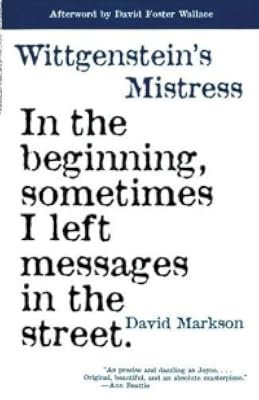
Wittgenstein's Mistress
by David Markson
On This Page
Description
Wittgenstein's Mistress is a novel unlike anything David Markson or anyone else has ever written before. It is the story of a woman who is convinced and, astonishingly, will ultimately convince the reader as well that she is the only person left on eart.Tags
Recommendations




















Member Recommendations

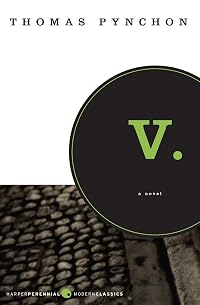
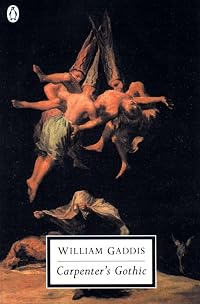
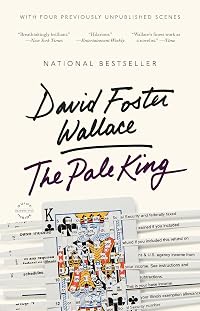
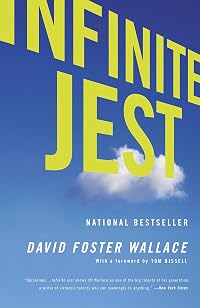
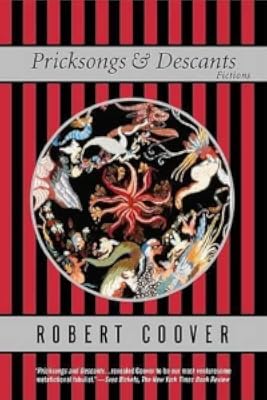
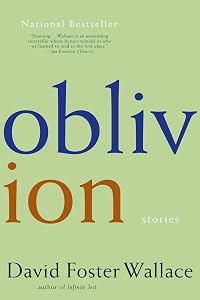
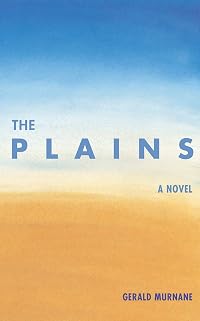
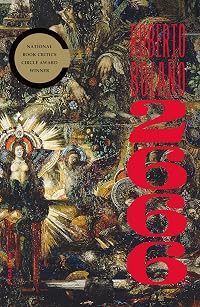
Philll The speaker follows a similar path in that he's quickly loosing his grasp. It's also full of intellectual stuff like in W's M, though of a different variety.
20
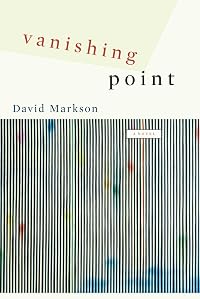
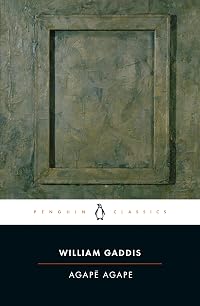
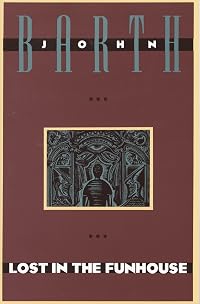
michaeljohn Both novels—each nontraditional and singular in form—feature a narrator wandering in a desolate landscape. Both narrators also show a similar propensity for historical digression.
Glass by Sam Savage
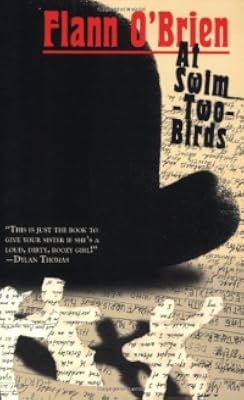
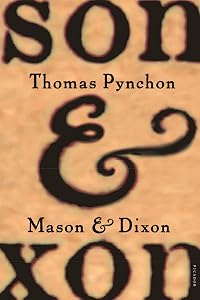
bluepiano Another outstanding book whose protagonist is isolated and possibly unreliable. It too has an unconventional narrative style and an astoundingly distinctive voice.
Member Reviews
Aunque lo que Leonardo dijo en realidad fue que no hay mejor manera de estar cuerdo y libre de toda ansiedad que estar loco
Kate es una mujer que frisa los cincuenta años. Eso es lo que Cervantes si pudiera conocer los avances de la narrativa desde su invención de la novela moderna diría del personaje protagonista de La amante de Wittgenstein. Una mujer que del mucho pensar en la cultura, la filosofía, los libros y todo en una escorrentía repetitiva y desesperada de datos, nos cuenta mucho de su sufrimiento como última persona en este planeta. Un sufrimiento que es también su ansiedad por acapararlo todo y volverse loca en el proceso, convirtiendo su mente en una mezcla de situaciones, vivencias, recuerdos, reflexiones y show more posibilidades que termina haciéndonos sentir el dolor de una locura desesperada por sanar de la que solo podemos encontrar en la misma la desconexión total. El final imposible, el poema inacabado, el adiós irresoluble de la pérdida de sí aunque en su soledad no importe, es solo un vacío inocuo de sentido para su mundo lleno de objetos que solo ella puede apreciar y nadie más. Es la pérdida en la nada, grito ahogado de quien cansada de su existencia escribe su mundo que es ella en una continuidad desbocada hacia una locura que va dando tumbos hasta su psicosis definitiva.
Aparte de eso, la novela es también un compendio obsesivo de datos que se entremezclan constantemente en una maravilla de popurrí que nos deja perplejos del sinsentido de la humanidad, de la cultura, del mundo, en una realidad donde solo existe una persona que ya no sabe recordar y se esfuerza en no perderse a sí misma. Es desgarrador ver como todo se desmorona y lo único que nos consuela es la voz de una madre en sus últimos instantes en un par de ocasiones, como el recuerdo que hace que la protagonista no sienta que todo fue una pérdida de tiempo.
Nunca sabrás cuánto significa para mí que seas artista, Kate, me dijo una noche.
Esos momentos conmovedores que nos hacen conectar con Kate, cuando no está buscando a un gato o a una gaviota para hacerle compañía. O se imagina un cuadro imposible que siempre tiene la escena definitiva. O se despeña con un monovolúmen por un terraplén al mar. O rema mar adentro viendo el reflejo de las llamas de su casa en las olas. O tantas y tantas situaciones entre absurdas, tristes, incomprensibles, divertidas y ansiosas de encontrar ese alivio que nunca llega. Cansarse constantemente y frustrarse también es conocer a una persona que grita al papel por no poder hacer otra cosa, hasta convertirse en un producto de sí misma o de la historia de la literatura o de no se sabe muy bien qué.
¿Habría tenido algún sentido que yo dijera que la mujer de mi novela un día se habría acostumbrado más fácilmente a un mundo sin nadie en él que a un mundo sin algo como El descendimiento de la cruz de Rogier van der Weyden, por cierto? ¿O sin la Ilíada? ¿O sin Antonio Vivaldi?
Hay muchas listas que se vuelven cada vez más largas, y que son tristes
Por Dios. ¿No debería dejar de preocuparme por corregir todas estas bobadas y limitarme a dejar que mi lenguaje saliera de la forma en que insiste en salir?
Aunque sin duda lo único que estoy pensando es que si hay tantas cosas que parecen existir únicamente en mi cabeza, cuando me siento aquí, entonces comienzan a existir también en estas páginas. Presumiblemente, continúan existiendo en estas páginas.show less
I didn’t know what I was getting into when I decided to read this book. I knew it was no beach read but, still, . . . Whoa!
It was the title that got my attention. I’ve been a student of Wittgenstein for many years, and I enjoy seeing him and his work from odd angles.
The book is a long first-person flow, babble really for the most part. Memories, connections between odd facts and often mis-stated facts, usually corrected later (e.g, no, it wasn’t Archimedes who came up with the paradox of Achilles and the Tortoise, it was Zeno).
It’s a book made up of incidental remarks written by, “Kate” who we gradually get to know over the course of her babbling. There is no action, no dialogue, unless you count such things as made-up show more dialogue between Spinoza and Rembrandt happening to meet standing in line at an apothecary.
The babbling is Kate’s monologue. There’s no one else here in Kate’s world, except in oblique memories.
If there is plot tension, it’s a tension between meaning and meaninglessness. with meaning struggling to break through. Like Kate’s mentions of her child Simon that strike through the babble like sudden dischordant notes of hard punctuation. The feeling crashes through the distraction and then withdraws again.
The babbling is “language on holiday” although in a different sense than Wittgenstein meant by that phrase.
Speaking of Wittgenstein, what does all this have to do with Wittgenstein?
Kate’s world feels to me like a tangent world to ours, of limited dimension, made of papier mache rather than real objects. The things in her world fail to hang together — they are constantly being exposed as pale images of reality, incapable of supporting the web of connections that would make them meaningful.
The helpful Afterward by David Foster Wallace picks up on that theme. To him, the novel is a dramatization of the world of Wittgenstein’s Tractatus. Objects linked together in logical connection via statements. Wallace expresses what he imagines to be Wittgenstein’s own repulsion from such a world, lacking in any depth or meaning by virtue of its logical positivist metaphysics, a metaphysics with no place for feeling or value, banished for their failure to convey facts.
In Wallace’s words, it’s “an imaginative portrait of what it would be like actually to live in the sort of world the logic & metaphysics of Wittgenstein’s Tractatus posits. This sort of world started out, for Wittgenstein, to be logical heaven. It ends up being (I opine) a metaphysical hell . .” And recognized as such by Wittgenstein. It’s a world spilled of its guts, leaving only its bones.
It’s an expression of a cold, factual, logical world at odds with Wittgenstein’s own life and ours.
If you’re not a student of Wittgenstein, you can still get the point. When you take out everything but the facts, the “enchantment” of the world, this is what you have. No place worth living.
Wallace also calls attention to the irony of the title. Wittgenstein, a gay man, after all had no mistress.* The title fails to refer, but, if Wittgenstein had a mistress, Kate might be her.
This is experimental fiction. Like I said, it’s no beach read. So prepare to work your way to what it means as you read it.
___________
*Although see Wittgenstein’s diaries, published as Movements of Thought, for more insight into his relationship (almost certainly unconsummated) with Marguerite Respinger. show less
It was the title that got my attention. I’ve been a student of Wittgenstein for many years, and I enjoy seeing him and his work from odd angles.
The book is a long first-person flow, babble really for the most part. Memories, connections between odd facts and often mis-stated facts, usually corrected later (e.g, no, it wasn’t Archimedes who came up with the paradox of Achilles and the Tortoise, it was Zeno).
It’s a book made up of incidental remarks written by, “Kate” who we gradually get to know over the course of her babbling. There is no action, no dialogue, unless you count such things as made-up show more dialogue between Spinoza and Rembrandt happening to meet standing in line at an apothecary.
The babbling is Kate’s monologue. There’s no one else here in Kate’s world, except in oblique memories.
If there is plot tension, it’s a tension between meaning and meaninglessness. with meaning struggling to break through. Like Kate’s mentions of her child Simon that strike through the babble like sudden dischordant notes of hard punctuation. The feeling crashes through the distraction and then withdraws again.
The babbling is “language on holiday” although in a different sense than Wittgenstein meant by that phrase.
Speaking of Wittgenstein, what does all this have to do with Wittgenstein?
Kate’s world feels to me like a tangent world to ours, of limited dimension, made of papier mache rather than real objects. The things in her world fail to hang together — they are constantly being exposed as pale images of reality, incapable of supporting the web of connections that would make them meaningful.
The helpful Afterward by David Foster Wallace picks up on that theme. To him, the novel is a dramatization of the world of Wittgenstein’s Tractatus. Objects linked together in logical connection via statements. Wallace expresses what he imagines to be Wittgenstein’s own repulsion from such a world, lacking in any depth or meaning by virtue of its logical positivist metaphysics, a metaphysics with no place for feeling or value, banished for their failure to convey facts.
In Wallace’s words, it’s “an imaginative portrait of what it would be like actually to live in the sort of world the logic & metaphysics of Wittgenstein’s Tractatus posits. This sort of world started out, for Wittgenstein, to be logical heaven. It ends up being (I opine) a metaphysical hell . .” And recognized as such by Wittgenstein. It’s a world spilled of its guts, leaving only its bones.
It’s an expression of a cold, factual, logical world at odds with Wittgenstein’s own life and ours.
If you’re not a student of Wittgenstein, you can still get the point. When you take out everything but the facts, the “enchantment” of the world, this is what you have. No place worth living.
Wallace also calls attention to the irony of the title. Wittgenstein, a gay man, after all had no mistress.* The title fails to refer, but, if Wittgenstein had a mistress, Kate might be her.
This is experimental fiction. Like I said, it’s no beach read. So prepare to work your way to what it means as you read it.
___________
*Although see Wittgenstein’s diaries, published as Movements of Thought, for more insight into his relationship (almost certainly unconsummated) with Marguerite Respinger. show less
Un flusso di pensieri apparentemente sconnessi. Da dove deriva la solitudine e l’apparente pazzia della voce narrante? Cosa c’è dietro a questa sequenza di pensieri che si ripetono in forme simili ma mai uguali? Una narratrice che non definirei neanche inaffidabile, perché siamo oltre: sono pensieri e riflessioni a volte viscosi che si annodano su se stessi.
Ma mai noiosi.
Mai faticosi.
A volte dolorosi.
Un romanzo altamente sperimentale, dice la bandella: ma non rende l’idea del modo con cui ci si debba buttare dentro e farsi trascinare.
Più di altri, questo libro ha bisogno di essere aperto “al momento giusto”, per non rischiare di odiarlo.
Ma mai noiosi.
Mai faticosi.
A volte dolorosi.
Un romanzo altamente sperimentale, dice la bandella: ma non rende l’idea del modo con cui ci si debba buttare dentro e farsi trascinare.
Più di altri, questo libro ha bisogno di essere aperto “al momento giusto”, per non rischiare di odiarlo.
Bijzonder boek dit. Niet weggelegd voor iedereen aangezien Markson alles doet behalve een verhaal vertellen. De vertelstijl blijkt gebaseerd op Wittgenstein's taalfilosofie (dat weet ik uit het nawoord van Lieke Marsman).
Als lezer maak je kennis met de gedachtes van Kate - enige overblijvende mens op aarde - die continu alle kanten op schieten. Als schilder vertelt ze veel weetjes over schilders, een andere dada is de Trojaanse oorlog. Kate leefde in verschillende musea en trok de wereld rond toen ze nog op zoek was (naar anderen mensen?), maar een betrouwbaar verteller blijkt ze niet te zijn. Naar het einde toe lijkt er wat waarheid door de gedachtes- en taalspelletjes door te schemeren, maar dan breekt Markson de boel af.
Klinkt mss show more wel stevig, maar alles is vlot leesbaar en speels opgebouwd.
Wat Wittgensgeins minnares lezenswaardig maakt, is wat er allemaal aan lees-, taal- en vertelpotentieel ontstaat door Marksons manier van schrijven. Het boek zit vol humor - vaak kurkdroog - en bevat ontelbare weetjes en feiten - al moet je als lezer zelf maar weten/ontdekken of de juiste anekdote aan de juiste historische figuur gekoppeld werd.
Wat het helemaal de moeite maakt is de vrede die je als lezer met je eigen gedachtes leert hebben. De sprongen die Kate's gedachtes maken en die voor haarzelf de evidentie zelve zijn, zijn dat niet altijd voor de lezer. En vergaat het ons dagdagelijks ook niet zo; dat onze gedachtesprongen niet altijd voet in de realiteit hebben of dat we van onze omgeving verwachten dat ze onze gedachtes zomaar kunnen volgen.
En als we dit herlezen, herkauwen of samen bespreken, groeig er ongetwijfeld nog heel wat meer potentieel uit dit bijzondere boek. show less
Als lezer maak je kennis met de gedachtes van Kate - enige overblijvende mens op aarde - die continu alle kanten op schieten. Als schilder vertelt ze veel weetjes over schilders, een andere dada is de Trojaanse oorlog. Kate leefde in verschillende musea en trok de wereld rond toen ze nog op zoek was (naar anderen mensen?), maar een betrouwbaar verteller blijkt ze niet te zijn. Naar het einde toe lijkt er wat waarheid door de gedachtes- en taalspelletjes door te schemeren, maar dan breekt Markson de boel af.
Klinkt mss show more wel stevig, maar alles is vlot leesbaar en speels opgebouwd.
Wat Wittgensgeins minnares lezenswaardig maakt, is wat er allemaal aan lees-, taal- en vertelpotentieel ontstaat door Marksons manier van schrijven. Het boek zit vol humor - vaak kurkdroog - en bevat ontelbare weetjes en feiten - al moet je als lezer zelf maar weten/ontdekken of de juiste anekdote aan de juiste historische figuur gekoppeld werd.
Wat het helemaal de moeite maakt is de vrede die je als lezer met je eigen gedachtes leert hebben. De sprongen die Kate's gedachtes maken en die voor haarzelf de evidentie zelve zijn, zijn dat niet altijd voor de lezer. En vergaat het ons dagdagelijks ook niet zo; dat onze gedachtesprongen niet altijd voet in de realiteit hebben of dat we van onze omgeving verwachten dat ze onze gedachtes zomaar kunnen volgen.
En als we dit herlezen, herkauwen of samen bespreken, groeig er ongetwijfeld nog heel wat meer potentieel uit dit bijzondere boek. show less
(3.5, rounded up to 4 stars)
TL;DR - This is a mind-bending piece of fiction. One of the most surreal books I've ever read, or maybe will. Must-read if you're tired of linear plots and reliable narrators.
On the surface, Wittgenstein's Mistress is a very shallow piece of literature - a narrator who may or may not be the last person on Earth, and is looking to find other humans. There's not even a semblance of a plot. The protagonist is the definition of unreliable. The plot has no structure. Neither does it have a pacing.
Then why should you read it?
Precisely because of all of the things above. Because there is no plot, we are free to listen to Kate's musings on the relation between Shakespeare and Greece, on how Dostoyevsky cried after show more coming to the US, and much more supposedly meaningless trivia. Because the narrator is unreliable, it makes a cat-and-mouse game for the reader to remember which strand of plot is about to be rendered into incoherent fragments in the next few sentences. Because there is no structure, you are free to lose your train of thought and come back to it, and you'll realize that you've missed nothing, since nothing has happened in the first place! Because there's no pacing, you are free to ponder on Kate's absolute misery on being the last person on Earth, and to realize that the trivia is there for a reason (no spoilers).
Avant-garde doesn't even begin to cover it. This is one of the few original novels of our lifetime - and I can see why it was rejected a staggering fifty-four times. For me, I'll never look at literature the same way again. This is the very antithesis of what a novel is supposed to be - but then again, I suppose, that's the point. show less
TL;DR - This is a mind-bending piece of fiction. One of the most surreal books I've ever read, or maybe will. Must-read if you're tired of linear plots and reliable narrators.
On the surface, Wittgenstein's Mistress is a very shallow piece of literature - a narrator who may or may not be the last person on Earth, and is looking to find other humans. There's not even a semblance of a plot. The protagonist is the definition of unreliable. The plot has no structure. Neither does it have a pacing.
Then why should you read it?
Precisely because of all of the things above. Because there is no plot, we are free to listen to Kate's musings on the relation between Shakespeare and Greece, on how Dostoyevsky cried after show more coming to the US, and much more supposedly meaningless trivia. Because the narrator is unreliable, it makes a cat-and-mouse game for the reader to remember which strand of plot is about to be rendered into incoherent fragments in the next few sentences. Because there is no structure, you are free to lose your train of thought and come back to it, and you'll realize that you've missed nothing, since nothing has happened in the first place! Because there's no pacing, you are free to ponder on Kate's absolute misery on being the last person on Earth, and to realize that the trivia is there for a reason (no spoilers).
Avant-garde doesn't even begin to cover it. This is one of the few original novels of our lifetime - and I can see why it was rejected a staggering fifty-four times. For me, I'll never look at literature the same way again. This is the very antithesis of what a novel is supposed to be - but then again, I suppose, that's the point. show less
Six-word review: Solitary survivor isn't mad, or is.
Extended review:
Without doubt it's my own shortcomings that make me unable to continue reading this book. It is simply too brilliant for me.
As best I can ascertain, Wittgenstein's Mistress plays out in fictional form an experience of the world as perceived through the lens of Ludwig Wittgenstein's philosophy, in much the same way that The Stranger represents the absurdism of Albert Camus: by engaging the reader in the vicarious apprehension of it in the philosopher's terms rather than by writing about it. In place of discourse, we have, as it were, direct experience.
(It is difficult even to speak about this properly in ordinary language, because words such as "experience," "perceived," show more "lens," "represents," and so on all present problems of meaning in themselves.)
Wittgenstein's first proposition "The world is everything that is the case" turns up verbatim in the text, though disembodied and unattributed, floating in like a wisp of a cloud, detaching itself, and floating off.
The fictional concept is that of a woman who is unaccountably the last person alive on earth. Settled for the time being in a beach house that might be somewhere in New York, she is typing a stream-of-consciousness succession of reminiscences, observations on her present circumstances, autobiographical snippets, accounts of her travels, and remarks on works of art, music, and literature that either have or have not been part of her life.
The first thing that began to wear on me to the point of distraction was the unbroken succession of short, short paragraphs, most of them only one sentence long, many others only two. This stylistic affectation gives the text a breathless, disjointed quality that I am sure was intentional and carefully controlled by the author but that nevertheless exhausts my attention.
The second was the narrator's incessant self-contradiction, qualification, self-correction, and use of words that signal reversal, such as "although," "however," "rather," and "still." Scarcely has the narrative voice of Kate recorded a memory or made an assertion before she has countered it in the next paragraph or a few paragraphs later. For example (page 67):
--
Once, in the Borghese Gallery, in Rome, I signed a mirror.
I did that in one of the women's rooms, with a lipstick.
What I was signing was an image of myself, naturally.
Should anybody else have looked, where my signature would have been was under the other person's image, however.
Doubtless I would not have signed it, had there been anybody else to look.
Though in fact the name I put down was Giotto.
There is only one mirror in this house, incidentally.
What that mirror reflects is also an image of myself, of course.
Though in fact what it has also reflected now and again is an image of my mother.
--
I understand that this too is intentional and central to the purpose of the novel, and it can only be my own impatience and lack of endurance that make me unable to persist with it.
I have made it to page 88. I glanced ahead a hundred pages and more, and it seems to continue in the same vein all the way to the end: meandering observations, allusions to art and to classical literature, assertion and reversal. I even, against all my readerly instincts, glanced at the end.
It's like looking at a huge abstract painting with thousands of little brushstrokes none of which actually depict or even evoke anything. Yes, I know, the intended effect may come from taking in the whole of it. So call me a Philistine, but a few square inches of that would have sufficed; I don't need an entire wall.
Enough. I've long since done with my philosophy classes. I've read my Sartre and Camus. At this stage of my life I want a novel that more or less follows a conventional plan. I'm leaving Wittgenstein's mistress to the house that may or may not be on the beach and may or may not be a house, with or without paintings, and I'm moving on. show less
Extended review:
Without doubt it's my own shortcomings that make me unable to continue reading this book. It is simply too brilliant for me.
As best I can ascertain, Wittgenstein's Mistress plays out in fictional form an experience of the world as perceived through the lens of Ludwig Wittgenstein's philosophy, in much the same way that The Stranger represents the absurdism of Albert Camus: by engaging the reader in the vicarious apprehension of it in the philosopher's terms rather than by writing about it. In place of discourse, we have, as it were, direct experience.
(It is difficult even to speak about this properly in ordinary language, because words such as "experience," "perceived," show more "lens," "represents," and so on all present problems of meaning in themselves.)
Wittgenstein's first proposition "The world is everything that is the case" turns up verbatim in the text, though disembodied and unattributed, floating in like a wisp of a cloud, detaching itself, and floating off.
The fictional concept is that of a woman who is unaccountably the last person alive on earth. Settled for the time being in a beach house that might be somewhere in New York, she is typing a stream-of-consciousness succession of reminiscences, observations on her present circumstances, autobiographical snippets, accounts of her travels, and remarks on works of art, music, and literature that either have or have not been part of her life.
The first thing that began to wear on me to the point of distraction was the unbroken succession of short, short paragraphs, most of them only one sentence long, many others only two. This stylistic affectation gives the text a breathless, disjointed quality that I am sure was intentional and carefully controlled by the author but that nevertheless exhausts my attention.
The second was the narrator's incessant self-contradiction, qualification, self-correction, and use of words that signal reversal, such as "although," "however," "rather," and "still." Scarcely has the narrative voice of Kate recorded a memory or made an assertion before she has countered it in the next paragraph or a few paragraphs later. For example (page 67):
--
Once, in the Borghese Gallery, in Rome, I signed a mirror.
I did that in one of the women's rooms, with a lipstick.
What I was signing was an image of myself, naturally.
Should anybody else have looked, where my signature would have been was under the other person's image, however.
Doubtless I would not have signed it, had there been anybody else to look.
Though in fact the name I put down was Giotto.
There is only one mirror in this house, incidentally.
What that mirror reflects is also an image of myself, of course.
Though in fact what it has also reflected now and again is an image of my mother.
--
I understand that this too is intentional and central to the purpose of the novel, and it can only be my own impatience and lack of endurance that make me unable to persist with it.
I have made it to page 88. I glanced ahead a hundred pages and more, and it seems to continue in the same vein all the way to the end: meandering observations, allusions to art and to classical literature, assertion and reversal. I even, against all my readerly instincts, glanced at the end.
It's like looking at a huge abstract painting with thousands of little brushstrokes none of which actually depict or even evoke anything. Yes, I know, the intended effect may come from taking in the whole of it. So call me a Philistine, but a few square inches of that would have sufficed; I don't need an entire wall.
Enough. I've long since done with my philosophy classes. I've read my Sartre and Camus. At this stage of my life I want a novel that more or less follows a conventional plan. I'm leaving Wittgenstein's mistress to the house that may or may not be on the beach and may or may not be a house, with or without paintings, and I'm moving on. show less
Paradoxically, having practically gouged out my eyes reading large parts of Wittgenstein’s Mistress by David Markson, I consider it a very skilful and clever book, an impressive feat of writing and somewhat like a work of (conceptual) art.
It is a story narrated by a woman who is seemingly the last human on Earth. I say seemingly since this is never qualified by anyone else and is only the word of this somewhat unreliable narrator who could quite possibly be stark raving bonkers instead.
She feeds us her piecemeal story of a married life and son’s death before some supposedly Armageddon-type intervention leaves her alone on the planet (as far as we can tell), frequenting countries, cities and art galleries whilst ruminating rather show more obsessively and pedantically on life, culture and the world’s and her own personal history.
So why was it such a chore if it was so good? I confess that my experience of Wittgenstein’s work is very basic but I believe Markson deftly weaves the linguist’s particular style and concerns with language into this novel in the manner of obsession with meaning of the central character. Constant and meticulous attempts (bordering on fanatically pedantical affection) to communicate exactly what is meant take precedent over plot and like linguistic branches, tangents of miscomprehension are exhaustively explored before the initial point/route is rejoined a few paragraphs or pages later, to continue the ‘story’.
Yet this is all so very clever and impressive that Markson can so convincingly write as this possibly insane character lamenting her lost son and life whilst ruminating on so many facets of existence. It truly is a great feat of writing despite the fact that it makes it a real trawl to the end. If you are a fan of novels that make you work and think and concern themselves with what it is to mean and be understood - this will be right up your street. show less
It is a story narrated by a woman who is seemingly the last human on Earth. I say seemingly since this is never qualified by anyone else and is only the word of this somewhat unreliable narrator who could quite possibly be stark raving bonkers instead.
She feeds us her piecemeal story of a married life and son’s death before some supposedly Armageddon-type intervention leaves her alone on the planet (as far as we can tell), frequenting countries, cities and art galleries whilst ruminating rather show more obsessively and pedantically on life, culture and the world’s and her own personal history.
So why was it such a chore if it was so good? I confess that my experience of Wittgenstein’s work is very basic but I believe Markson deftly weaves the linguist’s particular style and concerns with language into this novel in the manner of obsession with meaning of the central character. Constant and meticulous attempts (bordering on fanatically pedantical affection) to communicate exactly what is meant take precedent over plot and like linguistic branches, tangents of miscomprehension are exhaustively explored before the initial point/route is rejoined a few paragraphs or pages later, to continue the ‘story’.
Yet this is all so very clever and impressive that Markson can so convincingly write as this possibly insane character lamenting her lost son and life whilst ruminating on so many facets of existence. It truly is a great feat of writing despite the fact that it makes it a real trawl to the end. If you are a fan of novels that make you work and think and concern themselves with what it is to mean and be understood - this will be right up your street. show less
Members
- Recently Added By
Lists

1001 Books You Must Read Before You Die
1,448 works; 1,136 members

Best Contemporary Literary Fiction (Around the Last 30 Years)
400 works; 124 members

50 Tough Books for Extreme Readers
71 works; 39 members

Most difficult novels
68 works; 27 members

Top Five Books of 2022
736 works; 272 members

1,001 BYMRBYD Concensus
723 works; 27 members

Best First Lines
133 works; 8 members

Overdue Podcast
808 works; 9 members

Schwob Nederland
207 works; 2 members

Mind-Benders: Fiction that Hurts Your Head
34 works; 8 members
Author Information

20+ Works 4,308 Members
David Markson was born in Albany, New York on December 20, 1927. He received an undergraduate degree from Union College and a master's degree from Columbia University. Besides being a writer, he also worked as a journalist, book editor, and periodically as a college professor at Columbia University, Long Island University, and The New School. His show more works include Epitaph for a Tramp; Epitaph for a Dead Beat; This Is Not a Novel; Springer's Progress; Wittgenstein's Mistress; and The Last Novel. His novel, The Ballad of Dingus Magee, was made into a film starring Frank Sinatra entitled Dirty Dingus Magee. He was found dead on June 4, 2010 at the age of 82. (Bowker Author Biography) show less
Some Editions
Awards and Honors
Series
Belongs to Publisher Series
Common Knowledge
- Canonical title
- Wittgenstein's Mistress
- Original publication date
- 1988
- Important places
- USA; New York, USA; Long Island, New York, USA
- Epigraph
- What an extraordinary change takes place...when for the first time the fact that everything depends upon how a thing is thought first enters the consciousness, when, in consequence, thought in its absoluteness replaces an app... (show all)arent reality. -Kierkegaard
When I was still doubtful as to his ability, I asked G. E. Moore for his opinion, Moore replied, 'I think very well of him indeed.' When I enquired the reason for his opinion, he said that it was because Wittgenstein was the ... (show all)only man who looked puzzled at his lectures. -Bertrand Russell
I can well understand why children love sand. -Wittgenstein - Dedication
- For Joan Semmel
- First words
- In the beginning, sometimes I left messages in the street.
Somebody is living in the Louvre, certain of the messages would say. Or in the National Gallery.
Naturally they could only say that when I was in Paris ... (show all)or in London. Somebody is living in the Metropolitan Museum being what they would say when I was still in New York. - Original language
- English
- Canonical DDC/MDS
- 813
- Canonical LCC
- PS3563.A67 W58
Classifications
Statistics
- Members
- 1,809
- Popularity
- 12,106
- Reviews
- 40
- Rating
- (3.91)
- Languages
- 7 — Dutch, English, French, German, Italian, Polish, Spanish
- Media
- Paper, Audiobook, Ebook
- ISBNs
- 18
- ASINs
- 10