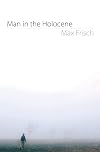
Man in the Holocene
by Max Frisch
On This Page
Description
A stunning tour de force, Man in the Holocene constructs a powerful vision of our place in the world by combining the banality of an aging man's lonely inner life and the objective facts he finds in the books of his isolated home. As a rainstorm rages outside, Max Frisch's protagonist, Geiser, watches the mountain landscape crumble beneath landslides and flooding, and speculates that the town will be wiped out by the collapse of a section of the mountain. Seeking refuge from the storm in show more town, he makes his way through a difficult and dangerous mountain pass, only to abandon his original plan and return home. A compelling meditation by one of Frisch's most original characters, Man in the Holocene charts Geiser's desperate attempt to find his place in history and in the confusing and fragile world outside his window. show lessTags
Recommendations
















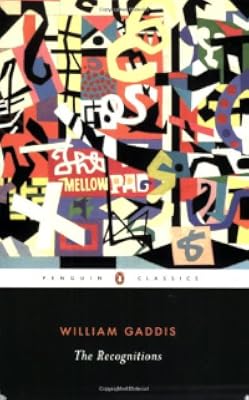
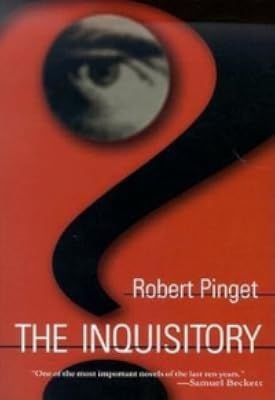
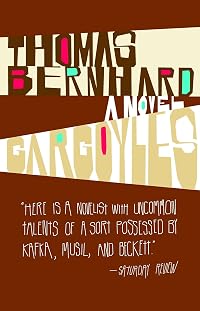

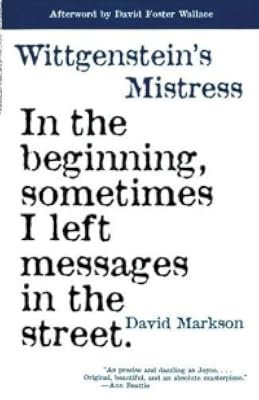



Member Recommendations

Member Reviews
This was a very strange reading experience: a loose sequence of descriptive and narrative sections, encyclopaedic articles, bible excerpts and memories. It takes a while before you realize that the book revolves around the older man, Herr Geiser, a confused loner who lives in a valley in southern Switzerland, not far from the Italian border. Geyser is clearly intrigued by the signs of decline in his environment (landslides due to constant rain, ants in his house, bus connections that have been interrupted), but also in himself: he has difficulty remembering things and doing the most basic actions. He tries to hold on tightly to what he once knew and focuses on geographical and historical articles and bible fragments (from Genesis) about show more the earliest geological and biological history; Frisch also inserts these articles and fragments into the text, with the original layout (up to and including texts in gothic lettering).
Geyser also ventures into a rather perilous trip through the mountains, trying to resume a journey that he used to undertake. We also get a flashback to a rather difficult climb of the Matterhorn, 50 years before. Certainly towards the end there seems to be something seriously wrong with the man, he sometimes seems unconscious for hours, and eventually people (including his daughter) appear who speak to him like a child.
As a writer, Frisch keeps himself in the background, but his seemingly purely descriptive report harshly portrays the dementing process of an old man who is more or less aware of what is happening. And also the broader metaphor, the reference to the ruthless power of erosion, to the nullity of man, (which only ‘appeared in the Holocene’, so very late in the history of the earth) finally becomes clear. What is a human life? What is man himself and can he withstand the enormous power of nature and time? Frisch makes his reader sweat in this philosophical parable. show less
Geyser also ventures into a rather perilous trip through the mountains, trying to resume a journey that he used to undertake. We also get a flashback to a rather difficult climb of the Matterhorn, 50 years before. Certainly towards the end there seems to be something seriously wrong with the man, he sometimes seems unconscious for hours, and eventually people (including his daughter) appear who speak to him like a child.
As a writer, Frisch keeps himself in the background, but his seemingly purely descriptive report harshly portrays the dementing process of an old man who is more or less aware of what is happening. And also the broader metaphor, the reference to the ruthless power of erosion, to the nullity of man, (which only ‘appeared in the Holocene’, so very late in the history of the earth) finally becomes clear. What is a human life? What is man himself and can he withstand the enormous power of nature and time? Frisch makes his reader sweat in this philosophical parable. show less
„Minden tönkremegy; tegnap a hőmérő, ma a lépcsőkorlát: a régi csavarok nem mennek vissza a rozsdába, most a lépcsőn karfa nélkül meredeznek a pálcák.
Az ember laikus marad.”
Geiser úr, az idős özvegyember valahol Tessinben, a svájci Isten háta mögött tengeti napjait. (Igen, Svájban is van Isten háta mögött. Vagy a svájciaknak is van Istenük, és neki is van háta möge. Kinek hogy tetszik.) Az eső esik, az erózió pedig eszi meg a hegyoldalakat. Fenyeget a földcsuszamlás. Geiser úrban is dolgozik egyfajta erózió, bár ő erejét megfeszítve harcol ellene: könyveiből mindenféle információkat vagdos ki és tűz a cetlifalra, hogy ne feledje el őket. De mit ér akár ezer adat, ha az adatok show more száma végtelen? Mit ér tudni, hogy „a Maggia évente átlagosan 550 000 köbméter hordalékot sodort a deltába”, meg hogy az ember a holocénban jelenik meg (pláne, hogy nem, mint Turms felhívta rá a figyelmet), ha az elménk a felejtéssel vívott egyre reménytelenebb harcban egyre inkább pusztulásnak indul? Egyáltalán, mit ér Geiser úr, és mit ér az ember?
Nos, ilyen vidám könyv ez. show less
Az ember laikus marad.”
Geiser úr, az idős özvegyember valahol Tessinben, a svájci Isten háta mögött tengeti napjait. (Igen, Svájban is van Isten háta mögött. Vagy a svájciaknak is van Istenük, és neki is van háta möge. Kinek hogy tetszik.) Az eső esik, az erózió pedig eszi meg a hegyoldalakat. Fenyeget a földcsuszamlás. Geiser úrban is dolgozik egyfajta erózió, bár ő erejét megfeszítve harcol ellene: könyveiből mindenféle információkat vagdos ki és tűz a cetlifalra, hogy ne feledje el őket. De mit ér akár ezer adat, ha az adatok show more száma végtelen? Mit ér tudni, hogy „a Maggia évente átlagosan 550 000 köbméter hordalékot sodort a deltába”, meg hogy az ember a holocénban jelenik meg (pláne, hogy nem, mint Turms felhívta rá a figyelmet), ha az elménk a felejtéssel vívott egyre reménytelenebb harcban egyre inkább pusztulásnak indul? Egyáltalán, mit ér Geiser úr, és mit ér az ember?
Nos, ilyen vidám könyv ez. show less
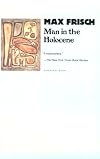
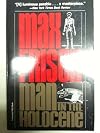
This was my first experience with the Dalkey Archive, revered by many of my friends on Goodreads, and unfortunately the first impressions were very poor: can it really be, I thought, unwrapping this in front of my postbox and examining it, that they spelled the name of the translator wrong on the front cover of the fucking book?!
http://imgur.com/Icdn1aG.jpg
Geoffrey Skelton was one of the greatest German translators we had (he died in 1998). How many people, I keep thinking, must have looked at this cover design before it got approved and printed? I mean seriously! The only way it could be any worse is if the book had been called Man in the Plasticine by Mark Fish.
Anyway. A shame, because the book is very interesting and deserves to be show more kept in print. A sort of existential collage, it follows a few days in the life of 73-year-old Geiser, a German-speaker from Basel, a widower, who has retired to live in a valley in Ticino, in Italian-speaking Switzerland. The narrative is impressionistic, staccato, often quite striking:
A little wall in the lower garden (dry-stone) has collapsed: debris among the lettuces, lumps of clay under the tomatoes. Perhaps that happened days ago.
Still, one can get tomatoes in cans.
Lavender flowering in the mist: scentless, as in a color film. One wonders what bees do in a summer like this.
It is important to Geiser to take note of what he sees. His memory is failing him, and he's compulsive about hoarding his knowledge – creating lists of the food in his kitchen, or of the sixteen different types of thunder he has distinguished echoing around his little house. His walls are covered in handwritten notes or clippings cut from the encyclopaedia, with his interests tending to geology and palaeontology.
Geiser knew at one time what caused tides, just as he knew about volcanoes, mountain ranges, etc. But when did the first mammals emerge? Instead of this, one knows how many liters of heating oil the tank contains, the time of the first and last mail bus – that is, when the highway is not blocked. When did man first emerge, and why? Triassic, Jurassic, Cretaceous, etc., but no idea how many millions of years the various eras lasted.
Man emerged in the Holocene – the epoch we're still in. This book thus deftly takes the scattered thoughts of one old man and locates them in the vast reaches of geological time. The disjointed style of his own reminiscences combines with the cuttings on his walls – excerpted here piecemeal from various Swiss reference works – to create a cut-up effect that juxtaposes the banal with the dramatic, dinosaurs with lettuces, continental drift with a fall down the stairs, and that ultimately becomes quite moving. Recommended, though possibly not in this badly-jacketed edition.
(One last quote to finish, because it didn't fit in the review and it demands to be shared.)
Ever since the young men have owned motorcycles, incest has been dying out, and so has sodomy. show less
http://imgur.com/Icdn1aG.jpg
Geoffrey Skelton was one of the greatest German translators we had (he died in 1998). How many people, I keep thinking, must have looked at this cover design before it got approved and printed? I mean seriously! The only way it could be any worse is if the book had been called Man in the Plasticine by Mark Fish.
Anyway. A shame, because the book is very interesting and deserves to be show more kept in print. A sort of existential collage, it follows a few days in the life of 73-year-old Geiser, a German-speaker from Basel, a widower, who has retired to live in a valley in Ticino, in Italian-speaking Switzerland. The narrative is impressionistic, staccato, often quite striking:
A little wall in the lower garden (dry-stone) has collapsed: debris among the lettuces, lumps of clay under the tomatoes. Perhaps that happened days ago.
Still, one can get tomatoes in cans.
Lavender flowering in the mist: scentless, as in a color film. One wonders what bees do in a summer like this.
It is important to Geiser to take note of what he sees. His memory is failing him, and he's compulsive about hoarding his knowledge – creating lists of the food in his kitchen, or of the sixteen different types of thunder he has distinguished echoing around his little house. His walls are covered in handwritten notes or clippings cut from the encyclopaedia, with his interests tending to geology and palaeontology.
Geiser knew at one time what caused tides, just as he knew about volcanoes, mountain ranges, etc. But when did the first mammals emerge? Instead of this, one knows how many liters of heating oil the tank contains, the time of the first and last mail bus – that is, when the highway is not blocked. When did man first emerge, and why? Triassic, Jurassic, Cretaceous, etc., but no idea how many millions of years the various eras lasted.
Man emerged in the Holocene – the epoch we're still in. This book thus deftly takes the scattered thoughts of one old man and locates them in the vast reaches of geological time. The disjointed style of his own reminiscences combines with the cuttings on his walls – excerpted here piecemeal from various Swiss reference works – to create a cut-up effect that juxtaposes the banal with the dramatic, dinosaurs with lettuces, continental drift with a fall down the stairs, and that ultimately becomes quite moving. Recommended, though possibly not in this badly-jacketed edition.
(One last quote to finish, because it didn't fit in the review and it demands to be shared.)
Ever since the young men have owned motorcycles, incest has been dying out, and so has sodomy. show less
Esperimento di scrittura riuscito a metà, soprattutto per quanto riguarda l'uso dei "ritagli" inseriti nel libro che inframezzano il già spezzato ritmo della narrazione. Frisch è a ogni modo molto bravo a costruire l'atmosfera da fine del mondo che anima il libro.
An old man retired to a Swiss village begins a descent into death and oblivion as incessant rains and thunderstorms seem to herald a general transformation of the landscape. In Geiser's last days the human is miniaturised until it practically disappears, as his mind increasingly falters and leaves the personal behind, and his attention becomes wholly consumed by the gigantic geological past of the planet and his canton. Very good.
Man in the Holocene (German: Der Mensch erscheint im Holozän, 1979) first appeared in the New Yorker in 1980 and garnered lofty praise from the New York Times: "masterpiece" and one of the "Best Books of 1980". It's very short, about the time it takes to watch an episode of James Burke's Connections, and has lots of pictures and blocks of text pasted in from old Encyclopedia's (original fonts and all) giving it a heightened sense of realism, a realism which matches the beautifully evocative descriptions of mountains in a rainstorm. It concerns an old man, alone in a cottage, in a remote Swiss valley, whose grasp on himself and time begins to erode, for reasons that don't become clear until the end. It's a philosophical novel about show more time, age, permanence of type versus the temporary individual. For example he considers the extinction of dinosaurs while watching a salamander crawl across the floor (salamanders probably descended from dinosaurs). At the end of his life, he is watching his body and mind erode and near extinction, yet he is also "aware", in a way that is physically expressed by pasting encyclopedia articles on the wall, that life continues onward through the epochs even while the individuals die off. Writing, then, becomes for Max Frisch -- who was also near lifes end and in a remote Swiss valley when he wrote the story -- a vehicle for expressing immortality, not because the individual text will last forever (it doesn't), but text is a symbolic way of expressing the idea of immortality which ensures it continuance. It's a beautiful book, although I can't figure out why he roasted the cat.
--Review by Stephen Balbach, via CoolReading (c) 2011 cc-by-nd show less
--Review by Stephen Balbach, via CoolReading (c) 2011 cc-by-nd show less
Today I went for a walk down the street and through the gate to the cement road, steeply inclined and overgrown in patches with thistles and weeds sprouting from the droppings of many cows, who roam the now yellowing hills that despite the overcast sky are impressively laid out for many miles, a winding valley through which a running creek cuts and crosses over grey and under green.
The cement road branches at its base, and if you follow the right path you will come to a gate and yet another branch, and if you continue to veer to the right you will walk down a wide and well-maintained construction, bounded by the base of a slope on the left and riotous growth on the right. If you walk down far enough, you will see a small area that show more slopes and suggests the beginning of one of those cow trails that cut into the hills in a zigzag shape, treacherous and sometimes humiliating to take when thinking on how creatures much larger and more unwieldy than yourself not only forged the road but unwaveringly maintain it.
Except that is a trap. It would not have been a trap fifteen years ago, when the stream was a mere two feet wide and barely six inches deep and even my six-year old self was able to jump across it with relative ease, six-year old eyes recording the sight of sunny gold burbling along as six-year-old feet readied themselves at the bottom of a gentle slope to jump across with six-year-old legs and land on the sandy shore across. Now, that slope cuts off a foot from its origin, and what greets you is a drop that would break both legs and maybe a neck, across a creek that has carved itself into a sizable expanse that rapidly spills and churns volumes into a deep basin that could easily swallow you down, should you lose your footing. A while back I heard from a surveyor that it had been measured at sixteen feet, surrounded by loose walls of mud and flimsy roots that could no more support a grasping hand than a daisy could resist the pull of eager six-year-old fingers.
I have no six-year-old memories of that landscape gullet.
The creek that chewed out that deepening hollow as well as the surrounding valley and hills is called Sabercat Creek, and if you went back and back and farther back to the first fork in the road and took the left path, you would walk along a road similar to its mirror, albeit more overgrown and more steep in its slopes, a high yellow slope pocked with trees and shrubbery on your left and a deep green gorge massed with fallen branches and poison ivy on your right. At the end of this path there is a gate, and beyond the gate is the place that the creek was named for, where 70 years before I was born they excavated the bones of monumental felines that returned to earth entirely 1.6 million years before humans gained their modern physiology. You can hike up the cliff that was left, look down at the long yellow grasses and tall thin whips of pink and green that healed the gouges left by the archaeological endeavor long ago, and wonder if there are any bones still resting in shapely divots, cool and dry under the earth that hasn't seen anything but a light rain for many weeks.
They were there long before us, and should the creek continue its destructive path and course itself into landslides that cause the houses to slip and slide and batter themselves into oblivion, possibly with their inhabitants within their walls, they will be there still.
One of those houses is mine, and in that house I have a laptop, and in that laptop there is a word document with which I have been keeping a collection of names, words, phrases, poetry, quotes both categorized by book and miscellaneous by necessity, and more recently reviews that differ from their lettered brethren in being of my own design. The document is 360 pages long, and is a boon for someone who could never keep a diary yet still wishes to have some record on hand, that both absorbs the new and cradles the old for rediscoveries by a brain that may still be young but is not infinite. It has survived three computers, four years, and countless accidentally closed windows and abruptly errant shutdowns. By it, I see myself, and slowly but surely, the changes of said self.
There may come a time in old age or even younger, when in the throes of Alzheimer's or some other decay of the brain I will open this document and forget words as soon as I read them, or forget it for long periods until a sudden retrieval reassures me that all is not lost, or delete it unknowingly and forget that such a thing ever existed.
If you keep in mind: the ceaseless biting and gnawing of water in a fierce erosion that can wear away the physical and make one question the mental; the monumental backdrop of time that one plays a blip of a part upon in this period that in the spirit of the Triassic and the Jurassic and the Cretaceous is termed the Holocene; the quickening sink and slippage of layers of the mind that jerks and shudders towards a broken record of a living that forsakes the straight road of the present for the drop into the deep waters of memory, no matter how many words are written on the wall.
You'll get a sense of what this book is like. show less
The cement road branches at its base, and if you follow the right path you will come to a gate and yet another branch, and if you continue to veer to the right you will walk down a wide and well-maintained construction, bounded by the base of a slope on the left and riotous growth on the right. If you walk down far enough, you will see a small area that show more slopes and suggests the beginning of one of those cow trails that cut into the hills in a zigzag shape, treacherous and sometimes humiliating to take when thinking on how creatures much larger and more unwieldy than yourself not only forged the road but unwaveringly maintain it.
Except that is a trap. It would not have been a trap fifteen years ago, when the stream was a mere two feet wide and barely six inches deep and even my six-year old self was able to jump across it with relative ease, six-year old eyes recording the sight of sunny gold burbling along as six-year-old feet readied themselves at the bottom of a gentle slope to jump across with six-year-old legs and land on the sandy shore across. Now, that slope cuts off a foot from its origin, and what greets you is a drop that would break both legs and maybe a neck, across a creek that has carved itself into a sizable expanse that rapidly spills and churns volumes into a deep basin that could easily swallow you down, should you lose your footing. A while back I heard from a surveyor that it had been measured at sixteen feet, surrounded by loose walls of mud and flimsy roots that could no more support a grasping hand than a daisy could resist the pull of eager six-year-old fingers.
I have no six-year-old memories of that landscape gullet.
The creek that chewed out that deepening hollow as well as the surrounding valley and hills is called Sabercat Creek, and if you went back and back and farther back to the first fork in the road and took the left path, you would walk along a road similar to its mirror, albeit more overgrown and more steep in its slopes, a high yellow slope pocked with trees and shrubbery on your left and a deep green gorge massed with fallen branches and poison ivy on your right. At the end of this path there is a gate, and beyond the gate is the place that the creek was named for, where 70 years before I was born they excavated the bones of monumental felines that returned to earth entirely 1.6 million years before humans gained their modern physiology. You can hike up the cliff that was left, look down at the long yellow grasses and tall thin whips of pink and green that healed the gouges left by the archaeological endeavor long ago, and wonder if there are any bones still resting in shapely divots, cool and dry under the earth that hasn't seen anything but a light rain for many weeks.
They were there long before us, and should the creek continue its destructive path and course itself into landslides that cause the houses to slip and slide and batter themselves into oblivion, possibly with their inhabitants within their walls, they will be there still.
One of those houses is mine, and in that house I have a laptop, and in that laptop there is a word document with which I have been keeping a collection of names, words, phrases, poetry, quotes both categorized by book and miscellaneous by necessity, and more recently reviews that differ from their lettered brethren in being of my own design. The document is 360 pages long, and is a boon for someone who could never keep a diary yet still wishes to have some record on hand, that both absorbs the new and cradles the old for rediscoveries by a brain that may still be young but is not infinite. It has survived three computers, four years, and countless accidentally closed windows and abruptly errant shutdowns. By it, I see myself, and slowly but surely, the changes of said self.
There may come a time in old age or even younger, when in the throes of Alzheimer's or some other decay of the brain I will open this document and forget words as soon as I read them, or forget it for long periods until a sudden retrieval reassures me that all is not lost, or delete it unknowingly and forget that such a thing ever existed.
If you keep in mind: the ceaseless biting and gnawing of water in a fierce erosion that can wear away the physical and make one question the mental; the monumental backdrop of time that one plays a blip of a part upon in this period that in the spirit of the Triassic and the Jurassic and the Cretaceous is termed the Holocene; the quickening sink and slippage of layers of the mind that jerks and shudders towards a broken record of a living that forsakes the straight road of the present for the drop into the deep waters of memory, no matter how many words are written on the wall.
You'll get a sense of what this book is like. show less
Members
- Recently Added By
Lists

German Literature
518 works; 56 members

One Book, Many Authors
441 works; 40 members

the old and the restless
62 works; 14 members

Harold Bloom - The Western Canon: D. The Chaotic Age
833 works; 24 members

tell me where it hurts
36 works; 7 members

Cooper
79 works; 1 member

Books About Older People
50 works; 11 members

Books Read in 2022
5,226 works; 112 members

Books Read in 2021
5,361 works; 114 members

Die besten Werke der deutschsprachigen Erzählliteratur von 1924 bis 2024
100 works; 2 members
Author Information

Max Frisch was born in Switzerland in 1911. He attended the University of Zurich and spent six years in the Swiss Army. He also worked as a freelance writer and an architect. Frisch is most famous for writing the novel I'm Not Stiller and the play The Firebugs. Both works explore one of Frisch's major themes: the problematic nature of living life show more without a true understanding of one's identity. Many of his works feature explore this theme, including the plays The Chinese Wall, Andorra: A Play in Twelve Scenes, and Don Juan; or the Love of Geometry. He has also written several other novels, including Homo Faber: A Report, and Man in the Holocene. Frisch was awarded the International Neustadt Prize for Literature in 1987. He died in 1991 in Zurich. (Bowker Author Biography) show less
Some Editions
Awards and Honors
Distinctions
Series
Belongs to Publisher Series
Work Relationships
Common Knowledge
- Canonical title
- Man in the Holocene
- Original title
- Mensch erscheint im Holozän
- Original publication date
- 1979; 1980 (English) (English)
- Dedication
- FOR MARIANNE
- First words*
- Es müßte möglich sein, eine Pagode zu türmen aus Knäckebrot, nichts zu denken und keinen Donner zu hören, keinen Regen, kein Plätschern aus der Traufe, kein Gurgeln ums Haus.
- Last words*
- (Click to show. Warning: May contain spoilers.)Im August und im September, nachts, sind Sternschnuppen zu sehen oder man hört ein Käuzchen.
- Original language
- German
*Some information comes from Common Knowledge in other languages. Click "Edit" for more information.
Classifications
- Genres
- General Fiction, Fiction and Literature
- DDC/MDS
- 833.912 — Literature & rhetoric German & related literatures German fiction 1900- 1900-1990 1900-1945
- LCC
- PT2611 .R814 .M4413 — Language and Literature German, Dutch and Scandinavian literatures German literature Individual authors or works 1860/70-1960
- BISAC
Statistics
- Members
- 597
- Popularity
- 49,263
- Reviews
- 14
- Rating
- (3.78)
- Languages
- 11 — Dutch, English, Finnish, French, German, Hungarian, Italian, Norwegian, Russian, Spanish, Swedish
- Media
- Paper, Ebook
- ISBNs
- 22
- ASINs
- 4