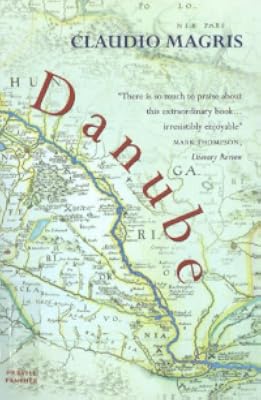
Danube
by Claudio Magris
On This Page
Description
In this acclaimed international bestseller, Claudio Magris tracks the Danube River, setting his finger on the pulse of Central Europe, the crucible of a culture that draws on influences of East and West, Christianity and Islam. In each town he raises the ghosts that inhabit the houses and monuments, from Ovid and Marcus Aurelius to Kafka and Canetti, in "a fascinating blend of anecdote and history" ("San Francisco Examiner").Tags
Recommendations


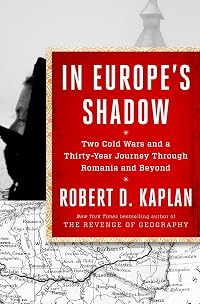
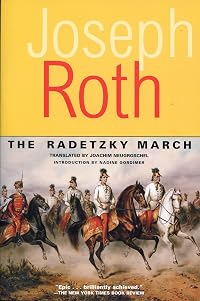
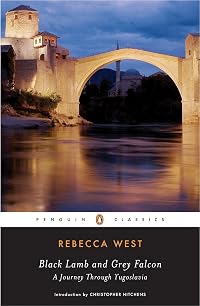



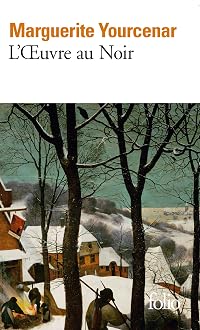










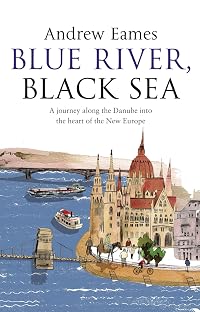

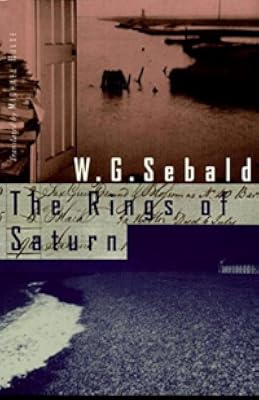
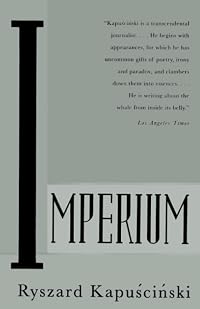







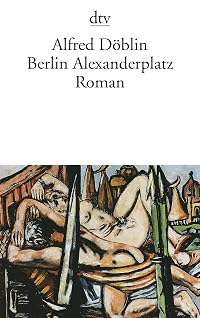



Member Recommendations

by caflores

Member Reviews
Ci sono libri che ti guardano per anni dagli scaffali della libreria, di cui senti parlare, ai quali altri scrittori fanno riferimento, tu li guardi, con un misto di diffidenza e senso di inferiorità, e li lasci lì, finché una notte non riesci a dormire, e quasi per caso te li ritrovi in mano.
Questa è la storia della relazione tra me e il capolavoro di Magris.
Pensavo che fosse un libro di viaggio, e infatti lo è, ma il Danubio, il suo stravagante e infinito percorso tra una sorgente assimilabile a un rubinetto e una foce che è un canale in un porto, sono il pretesto per un viaggio attraverso l'Europa, la sua storia e la sua letteratura, i suoi popoli e le sue contraddizioni.
Davvero un monumento, nonostante per molti versi la show more storia l'abbia superato, a causa della caduta del muro di Berlino e di tutta la frana che quella caduta ha provocato.
Ma resta la certezza che che acque del Danubio siano più potenti della piccola storia degli uomini, a meno che qualcuno non chiuda il rubinetto ... show less
Questa è la storia della relazione tra me e il capolavoro di Magris.
Pensavo che fosse un libro di viaggio, e infatti lo è, ma il Danubio, il suo stravagante e infinito percorso tra una sorgente assimilabile a un rubinetto e una foce che è un canale in un porto, sono il pretesto per un viaggio attraverso l'Europa, la sua storia e la sua letteratura, i suoi popoli e le sue contraddizioni.
Davvero un monumento, nonostante per molti versi la show more storia l'abbia superato, a causa della caduta del muro di Berlino e di tutta la frana che quella caduta ha provocato.
Ma resta la certezza che che acque del Danubio siano più potenti della piccola storia degli uomini, a meno che qualcuno non chiuda il rubinetto ... show less
Magris travels from the source(s) of the Danube in Bavaria to its mouth(s) in the Black Sea, and we get some entertaining reflections on what he sees along the way, but this isn’t so much a conventional travel book as a crash course in Central European literatures and cultures. For a lot of the time, he is seeing the world less through his own eyes than through those of the writers who have lived there and written about those places. Not just the big names, the Kafkas, Musils and Canettis, but also a lot of more obscure writers whom you’re unlikely to know about unless you have a special interest in a given area. He tells us about them in charming, witty style, so that we take in the information without it ever quite coming across show more like a lecture course.
The book is also fun, of course, because without quite realising it, Magris was capturing a snapshot of an epoch in Central European history that was just about to end: he was travelling in the very last years of the Iron Curtain. He often stops to reflect on the political realities of the places he is travelling through, and on the recent history that has made them what they are, but this isn’t really a political book. If you want to read in detail about the horrors of Ceaușescu‘s Romania or post-1968 Czechoslovakia, you will need to look elsewhere. Magris is recording them as countries in which writers are constrained but can still find interesting things to say. show less
The book is also fun, of course, because without quite realising it, Magris was capturing a snapshot of an epoch in Central European history that was just about to end: he was travelling in the very last years of the Iron Curtain. He often stops to reflect on the political realities of the places he is travelling through, and on the recent history that has made them what they are, but this isn’t really a political book. If you want to read in detail about the horrors of Ceaușescu‘s Romania or post-1968 Czechoslovakia, you will need to look elsewhere. Magris is recording them as countries in which writers are constrained but can still find interesting things to say. show less
There are certain books that are sui generis and this is one of those books. In part, it reminded me of the cultural stories that the first historian, Herodotus, included in his original work , The Histories, that provides the foundation for the idea of written history. While he focuses on the mind of men who have lived and ruled and dreamed on and about the Danube, ultimately Magris's work is different and as a result unique in its aspect. Danube is both a catalog of histories and myths about a place over time. The place is a river that begins in a geographic region but also begins in a time and continues to exist through generations of changes to this day.
Included in the journey down the Danube through history are stories of people show more and places and times; stories that are both historical and fictional, mythical and real. These stories complement a travelogue that highlights places and times and people and more. Most interesting and important for this reader were the stories of literature that derives from the residents and the being of the river. The names are familiar and include: Kafka, Freud, Wittgenstein, Marcus Aurelius, Musil, Ovid, Celine, Von Rezzori, and others, some of whom I encountered for the first time in this work.
The book begins with a discussion of the sources of the Danube -- sources of the river which "were the object of investigations, conjectures or information of Herodotus, Strabo, Caesar, Pliny, Ptolemy, the Pseudo-Scymnus, Seneca, Mela and Eratosthenes." These sources and the river that they feed have been the subject of history, politics, philosophy, mythology, and geography for millennia during which the Roman and the Holy Roman Empires rose and fell along with subsequent cities and countries into the twentieth century.
Early in the book the Danube is described as "a sinuous master of irony, of that irony which created the greatness of Central European culture," and as such it is the central conduit of Mitteleuropa and all that it implies. The river encompasses many great cities such as Ulm "of the old Germany of the Holy Roman Empire", yet also the birthplace of Albert Einstein. And of course there is Vienna which is in some ways at the center of the Danube journey if for no other reason than its cultural impact that extends to the new world and to this day, decades after the documentation of the journey of the Danube.
Another highlight on the journey is Passau where we are reminded of the literature and art inspired by the Danube. The author narrates the story of Siegfried from the Song of the Niebelungs ( a story also found in the Nordic saga the Edda) and shares the love and loyalty that is rendered there. Yet it is also a region that inspired the twentieth-century literature of Kafka. The juxtaposition of Kafka with the ancient legends leads to an even stranger one when moving on to Linz one finds the journey progressing (regressing?) through a city that Hitler once planned to recreate into a "refuge of his old age, the place he yearned to retire to after consolidating the Reich that was to last a thousand years". Yet, fortunately for lovers of literature Linz was also the home of the novelist Adalbert Stifter who, even if you have not heard of him (and I had not), was capable of prose comparable to that of Flaubert's Education Sentimentale. It is this same river that also inspired works by Musil and Svevo. It is this literature that inspires Magris to comment as follows:
"Men without qualities, those landlocked armchair explorers, have their contraceptives always in their pockets, and Mitteleuropean culture taken as a whole is also a large-scale process of intellectual contraception. Whereas on the epic sea is Aphrodite born, and there--as Conrad writes -- we conquer forgiveness for our sins and the salvation of our immortal souls; we remember that once we were gods."(p 137)
The stories of the Danube continue to abound in this epic work. Included are the names like Hegel and Canetti and Roth; the historical figures like Eichmann and Princess Elisabeth and Vlad the Impaler; the music of Schubert and Mozart and Strauss. All are epitomized for this reader by Schubert's Wanderer Fantasy and Strauss's Blue Danube Waltz. Even the geography of the river itself begins and ends in myth.
There is more and it flows from the richness, the depth, and the historical grandeur of this book. It is one whose deepness reaches realms that make the challenge of reading it (it is not an "easy read") worthwhile. Finally it is one of the most erudite and intelligent books I have read and that makes it also one of the most enjoyable and interesting. show less
Included in the journey down the Danube through history are stories of people show more and places and times; stories that are both historical and fictional, mythical and real. These stories complement a travelogue that highlights places and times and people and more. Most interesting and important for this reader were the stories of literature that derives from the residents and the being of the river. The names are familiar and include: Kafka, Freud, Wittgenstein, Marcus Aurelius, Musil, Ovid, Celine, Von Rezzori, and others, some of whom I encountered for the first time in this work.
The book begins with a discussion of the sources of the Danube -- sources of the river which "were the object of investigations, conjectures or information of Herodotus, Strabo, Caesar, Pliny, Ptolemy, the Pseudo-Scymnus, Seneca, Mela and Eratosthenes." These sources and the river that they feed have been the subject of history, politics, philosophy, mythology, and geography for millennia during which the Roman and the Holy Roman Empires rose and fell along with subsequent cities and countries into the twentieth century.
Early in the book the Danube is described as "a sinuous master of irony, of that irony which created the greatness of Central European culture," and as such it is the central conduit of Mitteleuropa and all that it implies. The river encompasses many great cities such as Ulm "of the old Germany of the Holy Roman Empire", yet also the birthplace of Albert Einstein. And of course there is Vienna which is in some ways at the center of the Danube journey if for no other reason than its cultural impact that extends to the new world and to this day, decades after the documentation of the journey of the Danube.
Another highlight on the journey is Passau where we are reminded of the literature and art inspired by the Danube. The author narrates the story of Siegfried from the Song of the Niebelungs ( a story also found in the Nordic saga the Edda) and shares the love and loyalty that is rendered there. Yet it is also a region that inspired the twentieth-century literature of Kafka. The juxtaposition of Kafka with the ancient legends leads to an even stranger one when moving on to Linz one finds the journey progressing (regressing?) through a city that Hitler once planned to recreate into a "refuge of his old age, the place he yearned to retire to after consolidating the Reich that was to last a thousand years". Yet, fortunately for lovers of literature Linz was also the home of the novelist Adalbert Stifter who, even if you have not heard of him (and I had not), was capable of prose comparable to that of Flaubert's Education Sentimentale. It is this same river that also inspired works by Musil and Svevo. It is this literature that inspires Magris to comment as follows:
"Men without qualities, those landlocked armchair explorers, have their contraceptives always in their pockets, and Mitteleuropean culture taken as a whole is also a large-scale process of intellectual contraception. Whereas on the epic sea is Aphrodite born, and there--as Conrad writes -- we conquer forgiveness for our sins and the salvation of our immortal souls; we remember that once we were gods."(p 137)
The stories of the Danube continue to abound in this epic work. Included are the names like Hegel and Canetti and Roth; the historical figures like Eichmann and Princess Elisabeth and Vlad the Impaler; the music of Schubert and Mozart and Strauss. All are epitomized for this reader by Schubert's Wanderer Fantasy and Strauss's Blue Danube Waltz. Even the geography of the river itself begins and ends in myth.
There is more and it flows from the richness, the depth, and the historical grandeur of this book. It is one whose deepness reaches realms that make the challenge of reading it (it is not an "easy read") worthwhile. Finally it is one of the most erudite and intelligent books I have read and that makes it also one of the most enjoyable and interesting. show less
A parasite of hardship, he takes refuge in absolute negation, splashing about comfortably among the contradictions of existence and of culture, and flaunting the frenzy of them, instead of trying to understand the far more arduous contest between good and evil, truth and falsehood, which every day brings with it.
This is a most episodic erudition, a heartbeat of time through the prism of a lifetime in a chair (recalling Gass) pondering the endless flow of a river, across Europe, across history, eventually allowing the sediment to afford upper case status-- History. My own time by the Danube has seldom been "Blue" as it were but one instead of marvel. I was there once on the Chain Bridge with the woman I love. We were not married then and show more I was left most mortified at making a move. (I had just read Prague by Arthur Phillips where the protagonist attempts to kiss a woman on the bridge and is rejected).
The quest of Magris along the river does appear solipsistic--but that isn't a complaint. He initially puzzles over the what constitutes the source of the river. There is incredible debate and contention regarding the location. Such assertions have considerable baggage. What do they preclude, what jingoism is evoked? Each page both crackles and groans under the weight of its references: Goethe, Holderlin, Nietzsche, Hofmannsthal.
The book inspires its own echoes -- go see Ister (2004) by David Barison, snuggle up with [b:Cultural Amnesia: Necessary Memories from History and the Arts|262762|Cultural Amnesia Necessary Memories from History and the Arts|Clive James|https://images.gr-assets.com/books/1439871720s/262762.jpg|1126436]
The book proceeds down the river, known of course in Ancient Greece as Ister. There is a melancholy of absence--not only of times and traditions, but tongues and manners of grace and civility. I myself was on the banks just a short while back. Looking about at the vineyard my wife's family are cultivating near Sremski Karlovci, or Carlowitz as it was known under the Hapsburgs or Karlofça as it was known by the Ottoman Empire. There is a Roman ruin on a hilltop and down below a 15C church, in the waning light of day the church betrayed a menace and my imagination flinched at the possibility of a Lovecraftean cult of river evil.
Serbia doesn't appear prominent in the book. Magris deliberates on Vienna and its poetic silence.
Silence is not Marx, it is Wittgenstein or Hofnannsthal: it is Viennese.
The Ottomans failed in their siege and back in Beograd someone had to answer for the defeat. It would have been so simple to tweet the succession. The book was penned in 1986 before Glastnost led to a change in format. It also predates the Yugoslav Civil War and the NATO destruction of the bridges at Novi Sod. The EU eventually paid for the removal and restoration: trade must prevail!
It may be that the moment is approaching, when the historical, social and cultural differences will reveal, and violently, the difficulties of mutual incompatibility. Our future will depend in part on our ability to prevent the priming of this time-bomb of hatred, and the possibility that new Battles of Vienna will transform brothers into foreigners and enemies.
Strange how the subterranean rifts in the YU throughout the 80s are ignored in favor of concerns about Bulgaria. Maybe the Brexit can be read into such, if it happened along those storied banks? show less
This is a most episodic erudition, a heartbeat of time through the prism of a lifetime in a chair (recalling Gass) pondering the endless flow of a river, across Europe, across history, eventually allowing the sediment to afford upper case status-- History. My own time by the Danube has seldom been "Blue" as it were but one instead of marvel. I was there once on the Chain Bridge with the woman I love. We were not married then and show more I was left most mortified at making a move. (I had just read Prague by Arthur Phillips where the protagonist attempts to kiss a woman on the bridge and is rejected).
The quest of Magris along the river does appear solipsistic--but that isn't a complaint. He initially puzzles over the what constitutes the source of the river. There is incredible debate and contention regarding the location. Such assertions have considerable baggage. What do they preclude, what jingoism is evoked? Each page both crackles and groans under the weight of its references: Goethe, Holderlin, Nietzsche, Hofmannsthal.
The book inspires its own echoes -- go see Ister (2004) by David Barison, snuggle up with [b:Cultural Amnesia: Necessary Memories from History and the Arts|262762|Cultural Amnesia Necessary Memories from History and the Arts|Clive James|https://images.gr-assets.com/books/1439871720s/262762.jpg|1126436]
The book proceeds down the river, known of course in Ancient Greece as Ister. There is a melancholy of absence--not only of times and traditions, but tongues and manners of grace and civility. I myself was on the banks just a short while back. Looking about at the vineyard my wife's family are cultivating near Sremski Karlovci, or Carlowitz as it was known under the Hapsburgs or Karlofça as it was known by the Ottoman Empire. There is a Roman ruin on a hilltop and down below a 15C church, in the waning light of day the church betrayed a menace and my imagination flinched at the possibility of a Lovecraftean cult of river evil.
Serbia doesn't appear prominent in the book. Magris deliberates on Vienna and its poetic silence.
Silence is not Marx, it is Wittgenstein or Hofnannsthal: it is Viennese.
The Ottomans failed in their siege and back in Beograd someone had to answer for the defeat. It would have been so simple to tweet the succession. The book was penned in 1986 before Glastnost led to a change in format. It also predates the Yugoslav Civil War and the NATO destruction of the bridges at Novi Sod. The EU eventually paid for the removal and restoration: trade must prevail!
It may be that the moment is approaching, when the historical, social and cultural differences will reveal, and violently, the difficulties of mutual incompatibility. Our future will depend in part on our ability to prevent the priming of this time-bomb of hatred, and the possibility that new Battles of Vienna will transform brothers into foreigners and enemies.
Strange how the subterranean rifts in the YU throughout the 80s are ignored in favor of concerns about Bulgaria. Maybe the Brexit can be read into such, if it happened along those storied banks? show less
Slightly tempting to compare Magris' cultural dredging of the Danube with something equally ambitious like Rebecca West's Black Lamb Grey Falcon, but whereas West's book of half-credulous received opinions comes off as an unreliable sort of Bloomsbury Herodotus, Magris is more reserved and a little detached. On the other hand, you certainly won't get any kind of coherent travel narrative here; the book merely methodically progresses in the subjects it addresses from one end of Europe to another, with an occassional anecdote thrown in where it suits.
It'd be easier to fault Magris for his sort of intellectual gentleman's-club style, which seems to revel in implying that every moment is made up of a tissue of insight and erudition, if show more damn near the whole book weren't made up of a tissue of insight and erudition. The odd occasion where he has nothing in particular to say can render the lofty style a little ridiculous, but it's never enough to spoil an otherwise brilliant trip through the nooks and crannies of eastern European culture. show less
It'd be easier to fault Magris for his sort of intellectual gentleman's-club style, which seems to revel in implying that every moment is made up of a tissue of insight and erudition, if show more damn near the whole book weren't made up of a tissue of insight and erudition. The odd occasion where he has nothing in particular to say can render the lofty style a little ridiculous, but it's never enough to spoil an otherwise brilliant trip through the nooks and crannies of eastern European culture. show less
Celebration! I have been reading this book for 22 months, since early 2024, but this lovely November I am officially done. Did I love it, do I recommend it - don't know, don't care. I'm just delighted to tell this story to myself. The rest of you can stop reading, I'm not even going to edit this part.
I added this book to my mental to-read list in the early 2000's. By then, I think, it was already out of print. Not sure if someone told me about it or it was referenced in another book, but I do think I already knew it was a long meandering collection, a niche sort of oddity that I would want to have read but maybe wasn't dying to be in the act of reading. I never found it on sale so I never bought it. When I joined Goodreads, it went on show more the list. Occasionally I've looked it up - used copies, special orders - but as someone who is careful about my bookspending, I never found it cheap enough and there was always something I wanted to buy more. Eventually I accepted this would sit forever on my to read list as a relic of my interests from 20+ years before. On a walk in fall of 2023, I passed the bookstore and noticed the sidewalk cart of cheap used books was back. Ahh, pre-covid nostalgia. Look, I said to my companion, the sidewalk cart is back, I love to look through it even though there's never anything I want. And then I realized right where I was pointing, center of the second cart shelf, was a $3 copy of Danube. How lovely! I bought it and wrapped it up for a holiday gift to myself, and after all that I was going to read it and finish it no matter what.
So the book. It is meandering, partly travelogue and partly critical essay, 400 pages of tiny print and small margins discussing history, geography, philosophers and literature, much of which I had no real knowledge of. I had to decide early on only to read one essay at a sitting, and never to look anything up but just to get through the obscure bits until I had the point of the section. Hence the two years of sporadic reading. I'm not sad I read it though, besides closing this decades-long story, there were parts I really enjoyed, and my book is full of bookmarked quotes. It's particularly interesting to go through Hungary, Serbia, Romania, in the 1980s, with no view to what would happen in a few years. I'm glad I could visit parts of the Danube basin, in history and geography both, that I didn't get to visit before - and it was fun to contextualize them in places and stories I know. show less
I added this book to my mental to-read list in the early 2000's. By then, I think, it was already out of print. Not sure if someone told me about it or it was referenced in another book, but I do think I already knew it was a long meandering collection, a niche sort of oddity that I would want to have read but maybe wasn't dying to be in the act of reading. I never found it on sale so I never bought it. When I joined Goodreads, it went on show more the list. Occasionally I've looked it up - used copies, special orders - but as someone who is careful about my bookspending, I never found it cheap enough and there was always something I wanted to buy more. Eventually I accepted this would sit forever on my to read list as a relic of my interests from 20+ years before. On a walk in fall of 2023, I passed the bookstore and noticed the sidewalk cart of cheap used books was back. Ahh, pre-covid nostalgia. Look, I said to my companion, the sidewalk cart is back, I love to look through it even though there's never anything I want. And then I realized right where I was pointing, center of the second cart shelf, was a $3 copy of Danube. How lovely! I bought it and wrapped it up for a holiday gift to myself, and after all that I was going to read it and finish it no matter what.
So the book. It is meandering, partly travelogue and partly critical essay, 400 pages of tiny print and small margins discussing history, geography, philosophers and literature, much of which I had no real knowledge of. I had to decide early on only to read one essay at a sitting, and never to look anything up but just to get through the obscure bits until I had the point of the section. Hence the two years of sporadic reading. I'm not sad I read it though, besides closing this decades-long story, there were parts I really enjoyed, and my book is full of bookmarked quotes. It's particularly interesting to go through Hungary, Serbia, Romania, in the 1980s, with no view to what would happen in a few years. I'm glad I could visit parts of the Danube basin, in history and geography both, that I didn't get to visit before - and it was fun to contextualize them in places and stories I know. show less
Didn't like this one. The author seems unconcerned with his audience,(in fact, onpage 311 he notes it can be an advantage to write for no one) or perhaps this book was not written for a broad audiene at all. Either way, there are references without context, a non-linear flow, convoluted prose and sentences up to seven lines long. And if ever a book cried out for pictures and a decent map (my copy has the Danube hidden in the fold), this is it.
I just couldn't get a sense of the basic narrative, However, I enjoyed the book more (but still not much) once I gave up and went with the flow. I imagined I was traveling down the Danube and various fellow-passengers were talking to me. Unfortunately, most were tedious and not very show more interesting.
However, as the author himself says (page 134), "really rotten books are rare". There are a few engaging stories along the way. Too few. show less
I just couldn't get a sense of the basic narrative, However, I enjoyed the book more (but still not much) once I gave up and went with the flow. I imagined I was traveling down the Danube and various fellow-passengers were talking to me. Unfortunately, most were tedious and not very show more interesting.
However, as the author himself says (page 134), "really rotten books are rare". There are a few engaging stories along the way. Too few. show less
Members
- Recently Added By
Published Reviews
ThingScore 100
Lists

Up the Rhine and down the Danube (or vice-versa)
8 works; 2 members

501 Must-Read Books
529 works; 72 members

Top Five Books of 2018
802 works; 265 members

Italian Literature
556 works; 41 members

Canon de la narrativa universal del siglo XX
254 works; 6 members

1980s
356 works; 22 members
Lista dei 100 migliori libri italiani degli ultimi 200 anni
100 works; 1 member

Books We Discovered On LibraryThing
530 works; 130 members

Bibliography of How the Old World Ended by Jonathan Scott
308 works; 1 member
Author Information

87+ Works 3,432 Members
Some Editions
Awards and Honors
Awards
Notable Lists
Series
Belongs to Publisher Series
Common Knowledge
- Canonical title
- Danube
- Original title
- Danubio
- Alternate titles*
- Donau : een ontdekkingsreis door de beschaving van Midden-Europa en de crisis van onze tijd
- Original publication date
- 1986 (original Italian) (original Italian); 1989 (English: Creagh) (English: Creagh)
- Important places
- Danube River Region
- Epigraph*
- Cavalcando lontano lontano fino al Danubio...
La fuga di re Mattia, canto popolare sloveno - Dedication*
- a Marisa, Francesco e Paolo
- First words*
- "Carissimo! L'assessore di Venezia, sig. Maurizio Cecconi, sulla base del progetto allegato ci ha avanzato la proposta di organizzare una mostra sul tema "L'architettura del viaggio: storia ed utopia degli alberghi". La sede ... (show all)prevista è Venezia. Del finanziamento si interesserebbero diverse istituzioni ed organizzazioni. se Lei vorrà dimostrare interesse per una collaborazione..."
- Last words*
- (Click to show. Warning: May contain spoilers.)Tutto qui, dunque?Dopo tremila chilometri di pellicola ci si alza e ci si allontana un momento dalla sala, cercando quello che vende i popcorn, e s'infila distrattamente un'uscita secondaria, sul retro. C'è poca gente, che ha fretta di andarsene, perchè è già abbastanza tardi, e il porto si svuota. Ma il canale scorre lieve, tranquillo e sicuro nel mare, non è più canale, limite, Regulation, bensì fluire che si apre e si abbandona alle acque e agli oceani di tutto il globo, e alle creature delle loro profondità. Fa che la morte mia, Signor - dice un verso di Marin - la sia comò l'score de un fiume in t'el mar grando.
- Original language*
- Italiaans
- Canonical DDC/MDS
- 914.3
*Some information comes from Common Knowledge in other languages. Click "Edit" for more information.
Classifications
- Genres
- Travel, Nonfiction, General Nonfiction
- DDC/MDS
- 914.3 — History & geography Geography & travel Geography of and travel in Europe Germany and central Europe
- LCC
- DB449.2 .M2713 — History of Europe, Asia, Africa and Oceania Austria – Liechtenstein – Hungary – Czechoslovakia History of Austria. Liechtenstein. Hungary. Czechoslovakia Local history and description Provinces, regions, etc.
- BISAC
Statistics
- Members
- 1,351
- Popularity
- 17,693
- Reviews
- 25
- Rating
- (3.86)
- Languages
- 20 — Catalan, Czech, Danish, Dutch, English, Finnish, French, German, Greek, Hungarian, Italian, Lithuanian, Norwegian (Bokmål), Polish, Portuguese, Russian, Serbian, Spanish, Swedish, Turkish
- Media
- Paper, Audiobook, Ebook
- ISBNs
- 69
- ASINs
- 10