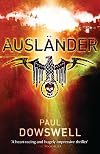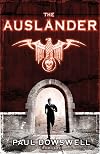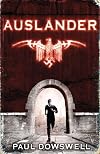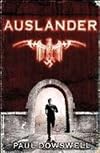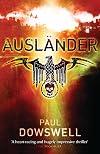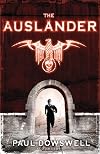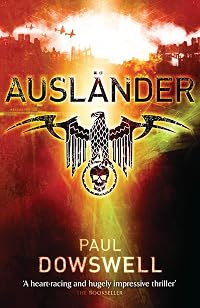
Auslander
by Paul Dowswell
On This Page
Description
When Peter's parents are killed, he is sent to an orphanage in Warsaw, Poland. But Peter is Volksdeutscher-of German blood. With his blond hair and blue eyes, he looks just like the boy on the Hitler Youth poster. The Nazis decide he is racially valuable. Indeed, a prominent German family is pleased to adopt such a fine Aryan specimen into their household. But despite his new "family," Peter feels like a foreigner-an ausländer-and he is forming his own ideas about what he sees and what he's show more told. He doesn't want to be a Nazi. So he takes a risk-the most dangerous one he could possibly choose in 1942 Berlin. . . .Paul Dowswell weaves meticulous research into a thrilling narrative, exposing a different angle of the horrors of Nazi Germany.
. show less
Tags
Recommendations








Member Reviews
I’m a sucker for historical fiction of any kind, but I especially love the stuff concerning the 20th century.
I bought this book eons ago, in my first year of Sixth Form, and have only just now read it. I remember a classmate had bought the same one and seemed to be enjoying it, so I had decided to do the same.
Dowswell’s novel, aimed at young adults, is about a young boy named Piotr (Peter later) whose family is killed during the occupation of Warsaw in World War Two. Left alone, he is sent to an orphange, and eventually chosen to be adopted by a good German family, Nazi sympathizers who look at him and think he is the poster boy for the Hitler Youth. Peter looks exactly like the boy on the poster, in fact – he has incredibly show more Nordic features, with blonde hair, strong jaw, and toned build. For all intents and purposes, he should be the perfect fit for a Hitler Youth. His new family actually enroll him in one of the Hitler Youth groups, as they do to all their other children, and at first he’s excited. His lifelong dream has been to become a Luftwaffe pilot, and this could very well be his ticket into all this. His adopted father is a professor at a university in Germany, studying genetics – more specifically, he’s studying ways in which genetics can tell apart Jews from non-Jews. And Peter, in the beginning, is 100% OK with this.
But Peter, thank God, suddenly realizes that maybe all this isn’t too good an idea.
You see, Peter isn’t German. He may look German (or like the Aryan ideal that Germany loved to talk about back then), but everybody knows that he isn’t. He’s an outsider in the new community, no matter how hard he tries to fit in. And he develops strong friendships with young teenagers who aren’t exactly sympathizers with the Nazi ideal. He listens to swing music and BBC radio, broadcast from England. He feels sorry for the Jews being forced to do manual labour around the city, and tries to help them. He fights back with his thoughts when people talk about how great Hitler is. He isn’t convinced. And that is important enough to save him from Germany in the end.
Peter’s story feels like it could be real – the story of a boy who wants to leave a country that he realizes is not as great as it seems. He becomes part of an underground network – a very illegal one – that helps Jews, and he eventually tries to skip town. The whole thing is a very real and very raw telling of what could possibly have happened during World War Two. If you think about it, really, it can’t have been that all Germans were as ecstatic about Hitler rising to power as we think they were. While there were fanatics, it can’t have been the same for everyone. And this novel’s last section – its Act Four, if you will – brings it all to a head when a family and Peter try to run away from the hellhole they’ve been living in to a safer place, a neutral place.
(Switzerland, d’uh.)
This book is well researched (and even credited!), and Dowswell put a lot of thought into the writing of it. While it is written for children, it’s incredibly good as a light summer read, and puts World War Two into a different perspective. For a long time, we’ve heard stories about what it was like to be on the Allies’s side, or the Jews’ side. But sometimes we never stop to think what it could have been like for the people living in Germany who just didn’t want it to happen in the first place.
(Please don’t take this as me invalidating the experience of the actual victims of World War Two. It’s just a nice change of pace to have a different perspective to the whole thing, is all.)
Overall, my final rating is a 4/5. Props, Dowswell! show less
I bought this book eons ago, in my first year of Sixth Form, and have only just now read it. I remember a classmate had bought the same one and seemed to be enjoying it, so I had decided to do the same.
Dowswell’s novel, aimed at young adults, is about a young boy named Piotr (Peter later) whose family is killed during the occupation of Warsaw in World War Two. Left alone, he is sent to an orphange, and eventually chosen to be adopted by a good German family, Nazi sympathizers who look at him and think he is the poster boy for the Hitler Youth. Peter looks exactly like the boy on the poster, in fact – he has incredibly show more Nordic features, with blonde hair, strong jaw, and toned build. For all intents and purposes, he should be the perfect fit for a Hitler Youth. His new family actually enroll him in one of the Hitler Youth groups, as they do to all their other children, and at first he’s excited. His lifelong dream has been to become a Luftwaffe pilot, and this could very well be his ticket into all this. His adopted father is a professor at a university in Germany, studying genetics – more specifically, he’s studying ways in which genetics can tell apart Jews from non-Jews. And Peter, in the beginning, is 100% OK with this.
But Peter, thank God, suddenly realizes that maybe all this isn’t too good an idea.
You see, Peter isn’t German. He may look German (or like the Aryan ideal that Germany loved to talk about back then), but everybody knows that he isn’t. He’s an outsider in the new community, no matter how hard he tries to fit in. And he develops strong friendships with young teenagers who aren’t exactly sympathizers with the Nazi ideal. He listens to swing music and BBC radio, broadcast from England. He feels sorry for the Jews being forced to do manual labour around the city, and tries to help them. He fights back with his thoughts when people talk about how great Hitler is. He isn’t convinced. And that is important enough to save him from Germany in the end.
Peter’s story feels like it could be real – the story of a boy who wants to leave a country that he realizes is not as great as it seems. He becomes part of an underground network – a very illegal one – that helps Jews, and he eventually tries to skip town. The whole thing is a very real and very raw telling of what could possibly have happened during World War Two. If you think about it, really, it can’t have been that all Germans were as ecstatic about Hitler rising to power as we think they were. While there were fanatics, it can’t have been the same for everyone. And this novel’s last section – its Act Four, if you will – brings it all to a head when a family and Peter try to run away from the hellhole they’ve been living in to a safer place, a neutral place.
(Switzerland, d’uh.)
This book is well researched (and even credited!), and Dowswell put a lot of thought into the writing of it. While it is written for children, it’s incredibly good as a light summer read, and puts World War Two into a different perspective. For a long time, we’ve heard stories about what it was like to be on the Allies’s side, or the Jews’ side. But sometimes we never stop to think what it could have been like for the people living in Germany who just didn’t want it to happen in the first place.
(Please don’t take this as me invalidating the experience of the actual victims of World War Two. It’s just a nice change of pace to have a different perspective to the whole thing, is all.)
Overall, my final rating is a 4/5. Props, Dowswell! show less
When Peter's parents are killed, he is sent to an orphanage in Warsaw. Then German soldiers take him away to be measured and assessed. They decide that Peter is racially valuable. He is Volksdeutscher: of German blood. With his blond hair, blue eyes, and acceptably proportioned head, he looks just like the boy on the Hitler-Jugend poster. Someone important will want to adopt Peter. They do. Professor Kaltenbach is very pleased to welcome such a fine Aryan specimen to his household. People will be envious. But Peter is not quite the specimen they think. He is forming his own ideas about what he is seeing, what he is told. Peter doesn't want to be a Nazi, and so he is going to take a very dangerous risk. The most dangerous risk he could show more possibly choose to take in Berlin in 1942. show less
A well-researched novel about a Polish boy, Peter Bruck, with a German father who is adopted by a rabid Nazi and taken to Berlin after his parents are killed in Poland by Russians. Peter becomes less and less enchanted by Nazi dogma, especially when he befriends Anna, daughter of liberal anti-Nazi Germans. A very evocative novel which shines a well-deserved light on ordinary Germans who were anti-Nazi and lived in daily fear of being denounced.
3,5 estrellas.
Al principio se me hizo un poco pesado, porque el resumen en la solapa hizo que creyera que iba a tener mucho más suspense, cuando en realidad el suspense y la intriga son sólo las últimas 60 páginas. Aún así, me ha parecido una lectura muy interesante, en la que se muestra que la realidad es mucho más complicada que "los buenos" vs "los malos", gracias a que todos los personajes que ha creado el autor, incluidos los secundarios, son redondos y no planos.
Reseña más extensa próximamente.
Al principio se me hizo un poco pesado, porque el resumen en la solapa hizo que creyera que iba a tener mucho más suspense, cuando en realidad el suspense y la intriga son sólo las últimas 60 páginas. Aún así, me ha parecido una lectura muy interesante, en la que se muestra que la realidad es mucho más complicada que "los buenos" vs "los malos", gracias a que todos los personajes que ha creado el autor, incluidos los secundarios, son redondos y no planos.
Reseña más extensa próximamente.
A strong, yet still enjoyable, view of life inside Nazi Germany for those who didn't believe the party line. It is a little contrived in places - naturally all those who didn't completely agree were involved in sheltering Jews... - and the ending doesn't seem to quite fit somehow but overall I think it is a very worthwhile book.
An interesting read. It gave a good picture of what it was like to be a child in Nazi Germany and the shocking indoctrination of children, but to me the characters never really came alive as they do in The Boy in the Striped Pyjamas for instance. It is a good read though and a look into history for teenagers studying the period.
The idea was interesting, but the writing style bored me. Piotr felt this. Piotr thought that. This thing happened. Then this thing happened next. I quit 23 pages in.
Members
- Recently Added By
Published Reviews
ThingScore 75
added by timo1986
Lists

A Child's Book Tour of Germany
76 works; 5 members
Author Information

100 Works 8,810 Members
Some Editions
Awards and Honors
Awards
Distinctions
Notable Lists
Common Knowledge
- Canonical title*
- Ausländer
- Original title
- Ausländer
- Original publication date
- 2009
- People/Characters
- Peter Bruck; Professor Kaltenbach; Anna Reiter
- Important places
- Berlin, Germany
- Important events
- World War II
- Dedication
- To Ruth and Ilse, who escaped, and also to Hannah
- First words
- Piotr Bruck shivered in the cold as he waited with twenty or so other naked boys in the long draughty corridor.
- Last words
- (Click to show. Warning: May contain spoilers.)He felt free.
*Some information comes from Common Knowledge in other languages. Click "Edit" for more information.
Classifications
- Genres
- Fiction and Literature, Children's Books, Teen, Young Adult
- DDC/MDS
- 823.92 — Literature & rhetoric English & Old English literatures English fiction 1900- 2000-
- LCC
- PZ7 .D7598 .A — Language and Literature Fiction and juvenile belles lettres Fiction and juvenile belles lettres Juvenile belles lettres
- BISAC
Statistics
- Members
- 250
- Popularity
- 130,125
- Reviews
- 12
- Rating
- (3.78)
- Languages
- 8 — Danish, Dutch, English, French, German, Italian, Portuguese, Spanish
- Media
- Paper, Ebook
- ISBNs
- 22
- ASINs
- 4