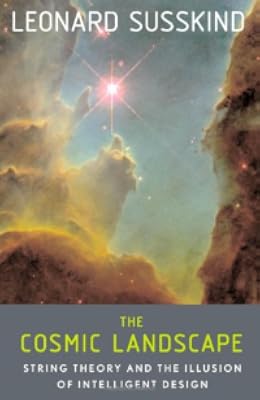
The Cosmic Landscape: String Theory and the Illusion of Intelligent Design
by Leonard Susskind
On This Page
Description
The beginning of the 21st century is a watershed in modern science, a time that will forever change our understanding of the universe, Susskind contends. Several decades ago, he introduced the revolutionary concept of string theory to the world of physical science. In doing so, he inspired a generation of physicists who believed that the theory would uniquely predict the properties of our universe. Now, in his first book, Susskind argues that the very idea of such an "elegant theory" no show more longer suits our understanding of the universe, and that our narrow 20th-century view of a unique universe will have to give way to the much broader concept of a gigantic cosmic landscape--a megaverse, pregnant with new possibilities.--From publisher description. show lessTags
Recommendations

Member Reviews
The Cosmic Landscape is a mess. I bought this book because the title and first few sections seemed to indicate that an eminent theoretical physicist, Leonard Susskind, was presenting a scientific argument against the Christian evangelical boondoggle called "intelligent design." In reality, the work is intended to promote the Anthropic Principle - a "principle that requires the laws of nature to be consistent with the existence of intelligent life" - as being a necessary result of the Landscape of String Theory.
Susskind's argument for the Anthropic Principle is fairly non-existent. What the book primarily consists of are demonstrations of how precarious the existence of life is against the array of possible universes. Could we exist if show more the cosmological constant was different? Or if quantum-level particles had different properties? The answer is confidently shown to be "no." There is little for the non-physicist to criticize here, and the book is a good primer on the Standard Model and String Theory. However, Susskind's ideas about the Anthropic Principle do not follow from his demonstrations.
Susskind views the potential existence of intelligent life as the organizing principle by which the laws of nature came to be. Note that this is different from saying that "because the laws of nature are what they are, it was possible for intelligent life to develop." It is also a different project from rejecting theories about the laws of nature that do not allow for intelligent life. To use the tired cliche, Susskind is putting the cart before the horse.
I might recommend this book to someone who wants a basic outline of modern theoretical physics. Be forewarned that this is dense material and Susskind tends to refer to material long ahead or behind the present material. Susskind's personal biases are also rampant. All but the most masochistic philosophers of science should look elsewhere as there is little of value to be had here. show less
Susskind's argument for the Anthropic Principle is fairly non-existent. What the book primarily consists of are demonstrations of how precarious the existence of life is against the array of possible universes. Could we exist if show more the cosmological constant was different? Or if quantum-level particles had different properties? The answer is confidently shown to be "no." There is little for the non-physicist to criticize here, and the book is a good primer on the Standard Model and String Theory. However, Susskind's ideas about the Anthropic Principle do not follow from his demonstrations.
Susskind views the potential existence of intelligent life as the organizing principle by which the laws of nature came to be. Note that this is different from saying that "because the laws of nature are what they are, it was possible for intelligent life to develop." It is also a different project from rejecting theories about the laws of nature that do not allow for intelligent life. To use the tired cliche, Susskind is putting the cart before the horse.
I might recommend this book to someone who wants a basic outline of modern theoretical physics. Be forewarned that this is dense material and Susskind tends to refer to material long ahead or behind the present material. Susskind's personal biases are also rampant. All but the most masochistic philosophers of science should look elsewhere as there is little of value to be had here. show less
Not as well-written as Susskind's other books - certain passages seemed to be almost cut-and-paste repeats, and I found it rather long-winded in places. Having said that it covered some fascinating ideas, and has mad me interested to (try to) take a closer look at the maths behind string theory.
The universe, why does she purr and growl and spit and coo the way she does? “Like the eye,” Leonard Susskind writes in The Cosmic Landscape: String Theory and the Illusion of Intelligent Design, “the special properties of the physical universe are so surprisingly fine-tuned that they demand explanation.”
The eye, of course, was supposed to be the trump card of the cadre of crypto-creationists known as the intelligent design underground. The plan, as outlined in the infamous Wedge document, was to stealthily sow doubt and infiltrate key positions in order to get creationism taught in schools, along with morning prayers and the Ten Commandments mowed into the lawns of every courtroom in the U.S. Alas, the trial in Dover, show more Pennsylvania (a case fondly, if very unofficially, remembered as A Couple Dumb Cluck School Board Members and Their Discovery Institute Allies vs. Common Sense), put the kybosh on intelligent design.
Which might mean that Susskind’s 2006 book is passé and no longer useful. The influential and admired theoretical physicist wrote it, he says in his introduction, because he thinks the universe – quirky, special, and weirdly tuned as she is – can be explained without recourse to “supernatural agents.”
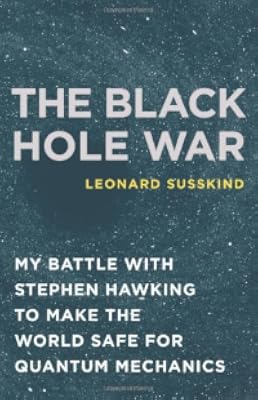
In fact, though, and except in the introduction, Susskind has way too much fun ogling the universe’s sexy features to really spend much time bashing creationists. He’s got “branes” on the brain while luxuriating in “a bubble bath universe,” washing off the mud (or whatever that stuff is) being slung in “the black hole wars.” Creationism be damned, let’s do math!
Or, since there aren’t any actual equations in The Cosmic Landscape, let’s do the diagram rumba and follow the squiggly lines that compose a Feynman diagram – but watch out! The dance floor is folding according to the weird rules of its own private geometry. And: energy is mass with no clothes on so, parents, shield your children from the wonders of the universe.
But that, ultimately, is Susskind’s point: you don’t need to bring in supernatural intelligence to explain the weird goings on in the universe; you don’t need “intelligent design” or, as brainy physicists with a metaphysical bent like to call it, the “anthropic principle.” The anthropic principle is the idea that the universe is designed just so, so that – guess who – humans can thrive in it. Things are neither too hot nor too cold; neither too inflationary nor too contractionary. It is kind of spooky. Better, though, Susskind says, to take a look at what he called “the physicist’s Darwinism.”
Survival of the fittest, that is, only as it applies to the laws of physics. Just as with biology, where you get highly adapted and complex things like eyes and duck-billed platypuses, the universe has strings, and branes and black holes. The laws that work, continue to work. The ones that don’t, stop being laws, either dying out or changing. There is, Susskind claims, a “landscape of possibilities” Out There – and The Cosmic Landscape is his delightful tour of it.
Originally published on Curled Up With A Good Book at www.curledup.com. © Brian Charles Clark, 2010 show less
The eye, of course, was supposed to be the trump card of the cadre of crypto-creationists known as the intelligent design underground. The plan, as outlined in the infamous Wedge document, was to stealthily sow doubt and infiltrate key positions in order to get creationism taught in schools, along with morning prayers and the Ten Commandments mowed into the lawns of every courtroom in the U.S. Alas, the trial in Dover, show more Pennsylvania (a case fondly, if very unofficially, remembered as A Couple Dumb Cluck School Board Members and Their Discovery Institute Allies vs. Common Sense), put the kybosh on intelligent design.
Which might mean that Susskind’s 2006 book is passé and no longer useful. The influential and admired theoretical physicist wrote it, he says in his introduction, because he thinks the universe – quirky, special, and weirdly tuned as she is – can be explained without recourse to “supernatural agents.”
In fact, though, and except in the introduction, Susskind has way too much fun ogling the universe’s sexy features to really spend much time bashing creationists. He’s got “branes” on the brain while luxuriating in “a bubble bath universe,” washing off the mud (or whatever that stuff is) being slung in “the black hole wars.” Creationism be damned, let’s do math!
Or, since there aren’t any actual equations in The Cosmic Landscape, let’s do the diagram rumba and follow the squiggly lines that compose a Feynman diagram – but watch out! The dance floor is folding according to the weird rules of its own private geometry. And: energy is mass with no clothes on so, parents, shield your children from the wonders of the universe.
But that, ultimately, is Susskind’s point: you don’t need to bring in supernatural intelligence to explain the weird goings on in the universe; you don’t need “intelligent design” or, as brainy physicists with a metaphysical bent like to call it, the “anthropic principle.” The anthropic principle is the idea that the universe is designed just so, so that – guess who – humans can thrive in it. Things are neither too hot nor too cold; neither too inflationary nor too contractionary. It is kind of spooky. Better, though, Susskind says, to take a look at what he called “the physicist’s Darwinism.”
Survival of the fittest, that is, only as it applies to the laws of physics. Just as with biology, where you get highly adapted and complex things like eyes and duck-billed platypuses, the universe has strings, and branes and black holes. The laws that work, continue to work. The ones that don’t, stop being laws, either dying out or changing. There is, Susskind claims, a “landscape of possibilities” Out There – and The Cosmic Landscape is his delightful tour of it.
Originally published on Curled Up With A Good Book at www.curledup.com. © Brian Charles Clark, 2010 show less
The author is not kidding when he states: "although the book is aimed at a lay audience, it is not aimed at the "lightweight" who is afraid to stretch his or her mind." This book certainly took me to the edge of my ability to picture what Mr. Susskind was talking about. There is a nice summary of the various thoughts in physics these days, particularly with regard to explaining how the universe came to be. However, I can't say that this book convinced me that there wasn't intelligence design. It seems to me (not having a physics background) that so much of what we "know" about physics - particularly on the particle level - is theoretical (devising theories of what's happening on the sub-atomic level to explain the behavior we can see). show more And those theories seem to be revised and changed on a pretty regular basis as new ideas are factored in. I think it is all exciting and interesting, but not definitive. As someone who believes God created the earth, I don't discount the idea that He worked according to specific laws (in fact I believe that He did work within laws that we could possibly discover). Maybe that sets me apart from other creationists. Anyway - Susskind didn't present any kind of overwhelming evidence that there was no intelligent design, at least for me. However, I'm amazed at the kinds of ideas that physicists can imagine and test using mathematical principles. Incredible. show less
Enjoyed the book and the outlook on where the science is...I was disappointed that the author spend little to no time talking about intelligent design. In fact l would go so far as to say that the author did such a great job describing how rare our universe is that he nearly gives ID believers all the evidence they need!
Beyond that one down side to the book it is simply outstanding. I felt very comfortable in the topic with out feeling that the material was dumbed down for a layman.
Beyond that one down side to the book it is simply outstanding. I felt very comfortable in the topic with out feeling that the material was dumbed down for a layman.
(posted on my blog: davenichols.net)
Physicist Leonard Susskind weighed in on his support for string theory in 2005 with The Cosmic Landscape: String Theory and the Illusion of Intelligent Design. A book with high goals and, from me personally, high expectations, Landscape falls quite flat from the very beginning and only occasionally rises to a point worth mentioning.
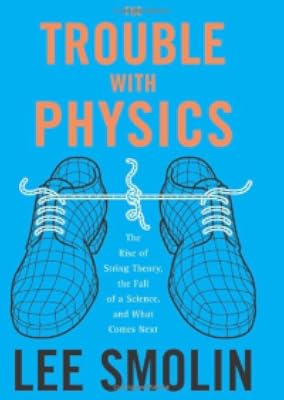
I was familiar with the public debate between Susskind and fellow physicist Lee Smolin (author of three books on physics, including his latest: The Trouble With Physics) over the concept known as the anthropic principle. Susskind, very much in favor of anthropic solutions, favors the weak anthropic version, which holds that our universe allows life only because of the show more existence of a multiverse which offers an overwhelming number of opportunities to get the "details" of physics right. However, I really expected Susskind to dig deeply into the notion of Intelligent Design as it related to religious faith in a specific Creator of the cosmos. However, rather than address this far more common meaning of "Intelligent Design" directly, Susskind spends chapter after chapter meandering through physics fundamentals and pleading with the reader to see how string theory and its multiverse predictions are not just reasonable but "solidly grounded" in research.
Having read a great deal of physics books and knowing many of the arguments for and against string theory, the anthropic principle, and cosmological intelligent design, I found Susskind's treatment and defense of his stance to be disappointing and muddled. The reader is left with a great deal of missing steps in his thinking, and like many string theorists, Susskind assumes the reader will accept that string theory and a multiverse system are facts from which to explore the issues. However, Susskind never establishes just why the reader should make these assumptions, and it leaves a lot of hollow ground hindering his argument.
Combined with the lack of any real attack on the "illusion of intelligent design", this sort of writing is a let down for me. I like Susskind and have watched many of his panel discussions where he is both thoughtful and clear. However, I've also watched a few of his seminars and, unfortunately, this book reads much more like his rambling, at times incoherent lectures than it does his focused and insightful panel debates. Three stars and only recommended for curious physics readers wanting to get Susskind's arguments first hand. show less
Physicist Leonard Susskind weighed in on his support for string theory in 2005 with The Cosmic Landscape: String Theory and the Illusion of Intelligent Design. A book with high goals and, from me personally, high expectations, Landscape falls quite flat from the very beginning and only occasionally rises to a point worth mentioning.
I was familiar with the public debate between Susskind and fellow physicist Lee Smolin (author of three books on physics, including his latest: The Trouble With Physics) over the concept known as the anthropic principle. Susskind, very much in favor of anthropic solutions, favors the weak anthropic version, which holds that our universe allows life only because of the show more existence of a multiverse which offers an overwhelming number of opportunities to get the "details" of physics right. However, I really expected Susskind to dig deeply into the notion of Intelligent Design as it related to religious faith in a specific Creator of the cosmos. However, rather than address this far more common meaning of "Intelligent Design" directly, Susskind spends chapter after chapter meandering through physics fundamentals and pleading with the reader to see how string theory and its multiverse predictions are not just reasonable but "solidly grounded" in research.
Having read a great deal of physics books and knowing many of the arguments for and against string theory, the anthropic principle, and cosmological intelligent design, I found Susskind's treatment and defense of his stance to be disappointing and muddled. The reader is left with a great deal of missing steps in his thinking, and like many string theorists, Susskind assumes the reader will accept that string theory and a multiverse system are facts from which to explore the issues. However, Susskind never establishes just why the reader should make these assumptions, and it leaves a lot of hollow ground hindering his argument.
Combined with the lack of any real attack on the "illusion of intelligent design", this sort of writing is a let down for me. I like Susskind and have watched many of his panel discussions where he is both thoughtful and clear. However, I've also watched a few of his seminars and, unfortunately, this book reads much more like his rambling, at times incoherent lectures than it does his focused and insightful panel debates. Three stars and only recommended for curious physics readers wanting to get Susskind's arguments first hand. show less
Why are the laws of physics fined tuned to provide exactly the exact environment which would permit intelligent life to develop, and ask such questions? Intelligent design, or a megaverse of all possible variables, and we find ourselves in this one precisely because it does permit life to develop. Susskind is one of the founders of string theory, and this book provides his answer to the above question. "A Landscape of possibilities, populated by a megaverse of actualities."
Members
- Recently Added By
Lists

Books referenced in Jim Holt's Why Does the World Exist?
119 works; 1 member
Author Information

10+ Works 4,012 Members
Leonard Susskind is the Felix Bloch Professor in theoretical physics at Stanford University. He is the author of The Cosmic Landscape , The Black Hole War, and TheTheoretical Minimum: What You Need to Know to Start Doing Physics. Susskind is a member of the National Academy of Science and the American Academy of Arts and Sciences, and the show more recipient of numerous prizes including the science writing prize of the American Institute of Physics for his Scientific American article on black holes. (Bowker Author Biography) show less
Common Knowledge
- Canonical title
- The Cosmic Landscape: String Theory and the Illusion of Intelligent Design
- Original publication date
- 2005-12
- Epigraph
- You Highness, I have no need of this hypothesis. Pierre-Simon de Laplace (1749-1827), reply made to Napoleon when asked why his celestial mechanics had no mention of God.
- First words
- I have always enjoyed explaining physics.
- Last words
- (Click to show. Warning: May contain spoilers.)Let me then close this book with the words with the words of Pierre-Simon de Laplace that opened it: "I have no need of this hypothesis."
- Blurbers
- Harvey, Van A.; Rees, Martin; Galison, Peter; Smolin, Lee
Classifications
Statistics
- Members
- 558
- Popularity
- 53,310
- Reviews
- 14
- Rating
- (3.53)
- Languages
- 6 — English, French, Italian, Polish, Spanish, Turkish
- Media
- Paper, Ebook
- ISBNs
- 12
- ASINs
- 3