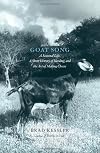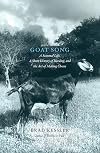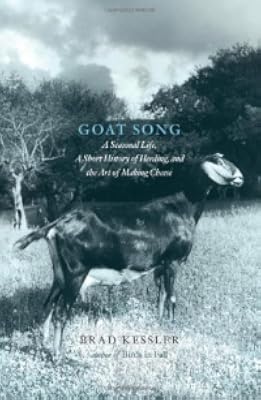
Goat Song: A Seasonal Life, A Short History of Herding, and the Art of Making Cheese
by Brad Kessler
On This Page
Description
The author, a novelist, describes his life as he and his wife moved to a farm in Vermont, becoming a goatherd and cheesemaker.Tags
Recommendations


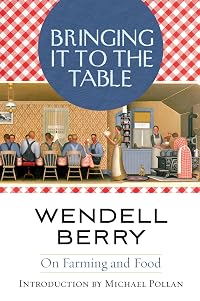
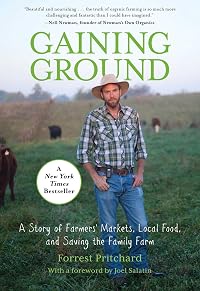
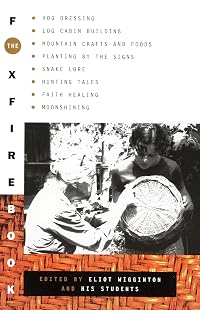
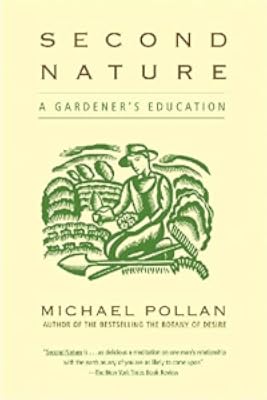



Member Recommendations
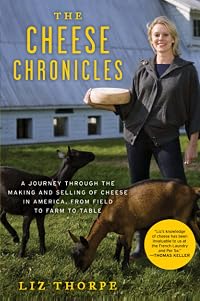
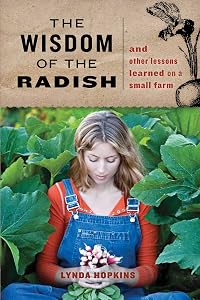
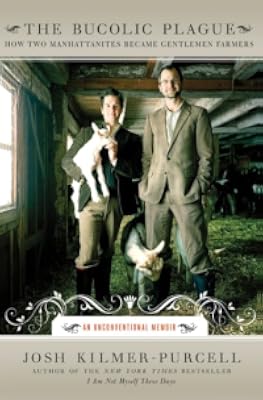
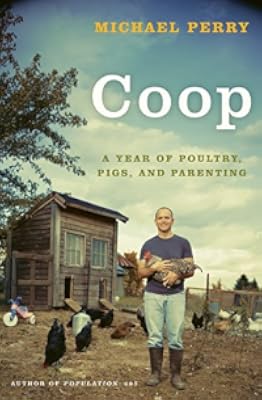
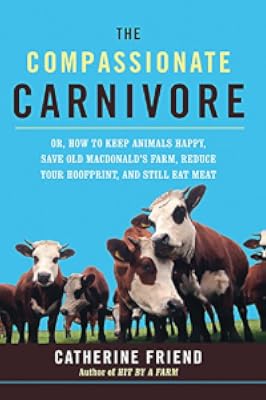
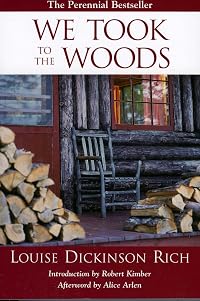
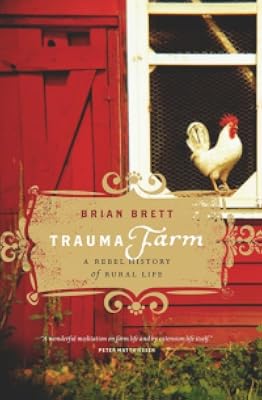
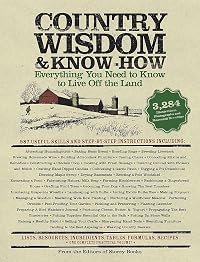
Muriel743 Covers similar topics - i.e. mainly urban people pursuing food self-sufficiency, forming relationships with rural community and neighbours and learning the skills needed to feed themselves.
Member Reviews
Loved this. I read it with quiet mind, savoring it in small tastes. Can a book have terroir? If so this one does.
From page one:
"Herding is a way of doing something while doing nothing; it asks only for one's presence, awake, watching animals and earth.
"Wind rakes the trees. Clouds float shadows through the grass. We enter the woods and the goats eat ash, birch, and maple. This evening I'll milk the does back in the barn and when the sun goes down I'll make an aged cheese from their milk called a 'tomme'. Months from now when snow covers the mountains, I'll open that 'tomme' and find this day again inside its rind: the aromatic grass, the leaves, this wind."
From page one:
"Herding is a way of doing something while doing nothing; it asks only for one's presence, awake, watching animals and earth.
"Wind rakes the trees. Clouds float shadows through the grass. We enter the woods and the goats eat ash, birch, and maple. This evening I'll milk the does back in the barn and when the sun goes down I'll make an aged cheese from their milk called a 'tomme'. Months from now when snow covers the mountains, I'll open that 'tomme' and find this day again inside its rind: the aromatic grass, the leaves, this wind."
Beautiful use of language--including some uncommmon words ("Stotting" is the one I felt compelled to look up, and loved the memory-image it brought up of goats I've seen stotting). I also searched for recordings of yoiking and kulning (given my Scandinavian roots; I neglected searches for bertsolari & ispadek). At times his comparisons were stretched a bit thin: Jesus as cheeses? He is at his best when he describes day wanders with his goats, leading them to pasture/woods; Kessler gets quite meditative at times. In sum, this book lets me feel the experience of raising goats over the year.
You could probably make a farm cheese with just the information in this book, but if you are raising goats you'll want a more definitive work on their show more care. He had a great exposé of pasteurization as a cure-all for bad milk (pp 162-5), making me want to run out to my closest raw milk supplier.
I found a number of quotes I wanted to keep--including one from Gandhi and one from Beston. These are Kessler's:
"...we stood together smelling wind and earth as if a great lever shifted somewhere in the universe." (p.130)
"Maybe paradise is ...within or exists in the holiness of daily labor, the body making food for itself; or maybe it surrounds us every second if only we open our eyes." (p.132)
"We're surprised by domestic animals' independence and dignity because so often we've taken that dignity away." (p.150)
"All she wanted was to be a goat." (p.152)
"A cheese...is never just a thing to put in your mouth."(p.157)
"Every pastoral [poem/song] is the dream of a common language..." "...when humans weren't separated from the animal Other..." (p.198)
"The only thing our monks produce is silence."(p.214)
"A book is a key that fits into the tumbler of the soul." (p.218)
"We make a circle of our life and never know it...Does it matter the bell one chooses?"(p.230)
"Sometimes my soul is here and sometimes it's not home." (p.231)
"...unlike other animals, humans struggle to achieve just being."(p.232) show less
You could probably make a farm cheese with just the information in this book, but if you are raising goats you'll want a more definitive work on their show more care. He had a great exposé of pasteurization as a cure-all for bad milk (pp 162-5), making me want to run out to my closest raw milk supplier.
I found a number of quotes I wanted to keep--including one from Gandhi and one from Beston. These are Kessler's:
"...we stood together smelling wind and earth as if a great lever shifted somewhere in the universe." (p.130)
"Maybe paradise is ...within or exists in the holiness of daily labor, the body making food for itself; or maybe it surrounds us every second if only we open our eyes." (p.132)
"We're surprised by domestic animals' independence and dignity because so often we've taken that dignity away." (p.150)
"All she wanted was to be a goat." (p.152)
"A cheese...is never just a thing to put in your mouth."(p.157)
"Every pastoral [poem/song] is the dream of a common language..." "...when humans weren't separated from the animal Other..." (p.198)
"The only thing our monks produce is silence."(p.214)
"A book is a key that fits into the tumbler of the soul." (p.218)
"We make a circle of our life and never know it...Does it matter the bell one chooses?"(p.230)
"Sometimes my soul is here and sometimes it's not home." (p.231)
"...unlike other animals, humans struggle to achieve just being."(p.232) show less
If you are the sort of reader who appreciates writers like Thoreau, Chet Raymo, M.F.K. Fisher, Terry Tempest Williams, Wendell Barry, etc.... if you appreciate beautiful prose, acute observation, philosophy that enlightens but never preaches, and animals... READ THIS BOOK!
From the back cover:
"Goat Song is the story of a year in the life of a couple who abandoned their one-bedroom apartment in New York City to live on seventy-five acres in Vermont and raise Nubian goats. In poetic, reverent detail, Brad Kessler explores our ancient relationship to the land and our gradual alienation from the animals that feed us. His fascinating account traces his journey of choosing the goats and learning how to breed, milk, and care for them. As show more Kessler begins to live the life of a herder, he encounters the pastoral roots of so many aspects of Western culture—how our diet, our alphabet, our religions, poetry, and economy all grew out of a pastoralist setting, a life lived among hoofed animals."
My only complaint with that description is that it doesn't do the book justice. The prologue is the hook:
"Early June. The mountains turn tender green this time of year, the skies become enamel blue. The goats wear bells around their necks while we hike up Mason's Hill. There's eight of us here today -- seven goats, one human. We step through salad greens and the goats taste everything in sight: steeplebush, wild strawberries, buttercups, blackberry vines. We're heading to the mountains soon.
Each day we wander the Vermont woods for an hour or two. I love the leave-taking, the sound of the goats' bells, the brief nomadism. Herding is a way of doing something while doing nothing; it asks only for one's presence, awake, watching animals and earth.
Wind rakes the trees. Clouds float shadows through the grass. We enter the woods and the goats eat ash, birch, and maple. This evening I'll milk the does back in the barn and when the sun goes down I'll make an aged cheese from their milk called a tomme. Months from now when snow covers the mountains, I'll open that tomme and find this day again insde its rind; the aromatic grass, the leaves, this wind."
Not all books live up to the beautiful promise of their opening sentences. This one does.
It's an earthy book -- rooted in the messy, bloody, comic, sometimes frightening, sometimes frustrating, always enriching world that comes into relief when shared with animals. In this case, goats. The chapter on breeding might put some readers off, in fact, so 'earthy' is it, but don't let that deter you. The book is a marvel. Kessler has a great gift for meditation-on-the-page, in the tradition of Thoreau. Not only does he make pastrolism (raising livestock, husbandry and care for animals) seem like the most attractive and deeply spiritual life possible, but he uses herding goats and cheese-making as jumping off points for ruminations on God, death, monastic life, ecology, history, food and belonging. Consider:
If today the concept of terroir [the set of special characteristics the geography, geology and climate of a particular place, interacting with plant genetics, express in agricultural products] seems foreign to Amerians, we forget that people here once knew how place affected taste. 'The cheeses of the granite hills and valleys of New England,' noted a nineteenth-century traveler, 'differ from those of the secondary soils of ... northern New York, while the latter differ from those produced in the shales of ... northern Pennsylvania; and they again are a different article from the cheese made on the slaty clays of the Ohio Western Reserve' Granite, slate, shale, clay--we once knew the earth informed our food.
Or,
"As for my own affrinage [maturing, ripening; becoming finer, as in cheese], I'm not so certain. All I can try to perfect in this lifetime is a cheese and maybe, if lucky, a book. My soul though, will have to wait. I don't life in a concrete cell on top of a mountain or make a disciplines practice. I catch what I can now and then and sometimes my soul is here and sometimes it's not home. Even saints struggle toward perfection. Maybe that's what makes humans so endearing, that our souls are so imperfectible, even those who spend a lifetime to that end. That unlike other animals, humans struggle to achieve just being."
At the end of the prologue, Kessler says, "The Igbo of Nigeria tell their children, if lost in the wilderness, follow a goat, she always knows the way back home. I've been following these goats back home each day, but where they lead surprises me still." I can't think of a more worthwhile journey, and how grateful I am he has shared it with us.
My gratitude also goes to writers Kathryn Kuitenbrouwer and Catherine Bush, who spent time on the Kessler farm and told me about this book. show less
From the back cover:
"Goat Song is the story of a year in the life of a couple who abandoned their one-bedroom apartment in New York City to live on seventy-five acres in Vermont and raise Nubian goats. In poetic, reverent detail, Brad Kessler explores our ancient relationship to the land and our gradual alienation from the animals that feed us. His fascinating account traces his journey of choosing the goats and learning how to breed, milk, and care for them. As show more Kessler begins to live the life of a herder, he encounters the pastoral roots of so many aspects of Western culture—how our diet, our alphabet, our religions, poetry, and economy all grew out of a pastoralist setting, a life lived among hoofed animals."
My only complaint with that description is that it doesn't do the book justice. The prologue is the hook:
"Early June. The mountains turn tender green this time of year, the skies become enamel blue. The goats wear bells around their necks while we hike up Mason's Hill. There's eight of us here today -- seven goats, one human. We step through salad greens and the goats taste everything in sight: steeplebush, wild strawberries, buttercups, blackberry vines. We're heading to the mountains soon.
Each day we wander the Vermont woods for an hour or two. I love the leave-taking, the sound of the goats' bells, the brief nomadism. Herding is a way of doing something while doing nothing; it asks only for one's presence, awake, watching animals and earth.
Wind rakes the trees. Clouds float shadows through the grass. We enter the woods and the goats eat ash, birch, and maple. This evening I'll milk the does back in the barn and when the sun goes down I'll make an aged cheese from their milk called a tomme. Months from now when snow covers the mountains, I'll open that tomme and find this day again insde its rind; the aromatic grass, the leaves, this wind."
Not all books live up to the beautiful promise of their opening sentences. This one does.
It's an earthy book -- rooted in the messy, bloody, comic, sometimes frightening, sometimes frustrating, always enriching world that comes into relief when shared with animals. In this case, goats. The chapter on breeding might put some readers off, in fact, so 'earthy' is it, but don't let that deter you. The book is a marvel. Kessler has a great gift for meditation-on-the-page, in the tradition of Thoreau. Not only does he make pastrolism (raising livestock, husbandry and care for animals) seem like the most attractive and deeply spiritual life possible, but he uses herding goats and cheese-making as jumping off points for ruminations on God, death, monastic life, ecology, history, food and belonging. Consider:
If today the concept of terroir [the set of special characteristics the geography, geology and climate of a particular place, interacting with plant genetics, express in agricultural products] seems foreign to Amerians, we forget that people here once knew how place affected taste. 'The cheeses of the granite hills and valleys of New England,' noted a nineteenth-century traveler, 'differ from those of the secondary soils of ... northern New York, while the latter differ from those produced in the shales of ... northern Pennsylvania; and they again are a different article from the cheese made on the slaty clays of the Ohio Western Reserve' Granite, slate, shale, clay--we once knew the earth informed our food.
Or,
"As for my own affrinage [maturing, ripening; becoming finer, as in cheese], I'm not so certain. All I can try to perfect in this lifetime is a cheese and maybe, if lucky, a book. My soul though, will have to wait. I don't life in a concrete cell on top of a mountain or make a disciplines practice. I catch what I can now and then and sometimes my soul is here and sometimes it's not home. Even saints struggle toward perfection. Maybe that's what makes humans so endearing, that our souls are so imperfectible, even those who spend a lifetime to that end. That unlike other animals, humans struggle to achieve just being."
At the end of the prologue, Kessler says, "The Igbo of Nigeria tell their children, if lost in the wilderness, follow a goat, she always knows the way back home. I've been following these goats back home each day, but where they lead surprises me still." I can't think of a more worthwhile journey, and how grateful I am he has shared it with us.
My gratitude also goes to writers Kathryn Kuitenbrouwer and Catherine Bush, who spent time on the Kessler farm and told me about this book. show less
If the joy of escaping with a book is one of life's pleasures, then the rapture at being utterly engaged by a book is inestimable. Enraptured was I today with Kessler's 'Goat Song.' From his invitation to follow where his goats lead, to his introspective and spiritual conclusion in which he reads an anagogic parable within cheesemaking, his affinage of milk and spirit, Kessler crafts his sentences, story, and references with the grace and reverence he displays in his relation of raising, herding, and caring for his goats. Absolutely a peer to the agricultural sociologic works of Pollan and Kingsolver, 'Goat Song' bespeaks the need to rediscover an American terroir, tapping into the zeitgeist of eating locally, of relearning what show more processes and connections exist within a sustainable and harmonious food system, of becoming engaged individually in the joy and profound rightness of cultivating one's own sustenance.
Kessler's peripatetic, caprine-led story meanders from history of language to history of place to history of religion, discovering in each the pastoral underpinnings of human nomadism that reverberate to this day, even if largely unnoticed and forgotten. Though his human mind draws intriguing comparisons and conclusions from the act of herding, Kessler complements his circumlocutions with a plain-spoken assortment of very basic tasks and explanations - dovetailing his pedagogic tangents with the mucking of stalls, the epicurean bliss of making faisselle, the harvesting of the summer hay with neighbors. These history lessons are penned alongside the dramatic - a goat's debilitating illness and coyote predation - and the comedic, epitomized by the trope of animal observation and the life cycle: the copulation scene; providing a literal and figurative sense of the word 'horny' and a visual enjoinder to the caprine roots of the word 'capricious,' Kessler's estrous does are mated to a nearby farm's buck who caprioles and charges and humps any nearby creature to satiate his lust, and, after several attempts, finally inseminates the desired target (but not before achieving a masturbatory feat of auto-fellatio).
Like the bellwether goat guiding the herd, Kessler builds his story to the culmination of raising goats - the cheesemaking - while drawing this act in whorls of meditative and spiritual discovery. He avoids a doctrinate overemphasis, drawing liberally from Jewish, Catholic, and Buddhist sources to examine the threads of land, goat, milk, bacteria, and human that culminate in a wheel of cheese, his tomme, which stands in for and beside the tome that he writes. Both exercises take on the notes of the spiritual quest, the quest around the wheel of time, leading to the never-ending and 'imperfectible' state of affinage, French for the final stage of aging and refining a cheese, which Kessler aptly carries to the personal quest he travels.
Shriven of the urban disassociation from nature by the character and caretaking of his goats, Kessler has crafted a piquant pastoral autobiography, attesting to his reacclimation to the rhythms of nature through the goat-eyed perspective that takes bliss as it comes, whether in the form of rich provender or still-cooling chèvre. show less
Kessler's peripatetic, caprine-led story meanders from history of language to history of place to history of religion, discovering in each the pastoral underpinnings of human nomadism that reverberate to this day, even if largely unnoticed and forgotten. Though his human mind draws intriguing comparisons and conclusions from the act of herding, Kessler complements his circumlocutions with a plain-spoken assortment of very basic tasks and explanations - dovetailing his pedagogic tangents with the mucking of stalls, the epicurean bliss of making faisselle, the harvesting of the summer hay with neighbors. These history lessons are penned alongside the dramatic - a goat's debilitating illness and coyote predation - and the comedic, epitomized by the trope of animal observation and the life cycle: the copulation scene; providing a literal and figurative sense of the word 'horny' and a visual enjoinder to the caprine roots of the word 'capricious,' Kessler's estrous does are mated to a nearby farm's buck who caprioles and charges and humps any nearby creature to satiate his lust, and, after several attempts, finally inseminates the desired target (but not before achieving a masturbatory feat of auto-fellatio).
Like the bellwether goat guiding the herd, Kessler builds his story to the culmination of raising goats - the cheesemaking - while drawing this act in whorls of meditative and spiritual discovery. He avoids a doctrinate overemphasis, drawing liberally from Jewish, Catholic, and Buddhist sources to examine the threads of land, goat, milk, bacteria, and human that culminate in a wheel of cheese, his tomme, which stands in for and beside the tome that he writes. Both exercises take on the notes of the spiritual quest, the quest around the wheel of time, leading to the never-ending and 'imperfectible' state of affinage, French for the final stage of aging and refining a cheese, which Kessler aptly carries to the personal quest he travels.
Shriven of the urban disassociation from nature by the character and caretaking of his goats, Kessler has crafted a piquant pastoral autobiography, attesting to his reacclimation to the rhythms of nature through the goat-eyed perspective that takes bliss as it comes, whether in the form of rich provender or still-cooling chèvre. show less
This memoir describes Kessler's first year as a goat farmer. Kessler describes the day-to-day details of a pastoral existence, its seasonal chores, and mixes in erudite reflections and classical quotations ("the cry of a goat is so haunting and dramatic our word tragedy comes form it: tragoidia in Greek - the cry of the goat. The goat song."). The result is eloquent, literary, but also warm and conversational.
Kessler's memoir not only describes a year in the life of a shepherd, it also describes his own evolution an accomplished cheesemaker - at the end of the novel, one of the most cheese-centric restaurants in New York City has agreed to carry his chevre. He weaves himself into the local rural community, and his description of show more hay-making at a neighbor's farm is one of the most memorable in the book. He also always moves beyond the personal to the general - a nearby monastery gives him the opportunity to reflect on the monastic tradition of cheese-making and explain simple things like why hard cheeses became the most popular commercially (because they could travel).
While the writing is exquisite, it is not for the squeamish. Kessler excels where his subject matter is messy - his description of the molds growing on his goat cheese, for example, is gorgeous: "Each week a different color will shade their skin, browns and yellows and whites and purples, while inside a world is going on unseen...and they will be like meadows, like fields, like grasslands with one growth coming and another dying - constantly." The author also doesn't hesitate describe how to determine if a she-goat is in heat, or the astonishing sight of a buck orally pleasuring itself.
I very much enjoyed GOAT SONG, for its exquisite, detailed description of a rural lifestyle. Its praise of pure, whole foods, of simple eating and hard work, will appeal to many. At the same time, it's strongly literary and at times quite graphic. show less
Kessler's memoir not only describes a year in the life of a shepherd, it also describes his own evolution an accomplished cheesemaker - at the end of the novel, one of the most cheese-centric restaurants in New York City has agreed to carry his chevre. He weaves himself into the local rural community, and his description of show more hay-making at a neighbor's farm is one of the most memorable in the book. He also always moves beyond the personal to the general - a nearby monastery gives him the opportunity to reflect on the monastic tradition of cheese-making and explain simple things like why hard cheeses became the most popular commercially (because they could travel).
While the writing is exquisite, it is not for the squeamish. Kessler excels where his subject matter is messy - his description of the molds growing on his goat cheese, for example, is gorgeous: "Each week a different color will shade their skin, browns and yellows and whites and purples, while inside a world is going on unseen...and they will be like meadows, like fields, like grasslands with one growth coming and another dying - constantly." The author also doesn't hesitate describe how to determine if a she-goat is in heat, or the astonishing sight of a buck orally pleasuring itself.
I very much enjoyed GOAT SONG, for its exquisite, detailed description of a rural lifestyle. Its praise of pure, whole foods, of simple eating and hard work, will appeal to many. At the same time, it's strongly literary and at times quite graphic. show less
nonfiction (goat cheese farmer memoir)
The first half was really good--easy to read and full of humble comforts and idyllic pleasures. The second half was okay, but the author flattered himself by trying to be philosophical and introspective in an interesting way (it really wasn't that interesting). I also thought he took almost all of the credit when the goat farm was clearly a joint partnership between him and his wife Dona. (He mentions a lot of goat farming neighbors and acquaintances, but skims over Dona's contributions, except to say that she did some of the milking, and was present while decisions were made. This could have been 4 stars but I am docking a star for the reasons listed above.
The first half was really good--easy to read and full of humble comforts and idyllic pleasures. The second half was okay, but the author flattered himself by trying to be philosophical and introspective in an interesting way (it really wasn't that interesting). I also thought he took almost all of the credit when the goat farm was clearly a joint partnership between him and his wife Dona. (He mentions a lot of goat farming neighbors and acquaintances, but skims over Dona's contributions, except to say that she did some of the milking, and was present while decisions were made. This could have been 4 stars but I am docking a star for the reasons listed above.
I was leery of this, as I'm not particularly fond of urbanites who have no clue what they're getting into, and no respect for traditional farmers. But Kessler both acknowledges his fortunate situation (another source of income and so no real worries about this experimental hobby) and earns 'country cred' (helping neighbors bring in their hay crops, getting well & truly dirty, etc.).
It's not quite as poetic and fascinating as the blurbs imply, but pretty close. It's also a fairly easy & quick read. I do wish there was a bibliography, as so very many books were mentioned in the text and it would be nice if they were listed, with others that he must have read but not mentioned, all together. Also Dona is a photographer, so why were there, show more what, 2? 3? photos in the whole book? :pout:
Speaking of Dona: did she not want to go to France to a rural cheesemaker? Did they flip a coin to see who could go? Or is she a martyr? She sure did work at least as hard as he, it seems. Though their roles are not always made clear, it does seem like he gets the fun parts like going to the meadow & forest, and making the cheeses, and she gets the dirtier more mundane chores. show less
It's not quite as poetic and fascinating as the blurbs imply, but pretty close. It's also a fairly easy & quick read. I do wish there was a bibliography, as so very many books were mentioned in the text and it would be nice if they were listed, with others that he must have read but not mentioned, all together. Also Dona is a photographer, so why were there, show more what, 2? 3? photos in the whole book? :pout:
Speaking of Dona: did she not want to go to France to a rural cheesemaker? Did they flip a coin to see who could go? Or is she a martyr? She sure did work at least as hard as he, it seems. Though their roles are not always made clear, it does seem like he gets the fun parts like going to the meadow & forest, and making the cheeses, and she gets the dirtier more mundane chores. show less
Members
- Recently Added By
Lists

Top Five Books of 2013
1,562 works; 721 members
Author Information
11 Works 742 Members
Brad Kessler's work has appeared in The New Yorker, The New York Times Magazine, Doubletake, The Nation, & The Village Voice. A former editor at Interview magazine, he is the author of several award-winning children's books, including "The Firebird", "Brer Rabbit & Boss Lion", & "John Henry". He lives in Vermont & New York City. (Bowker Author show more Biography) show less
Common Knowledge
- Original publication date
- 2009
- Important places
- Vermont, USA; Ariège, Occitanie, France
- Epigraph
- Shepherd. They say that on your barren mountain ridge
You have measured out the road that the soul treads
When it has vanished from our natural eyes;
That you have talked with apparitions.
Goatherd.Indeed
My da... (show all)ily thoughts since the first stupor of youth
Have found the path my goats' feet cannot find.
Shepherd.Sing, for it may be that your thoughts have plucked
Some medicable herb to make our grief
Less bitter.
--W.B.Yeats
[ending epigraph, it there is such a thing]
let's stop here and sing our songs,
Put down the baby goats; we'll make it to town;
Or if you're afraid it's going to rain tonight,
Let's keep on going, but singing as w... (show all)e go.
Singing makes the journey easier.
I'll carry the basket awhile, so you can sing.
--Virgil, Eclogue IX - Dedication
- For Annie Dillard
- First words
- Early June. The mountains turn tender green this time of year, the skies become enamel blue.
- Quotations
- A cheese...is never just a thing to put in your mouth. (p.157)
A book is a key that fits into the tumbler of the soul. (p.218) - Last words
- (Click to show. Warning: May contain spoilers.)We've eaten all the books page by page; my wheel, my depth, my volume--complete.
- Publisher's editor
- Graham, Nan
- Blurbers
- Waters, Alice; Grandin, Temple; McKibben, Bill; Kurlansky, Mark
Classifications
Statistics
- Members
- 262
- Popularity
- 123,610
- Reviews
- 24
- Rating
- (4.09)
- Languages
- English
- Media
- Paper, Ebook
- ISBNs
- 4
- ASINs
- 2