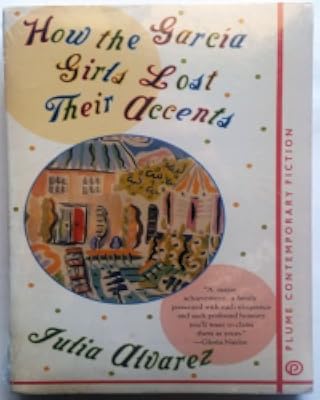
How the Garcia Girls Lost Their Accents
by Julia Alvarez
On This Page
Description
"Poignant . . . Powerful . . . Beautifully captures the threshold experience of the new immigrant, where the past is not yet a memory." —The New York Times Book ReviewAcclaimed writer Julia Alvarez’s beloved first novel gives voice to four sisters as they grow up in two cultures. The García sisters—Carla, Sandra, Yolanda, and Sofía—and their family must flee their home in the Dominican Republic after their father’s role in an attempt to overthrow brutal dictator Rafael show more Trujillo is discovered. They arrive in New York City in 1960 to a life far removed from their existence in the Caribbean. In the wondrous but not always welcoming U.S.A., their parents try to hold on to their old ways as the girls try find new lives: by straightening their hair and wearing American fashions, and by forgetting their Spanish. For them, it is at once liberating and excruciating to be caught between the old world and the new. Here they tell their stories about being at home—and not at home—in America.
Julia Alvarez’s new novel, Afterlife, is available now.. show less
Tags
Recommendations






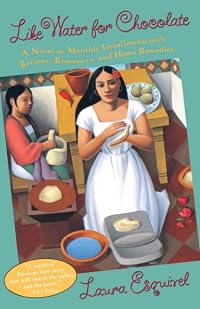


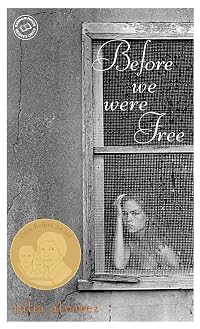






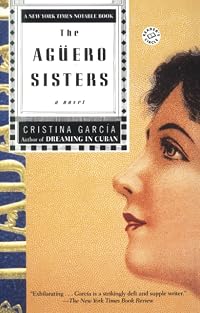
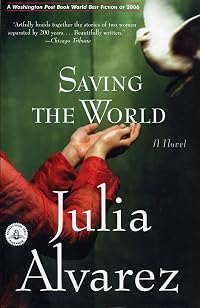
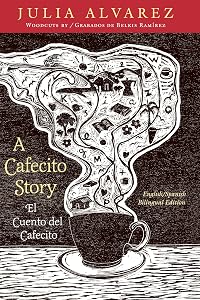


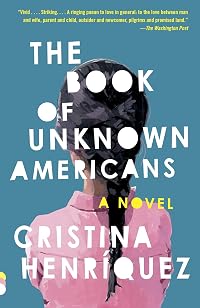



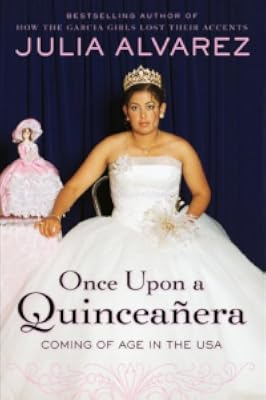

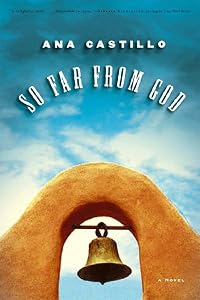









Member Recommendations

Member Reviews
The García family flees the Dominican Republic for the United States amid political unrest. The four sisters – Carla, Sandra, Yolanda, and Sofia – find 1960s New York City very different from the upper-middle-class life they knew “back home.” Absent their maids and extended family, the García girls do their best to assimilate into the mainstream; they iron their hair, forget their Spanish, and meet (and date) boys without chaperones.
This is a wonderfully entertaining look at the immigrant experience and at the strong family ties that see these sisters (and their parents) through a tumultuous adolescence and young adulthood. The novel is told in alternating perspectives, focusing on a different sister in each chapter, and also show more moving back in time, from 1989 to 1956.
When exploring their childhood in the DR, Alvarez allows the innocence of youth to be apparent. Children may sense that something isn’t quite right, but they typically don’t know the realities facing their parents. The family’s sudden departure for the United States is at first a great adventure, but the reality of reduced circumstances and cramped city apartments (instead of a large family compound with gardens and servants) quickly makes the girls homesick. Once assured that there is no going back, they struggle to fit in with their peers at school. They don’t want to stick out due to dress, language, food, or customs. With their assimilation, however, comes a greater clash between the girls and their parents’ “old world” values.
The use of multiple narrators and non-linear time line, however, made for an uneven reading experience. I would be invested in one sister’s story, and then jerked to a different time and place and narrator with little or no warning. Some members of my F2F book club found this so distracting that they lowered their ratings significantly. But for me the “confusion” is indicative of the immigrant experience. Each immigrant ultimately has to choose the extent to which she will adopt the customs, foods, dress of her new environment, and how much of her native customs, foods, dress to keep and share with her new neighbors. The García girls draw comfort from their deep roots in the Dominican Republic while bravely and enthusiastically facing and embracing their future as Americans. show less
This is a wonderfully entertaining look at the immigrant experience and at the strong family ties that see these sisters (and their parents) through a tumultuous adolescence and young adulthood. The novel is told in alternating perspectives, focusing on a different sister in each chapter, and also show more moving back in time, from 1989 to 1956.
When exploring their childhood in the DR, Alvarez allows the innocence of youth to be apparent. Children may sense that something isn’t quite right, but they typically don’t know the realities facing their parents. The family’s sudden departure for the United States is at first a great adventure, but the reality of reduced circumstances and cramped city apartments (instead of a large family compound with gardens and servants) quickly makes the girls homesick. Once assured that there is no going back, they struggle to fit in with their peers at school. They don’t want to stick out due to dress, language, food, or customs. With their assimilation, however, comes a greater clash between the girls and their parents’ “old world” values.
The use of multiple narrators and non-linear time line, however, made for an uneven reading experience. I would be invested in one sister’s story, and then jerked to a different time and place and narrator with little or no warning. Some members of my F2F book club found this so distracting that they lowered their ratings significantly. But for me the “confusion” is indicative of the immigrant experience. Each immigrant ultimately has to choose the extent to which she will adopt the customs, foods, dress of her new environment, and how much of her native customs, foods, dress to keep and share with her new neighbors. The García girls draw comfort from their deep roots in the Dominican Republic while bravely and enthusiastically facing and embracing their future as Americans. show less
This is one of those rare occasions where I just don't get what everyone else sees. For me, the story would be easier to understand through more distinct short stories, rather than the Cubist approach Alvarez uses. The story certainly does convey some of the cultural nuances of the Dominican Republic, but I found even this to be overkill in places. For example, in one passage, she includes a series of malapropisms used by one of the main characters who had migrated to the US. There were so many that they started to seem unreal. I've read a reasonable diversity of cultures and gender emphasis. This just didn't work for me.
The way they're written, the scenes are rich with detail and subtle emotion, but somehow they don't come together into a satisfying whole. I'm not sure what it is because I like the reverse chronology and I like the scenes, as I've mentioned. Maybe it's that the characters overall don't seem three-dimensional. Yoyo's is the clearest voice, and I didn't actually find her sections particularly interesting. I wanted more of the sisters or of Mami or Papi. As it is, the novel is pretty good, but it didn't really snag me and draw me in. I finished it, but it left me unsatisfied.
As a side note, the Kindle edition was poorly edited, and that was somewhat distracting.
As a side note, the Kindle edition was poorly edited, and that was somewhat distracting.
In the 1950s, four sisters—Carla, Sandra, Yolanda, and Sofía—are raised by well-to-do parents in the Dominican Republic, alongside a multitude of grandparents, aunts, uncles, and cousins. Their family is suddenly forced to emigrate to the United States in the 1960s to escape the political repression of the brutal Trujillo regime, an event that causes everyone in the clan no shortage of acclimatization issues. By the late 1980s, the García girls are fully grown and have achieved varying levels of success in their careers and relationships, while continuing to think wistfully about their idyllic, youthful days on the island. So goes the basic outline of How the García Girls Lost Their Accents, Julia Alvarez’ quilt of a novel that show more is actually presented as fifteen separate vignettes spanning some four decades. Although written in 1991, the book’s themes of immigration and cultural assimilation still feel remarkably fresh and timely, an outcome no doubt aided by the current political climate in the United States.
Unfortunately, though, the author’s message was marred by two questionable literary devices that she adopted throughout the novel. First, the story was told in reverse chronological order, with the girls’ youthful experiences on the island coming in the final section. There did not seem to be any good reason for this writerly sleight-of-hand; the stories of the girls at an older age were not really that well connected to those of their younger selves. Second, Alvarez tried to use multiple voices in the various chapters—although Yolanda’s was by far the most prominent—but the largely indistinguishable perspectives of the four sisters created a narrative that was frequently muddled and indistinct. (Incidentally, the titular issue of exactly how the girls lost their accents is never really addressed and nothing explains Mami’s forced and cloying malapropisms.) So, while I did enjoy reading this book and also learned a bit about the history of the Dominican Republic, it nevertheless ended up seeming like something of a missed opportunity. show less
Unfortunately, though, the author’s message was marred by two questionable literary devices that she adopted throughout the novel. First, the story was told in reverse chronological order, with the girls’ youthful experiences on the island coming in the final section. There did not seem to be any good reason for this writerly sleight-of-hand; the stories of the girls at an older age were not really that well connected to those of their younger selves. Second, Alvarez tried to use multiple voices in the various chapters—although Yolanda’s was by far the most prominent—but the largely indistinguishable perspectives of the four sisters created a narrative that was frequently muddled and indistinct. (Incidentally, the titular issue of exactly how the girls lost their accents is never really addressed and nothing explains Mami’s forced and cloying malapropisms.) So, while I did enjoy reading this book and also learned a bit about the history of the Dominican Republic, it nevertheless ended up seeming like something of a missed opportunity. show less
I really liked it. Alvarez has nearly mellifluous writing. At first I had a little trouble keeping the sisters straight because some of the early stories use "the oldest sister"/"the youngest sister" instead of names, but after a few of the chapters I got it figured out. The fear in the time of the dictatorship is rendered so vividly. It's hard to think about how recent that was and how many generations were affected in these families that got split up due to immigration, imprisonment, and violence.
The story of the four Garcia de la Torre sisters whose family left the Dominican Republic to live in New York. They gradually get over their home-sickness, but even as adults they are unsure whether they have lost more than they have gained. I liked the way it was written, going backwards in time starting with their adult life in New York and ending up with them as small children on the island.
Poignant and very enjoyable.
Poignant and very enjoyable.
I liked the idea of this book as well as the descriptions. I thought there were a lot of unanswered questions and it makes me wonder if there are other books that tell the rest of the story. Perhaps the whole point of the book was the family stories continue on and on with no end, that the stories we tell to illustrate our lives wax and wane and change as they are retold until you can't tell what actually happened.
Members
- Recently Added By
Lists

Female Author
1,235 works; 67 members
Female Protagonist
1,056 works; 57 members

Banned or Challenged Books
400 works; 41 members

500 Great Books by Women
507 works; 60 members

Books Read in 2017
4,249 works; 130 members

Books Read in 2015
3,299 works; 129 members

Banned Books - Latinx
11 works; 1 member

The Atlantic's The Great American Novel
136 works; 12 members

Books Read in 2024
4,623 works; 126 members
Author Information

34+ Works 18,624 Members
Julia Alvarez was born in New York City on March 27, 1950 and was raised in the Dominican Republic. Before becoming a full-time writer, she traveled across the country with poetry-in-the-schools programs and then taught at the high school level and the college level. In 1991, she earned tenure at Middlebury College and published her first book How show more the Garcia Girls Lost Their Accent, which won the PEN Oakland/Jefferson Miles Award for excellence in 1991. Her other works include In the Time of the Butterflies, The Other Side of El Otro Lado, and Once upon a Quinceañera: Coming of Age in the USA. (Bowker Author Biography) show less
Some Editions
Awards and Honors
Awards
Distinctions
Notable Lists
Series
Belongs to Publisher Series
Work Relationships
Has as a student's study guide
Common Knowledge
- Canonical title
- How the Garcia Girls Lost Their Accents
- Original title
- How the Garcia girls lost their accents
- Original publication date
- 1991
- People/Characters
- Carla Garcia; Yolanda "Yoyo" Garcia; Sandra "Sandy" Garcia; Sophia "Fifi" Garcia
- Important places
- The Bronx, New York, New York, USA; Dominican Republic
- First words
- The old aunts lounge in the white wicker armchairs, flipping open their fans, snapping them shut.
Träge sitzen die alten Tanten in den weissen Korbsesseln, lassen ihre Fächer aufspringen und mit einem Knall wieder zusammenklappen. - Last words
- (Click to show. Warning: May contain spoilers.)Dann höre ich sie, in dieser Stunde und in dieser Einsamkeit, ein schwarzes, pelziges Wesen, das in den verborgenen Winkeln meines Lebens auf der Lauer liegt, sein magentarotes Maul aufreisst und über eine Wunde klagt, die die Seele meiner Kunst ist.
Classifications
Statistics
- Members
- 3,820
- Popularity
- 4,146
- Reviews
- 74
- Rating
- (3.52)
- Languages
- 7 — Arabic, Dutch, English, French, German, Norwegian (Bokmål), Spanish
- Media
- Paper, Audiobook, Ebook
- ISBNs
- 41
- ASINs
- 17