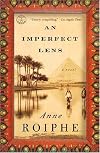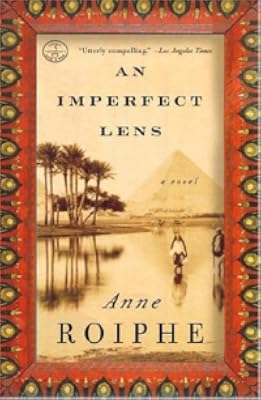
An Imperfect Lens: A Novel
by Anne Roiphe
On This Page
Description
Acclaimed author Anne Roiphe evokes the sights and sounds of 1880s Alexandria, Egypt, a bustling center of trade and travel. From teeming docks to overflowing market stalls, from grand homes to grimy narrow alleyways, cholera microbes rise and bob in streams of water and tiny droplets, clinging to moisture as man clings to air. With a keen mind and dedication to his work, young Louis Thuillier has impressed his mentor--famed scientist Louis Pasteur--enough to be sent to Alexandria as show more one-third of the French mission searching for the source of the cholera that is terrorizing the city. Along with the other members of the French mission--scientists Emile Roux and Edmond Nocard and their enterprising servant Marcus--Louis longs to find the cure, bringing glory to himself and to France. Este Malina is the lovely daughter of a respected Jewish doctor, whose family has lived in Alexandria for hundreds of years. A life of comfort has made Este a romantic, and she hopes to marry a man with the heart of a poet. Neither expects to find a soul mate in the other, but when Este begins to assist at the French mission's lab, a deep bond forms. Este, though, is engaged to another, and Louis is not Jewish--her family would never allow them to marry. In spite of their many differences, the lovers' desire grows and their fantasies threaten to distract them from their work. In Alexandria, the disease rages on, as mysterious as it was a thousand years before. Political intrigue threatens to separate Este and Louis permanently. Their love, as fragile as the glass slides they use in the lab, is in danger before it has had a chance to thrive. With An Imperfect Lens, rich with the sights and scents of a different era, Anne Roiphe once again demonstrates the storytelling power for which she has long been hailed. show lessTags
Recommendations










Member Reviews
Insidious, evocative, haunting. What I loved about the writing at first contact was how its urgency and immediacy transformed me, the reader, into the relentless perverse cholera microbe itself. One is following the main plotline and a number of secondary ones constantly; but on the way one bobs about in the flowing water systems of late nineteenth-century Alexandria dispassionate as victim after random victim falls and others simply walk away uninfected.
This is also a wonderful imagining of the last days of a hitherto little-known scientist set against the backdrop of the Alexandria of the day (I swear you can smell from the pages!) There is a sense of breathlessness in the action as the French mission - sent to the East by none other show more than Louis Pasteur - races both the cholera microbe they are trying to identify and the rival German delegation, headed by eminent scientist Dr Robert Koch. The romance is understated and sensitively written and the characters well-drawn. Highly recommend. show less
This is also a wonderful imagining of the last days of a hitherto little-known scientist set against the backdrop of the Alexandria of the day (I swear you can smell from the pages!) There is a sense of breathlessness in the action as the French mission - sent to the East by none other show more than Louis Pasteur - races both the cholera microbe they are trying to identify and the rival German delegation, headed by eminent scientist Dr Robert Koch. The romance is understated and sensitively written and the characters well-drawn. Highly recommend. show less
I have mixed feelings about An Imperfect Lens by Anne Roiphe. On one hand, it gives the reader a most comprehensive study on the disease of cholera. The author provides detailed descriptions of every aspect of this most horrible disease and the science that finally identified this elusive microbe. The city of Alexandria is portrayed in vivid detail, from the lowest of slums to the enclaves of the wealthy, from the foul smells of the docks to the exotic scents of the merchants stalls, this book brings 1880’s Alexandria, Egypt to life.
A group of French scientists are sent by Louis Pasteur, to find the cause of cholera. Time is a factor as Alexandria is in the grip of an epidemic and, there is a German scientist who is also on the hunt. show more For the honour of France, these men arrive and begin their quest. It is 1883, this mission did happen, these are real men, and this story is based on fact.
My problem with the book lies with the characters. In this, a story of purpose and passion, the characters remained distant and elusive. In fact, the odious germ that was being tracked down seemed to have more personality than the living characters. I never totally felt involved with the characters, instead was more of a interested sideliner. I did, however, want to hurry them along, have them make their discoveries as cholera was a villain that I wanted to see destroyed. For me An Imperfect Lens read more like a work of narrative non-fiction and was a interesting read, just not a book that totally carried me away. show less
A group of French scientists are sent by Louis Pasteur, to find the cause of cholera. Time is a factor as Alexandria is in the grip of an epidemic and, there is a German scientist who is also on the hunt. show more For the honour of France, these men arrive and begin their quest. It is 1883, this mission did happen, these are real men, and this story is based on fact.
My problem with the book lies with the characters. In this, a story of purpose and passion, the characters remained distant and elusive. In fact, the odious germ that was being tracked down seemed to have more personality than the living characters. I never totally felt involved with the characters, instead was more of a interested sideliner. I did, however, want to hurry them along, have them make their discoveries as cholera was a villain that I wanted to see destroyed. For me An Imperfect Lens read more like a work of narrative non-fiction and was a interesting read, just not a book that totally carried me away. show less
I picked this book up on a whim as the plot seemed intriguing. Louis Thuillier, a young protégé of Louis Pasteur, is sent to Alexandria with a French team of scientist trying to locate the source of the cholera epidemic of 1883. In a race against time to beat the Germans in isolating the organism causing the disease, and to save lives, the team members each deal with the situation differently. Louis falls in love. The object of his affection is a beautiful, intelligent, Jewish woman, whose family would never consider his suit.
The broad outlines of the novel are historically accurate. Louis, Émile Roux, and Edmond Nocard were real scientists sent on the mission, and Robert Koch is the German microbiologist with whom they had a show more scientific rivalry. The love story is fictitious. The author, Anne Roiphe, was inspired to write the novel in honor of her brother, a hematologist and laboratory scientist, who died of AIDS.
I would have loved to read a nonfiction account of the epidemic and of Louis and his teammates. This is one time when, in my opinion, the fictitious treatment did not add to the story. I found the love affair to be forced, and the setting wasn’t described as compellingly as it could have been. Never do the scientists seem concerned about, or even notice, the people dying around them, which struck me as a little odd. Cholera microbes are treated almost as a character in the story, with descriptions of where they are living and how close they come to infecting various people. It was interesting at first, but got a little old after the umpteenth time they wriggle within millimeters of someone’s hand or mouth.
Final verdict: fascinating episode in history, but writing falls short. Not recommended. show less
The broad outlines of the novel are historically accurate. Louis, Émile Roux, and Edmond Nocard were real scientists sent on the mission, and Robert Koch is the German microbiologist with whom they had a show more scientific rivalry. The love story is fictitious. The author, Anne Roiphe, was inspired to write the novel in honor of her brother, a hematologist and laboratory scientist, who died of AIDS.
I would have loved to read a nonfiction account of the epidemic and of Louis and his teammates. This is one time when, in my opinion, the fictitious treatment did not add to the story. I found the love affair to be forced, and the setting wasn’t described as compellingly as it could have been. Never do the scientists seem concerned about, or even notice, the people dying around them, which struck me as a little odd. Cholera microbes are treated almost as a character in the story, with descriptions of where they are living and how close they come to infecting various people. It was interesting at first, but got a little old after the umpteenth time they wriggle within millimeters of someone’s hand or mouth.
Final verdict: fascinating episode in history, but writing falls short. Not recommended. show less
I did not enjoy this book. I found it very long winded with a lot of info dumping. The story did not move along with much swiftness and it was a labour to plough through the pages. Nothing much seemed to happen apart from endless description of people falling ill and scientists peering in vain down their microscopes at things dredged from the bowels of the sick. The writing was wordy and florid. I particularly did not like the crystal ball sentence towards the conclusion of the book regarding Jews moving to Germany in the 1880s, whose 'great-grandchildren would be able to live in a peaceful and harmonious world'...clearly that would not be the case based on history, the characters obviously would not know that. I thought it a cheap show more trick thrown in to make the reader think, "ah, little do you know what the future holds...". It lessened the reading experience for me, such as it was.
I would not recommend this book, which could essentially be summed up in a few sentences.
Cholera breaks out in Alexandria, people start to die horrible deaths. A rival team of French and German scientists try to identify the cause while more people die horribly. Meanwhile, one of the female characters discovers love, but the 'romance' is pretty boring because the book is overwhelmed with more people dying. Some dodgy political and trade dealings are thrown in for good measure.
I did not feel close to these characters at all. I did not feel as if I was experiencing their world. show less
I would not recommend this book, which could essentially be summed up in a few sentences.
Cholera breaks out in Alexandria, people start to die horrible deaths. A rival team of French and German scientists try to identify the cause while more people die horribly. Meanwhile, one of the female characters discovers love, but the 'romance' is pretty boring because the book is overwhelmed with more people dying. Some dodgy political and trade dealings are thrown in for good measure.
I did not feel close to these characters at all. I did not feel as if I was experiencing their world. show less
This one I picked up while in Egypt and is a novelization of French and German missions sent to Alexandria, Egypt in the late nineteenth century in order to find the microbe causing cholera and to find a cure for this infectious disease. Roche builds an atmosphere akin to your modern horror film where you feel that evil is around every corner and you can feel its presence sight unseen. But cholera has been a very real evil of reality and has been capable of killing tens of thousands in a matter of days. Roche makes a point (which becomes a bit repetitive) that while the disease was everywhere, contact with the disease was quite random and the forces of fate had some role to play on who was infected and who was not. Her descriptions of show more what the disease did to the bodies of its victims rivaled that of any horror film in its goriness and would satisfy your morbid curiosity.
Roche's novel is a bit weak on the scientific experiments and processes which was disappointing to me. She instead throws a love story into the mix which is of complete fiction. I don't think it added much to the book and I would've rather learned more about the scientific aspect of the missions. The relationship aspect was only of interest due to the other topics that were brought out of it including class divides, religious affiliations, and the topic of arranged marriages.
This was an easy beach read albiet on a rather gruesome topic. show less
Roche's novel is a bit weak on the scientific experiments and processes which was disappointing to me. She instead throws a love story into the mix which is of complete fiction. I don't think it added much to the book and I would've rather learned more about the scientific aspect of the missions. The relationship aspect was only of interest due to the other topics that were brought out of it including class divides, religious affiliations, and the topic of arranged marriages.
This was an easy beach read albiet on a rather gruesome topic. show less
I'm tired of reading books based on wonderful ideas that aren't fully developed...
Also, Este is a brat.
Also, Este is a brat.
Gorgeous writing.
Members
- Recently Added By
Lists

Historical Fiction Lovers
88 works; 4 members

Authors from the United States
245 works; 3 members

BingoDOG - Scientists in Fiction
111 works; 17 members
Author Information

Common Knowledge
- Important places
- Alexandria, Egypt
Classifications
Statistics
- Members
- 89
- Popularity
- 360,862
- Reviews
- 10
- Rating
- (3.45)
- Languages
- English
- Media
- Paper, Ebook
- ISBNs
- 3
- ASINs
- 2