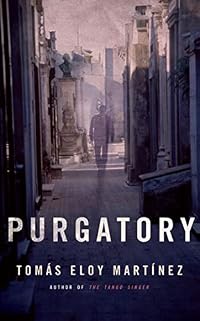
Purgatory
by Tomás Eloy Martínez
On This Page
Description
Simón Cardoso had been dead thirty years when his wife, Emilia Dupuy, spotted him at lunchtime in the lounge bar in Trudy Tuesday. So begins Purgatory. Simón, a cartographer like Emilia, vanished during a trip to map an obscure road in Argentina's back country. Later, testimonies suggested that he was one of the thousands of "subversives" arrested, tortured, and executed by the military regime. Yet Emilia, daughter of the regime's chief propagandist, has refused to accept this. She has show more spent her life longing for Simón to return, following elusive leads, never giving up hope. The husband who reappears to her, however, has not suffered those same years of uncertainty; for him, no time has passed at all.--From back cover. show lessTags
Recommendations











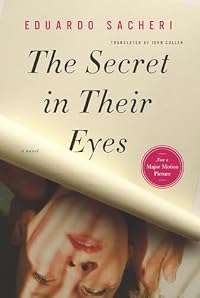





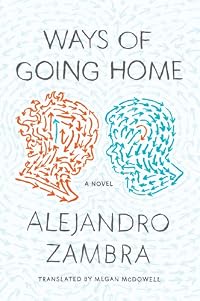
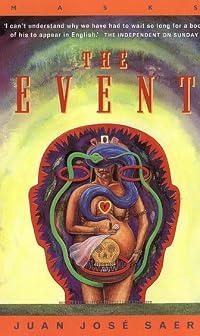
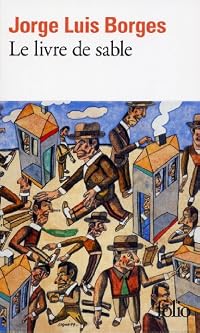


















Member Recommendations
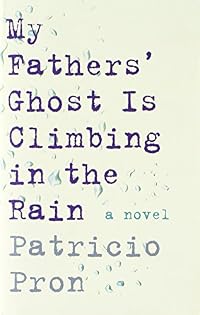
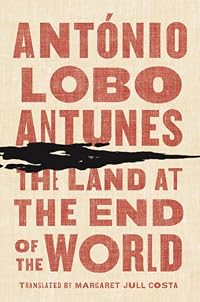
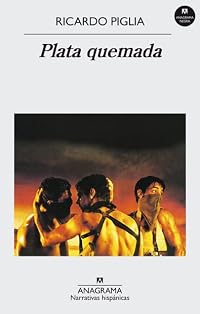
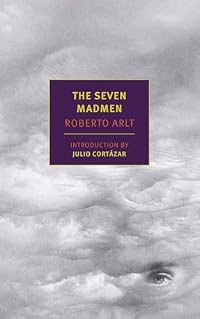
philosojerk I found Martinez's style in Purgatory very reminiscent of Marquez's in One Hundred Years. If you enjoyed one of them, you would probably enjoy the other.
Member Reviews
This book, chillingly, doesn't feel untimely. It's a little too close to home in regards to a government leaning toward nationalism, fascism, gaslighting, etc.
The book deals with the reality, the unreality, the dreams (hoped for, crushed, never lost), the almost-unimaginable life around Argentina's Dirty War. There is a magical element here, but not really magical realism -- it is all too real to think that if your loved one was "disappeared", you would endlessly search, believe, hope that somehow, some way you would find your loved one again. If you do see them years later, is it a break with reality? Has the stress of decades caused hallucinations, alternate realities of the mind? Dementia? Or is it an against-all-odds reunion?
It's show more not an easy book to read or to follow. Partly it focuses on a woman whose husband becomes a "disappeared" soon after they are married. She never gives up hope, she never stops searching. But her trials are compounded by her family life as her father is a mouthpiece, the master of PR for the regime. She's torn between the harsh reality of knowing what her father does, what the regime does, but also not wanting to believe those truths of her father, not wanting to believe what happened to her husband, not wanting to know the things her country is doing. Her life is in this state of purgatory always. Another element comes into play partway through: the author (the real author or a fictitious version of the real author who himself lived in exile during the military dictatorship?) striking up a relationship/friendship with the main character, their histories overlapping as exiles from Argentina. Is the author telling her story? Is she telling her story to the author? Or is the author creating her reality? Her unreality? It's a bit of a mind-bending, post-modern style of storytelling & an effective way to delve some of the realities of this terrifying, alarming period of Argentine history & the long, murky shadows it has cast for decades.
Not an easy read stylistically or content-wise. But effective at creating the never-ending unease, fear, waiting, loss, anxiety, & societal amnesia that often surrounds the horrific, both on a personal & national level. show less
The book deals with the reality, the unreality, the dreams (hoped for, crushed, never lost), the almost-unimaginable life around Argentina's Dirty War. There is a magical element here, but not really magical realism -- it is all too real to think that if your loved one was "disappeared", you would endlessly search, believe, hope that somehow, some way you would find your loved one again. If you do see them years later, is it a break with reality? Has the stress of decades caused hallucinations, alternate realities of the mind? Dementia? Or is it an against-all-odds reunion?
It's show more not an easy book to read or to follow. Partly it focuses on a woman whose husband becomes a "disappeared" soon after they are married. She never gives up hope, she never stops searching. But her trials are compounded by her family life as her father is a mouthpiece, the master of PR for the regime. She's torn between the harsh reality of knowing what her father does, what the regime does, but also not wanting to believe those truths of her father, not wanting to believe what happened to her husband, not wanting to know the things her country is doing. Her life is in this state of purgatory always. Another element comes into play partway through: the author (the real author or a fictitious version of the real author who himself lived in exile during the military dictatorship?) striking up a relationship/friendship with the main character, their histories overlapping as exiles from Argentina. Is the author telling her story? Is she telling her story to the author? Or is the author creating her reality? Her unreality? It's a bit of a mind-bending, post-modern style of storytelling & an effective way to delve some of the realities of this terrifying, alarming period of Argentine history & the long, murky shadows it has cast for decades.
Not an easy read stylistically or content-wise. But effective at creating the never-ending unease, fear, waiting, loss, anxiety, & societal amnesia that often surrounds the horrific, both on a personal & national level. show less
Perhaps the only sane approach to the insanity and cruelty of Argentina's Dirty War is to fade into a magical-realistic vision. Tomás Eloy Martínez does just that in Purgatory. In the story of a woman who searches for thirty years for her husband who was disappeared, he invites the reader to share the fear, despair, and helplessness of the survivor. I know nothing about the Dirty War other than what I have read in this book. Even with my faulty understanding of what Eloy Martínez was doing, I think that I know enough.
Purgatory wanders through time with both a third person narration that seemed clumsily translated and a first person narration that is immediate and deft. Emilia, the main character, is sixty when she sees her husband, show more still looking the thirty years that he was when he disappeared, in a restaurant in New Jersey, far from their Argentinian homeland. The couple had been cartographers sent on assignment into the wilds to make a valid map for their company. They stumble onto a crowd of homeless people, rounded up by the milita and dumped in the wilderness (in one of the most distressing scenes in the book) with no means of sustenance. When they try to report them, they are arrested. Because Emilia's father is a central power behind the government, she is saved. Simón, however, disappears. Emilia spends her life looking for him and drawing maps by which they may find their way to one another.
Maps and disappearances are the controlling motifs of the book. For Emilia a map has a separate reality which one may enter. In some sense everybody in the book disappears. Emilia and her professor friend, the first person narrator who is or is not TEM, have disappeared in exile. Emilia's mother disappears in dementia. Her cruel, callous father finally disappears in death. The Argentina that Emilia and her friends love disappears in illusion. This being present and not present is the essence of Purgatory.
Hear a conversation between Emilia and Simón:
"'I've been looking for this island for a long time,' he says. 'I find it, and when I try to pin down in space where it is, it slips through my fingers. Maybe that's my mistake, maybe there is no place in space for it. I try to draw it differently. I put it down on paper and turn away for a minute, and when I look at it again, the island is gone. It has vanished.'
'It must be situated in time, then,' Emilia says, 'and if it is, then sooner or later it will come back. Sooner and later are refuges in time.'"
This is not a book for the faint of heart. It will bear rereading, especially for somebody like me who understood only a small portion of what she read. show less
Purgatory wanders through time with both a third person narration that seemed clumsily translated and a first person narration that is immediate and deft. Emilia, the main character, is sixty when she sees her husband, show more still looking the thirty years that he was when he disappeared, in a restaurant in New Jersey, far from their Argentinian homeland. The couple had been cartographers sent on assignment into the wilds to make a valid map for their company. They stumble onto a crowd of homeless people, rounded up by the milita and dumped in the wilderness (in one of the most distressing scenes in the book) with no means of sustenance. When they try to report them, they are arrested. Because Emilia's father is a central power behind the government, she is saved. Simón, however, disappears. Emilia spends her life looking for him and drawing maps by which they may find their way to one another.
Maps and disappearances are the controlling motifs of the book. For Emilia a map has a separate reality which one may enter. In some sense everybody in the book disappears. Emilia and her professor friend, the first person narrator who is or is not TEM, have disappeared in exile. Emilia's mother disappears in dementia. Her cruel, callous father finally disappears in death. The Argentina that Emilia and her friends love disappears in illusion. This being present and not present is the essence of Purgatory.
Hear a conversation between Emilia and Simón:
"'I've been looking for this island for a long time,' he says. 'I find it, and when I try to pin down in space where it is, it slips through my fingers. Maybe that's my mistake, maybe there is no place in space for it. I try to draw it differently. I put it down on paper and turn away for a minute, and when I look at it again, the island is gone. It has vanished.'
'It must be situated in time, then,' Emilia says, 'and if it is, then sooner or later it will come back. Sooner and later are refuges in time.'"
This is not a book for the faint of heart. It will bear rereading, especially for somebody like me who understood only a small portion of what she read. show less
 This review was written for LibraryThing Early Reviewers.
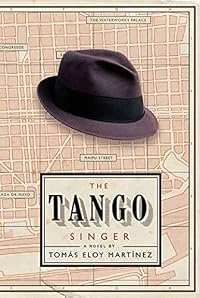
Purgatory is the first novel of Tomás Eloy Martínez to be translated into English since his death in 2010. He is best know for his acclaimed books The Peron Novel, Santa Evita, and The Tango Singer. It is translated from the Spanish by award winning translator Frank Wynne.
This was my first novel by Eloy Martínez, so I had nothing but his reputation to go on but I am always willing to try new authors from Latin America. This one did not let me down. It’s a hauntingly melancholy novel about a woman whose husband disappeared thirty years ago along with thousands of others during Argentina’s military dictatorship. She spends the intervening time searching for him as she hears rumors that he has been seen in various places. What makes show more the book so poignant is that her own father is a high ranking official in the dictatorship and is almost certainly complicit in his son-in-law’s fate and certainly in that of many of his compatriots. Eloy Martínez really does a great job of portraying how a people can put their blinders on and ignore that what they are doing really does not (and cannot) justify the end. As the novel jumps back and forth between the past and the present, you see the toll that this takes on the family and the country.
When Emilia finally sees her husband Símon in a restaurant, he has not aged a bit from the day he disappeared while she, of course, is 30 years older. As the novel winds on, Emilia withdraws into her “life” with Símon. Is it reality or is it all in her mind? You decide…but you should read this book.
I’ll leave you with my favorite passage from the book:
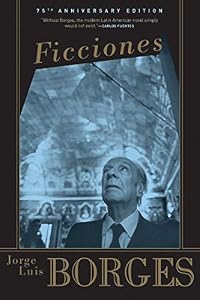
“I thought about all the things that disappear without our even noticing, because we know only what exists, we know nothing of those things that never come into existence; I thought about the non-being I would have been had my parents conceived me seconds earlier or later. I thought of the libraries of books never written (Borges tried to make up for this absence in ‘The Library of Babel’), but all that remained was the idea, there was no flesh, no bones, a magnificent lifeless idea. I thought about the Mozart symphonies silenced by his untimely death, about the song running through John Lennon’s mind that December night when he was murdered. If we could recover the unwritten books, the lost music, if we could set out in search of what never existed and find it, then we should have conquered death.”
This review was written for LibraryThing Early Reviews (sorry it wasn't really "early") show less
This was my first novel by Eloy Martínez, so I had nothing but his reputation to go on but I am always willing to try new authors from Latin America. This one did not let me down. It’s a hauntingly melancholy novel about a woman whose husband disappeared thirty years ago along with thousands of others during Argentina’s military dictatorship. She spends the intervening time searching for him as she hears rumors that he has been seen in various places. What makes show more the book so poignant is that her own father is a high ranking official in the dictatorship and is almost certainly complicit in his son-in-law’s fate and certainly in that of many of his compatriots. Eloy Martínez really does a great job of portraying how a people can put their blinders on and ignore that what they are doing really does not (and cannot) justify the end. As the novel jumps back and forth between the past and the present, you see the toll that this takes on the family and the country.
When Emilia finally sees her husband Símon in a restaurant, he has not aged a bit from the day he disappeared while she, of course, is 30 years older. As the novel winds on, Emilia withdraws into her “life” with Símon. Is it reality or is it all in her mind? You decide…but you should read this book.
I’ll leave you with my favorite passage from the book:
“I thought about all the things that disappear without our even noticing, because we know only what exists, we know nothing of those things that never come into existence; I thought about the non-being I would have been had my parents conceived me seconds earlier or later. I thought of the libraries of books never written (Borges tried to make up for this absence in ‘The Library of Babel’), but all that remained was the idea, there was no flesh, no bones, a magnificent lifeless idea. I thought about the Mozart symphonies silenced by his untimely death, about the song running through John Lennon’s mind that December night when he was murdered. If we could recover the unwritten books, the lost music, if we could set out in search of what never existed and find it, then we should have conquered death.”
This review was written for LibraryThing Early Reviews (sorry it wasn't really "early") show less
This review was written for LibraryThing Early Reviewers.An exploration of the legacy of Argentina's Dirty War, this is a tremendous book.
It opens with an incredible first sentence and it contains a brilliant set piece involving Orsen Welles, but it does slow down from time to time. It is well worth pushing through, because this is a special work. For me, the difficulty was with the main character, Emilia, who is confusing and hard to understand. She frequently seems passive or obtuse despite her obvious intelligence and drive. But as the novel unfolds, the source of her character becomes clear. She is revealed in the end as the victim not just of her husband's disappearance but also of her powerful father's domination and control. She is an obvious stand-in for Argentina itself, deceived and show more brutalized, and part of the book's brilliance is that by the end the cause of her suffering and mental unravelling is so understandable.
It is a novel about dreams and illusions, good and bad. The disappearances and loss that lie at the center of the novel are not just the loss of things that existed, but also the absence of the things that never were. Dreams, maps, boundaries and writing are all metaphors for ways we both lose our way and try to find ourselves.
In our rather feckless time, where first novels about college baseball players are elevated to "best of the year" status, this book stands out. It is difficult, serious and important. The author died before this was translated into English, but it proudly speaks for him. I hope people read this book. show less
It opens with an incredible first sentence and it contains a brilliant set piece involving Orsen Welles, but it does slow down from time to time. It is well worth pushing through, because this is a special work. For me, the difficulty was with the main character, Emilia, who is confusing and hard to understand. She frequently seems passive or obtuse despite her obvious intelligence and drive. But as the novel unfolds, the source of her character becomes clear. She is revealed in the end as the victim not just of her husband's disappearance but also of her powerful father's domination and control. She is an obvious stand-in for Argentina itself, deceived and show more brutalized, and part of the book's brilliance is that by the end the cause of her suffering and mental unravelling is so understandable.
It is a novel about dreams and illusions, good and bad. The disappearances and loss that lie at the center of the novel are not just the loss of things that existed, but also the absence of the things that never were. Dreams, maps, boundaries and writing are all metaphors for ways we both lose our way and try to find ourselves.
In our rather feckless time, where first novels about college baseball players are elevated to "best of the year" status, this book stands out. It is difficult, serious and important. The author died before this was translated into English, but it proudly speaks for him. I hope people read this book. show less
This review was written for LibraryThing Early Reviewers."Simon Cardosa had been dead thirty years when his wife, Emilia Dupuy, spotted him at lunchtime in the lounge bar in Trudy Tuesday."
That's the opening line and one reason to pick this up. Another reason to pick this up is that it's good. If that doesn't clinch it, then maybe the strong (read: not melodramatic) love story will. Or maybe the insightful commentary on a harsh, unforgiving Argentinian regime will. Add in the ghost spouse and you've got Ghost, minus the melodrama & plus the politics. Read: Purgatory is better than Ghost.
That's the opening line and one reason to pick this up. Another reason to pick this up is that it's good. If that doesn't clinch it, then maybe the strong (read: not melodramatic) love story will. Or maybe the insightful commentary on a harsh, unforgiving Argentinian regime will. Add in the ghost spouse and you've got Ghost, minus the melodrama & plus the politics. Read: Purgatory is better than Ghost.
This review was written for LibraryThing Early Reviewers.Purgatory
By Tomas Eloy Martinez
Translation by Frank Wynne
Bloomsbury USA, 273 pgs
978-1-60819-711-8
Rating: 3
Everyone in this novel is loco, at least one taco short of a combo plate. Personally, I have a soft spot for Latino cultures, our neighbors to the south, and Mexico is breaking my heart. I would rather vacation in Peru than in Germany so please don't think I'm prejudiced. Still and all, everyone in this book is insane: the general, the doctor, the mapmaker, the mother, the wife and etc.
Emilia Dupuy's husband Simon Cardoso disappeared in Argentina and has been missing and presumed (or known, depending on who you're talking to) dead for 30 years when she spies him in a restaurant in New Jersey. He has not aged or changed in 30 show more years, exactly the same. They go back to her place and spend the weekend together. Or maybe they spend the rest of their lives together. Or maybe they don't go back to her place. Maybe Simon is a ghost, or maybe he doesn't exist in any form on any plane.
During the seventies and eighties Argentina suffered from a military dictatorship that had lots in common with the Third Reich and Franco's Spain. Thousands of people were "disappeared." Emilia's father was the chief propagandist for the the general and his regime. In the book the dictator general is referred to as "the Eel" and the appellation is pitch perfect. Simon mouths off one night during dinner and this appears to be the catalyst for everything that comes after.
Emilia and Simon are cartographers and are sent to a remote region to map and are captured by the army, suspected of being subversives. They are separated and interrogated. Emilia is released. What happens after that is murky to say the least. Is Simon released? tortured? executed? There are witnesses who say they witnessed Simon's death or saw his body. Emilia gets anonymous messages claiming he is alive and living in Caracas or Mexico. She spends the rest of her life, as far as we can tell (for not much is actually known), searching for him.
I have had a difficult time deciding what the rating for this book should be. I very much enjoyed the parts in Argentina and the intermittently comedic treatment of the totalitarian regime. I found Emilia's search tedious at times. Mostly this book made me feel impatient. You don't know whether you're coming or going, which way is up? I realize that this is probably what the author intended but geez. It reminded me of the "the big lie" philosophy of the Nazis. Who are you going to believe? Me or your lying eyes?
The author of Purgatory was born in Argentina and was forced to live in exile during the military dictatorship. He has written other internationally acclaimed novels such as The Peron Novel and Santa Evita. Senor Martinez was professor of Latin American studies at Rutgers University until his death in 2010. A quote from page 221 about what is lost with death: "If we could recover the unwritten books, the lost music, if we could set out in search of what never existed and find it, then we should have conquered death."
http://www.bloomsburyusa.com/ show less
By Tomas Eloy Martinez
Translation by Frank Wynne
Bloomsbury USA, 273 pgs
978-1-60819-711-8
Rating: 3
Everyone in this novel is loco, at least one taco short of a combo plate. Personally, I have a soft spot for Latino cultures, our neighbors to the south, and Mexico is breaking my heart. I would rather vacation in Peru than in Germany so please don't think I'm prejudiced. Still and all, everyone in this book is insane: the general, the doctor, the mapmaker, the mother, the wife and etc.
Emilia Dupuy's husband Simon Cardoso disappeared in Argentina and has been missing and presumed (or known, depending on who you're talking to) dead for 30 years when she spies him in a restaurant in New Jersey. He has not aged or changed in 30 show more years, exactly the same. They go back to her place and spend the weekend together. Or maybe they spend the rest of their lives together. Or maybe they don't go back to her place. Maybe Simon is a ghost, or maybe he doesn't exist in any form on any plane.
During the seventies and eighties Argentina suffered from a military dictatorship that had lots in common with the Third Reich and Franco's Spain. Thousands of people were "disappeared." Emilia's father was the chief propagandist for the the general and his regime. In the book the dictator general is referred to as "the Eel" and the appellation is pitch perfect. Simon mouths off one night during dinner and this appears to be the catalyst for everything that comes after.
Emilia and Simon are cartographers and are sent to a remote region to map and are captured by the army, suspected of being subversives. They are separated and interrogated. Emilia is released. What happens after that is murky to say the least. Is Simon released? tortured? executed? There are witnesses who say they witnessed Simon's death or saw his body. Emilia gets anonymous messages claiming he is alive and living in Caracas or Mexico. She spends the rest of her life, as far as we can tell (for not much is actually known), searching for him.
I have had a difficult time deciding what the rating for this book should be. I very much enjoyed the parts in Argentina and the intermittently comedic treatment of the totalitarian regime. I found Emilia's search tedious at times. Mostly this book made me feel impatient. You don't know whether you're coming or going, which way is up? I realize that this is probably what the author intended but geez. It reminded me of the "the big lie" philosophy of the Nazis. Who are you going to believe? Me or your lying eyes?
The author of Purgatory was born in Argentina and was forced to live in exile during the military dictatorship. He has written other internationally acclaimed novels such as The Peron Novel and Santa Evita. Senor Martinez was professor of Latin American studies at Rutgers University until his death in 2010. A quote from page 221 about what is lost with death: "If we could recover the unwritten books, the lost music, if we could set out in search of what never existed and find it, then we should have conquered death."
http://www.bloomsburyusa.com/ show less
This review was written for LibraryThing Early Reviewers.An impressive literary novel about the Disappeared of Argentina -- centrally about one woman whose husband vanishes into the clutches of the security forces. But the book is not for the most part literal or didactic in its exploration of this, and the list of what besides this husband disappears into purgatory despite the characters' attempts to freeze into existence by mapping -- fixing in place -- is impressive: a mother's consciousness, the places of a town, history, even the life of the author and his protagonist all slip or start to slip away. In fact, the slowest / weakest parts of the novel, to me, are the parts most straightforwardly descriptive of the life of the protagonist in Argentina -- well told, but a little familiar.
The show more telling of the opening conceit -- the protagonist, after searching for years for her husband despite the facts, obvious to most, that he must be dead, sees him across a restaurant in New Jersey -- is wonderful, and the way the husband, and then the widow, and even the city become simultaneously there and not there, simultaneous describes the dilemna of Argentina in the wake of the Dirty War and echoes in the broader human condition. show less
The show more telling of the opening conceit -- the protagonist, after searching for years for her husband despite the facts, obvious to most, that he must be dead, sees him across a restaurant in New Jersey -- is wonderful, and the way the husband, and then the widow, and even the city become simultaneously there and not there, simultaneous describes the dilemna of Argentina in the wake of the Dirty War and echoes in the broader human condition. show less
This review was written for LibraryThing Early Reviewers.Members
- Recently Added By
Author Information

26 Works 1,661 Members
Tomás Eloy Martínez was born in San Miguel de Tucumán, Argentina on July 16, 1934. He received an undergraduate degree in Spanish and Latin American literature from the National University of Tucumán and a master's degree from the University of Paris. He was a novelist, journalist, essayist and critic. In the early 1970s, he conducted long show more interviews with Juan Domingo Perón in Madrid, where the general was living in exile. In 1975, while eating lunch in a Buenos Aires restaurant, he received word that when he stepped outside, he would be assassinated by a right-wing paramilitary group. Since there was no back door, he decided to document his own murder and phoned his newspaper requesting a photographer. When a swarm of photographers descended, the assassins scattered. He fled the country and eventually ended up in the United States, where he taught at the University of Maryland in the mid-1980s. His works include The Perón Novel (La Novela de Perón), Santa Evita, and The Tango Singer (El Cantor de Tango). He taught at Rutgers University from 1995 until his death. He died as the result of a brain tumor on January 31, 2010 at the age of 75. (Bowker Author Biography) show less
Awards and Honors
Awards
Notable Lists
Common Knowledge
- Canonical title
- Purgatory
- Original title
- Purgatorio
- Original publication date
- 2009
- People/Characters
- Emilia Dupuy; Símon Cardosa; Nancy Frears
- Important places
- Highland Park, New Jersey, USA
- Epigraph
- ...what is fleeting remains, it endures.
FRANCISCO DE QUEVEDO
'To Rome Buried in Her Ruins' - Dedication
- In memoriam Susan Rotker, ten years after.
- First words
- Símon Cardosa had been dead thirty years when his wife, Emilia Dupuy, spotted him at lunchtime in the lounge bar in Trudy Tuesday.
- Last words
- (Click to show. Warning: May contain spoilers.)'It doesn't matter,' she says. 'It will grow broader and deeper just for us.'
Classifications
- Genres
- General Fiction, Fiction and Literature
- DDC/MDS
- 863.64 — Literature & rhetoric Spanish Literature Spanish fiction 20th Century 1945-2000
- LCC
- PQ7798.23 .A692 .P8713 — Language and Literature French, Italian, Spanish and Portuguese literatures Spanish literature Provincial, local, colonial, etc. Spanish America
- BISAC
Statistics
- Members
- 189
- Popularity
- 172,617
- Reviews
- 25
- Rating
- (3.67)
- Languages
- 6 — English, French, German, Italian, Portuguese, Spanish
- Media
- Paper, Audiobook, Ebook
- ISBNs
- 17
- ASINs
- 9