
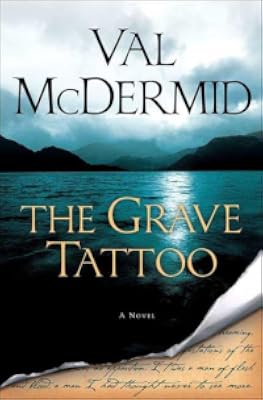
The Grave Tattoo
by Val McDermid
On This Page
Description
In The Grave Tattoo, suspense master Val McDermid spins a psychological thriller in which a present-day murder has its roots in the eighteenth century and the mutiny on the H.M.S. Bounty. After torrential summer rains uncover a bizarrely tattooed body on a Lake District hillside, long discarded old wives' tales takes on a chilling new plausibility. For centuries, Lakelanders have whispered that Fletcher Christian staged the massacre on Pitcairn so that he could return home. And there, he show more told his story to an old friend and schoolmate, William Wordsworth, who turned it into a long narrative poem--a poem that remained hidden lest it expose Wordsworth to the gallows for harboring a fugitive. Wordsworth specialist Jane Gresham, herself a native of the Lake District, feels compelled to discover once and for all whether the manuscript ever existed--and whether it still exists today. But as she pursues each new lead, death follows hard on her heels. Suddenly Jane is at the heart of a 200-year-old mystery that still has the power to put lives on the line. Against the dramatic backdrop of England's Lake District a drama of life and death plays out, its ultimate prize a bounty worth millions. show lessTags
Recommendations












Member Reviews
What do William Wordsworth, the eminent English poet, and Fletcher Christian, the lead mutineer against Captain Bligh on the Bounty, have in common? According to Val McDermid in The Grave Tattoo the two were contemporaries, schoolmates and friends. It had long been rumoured in the Lake District that Christian did not die on Pitcairn Island but instead had come home to England. There were even rumours that Christian had visited his old friend and told him his story. When a body turns up in the peat which carries South Sea tattoos, Jane Gresham is intrigued. Jane is a native of the Lake District and a Wordsworth scholar so she is familiar with the rumours. She even found a document in the Wordsworth Museum that hints there was a record show more kept of the meeting. Jane convinces her University to give her two weeks’ study leave to try to find more evidence. Just before she leaves her young, black neighbour, Tenille, is almost raped by her guardian’s boyfriend. Tenille confides in Jane because she is the only adult in Tenille’s life who cares about her. Jane offers Tenille the use of her flat and talks to the gangster who is rumoured to be Tenille’s father. Jane believes the father will frighten the potential rapist and then Tenille will be safe. Later that evening when Tenille figures the coast will be clear she goes home and finds her attacker dead on the couch. A shotgun, which obviously killed him, is on the floor and Tenille picks it up. She then realizes that her father must have shot him and she decides to set fire to the flat to burn up any incriminating evidence. Unfortunately she was seen leaving the flat and her fingerprints are still found on the shotgun. So Tenille decides to follow Jane to the Lake District in the hopes that Jane can sort this problem.
Meanwhile, Jane has found some tantalizing evidence that a maid in the Wordsworth household was given the papers about Fletcher Christian. Her initial attempts to trace the maid were frustrated by the fact that there were no records about her after she married. Her friend and colleague, Dan, comes up to help out and her brother, a local school teacher, has a crucial bit of evidence from his students. Unbeknownst to Jane, her ex-boyfriend, Jake, is also on the trail of the documents for his boss and new lover. When the descendents of the maid start dying soon after Jane talks to them, suspicion falls on Jane who is already suspected of harbouring Tenille. Someone is killing the descendents and if it’s not Jane, who is it?
I thought this book was fascinating for both the plot line about uncovering the lost documents and the who-dun-it aspects. Jane is a feisty and gutsy character. Her concern about Tenille shows she also has a tender side. Tenille is also a great invention as a young black woman who talks like a rapper but feels like a romantic poet. Even some of the minor characters are well-drawn; Dr. River Wilde, the forensic anthropologist who is examining the body from the peat is shown as a respected scientist and a sensual woman; DCI Ewan Rigston of the local police force is a no-nonsense officer but he doesn’t jump to conclusions.
I was caught totally off guard by the revelation of the murderer. If I have any quibbles about the book it is that I am getting a little tired of the device that has the murderer die before they are even charged. However, it does tie everything up in a nice neat bundle. show less
Meanwhile, Jane has found some tantalizing evidence that a maid in the Wordsworth household was given the papers about Fletcher Christian. Her initial attempts to trace the maid were frustrated by the fact that there were no records about her after she married. Her friend and colleague, Dan, comes up to help out and her brother, a local school teacher, has a crucial bit of evidence from his students. Unbeknownst to Jane, her ex-boyfriend, Jake, is also on the trail of the documents for his boss and new lover. When the descendents of the maid start dying soon after Jane talks to them, suspicion falls on Jane who is already suspected of harbouring Tenille. Someone is killing the descendents and if it’s not Jane, who is it?
I thought this book was fascinating for both the plot line about uncovering the lost documents and the who-dun-it aspects. Jane is a feisty and gutsy character. Her concern about Tenille shows she also has a tender side. Tenille is also a great invention as a young black woman who talks like a rapper but feels like a romantic poet. Even some of the minor characters are well-drawn; Dr. River Wilde, the forensic anthropologist who is examining the body from the peat is shown as a respected scientist and a sensual woman; DCI Ewan Rigston of the local police force is a no-nonsense officer but he doesn’t jump to conclusions.
I was caught totally off guard by the revelation of the murderer. If I have any quibbles about the book it is that I am getting a little tired of the device that has the murderer die before they are even charged. However, it does tie everything up in a nice neat bundle. show less
An entertaining murder mystery with a - slightly contrived - historical back-story, in which the discovery of a 200-year-old body in a peat bog provokes various more or less devious characters to rush around the Lake District in pursuit of a possible Wordsworth manuscript, accompanied by a string of suspicious deaths. I had the feeling that there were rather too many different subplots going on at once, but McDermid is of course an old pro at this game and can keep any number of balls in the air at the same time, so it all comes together in the end.
Drawing on a Lakeland myth, Val McDermid has written a compelling crime novel. Jane Gresham is a scholar of William Wordsworth and when an old body is discovered near her family home in the Lake District, it reawakens her interest in a possibly hidden manuscript by the poet. Added to the mix is a murder on the London estate where she lives that involves Tenille, a 13 year old girl, who she has befriended. Jan’s return to her roots in search of the possible poem leads to a hunt through the descendants of local families who may have it hidden in their possession. But trouble follows her, in the shape of a rival who will stop at nothing to discover the manuscript and also Tenille, who travels after her as she sees Jane as her only show more reliable friend. This tied in with the myth surrounding Fletcher Christian of the mutiny on the Bounty fame, makes for an imaginative, intriguing and fast-moving story. show less
If I were cynical (Cynical? Moi?) I might be tempted to say that The Grave Tattoo was Val McDermid writing a pastiche of Reginald Hill parodying The Da Vinci Code.
But that wouldn't be entirely fair. It's true that it's set in Hill's beloved Lake District, like his The Stranger House published a year or so earlier. It's also true that the plot revolves around an academic's search to uncover the secret of a historical conspiracy held in trust by a hapless Lakeland family before she is beaten to it with messy consequences. However, there's a lot more to it than that.
The McGuffin in this case is a putative lost epic poem by William Wordsworth, based on the story of Fletcher Christian (a Maryport lad, who went to school with Willie). The show more literary chase, which leaves a trail of unexplained dead bodies, is a fascinating one with a satisfying resolution. This kind of story is a new departure for McDermid, but I hope it won't be the last she'll do in this field. show less
But that wouldn't be entirely fair. It's true that it's set in Hill's beloved Lake District, like his The Stranger House published a year or so earlier. It's also true that the plot revolves around an academic's search to uncover the secret of a historical conspiracy held in trust by a hapless Lakeland family before she is beaten to it with messy consequences. However, there's a lot more to it than that.
The McGuffin in this case is a putative lost epic poem by William Wordsworth, based on the story of Fletcher Christian (a Maryport lad, who went to school with Willie). The show more literary chase, which leaves a trail of unexplained dead bodies, is a fascinating one with a satisfying resolution. This kind of story is a new departure for McDermid, but I hope it won't be the last she'll do in this field. show less
If I were cynical (Cynical? Moi?) I might be tempted to say that The Grave Tattoo was Val McDermid writing a pastiche of Reginald Hill parodying The Da Vinci Code.
But that wouldn't be entirely fair. It's true that it's set in Hill's beloved Lake District, like his The Stranger House published a year or so earlier. It's also true that the plot revolves around an academic's search to uncover the secret of a historical conspiracy held in trust by a hapless Lakeland family before she is beaten to it with messy consequences. However, there's a lot more to it than that.
The McGuffin in this case is a putative lost epic poem by William Wordsworth, based on the story of Fletcher Christian (a Maryport lad, who went to school with Willie). The show more literary chase, which leaves a trail of unexplained dead bodies, is a fascinating one with a satisfying resolution. This kind of story is a new departure for McDermid, but I hope it won't be the last she'll do in this field. show less
But that wouldn't be entirely fair. It's true that it's set in Hill's beloved Lake District, like his The Stranger House published a year or so earlier. It's also true that the plot revolves around an academic's search to uncover the secret of a historical conspiracy held in trust by a hapless Lakeland family before she is beaten to it with messy consequences. However, there's a lot more to it than that.
The McGuffin in this case is a putative lost epic poem by William Wordsworth, based on the story of Fletcher Christian (a Maryport lad, who went to school with Willie). The show more literary chase, which leaves a trail of unexplained dead bodies, is a fascinating one with a satisfying resolution. This kind of story is a new departure for McDermid, but I hope it won't be the last she'll do in this field. show less
I have long been a fan of psychological crime thrillers, but for whatever reason, The Grave Tattoo is my first experience with a Val McDermid title. Now having read it, I can certainly see why critics of the day considered it to be McDermid's breakthrough effort, and I look forward to reading more of her work.
This intricately plotted novel seems to have something for every kind of mystery fan. Its core plot involves the 200-year-old body pulled out of a Lake District peat bog that a forensic scientist has cleverly nicknamed “Pirate Peat” because of the intricate tattoos still visible on the body. Interesting as the body already is, there is a strong possibility that it could turn out to be an even more important find than it appears show more to be at first glance. Local lore says that Bounty mutineer Fletcher Christian somehow survived the aftermath of that famous incident, made his way back to his home area, and disappeared there for good. Could this be the famous sailor’s body?
Wordsworth scholar Jane Gresham, who grew up near where the bog body was found, believes there is more to the Fletcher Christian story. Her research indicates a strong possibility that Christian told his story to William Wordsworth, an old classmate of his, before he disappeared. She believes it likely that Wordsworth wrote down what he was told by Christian before producing a long lost poem about his old friend's adventures. Jane knows how successfully the Wordsworth family guarded its privacy and reputation, so it makes sense to her that the poem and notes would have been hidden away rather than being made public during the author's lifetime. But they are out there somewhere, she thinks, and if it can be proved that Pirate Peat is really Fletcher Christian, it will prove that she is on the right track.
Intriguing as this story line is, it is easy for readers to lose themselves in McDermid's side plots involving Jane's friends and family. The most intriguing thread involves the thirteen-year-old mixed race girl whom Jane has befriended in the infamous London housing project she is forced to live in – being a Wordsworth scholar and college lecturer does not seem to pay particularly well and London rents are high, after all. Tenille is a pet project of Jane's, a kid she is trying to save from the future that already seems destined to be hers.
Wordsworth's papers, if they exist and can be found, will be worth millions to the right collector, and as is always the case, some are willing to do whatever it takes to get their hands on something so precious. Jane’s life gets complicated when characters from all the side plots start showing up in the Lake District for reasons of their own. Suddenly nothing makes sense to Jane. If she is to find the documents she is so certain exist, she will need lots of help – but whom can she trust? Her brother seems to be in a race to find the papers before she does; the police are accusing her of hiding a murder suspect; and people are dying all around her. show less
This intricately plotted novel seems to have something for every kind of mystery fan. Its core plot involves the 200-year-old body pulled out of a Lake District peat bog that a forensic scientist has cleverly nicknamed “Pirate Peat” because of the intricate tattoos still visible on the body. Interesting as the body already is, there is a strong possibility that it could turn out to be an even more important find than it appears show more to be at first glance. Local lore says that Bounty mutineer Fletcher Christian somehow survived the aftermath of that famous incident, made his way back to his home area, and disappeared there for good. Could this be the famous sailor’s body?
Wordsworth scholar Jane Gresham, who grew up near where the bog body was found, believes there is more to the Fletcher Christian story. Her research indicates a strong possibility that Christian told his story to William Wordsworth, an old classmate of his, before he disappeared. She believes it likely that Wordsworth wrote down what he was told by Christian before producing a long lost poem about his old friend's adventures. Jane knows how successfully the Wordsworth family guarded its privacy and reputation, so it makes sense to her that the poem and notes would have been hidden away rather than being made public during the author's lifetime. But they are out there somewhere, she thinks, and if it can be proved that Pirate Peat is really Fletcher Christian, it will prove that she is on the right track.
Intriguing as this story line is, it is easy for readers to lose themselves in McDermid's side plots involving Jane's friends and family. The most intriguing thread involves the thirteen-year-old mixed race girl whom Jane has befriended in the infamous London housing project she is forced to live in – being a Wordsworth scholar and college lecturer does not seem to pay particularly well and London rents are high, after all. Tenille is a pet project of Jane's, a kid she is trying to save from the future that already seems destined to be hers.
Wordsworth's papers, if they exist and can be found, will be worth millions to the right collector, and as is always the case, some are willing to do whatever it takes to get their hands on something so precious. Jane’s life gets complicated when characters from all the side plots start showing up in the Lake District for reasons of their own. Suddenly nothing makes sense to Jane. If she is to find the documents she is so certain exist, she will need lots of help – but whom can she trust? Her brother seems to be in a race to find the papers before she does; the police are accusing her of hiding a murder suspect; and people are dying all around her. show less
What if mutineer Fletcher Christian didn’t die on Pitcairn island, but returned to his native England? Worsdworth scholar Jane Gresham secures a leave of absence from her job at a London university to explore the connection between a 200-year-old body discovered in the peat near her Lake District home and a Wordsworth manuscript that may have been hidden nearly as long. Jane isn’t the only person with an interest in the manuscript. As the deaths pile up, Jane herself may be in danger.
McDermid combines elements I love in a good mystery – history, literature, a strong sense of place, with a little bit of genealogy. I wasn’t surprised by the revelation of the villain’s identity near the end of the book. There were so few suspects show more that it was easy to figure out who it must be. And Jane really didn’t do much investigating. She mostly reacted to events as they unfolded. I was happy enough to go along with the ride. show less
McDermid combines elements I love in a good mystery – history, literature, a strong sense of place, with a little bit of genealogy. I wasn’t surprised by the revelation of the villain’s identity near the end of the book. There were so few suspects show more that it was easy to figure out who it must be. And Jane really didn’t do much investigating. She mostly reacted to events as they unfolded. I was happy enough to go along with the ride. show less
Members
- Recently Added By
Lists

British Mystery
469 works; 14 members

Books Read in 2020
4,379 works; 124 members
Author Information

102+ Works 30,091 Members
Val McDermid was born in Scotland on June 4, 1955. She was the first student from a state school in Scotland accepted to read English at St Hilda's College, Oxford. She graduated in 1975 and became a journalist. She wrote her first novel at the age of 21. It didn't get published, but she turned it into a play entitled Like a Happy Ending. It was show more performed by the Plymouth Theatre Company and was later adapted for BBC radio. Her first book, Report for Murder, was published in 1987. She is the author of the Lindsay Gordon Mystery series, the Kate Brannigan Mystery series, and the Dr. Tony Hill and Carol Jordan Mysteries series as well as several stand alone books including The Distant Echo, A Darker Domain, Trick of the Dark and Out of Bounds. The Mermaids Singing won the Crime Writers' Association Gold Dagger for Best Crime Novel of the Year. (Bowker Author Biography) show less
Some Editions
Awards and Honors
Work Relationships
Is contained in
Common Knowledge
- Canonical title
- The Grave Tattoo
- Original title
- The Grave Tattoo
- Original publication date
- 2006
- People/Characters
- Jane Gresham; Tenille Cole; Jake Hartnell; Dan Seabourne; River Wilde; Ewan Rigston (show all 9); Matthew Gresham; Diane Gresham; Fletcher Christian
- Important places
- Fellhead, Cumbria, England, UK; London, England, UK
- Epigraph*
- O Reader! Had you in your mind such stores as silent thougth can bring, O gentle Reader! you would find a tale in every thing - William Wordsworth - Simon Lee
- Dedication
- For Kelly - my blossom of snow
- First words
- All landscapes hold their own secrets.
- Last words
- (Click to show. Warning: May contain spoilers.)'So you see, it's truly not all bad.'
- Publisher's editor
- Wisdom, Julia (HarperCollins UK)
- Blurbers
- Gerritsen, Tess; Perry, Anne; Fonder, Joseph; Coben, Harlan; King, Laurie; Rearson, Ridley (show all 7); Pelecanos, George
- Original language
- English
*Some information comes from Common Knowledge in other languages. Click "Edit" for more information.
Classifications
Statistics
- Members
- 1,355
- Popularity
- 17,583
- Reviews
- 48
- Rating
- (3.45)
- Languages
- 13 — Bulgarian, Czech, Dutch, English, French, German, Norwegian (Bokmål), Norwegian, Spanish, Swedish, Turkish, Portuguese (Portugal), Portuguese (Brazil)
- Media
- Paper, Audiobook, Ebook
- ISBNs
- 58
- ASINs
- 24