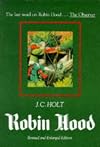
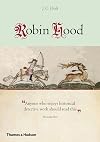
Robin Hood
by J. C. Holt
On This Page
Description
People's hero or lawless marauder? Who was the 'real' Robin Hood - or was there none? And how did the legends of a violent era become the romantic tales of today?Tags
Recommendations
























Member Recommendations
waltzmn For readers who want a single reference for the Robin Hood corpus, this is probably the best now available -- modern edited texts with glosses and introductions. There are some rather loudly stated assertions which are, at best, beyond proof, but the texts themselves are mostly excellent.

waltzmn It would be a little strong to say that modern Robin Hood scholarship began with this book -- but only a little. Dobson and Taylor were the first editors since F. J. Child in the nineteenth century to really attempt a scholarly study of the Robin Hood corpus. Of course this first attempt has a few glitches. But most of it stands up very well.
Member Reviews
Robin is first referenced in Piers the Plowman, (1370s, which I read last month) proving that he was already popular! Arthur has certainly endured due to his "historical" significance as a "legitimate" King of England, but why Robin? While Robin's archetype was certainly not unique (the reader learns of outlaw Adam Bell) he has survived through the centuries due to 1) his popularity with the lower class 2) his proximity to the Great Northern Road 3) the original tales existing solely in English and therefore accessible, and 4) his stories are based in reality rather than the fantastical.
First and foremost, Robin Hood did not exist. J.C. Holt explores the historical record and counters the posited theories of the past with compelling show more arguments of their own. The most well-known Robin Hood tales actually emerged in the 18th c. In their enthusiasm, popular historians either overlooked evidence that didn't support his existence or appealed to ignorance. But Holt successfully dissects these assumptions by exploring the original "gests," in which Robin and Little John are simple yeomen.
I had to give this one a four because there is a chapter that needed improving. When Holt lists the possible "inspirations" for Robin Hood, onomastic variations of Hood, geographical specifics, etc. it gets muddled to say the least. A better editor would've broken these down into smaller paragraphs or an organized list of sorts. After a few pages, all the "Robins," "Rogers" and "Roberts" started to run together. But it's about separating fact from fiction, which I appreciate, and Holt clearly embraces one of literature's most lovable and clever heroes. show less
First and foremost, Robin Hood did not exist. J.C. Holt explores the historical record and counters the posited theories of the past with compelling show more arguments of their own. The most well-known Robin Hood tales actually emerged in the 18th c. In their enthusiasm, popular historians either overlooked evidence that didn't support his existence or appealed to ignorance. But Holt successfully dissects these assumptions by exploring the original "gests," in which Robin and Little John are simple yeomen.
I had to give this one a four because there is a chapter that needed improving. When Holt lists the possible "inspirations" for Robin Hood, onomastic variations of Hood, geographical specifics, etc. it gets muddled to say the least. A better editor would've broken these down into smaller paragraphs or an organized list of sorts. After a few pages, all the "Robins," "Rogers" and "Roberts" started to run together. But it's about separating fact from fiction, which I appreciate, and Holt clearly embraces one of literature's most lovable and clever heroes. show less
A scholarly, but eminently readble, study of the legend of Robin Hood. Based primarily around the earliest written ballads on the subject (and The Gest of Robin Hood is included in full), the author explores the geography, the links to possible factual history, and much more. This is not a telling of the legend, but an examination of how the legend developed over the years, merging in with other stories.
If you know anything about Robin Hood, even if only from Kevin Costner (!), then it will be an interesting read. If, like me, you have lived your entire life within 10 miles of Nottingham, then it is truly fascinating.
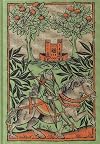
I read the Folio Society edition, which is a beautifully bound copy.
Thoroughly recommended.
If you know anything about Robin Hood, even if only from Kevin Costner (!), then it will be an interesting read. If, like me, you have lived your entire life within 10 miles of Nottingham, then it is truly fascinating.
I read the Folio Society edition, which is a beautifully bound copy.
Thoroughly recommended.
I first read this book when I was in high school. It interested me in the same way that books that speculated about the historical origins of King Arthur did. While most King Arthur-as-historical-figure books suffer from a dearth of facts and an overabundance of enthusiasm, this book for the most part does not share those traits.
Holt presents the historical evidence that someone named Robin (or Hobb or Hobbehod) once actually existed and served as the inspiration for a cycle of ballads. The evidence is scanty at best, and Holt does not ignore that fact. However, he does present an argument that the ballads are an account of not so much one man's deeds, as the deeds of a group of men who adopted and adapted the Robin Hood persona - a show more persona which was originated by a 13th-century criminal.
The book is deservedly considered a classic, not just for Holt's responsible approach, but for its readability. Note, however, that the second edition contains an essential update drawn from sources discovered after the first edition. You might want to read the preface and postscript before reading the rest of the book, as they contain the updated information. show less
Holt presents the historical evidence that someone named Robin (or Hobb or Hobbehod) once actually existed and served as the inspiration for a cycle of ballads. The evidence is scanty at best, and Holt does not ignore that fact. However, he does present an argument that the ballads are an account of not so much one man's deeds, as the deeds of a group of men who adopted and adapted the Robin Hood persona - a show more persona which was originated by a 13th-century criminal.
The book is deservedly considered a classic, not just for Holt's responsible approach, but for its readability. Note, however, that the second edition contains an essential update drawn from sources discovered after the first edition. You might want to read the preface and postscript before reading the rest of the book, as they contain the updated information. show less
This is a serious scholarly book about Robin Hood , probably the most serious argument for a historical 13th century Robin Hood, with careful discussions of the early evidence such as it is, and the geography of the early Robin Hood poems, especially the Gest, which seems to be set in the Barnsdale region of southern Yorkshire, though mixed with (later?) references to the traditional Sherwood in Nottinghamshire. It also includes a well-known discussion of the audience of Robin Hood, subject on which there has been much debate.
Someone has written a book about the legend of Robin Hood, possible sources and inspirstions, and some findings about social conditions that might have led to the creation of the Legend. Robin hood is not so dignified a story as Arthur, and it seems to be more recent. the corpus has certainly been not carefully cared for, and is prey to commercial interests. A good critical book on the legend.
Book Description: NY: Thames and Hudson, 1982. First Edition. Fine in V Fine dj. Clean and tight. as new. printed & bound in Great Britain,
RE85CJPL
Members
- Recently Added By
Lists

Folio Society
831 works; 48 members

Huxley's reading log 2016
84 works; 3 members

Books Read in 2024
4,727 works; 128 members
Author Information

14+ Works 743 Members
Common Knowledge
- Canonical title
- Robin Hood
- Original publication date
- 1982; 1989 (revised and enlarged) (revised and enlarged)
- People/Characters
- Robin Hood; Little John; Joseph Ritson; Adam Bell; Clym of the Clough; William of Cloudesly (show all 7); Joseph Hunter
- Important places*
- South Yorkshire, Yorkshire and the Humber, Engeland, Verenigd Koninkrijk; Yorkshire and the Humber, Engeland, Verenigd Koninkrijk
*Some information comes from Common Knowledge in other languages. Click "Edit" for more information.
Classifications
- Genres
- Nonfiction, History, Literature Studies and Criticism
- DDC/MDS
- 398.352 — Society, government, & culture Customs, etiquette & folklore Folklore & Folktales Real phenomena as subjects of folklore Humanity and human existence Specific groups of people; heroes [Formerly Persons, including individual persons]
- LCC
- PR2129 .H64 — Language and Literature English English Literature Anglo-Norman period. Early English. Middle English
- BISAC
Statistics
- Members
- 520
- Popularity
- 57,743
- Reviews
- 8
- Rating
- (4.15)
- Languages
- English, Finnish, German, Italian
- Media
- Paper
- ISBNs
- 8
- ASINs
- 13