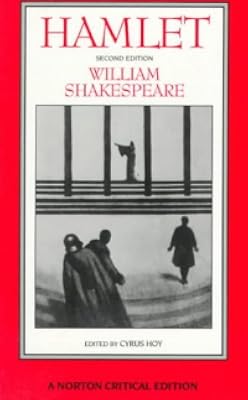
Hamlet [Norton Critical Edition]
by William Shakespeare
On This Page
Description
Presents an annotated text of Shakespeare's tragedy about the Prince of Denmark, and includes background essays, extracts from the sources, and critical commentary.Tags
Recommendations



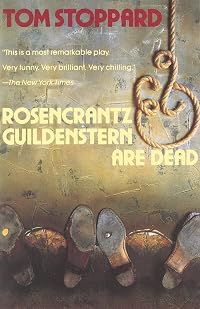

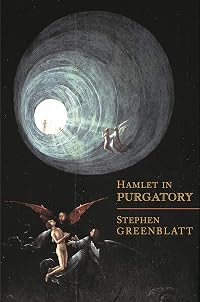
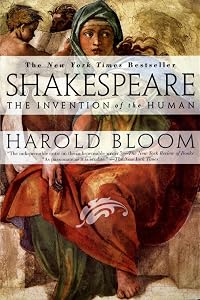

Member Recommendations

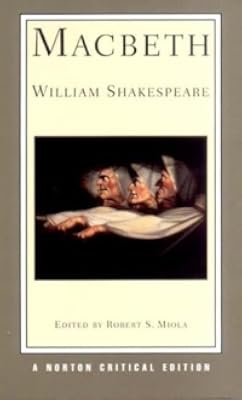
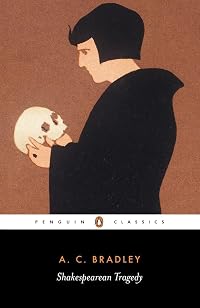
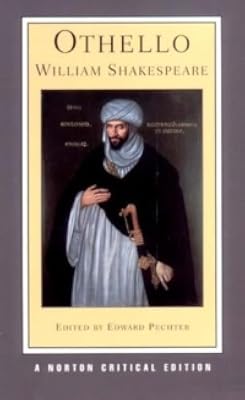
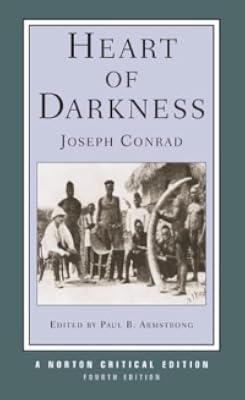
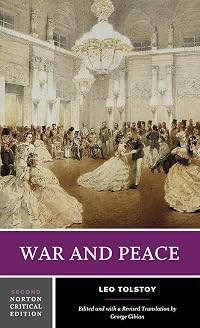
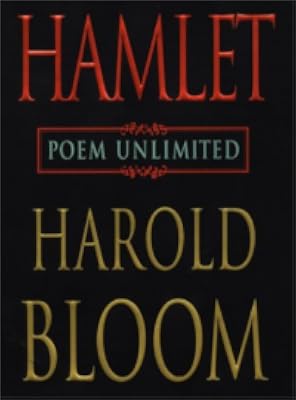
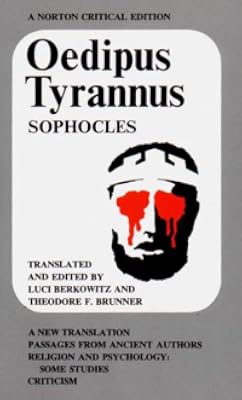
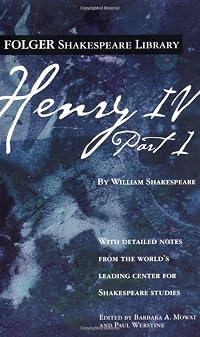
CGlanovsky Elizabethan dramas featuring murder, ghosts, a character appearing mad with grief, and revenge plots taking advantage of a play within the plays
Member Reviews
Hamlet shouldn't need a synopsis, as most Western readers have been exposed to the story in some form or other. Although, honestly, people might be more familiar with some of its most memorable quotes rather than the actual plot. The story follows Hamlet, young prince of Denmark, as he struggles with his directive to avenge his father's death. His father's ghost is the one who compelled them to this dark job, revealing that his Uncle Claudius murdered him to take the throne and the queen. Hamlet currently despises his mother and uncle for their hasty marriage and curtailed grieving, but he is none too eager to commit revenge killing. As he feigns madness, or maybe truly indulges it, he drives the woman who loves him to desperate and show more terrible extremes, he accidentally stabs her father who is eavesdropping on him and his mother, and escapes Claudius's attempt on his own life by throwing Rosencrantz and Guildenstern to their deaths in his place. In the end, Hamlet is not the initiator of Claudius's death, but merely thwarts the king's own elaborate plot to kill Hamlet, inadvertently taking out most of the people on the stage before he succumbs to the poison with which Laertes stabbed him.
This brief description leaves out many significant details, such as Ophelia's drowning and Laertes' own grief-stricken scheming, but again, the famous and canonical story is well known. Even more prevalent are the lines from some of Hamlet's soliloquies. People who don't know play at all probably recognize the beginning of his famous "to be or not to be" speech. The powerful language is one reason that Shakespeare's preeminent play is remembered and repeated all over the world, but the character of Hamlet himself is also the subject of much discussion. Is he paralyzed by hesitance, too sensitive to accept his brutal role, in love with his mother, or merely a carefully calculating genius? Thousands of critical responses have prompted just as many readings of the play and its namesake. A great reason to read this Norton Critical edition is the collection of critical material that occupies the second half of the book, after the play and its quality footnotes and introduction. This book also includes several reactions about Hamlet written by various actors who have played the character in the past. All of this collected critical information helps the reader dive into the many layers of a complex piece of literature and drama. I highly recommend Norton Critical editions for the serious reader.
The question still remains of whether I enjoyed the play. I did. Shakespeare was a master at incorporating his powerful characterization and language in a play that was packed with enough action and surprise to entertain even his least-discerning playgoers. I was drawn in by the intricate revenge story and the incredibly life-like characters, while at the same time appreciating the more subtle elements that underlay the events of the plot. This was actually my second read of the play. The first time I chose this book, I was in college and just quickly read through a library copy so I could say that I had read Hamlet. This time, I chose the Norton book, so I could slowly read the drama and take in its many interpretations. I greatly appreciated the matter at the end for allowing me to delve deeper into the play and some of the world of criticism that has grown around it. I certainly feel as if adding this book to my reading history strengthens my understanding of literature. show less
This brief description leaves out many significant details, such as Ophelia's drowning and Laertes' own grief-stricken scheming, but again, the famous and canonical story is well known. Even more prevalent are the lines from some of Hamlet's soliloquies. People who don't know play at all probably recognize the beginning of his famous "to be or not to be" speech. The powerful language is one reason that Shakespeare's preeminent play is remembered and repeated all over the world, but the character of Hamlet himself is also the subject of much discussion. Is he paralyzed by hesitance, too sensitive to accept his brutal role, in love with his mother, or merely a carefully calculating genius? Thousands of critical responses have prompted just as many readings of the play and its namesake. A great reason to read this Norton Critical edition is the collection of critical material that occupies the second half of the book, after the play and its quality footnotes and introduction. This book also includes several reactions about Hamlet written by various actors who have played the character in the past. All of this collected critical information helps the reader dive into the many layers of a complex piece of literature and drama. I highly recommend Norton Critical editions for the serious reader.
The question still remains of whether I enjoyed the play. I did. Shakespeare was a master at incorporating his powerful characterization and language in a play that was packed with enough action and surprise to entertain even his least-discerning playgoers. I was drawn in by the intricate revenge story and the incredibly life-like characters, while at the same time appreciating the more subtle elements that underlay the events of the plot. This was actually my second read of the play. The first time I chose this book, I was in college and just quickly read through a library copy so I could say that I had read Hamlet. This time, I chose the Norton book, so I could slowly read the drama and take in its many interpretations. I greatly appreciated the matter at the end for allowing me to delve deeper into the play and some of the world of criticism that has grown around it. I certainly feel as if adding this book to my reading history strengthens my understanding of literature. show less
Hamlet finds out from the ghost of his father that his uncle was his father's murderer, and must seek revenge. It was good to finally read this play after hearing so much about it. I didn't understand some parts but on the whole very entertaining!
Ratings
Members
- Recently Added By
Author Information

William Shakespeare, 1564 - 1616 Although there are many myths and mysteries surrounding William Shakespeare, a great deal is actually known about his life. He was born in Stratford-Upon-Avon, son of John Shakespeare, a prosperous merchant and local politician and Mary Arden, who had the wealth to send their oldest son to Stratford Grammar School. show more At 18, Shakespeare married Anne Hathaway, the 27-year-old daughter of a local farmer, and they had their first daughter six months later. He probably developed an interest in theatre by watching plays performed by traveling players in Stratford while still in his youth. Some time before 1592, he left his family to take up residence in London, where he began acting and writing plays and poetry. By 1594 Shakespeare had become a member and part owner of an acting company called The Lord Chamberlain's Men, where he soon became the company's principal playwright. His plays enjoyed great popularity and high critical acclaim in the newly built Globe Theatre. It was through his popularity that the troupe gained the attention of the new king, James I, who appointed them the King's Players in 1603. Before retiring to Stratford in 1613, after the Globe burned down, he wrote more than three dozen plays (that we are sure of) and more than 150 sonnets. He was celebrated by Ben Jonson, one of the leading playwrights of the day, as a writer who would be "not for an age, but for all time," a prediction that has proved to be true. Today, Shakespeare towers over all other English writers and has few rivals in any language. His genius and creativity continue to astound scholars, and his plays continue to delight audiences. Many have served as the basis for operas, ballets, musical compositions, and films. While Jonson and other writers labored over their plays, Shakespeare seems to have had the ability to turn out work of exceptionally high caliber at an amazing speed. At the height of his career, he wrote an average of two plays a year as well as dozens of poems, songs, and possibly even verses for tombstones and heraldic shields, all while he continued to act in the plays performed by the Lord Chamberlain's Men. This staggering output is even more impressive when one considers its variety. Except for the English history plays, he never wrote the same kind of play twice. He seems to have had a good deal of fun in trying his hand at every kind of play. Shakespeare wrote 154 sonnets, all published on 1609, most of which were dedicated to his patron Henry Wriothsley, The Earl of Southhampton. He also wrote 13 comedies, 13 histories, 6 tragedies, and 4 tragecomedies. He died at Stratford-upon-Avon April 23, 1616, and was buried two days later on the grounds of Holy Trinity Church in Stratford. His cause of death was unknown, but it is surmised that he knew he was dying. (Bowker Author Biography) show less
Some Editions
Series
Belongs to Publisher Series
Work Relationships
Contains
Common Knowledge
- Canonical title
- Hamlet [Norton Critical Edition]
- Original publication date
- 1603
- First words
- Who's there?
- Last words
- (Click to show. Warning: May contain spoilers.)Go, bid the soldier's shoot.
- Original language
- English
- Disambiguation notice
- Do Not Combine: This is a "Norton Critical Edition", it is a unique work with significant added material, including essays and background materials. Do not combine with other editions of the work. Please maintain the p... (show all)hrase "Norton Critical Edition" in the Canonical Title and Publisher Series fields.
Classifications
- Genres
- Poetry, Fiction and Literature, Literature Studies and Criticism
- DDC/MDS
- 822.33 — Literature & rhetoric English & Old English literatures British Drama Shakespeare Shakespeare, William 1564–1616
- LCC
- PR2807 .A2 .H68 — Language and Literature English English Literature English renaissance (1500-1640)
- BISAC
Statistics
- Members
- 655
- Popularity
- 44,122
- Reviews
- 2
- Rating
- (4.42)
- Languages
- Dutch, English, Hungarian
- Media
- Paper
- ISBNs
- 1
- ASINs
- 6