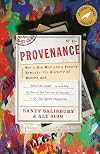
Provenance: how a con man and a forger rewrote the history of modern art
by Laney Salisbury, Aly Sujo
On This Page
Description
Recounts the activities of John Drewe, who manipulated struggling artist John Myatt and other unwitting accomplices to become prolific art forgers whose works Drewe successfully passed off as legitimate pieces.Tags
Recommendations








Member Reviews
Although I know next to nothing about the art world, I found this book pretty interesting. Sometimes I think the magnitude of what John Drewe did escapes me, but the overall impression of a manipulative scumbag was pretty clear. It isn’t the actual forged painting that did the most damage, but the provenance and thus the title of the book. I don’t know if he and the painter really did rewrite the history of art, but they certainly did bilk people out of a lot of money and ruin reputations.
In some ways, I’m sympathetic to Drewe. These people were asking for it. Valuing art for its circumstances and pedigree rather than its merits makes it really easy to be taken. Greed blinds us all and Drewe knew it. Pretty much everyone who was show more taken was a willing victim, ignored contradictory evidence and just wanted to be the next star in their particular firmament. It makes it hard to have sympathy for them; too much ego and too much money. Myatt’s musing about how that money could have been better spent is spot on. The grandiose waste is appalling and it’s delicious irony to know that many of his forgeries are still on display, cherished for their provenance rather than their aesthetic. It’s easy to believe these people got what they deserved.
My sympathy is directed at the archivists and the artists who were lied to, betrayed and taken advantage of. At the beginning of the book the author states that archivists are the lowest rung on the art world ladder; the least appreciated, but the most important in terms of preserving provenance and thus proving a work’s credibility. That credibility is what drives up the perceived value of a work and thus the price at which it can be sold. Drewe knew this, too and found a way infiltrate and corrupt a totally legitimate archive.
Even though he’s a lying asshole, Drewe is a talented lying asshole. A plot this intricate and far-reaching is impressive no matter how damaging. His ability to set up events far, far in advance is mind-boggling. Attention to detail, imagination, foresight and a deep understanding of human nature are only part of it. The kind of confidence Drewe displays is his biggest key to success. People want to believe him. They’re dying to be led, shepherded and mentored by such a luminous figure. His looks, accent, clothes, supposed contacts, job and bits of spouted science are enough to convince people he is what he says he is. Daring. I’d never even dream of pulling off that kind of farce. In some ways I have to admire the bravado, but that kind of soulless existence also gives me pause. Crossing with art at its most essential, as human expression, is the most extreme contradiction I can think of. A soulless human cannot create art, but it can exploit it and even art at its most corrupt is susceptible to its charms. You’d think an already morally bankrupt system would recognize one of its own. As I said, greed blinds people and that’s what this is ultimately a story of. The power of greed. show less
In some ways, I’m sympathetic to Drewe. These people were asking for it. Valuing art for its circumstances and pedigree rather than its merits makes it really easy to be taken. Greed blinds us all and Drewe knew it. Pretty much everyone who was show more taken was a willing victim, ignored contradictory evidence and just wanted to be the next star in their particular firmament. It makes it hard to have sympathy for them; too much ego and too much money. Myatt’s musing about how that money could have been better spent is spot on. The grandiose waste is appalling and it’s delicious irony to know that many of his forgeries are still on display, cherished for their provenance rather than their aesthetic. It’s easy to believe these people got what they deserved.
My sympathy is directed at the archivists and the artists who were lied to, betrayed and taken advantage of. At the beginning of the book the author states that archivists are the lowest rung on the art world ladder; the least appreciated, but the most important in terms of preserving provenance and thus proving a work’s credibility. That credibility is what drives up the perceived value of a work and thus the price at which it can be sold. Drewe knew this, too and found a way infiltrate and corrupt a totally legitimate archive.
Even though he’s a lying asshole, Drewe is a talented lying asshole. A plot this intricate and far-reaching is impressive no matter how damaging. His ability to set up events far, far in advance is mind-boggling. Attention to detail, imagination, foresight and a deep understanding of human nature are only part of it. The kind of confidence Drewe displays is his biggest key to success. People want to believe him. They’re dying to be led, shepherded and mentored by such a luminous figure. His looks, accent, clothes, supposed contacts, job and bits of spouted science are enough to convince people he is what he says he is. Daring. I’d never even dream of pulling off that kind of farce. In some ways I have to admire the bravado, but that kind of soulless existence also gives me pause. Crossing with art at its most essential, as human expression, is the most extreme contradiction I can think of. A soulless human cannot create art, but it can exploit it and even art at its most corrupt is susceptible to its charms. You’d think an already morally bankrupt system would recognize one of its own. As I said, greed blinds people and that’s what this is ultimately a story of. The power of greed. show less
What an appalling story. It was shocking to read how poorly access to archives was managed, not to mention the absolute amoral, soulless individual that was John Cockett (aka 'John Drewe', amongst many other aliases). The biography was so swamped in detail that the thrust of the story was lost. Skimming was the only way to discover the developments that eventually brought this criminal to justice, such as it was.
a very well done book that takes you into the world of art. Now, don't get me wrong ~ I know nothing about art (and I mean nothing) nor am I really all that interested in it. BUT, this book has a way of really taking you in and revealing people and personalities ~ and a huge con ~ and that carries you through the story.
It was a quick read but also had a very fast pace. Before you know it, you are learning about the con and the art world and already 1/2 way through the book!!
A huge eye opener for just how much fraud there is in paintings (and how scary an investment in them just might be!!!) It was hard to believe just how long they managed to pull the con off!!
It was a quick read but also had a very fast pace. Before you know it, you are learning about the con and the art world and already 1/2 way through the book!!
A huge eye opener for just how much fraud there is in paintings (and how scary an investment in them just might be!!!) It was hard to believe just how long they managed to pull the con off!!
From the book cover: “Filled with extraordinary characters and told at breakneck speed, Provenance reads like a well-plotted thriller. But this is most certainly not fiction. It is the astonishing narrative of one of the most far-reaching and elaborate cons in the history of art forgery. Stretching from London to Paris to New York, investigative reporters Laney Salisbury and Aly Sujo recount the tale of infamous con man and unforgettable villain John Drewe and his accomplice, the affable artist John Myatt.”
One always expects the cover description to be complimentary to the book. All too often, however, it is similar to a movie trailer that highlights the only the very best part of the whole story. Not the case with Provenance. This show more book truly does read like a thriller. It is indeed fast paced. The authors certainly did their research and managed to wrangle the very, very convoluted escapades of John Drewe into a readable (and quite exciting) look into the world of art and art forgery. I have been reading a fair bit of non-fiction lately and Provenance is the most “current” of the books I have read. It certainly makes for interesting reading when the authors were able to interview the people involved (because they were still alive) and know that the information was reasonably fresh in their recollections.
“Frequently there is a tender complicity between faker and victim: I want you to believe that such and such is the case, says the faker; if you want to believe it, too, and in order to cement that belief, you, for your part, will give me a great deal of money, and I, for my part, will laugh behind your back. The deal is done.” – from a letter by Julian Barnes, June 11, 1990.
The above quote pretty much sums up how cons like the one perpetuated by John Drewe can go on as long as it did. Yes, the talent of the “con man” makes it happen but the complicity of the those wanting to believe in his story allow it to go on for such a very long time. While reading this book the “what if” question was constantly in the back of my mind …
What if …. John Drewe had turned his considerable talents to a legitimate enterprise? What if … John Myatt used his considerable talents not for forgery but for original art? What if … John Drewe’s marriage had not hit the rocks and his wife not become angry enough to go to the police with her suspicions?
Definitely the art world would have been turned inside out even more, but we also would have been left without a wonderful telling of the caper. I enjoyed this book a great deal. show less
One always expects the cover description to be complimentary to the book. All too often, however, it is similar to a movie trailer that highlights the only the very best part of the whole story. Not the case with Provenance. This show more book truly does read like a thriller. It is indeed fast paced. The authors certainly did their research and managed to wrangle the very, very convoluted escapades of John Drewe into a readable (and quite exciting) look into the world of art and art forgery. I have been reading a fair bit of non-fiction lately and Provenance is the most “current” of the books I have read. It certainly makes for interesting reading when the authors were able to interview the people involved (because they were still alive) and know that the information was reasonably fresh in their recollections.
“Frequently there is a tender complicity between faker and victim: I want you to believe that such and such is the case, says the faker; if you want to believe it, too, and in order to cement that belief, you, for your part, will give me a great deal of money, and I, for my part, will laugh behind your back. The deal is done.” – from a letter by Julian Barnes, June 11, 1990.
The above quote pretty much sums up how cons like the one perpetuated by John Drewe can go on as long as it did. Yes, the talent of the “con man” makes it happen but the complicity of the those wanting to believe in his story allow it to go on for such a very long time. While reading this book the “what if” question was constantly in the back of my mind …
What if …. John Drewe had turned his considerable talents to a legitimate enterprise? What if … John Myatt used his considerable talents not for forgery but for original art? What if … John Drewe’s marriage had not hit the rocks and his wife not become angry enough to go to the police with her suspicions?
Definitely the art world would have been turned inside out even more, but we also would have been left without a wonderful telling of the caper. I enjoyed this book a great deal. show less
Why is a Leonardo a Leonardo? Because the provenance - the history of ownership of a work of art and the records authenticating that ownership - say that it is. A great forger can create a work of art, but without provenance for that work, passing it off is still a problem. But what happens when a master art forger and a master documents forger team up? The art world is thrown into chaos.
Salisbury and Sujo's riveting book documents that chaos as it follows John Drewe, a chameleon of a man who remains as mysterious to the reader at the end of the book as he does at the beginning. Drewe finds John Myatt, an artist with a remarkable talent for mimicry, and convinces him to create new works "in the style" of modern masters. Drewe then show more forges provenance and passes the art off as newly discovered work. Watching the scheme develop and ultimately unravel - thanks to some good police work, a woman scorned, and some knowledgeable archivists - is what the book is all about.
Although nonfiction, the book reads like a good novel. It's well-paced and exciting and provides fascinating insight into the world of art and archives. Highly recommended. show less
Salisbury and Sujo's riveting book documents that chaos as it follows John Drewe, a chameleon of a man who remains as mysterious to the reader at the end of the book as he does at the beginning. Drewe finds John Myatt, an artist with a remarkable talent for mimicry, and convinces him to create new works "in the style" of modern masters. Drewe then show more forges provenance and passes the art off as newly discovered work. Watching the scheme develop and ultimately unravel - thanks to some good police work, a woman scorned, and some knowledgeable archivists - is what the book is all about.
Although nonfiction, the book reads like a good novel. It's well-paced and exciting and provides fascinating insight into the world of art and archives. Highly recommended. show less
An art dealer acquaintance of mine likes to say (in all seriousness) that the most successful members of his profession are basically international Machiavellian criminals. The hero of this book (or villain, or whatever you want to call him) fits perfectly well into this world; in fact he has a distinct advantage over real art dealers who presumably have some sense of conscience or morality, or at least fear of getting caught. Not so with John Drewe, the brilliant sociopath who, circumventing the security designed to prevent people from stealing items from the hallowed Tate art library, smuggled in forged catalogs and records, then used these to document forged paintings. I'm an art dealer myself and can testify that in our world, where show more brand names trump connoisseurship, too many people look only at the name of the artist, not the painting. What makes a Picasso these days is not the brush strokes, or the concept, or its beauty (or lack of it) -- it is the paperwork.
This story reads like a novel and, even if you're not interested in art, is a very good read. If you like it, then you will probably also like THE BILLIONAIRE'S VINEGAR by Benjamin Wallace, which is another well-written and very similar true story, that one set in the world of rare wine. show less
This story reads like a novel and, even if you're not interested in art, is a very good read. If you like it, then you will probably also like THE BILLIONAIRE'S VINEGAR by Benjamin Wallace, which is another well-written and very similar true story, that one set in the world of rare wine. show less
Filled with extraordinary characters and told at breakneck speed, Provenance reads like a well-plotted thriller. But this is most certainly not fiction. It is the astonishing narrative of one of the most far-reaching and elaborate cons in the history of art forgery. Stretching from London to Paris to New York, investigative reporters Laney Salisbury and Aly Sujo recount the tale of infamous con man and unforgettable villain John Drewe and his accomplice, the affable artist John Myatt. Together they exploited the archives of British art institutions to irrevocably legitimize the hundreds of pieces they forged, many of which are still considered genuine and hang in prominent museums and private collections today.
Members
- Recently Added By
Published Reviews
ThingScore 75
If you've ever been had by a con man, as I once was at a cash machine in Salem, Mass., you know the odd aftermath of emotion. First, you're befuddled, then enraged and finally consumed by visions of revenge. But there's another sentiment that can sneak up on you. I was reminded of it while reading Laney Salisbury and Aly Sujo's well-crafted tale of British con artist John Drewe. I'd expected show more to despise the psychopath at the center of what Scotland Yard called the biggest art fraud of the 20th century. But somehow, from the first page, he got me to drop my guard. Drewe, for all his odious ambitions, is ingenious, persuasive, even brilliant. As I was pulled deeper into his deceptions, I couldn't help admiring this creep. Likewise, I understood how I came away from that cash machine years ago envious of a guy who could put together a wildly complicated fiction that was credible enough to squeeze $20 out of me.
In "Provenance," Salisbury and Sujo untangle Drewe's elaborate scheme that put more than 200 counterfeit works on the market between 1986 and 1995. What's fascinating about his story is his inventiveness in faking the paintings' provenances. Drewe ginned up receipts for prior purchases; he created catalogs for exhibitions that never took place; he even fabricated records for restoration work that the supposedly decades-old paintings had required over the years. In a master stroke, he smooth-talked his way into the archives of the Tate Gallery, where he inserted some of his phony documents into the files. Experts rummaging about in the archives to certify a work's authenticity would find much to lead them astray. . . . show less
In "Provenance," Salisbury and Sujo untangle Drewe's elaborate scheme that put more than 200 counterfeit works on the market between 1986 and 1995. What's fascinating about his story is his inventiveness in faking the paintings' provenances. Drewe ginned up receipts for prior purchases; he created catalogs for exhibitions that never took place; he even fabricated records for restoration work that the supposedly decades-old paintings had required over the years. In a master stroke, he smooth-talked his way into the archives of the Tate Gallery, where he inserted some of his phony documents into the files. Experts rummaging about in the archives to certify a work's authenticity would find much to lead them astray. . . . show less
added by PLReader
Lists

Wishlist
2 works; 1 member

True Crime
216 works; 16 members

2008-2012 Notable Books for Adults
127 works; 10 members

el
1,139 works; 1 member
Author Information
4+ Works 1,220 Members
1 Work 663 Members
Awards and Honors
Awards
Distinctions
Common Knowledge
- Canonical title
- Provenance: how a con man and a forger rewrote the history of modern art
- Original publication date
- 2009
- People/Characters
- Le Corbusier; Alberto Giacombetti; Ben Nicholson; John Myatt; John Drewe
- Important places
- Tate Gallery, London, England, UK; Sotheby's, London, England, UK; Christie's Auction House, London, England, UK; London, England, UK
- Epigraph
- It's called a confidence games. Why? Because you give me your confidence? No. Because I give you mine. David Mamet House of Games
- Dedication
- For Aly Sujo, with love. Aug. 26-1949-Oct. 4, 2008
- First words
- One sunny April afternoon in 1990 two Englishmen strode up the steps of London's Tate Gallery, passed beneath the imposing statues atop the pedimenta - Brittania, the lion, and the unicorn - and made their way through the gra... (show all)nd portico into one of the world's greatest museums.
- Last words
- (Click to show. Warning: May contain spoilers.)Myatt swore that the next time he found a hair stuck to his canvas, he'd leave well enough alone.
- Blurbers
- Mason, Christopher; Lawson, Guy; Tully, Judd; Livio, Mario; Horn, Stacy; Hughes, Robert J.
Classifications
Statistics
- Members
- 663
- Popularity
- 43,412
- Reviews
- 27
- Rating
- (4.03)
- Languages
- Dutch, English
- Media
- Paper, Audiobook, Ebook
- ISBNs
- 10
- ASINs
- 6