
Jason Felch
Author of Chasing Aphrodite: The Hunt for Looted Antiquities at the World's Richest Museum
Works by Jason Felch
Chasing Aphrodite: The Hunt for Looted Antiquities at the World's Richest Museum (2011) 284 copies, 9 reviews
Tagged
Common Knowledge
- Gender
- male
Members
Reviews
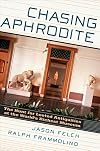
It seems as if everyone with even the slightest interest in the art market has hopped on the looted antiquities bandwagon and produced a book on some aspect of the most recent controversies to rock major collecting institutions like the Met in New York and the Getty in Malibu. Too often these have been dry or tedious (with the notable exception of Sharon Waxman's "Loot", which is excellent) so the arrival of a comprehensive, lively, thoroughly-researched and thoughtfully structured new book show more on the topic is more welcome than one might otherwise have thought.
Jason Felch and Ralph Frammolino look at the kerfuffle surrounding the black market in looted antiquities through the prism of the Getty Museum and its sudden rise to become the richest collecting institution in the world. They do an excellent job keeping the myriad strands of their narrative straight (museum politics, the history of the Getty, the looting investigation in Italy, the personalities of some of the major players) while simultaneously bringing them together to weave a compelling story. They are alert to the nuances and ironies of their tale, such as the fact that while Marion True was publicly urging her fellow curators to take a new approach and only acquire objects whose provenance was certain and legal, she was unable to resist the temptation to acquire extraordinary and rare items for her own museum, any more than she could resist becoming too cozy with donors and dealers.
What emerges is a portrayal of an artistic world that is nastier, more back-biting and vicious than most of the general world might imagine (museum politics makes Washington look warm and fuzzy) and a fascinating saga of how some masterpieces from the Hellenic and Roman eras made it into our museums. It's another tribute to this book that I ended it resolved to head off to the Met soon and amble through the classical galleries, in case more of the objects vanish back to the places where they were unearthed by "tombaroli", aka tomb robbers. This and Waxman's "Loot" are the two books to read on this subject (they compliment each other nicely) IMO; few of the others are as accessible to the general reader or as well-written. So in this case at least, one of the last entrants in a crowded field proves to be one of the best.
Full disclosure: I obtained an electronic advance copy of this book from NetGalley; I expect I'll end up buying a copy for myself so that I'll have it to hand. show less
Jason Felch and Ralph Frammolino look at the kerfuffle surrounding the black market in looted antiquities through the prism of the Getty Museum and its sudden rise to become the richest collecting institution in the world. They do an excellent job keeping the myriad strands of their narrative straight (museum politics, the history of the Getty, the looting investigation in Italy, the personalities of some of the major players) while simultaneously bringing them together to weave a compelling story. They are alert to the nuances and ironies of their tale, such as the fact that while Marion True was publicly urging her fellow curators to take a new approach and only acquire objects whose provenance was certain and legal, she was unable to resist the temptation to acquire extraordinary and rare items for her own museum, any more than she could resist becoming too cozy with donors and dealers.
What emerges is a portrayal of an artistic world that is nastier, more back-biting and vicious than most of the general world might imagine (museum politics makes Washington look warm and fuzzy) and a fascinating saga of how some masterpieces from the Hellenic and Roman eras made it into our museums. It's another tribute to this book that I ended it resolved to head off to the Met soon and amble through the classical galleries, in case more of the objects vanish back to the places where they were unearthed by "tombaroli", aka tomb robbers. This and Waxman's "Loot" are the two books to read on this subject (they compliment each other nicely) IMO; few of the others are as accessible to the general reader or as well-written. So in this case at least, one of the last entrants in a crowded field proves to be one of the best.
Full disclosure: I obtained an electronic advance copy of this book from NetGalley; I expect I'll end up buying a copy for myself so that I'll have it to hand. show less
This book read like a thriller. It provides many insights into the workings of major museums and the conflict between the desire of those museums to acquire the best antiquities and that of the countries those antiquities come from to preserve their cultural patrimony. While this story focused on the Getty Museum and Italian and Greek antiquities, the problem continues today with looted objects from the Middle East and other countries. There are two sides to this arguments, but there is show more indeed a "bright line" between wanting to protect an object and engaging in criminal activity. show less
The surprisingly hard-to-put-down Chasing Aphrodite traces how the J. Paul Getty Museum in Los Angeles built its impressive collection of classic artifacts along with its impressive reputation, only to see it crack in the wake of accusations of participating in an antiquities black market.
Jason Felch and Ralph Frammolino build the book from their initial articles in the Los Angeles Times. The reports were finalists for the Pulitzer Prize in Investigative Journalism after the articles exposed show more the Getty and other museums for their roles in questionable collecting.
From the beginning of the book, Felch and Frammolino make it clear this is not a dry look at museums. “The museum world’s dirty little secret came to light amid revelations about pedophile priests in the Catholic Church and widespread steroid use in Major League Baseball,” they write. Two scandals most of their readers would have been hard pressed not to notice in the news. News about the Getty and other museums may have not garnered attention among people outside the art world at first, but placed into context with two other scandals, the Getty scandal acquires a new relevancy for most people.
As Chasing Aphrodite follows various pieces of art from discovery and looting through to public unveilings at museum galas, the authors introduce a plethora of characters. Equal attention is given to ordinary fisherman who pull a bronze figure from the ocean to billionaire J. Paul Getty himself and on to the museum personnel and Italian police investigators. The characters are real people, and readers walk away with a sense of the conflicting ambitions of each.
Even passages about the United Nations Educational, Scientific and Cultural Organization and changing international law about importing and acquisitioning antiquities that could, in other works, be skipped over to get back to the “good parts,” keep the reader’s interest.
The Aphrodite statue serves as the touchstone throughout the book. The statue is believed to have been looted from Sicily, and experts now question whether it depicts the goddess of love or, through the convoluted family ties of Greek and Roman mythology, her cousin Persephone. Spoiler alert for those who didn’t follow the original articles or ensuing publicity: the statue is now at the Aidone Archaeological Museum in Sicily.
Time and again, Felch and Frammolino return to the Aphrodite statue, using her journey to follow the trail of black and grey market dealers and the surprisingly high propensity for some museum officials to forge documents of origin and even personally smuggle artifacts into the United States.
The Italian investigation into the key players undoubtedly took a long time (the book covers years) and was likely repetitive and involved more paper shuffling than action. It’s to Chasing Aphrodite’s credit that the investigation seems lively. Scenes where the key investigators discover photographs and artifacts in a warehouse seem lifted from a movie. A brief mention that two investigators develop a personal relationship heightens the life imitating art atmosphere that permeates the book.
For someone not working in a museum, the descriptions of internal politics and power don’t seem real. Flaws that stand out in fiction as clichés – hubris, narcissism, greed – are real human traits. The jockeying for power at the Getty and need to improve the collection seem to bring out the best and worst of the people involved. Arguments for acquiring questionable artifacts may start off well-intentioned but are overwhelmed by the mounting arguments against. Even then, some museum officials persist in clinging to their old ways more fiercely than before while presenting a public front of protecting the countries of origin. Unlike fiction, villains of the piece aren’t as black and white. The authors make it easy to understand how the collecting process began and why it continued for so long.
Inevitably though, the Getty and other museums had to change their policies. As an Italian archaeological director writes to True, “Do you have any idea how many archaeological sites have been plundered so that a single object can reach the market? How much scientific evidence we have lost? How many other objects have been destroyed? Acquiring from the market is a crime against science and against the cultural and historic patrimony of another country.” show less
Jason Felch and Ralph Frammolino build the book from their initial articles in the Los Angeles Times. The reports were finalists for the Pulitzer Prize in Investigative Journalism after the articles exposed show more the Getty and other museums for their roles in questionable collecting.
From the beginning of the book, Felch and Frammolino make it clear this is not a dry look at museums. “The museum world’s dirty little secret came to light amid revelations about pedophile priests in the Catholic Church and widespread steroid use in Major League Baseball,” they write. Two scandals most of their readers would have been hard pressed not to notice in the news. News about the Getty and other museums may have not garnered attention among people outside the art world at first, but placed into context with two other scandals, the Getty scandal acquires a new relevancy for most people.
As Chasing Aphrodite follows various pieces of art from discovery and looting through to public unveilings at museum galas, the authors introduce a plethora of characters. Equal attention is given to ordinary fisherman who pull a bronze figure from the ocean to billionaire J. Paul Getty himself and on to the museum personnel and Italian police investigators. The characters are real people, and readers walk away with a sense of the conflicting ambitions of each.
Even passages about the United Nations Educational, Scientific and Cultural Organization and changing international law about importing and acquisitioning antiquities that could, in other works, be skipped over to get back to the “good parts,” keep the reader’s interest.
The Aphrodite statue serves as the touchstone throughout the book. The statue is believed to have been looted from Sicily, and experts now question whether it depicts the goddess of love or, through the convoluted family ties of Greek and Roman mythology, her cousin Persephone. Spoiler alert for those who didn’t follow the original articles or ensuing publicity: the statue is now at the Aidone Archaeological Museum in Sicily.
Time and again, Felch and Frammolino return to the Aphrodite statue, using her journey to follow the trail of black and grey market dealers and the surprisingly high propensity for some museum officials to forge documents of origin and even personally smuggle artifacts into the United States.
The Italian investigation into the key players undoubtedly took a long time (the book covers years) and was likely repetitive and involved more paper shuffling than action. It’s to Chasing Aphrodite’s credit that the investigation seems lively. Scenes where the key investigators discover photographs and artifacts in a warehouse seem lifted from a movie. A brief mention that two investigators develop a personal relationship heightens the life imitating art atmosphere that permeates the book.
For someone not working in a museum, the descriptions of internal politics and power don’t seem real. Flaws that stand out in fiction as clichés – hubris, narcissism, greed – are real human traits. The jockeying for power at the Getty and need to improve the collection seem to bring out the best and worst of the people involved. Arguments for acquiring questionable artifacts may start off well-intentioned but are overwhelmed by the mounting arguments against. Even then, some museum officials persist in clinging to their old ways more fiercely than before while presenting a public front of protecting the countries of origin. Unlike fiction, villains of the piece aren’t as black and white. The authors make it easy to understand how the collecting process began and why it continued for so long.
Inevitably though, the Getty and other museums had to change their policies. As an Italian archaeological director writes to True, “Do you have any idea how many archaeological sites have been plundered so that a single object can reach the market? How much scientific evidence we have lost? How many other objects have been destroyed? Acquiring from the market is a crime against science and against the cultural and historic patrimony of another country.” show less
Fascinating and appalling account of how the Getty museum (along with most other major US museums) contributed to the looting of European antiquities through an elaborate system of corruption among the wealthy elites.
Lists
Awards

You May Also Like


Associated Authors
Statistics
- Works
- 1
- Members
- 284
- Popularity
- #82,066
- Rating
- 4.0
- Reviews
- 9
- ISBNs
- 2