
Player Piano
by Kurt Vonnegut
On This Page
Description
Vonnegut's first novel spins the chilling tale of engineer Paul Proteus, who must find a way to live in a world dominated by a super computer and run completely by machines. His rebellion is a wildly funny, darkly satirical look at modern society.Tags
Recommendations

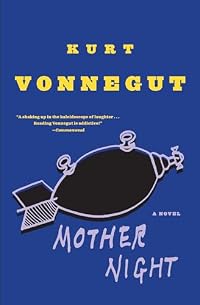

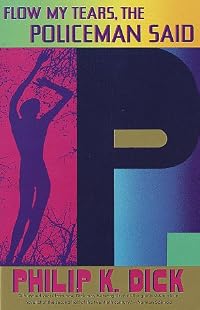












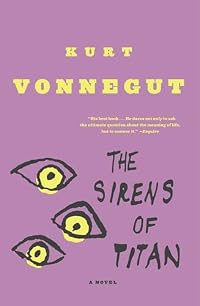



















Member Recommendations

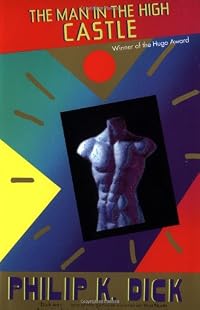
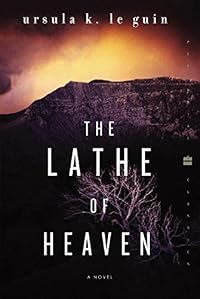
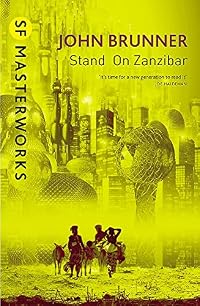
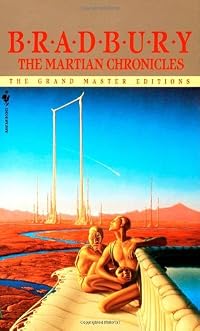
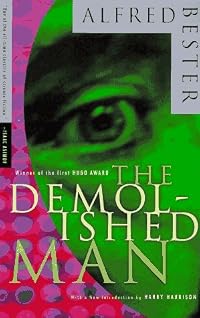
CGlanovsky Exploring societal implications of replacing humans with artificial labor.
Member Reviews
Apparently this is Vonnegut's first novel, and of those of his I've read so far it's by a long margin his best. It's the only one with characterisation deep enough to get invested in anyone's storyline. It has some really funny satire of corporate culture.
It includes a pertinent and important critique of capitalism, in the sense that increasing levels of mechanisation should liberate humanity from increasing amounts of unpleasant work (which is what the ruling class here claims has happened), but under capitalism this is impossible, because you need money to pay for life's necessities and the only way to get it is by working – pretty hard, when almost all the jobs are being done by machines! While under socialism you would have the show more ever-decreasing amount of work being shared between everyone capable, under capitalism you get a steadily-growing group of unemployed workers, who are therefore destitute. Vonnegut's protagonist, Paul Proteus, gets a little misdirected and blames the machines themselves instead of the economic system, but you can easily identify the real problem ;)
The novel is really weak on the inclusion of females; it seems that almost every woman is a housewife (presumably because there are not enough jobs for even just a fraction of the male population…) but not actually everyone because Paul's secretary is a woman. At any rate, it seemed bizarre that a novel so concerned with how men should spend their lives would just ignore women completely.
While that was unsatisfying, I really enjoyed this overall. As you can see, four stars. show less
It includes a pertinent and important critique of capitalism, in the sense that increasing levels of mechanisation should liberate humanity from increasing amounts of unpleasant work (which is what the ruling class here claims has happened), but under capitalism this is impossible, because you need money to pay for life's necessities and the only way to get it is by working – pretty hard, when almost all the jobs are being done by machines! While under socialism you would have the show more ever-decreasing amount of work being shared between everyone capable, under capitalism you get a steadily-growing group of unemployed workers, who are therefore destitute. Vonnegut's protagonist, Paul Proteus, gets a little misdirected and blames the machines themselves instead of the economic system, but you can easily identify the real problem ;)
The novel is really weak on the inclusion of females; it seems that almost every woman is a housewife (presumably because there are not enough jobs for even just a fraction of the male population…) but not actually everyone because Paul's secretary is a woman. At any rate, it seemed bizarre that a novel so concerned with how men should spend their lives would just ignore women completely.
While that was unsatisfying, I really enjoyed this overall. As you can see, four stars. show less
This is Vonnegut's first novel. Hard for me to believe that - it has so much happening here and so much to say about how people derive meaning and sense of identity. In some ways, the science fiction elements haven't aged well (he couldn't predict self-driving cars despite all the other tasks automated?), and there are some troubling gender politics. But I recommend it for both dystopia fans and Vonnegut fans. As always, there are some turns of phrase that capture an entire philosophy in 9 words.
Dr. Paul Proteus is an esteemed position in an alternate reality 1950s America and on the line for a potential promotion when he starts to question whether the society he and his father helped to form - one increasingly reliant on machines for all labor - is not detrimental to humanity.
Player Piano is Kurt Vonnegut's first novel and a great first one at that. While his writing isn't quite as sharp and succinct as it is Cat's Cradle (the only other Vonnegut I've read), he still shines with a great deal of wit and wisdom. In particular, I found the scenes between the American ambassador and his guests to be cruelly funny as he attempts to explain American grandeur and innovation to foreigners who "mistake" many of these triumphs. show more Vonnegut's characters are incredibly vivid - I found myself becoming deeply invested even minor characters who only appear for one scene. While some of these characterizations were perhaps a little bit of caricatures, the overall effect was of compelling, well-rounded people who I was interested in reading more about.
Vonnegut is particularly visionary in this novel - while the actual mechanics may be somewhat different, his prediction of a world run by machines with displaced people trying to find their place in society is eerily on the nose. Of course, in his world, the government provides for those people whose labor is replaced by machinery by finding them albeit incredibly menial jobs, whereas in our world we end up with places like Detroit. This is definitely a novel, that while incredibly readable and fast paced enough, gives the reader plenty to chew over in their thoughts during and after reading it. I highly recommend it. show less
Player Piano is Kurt Vonnegut's first novel and a great first one at that. While his writing isn't quite as sharp and succinct as it is Cat's Cradle (the only other Vonnegut I've read), he still shines with a great deal of wit and wisdom. In particular, I found the scenes between the American ambassador and his guests to be cruelly funny as he attempts to explain American grandeur and innovation to foreigners who "mistake" many of these triumphs. show more Vonnegut's characters are incredibly vivid - I found myself becoming deeply invested even minor characters who only appear for one scene. While some of these characterizations were perhaps a little bit of caricatures, the overall effect was of compelling, well-rounded people who I was interested in reading more about.
Vonnegut is particularly visionary in this novel - while the actual mechanics may be somewhat different, his prediction of a world run by machines with displaced people trying to find their place in society is eerily on the nose. Of course, in his world, the government provides for those people whose labor is replaced by machinery by finding them albeit incredibly menial jobs, whereas in our world we end up with places like Detroit. This is definitely a novel, that while incredibly readable and fast paced enough, gives the reader plenty to chew over in their thoughts during and after reading it. I highly recommend it. show less
Easily one of the best books I've ever read. I believe great art makes you think, rather than telling you what to think. Player Piano is a brilliant example of great art, showing you what it means when your autonomy, your freedoms are taken away, replaced with pre-programmed choices that have the best intentions behind them. It shows you what it means to be a man in a world where men are no longer needed. It shows you what might happen... or has already happened.
It makes you think. And, ultimately, that's what matters.
It makes you think. And, ultimately, that's what matters.
1951. Has the third industrial revolution been a slow burner all this time, or is AI a 4th? Here we are in any case with these new tools replacing more facets of human thinking and this book is as relevant as ever 70 years on.
Pay heed to the barber in the story, who keeps himself up at night worrying about the machines coming for his job, only to design one that can do it and put himself into comfortable retirement but every one of his contemporaries out of work.
An interesting premise here is the idea, in contrast to the beliefs of political conservatives, that people want to work, and they want meaningful work. That isn't new and it wasn't new then, or perhaps it was, but in any case it's a truism that the right doesn't buy into. It's show more something we're going to struggle with as a society in the coming years, as we are going to need state backed job guarantees along the lines of that proposed by modern monetary theory if things go the way they're going. Which sounds suspiciously like the Reeks and Wrecks. So where do we go and what we do? show less
Pay heed to the barber in the story, who keeps himself up at night worrying about the machines coming for his job, only to design one that can do it and put himself into comfortable retirement but every one of his contemporaries out of work.
An interesting premise here is the idea, in contrast to the beliefs of political conservatives, that people want to work, and they want meaningful work. That isn't new and it wasn't new then, or perhaps it was, but in any case it's a truism that the right doesn't buy into. It's show more something we're going to struggle with as a society in the coming years, as we are going to need state backed job guarantees along the lines of that proposed by modern monetary theory if things go the way they're going. Which sounds suspiciously like the Reeks and Wrecks. So where do we go and what we do? show less
The race to produce weaponry during WWIII pushed humans out of the manufacturing field - they're too inefficient and unreliable. Machines left engineers the elite of society relegating/separating the rest of the population to mere existence in little boxes, all the same with IQ absolutely determining one's fate.
"What have you got against machines?"
"They're slaves."
"Well, what the heck - I mean, they aren't people. They don't suffer. They don't mind working."
"No. But they compete with people."
"That's a pretty good thing, isn't it - considering what a sloppy job most people do of anything?"
"Anybody that competes with slaves becomes a slave."
A promising engineer begins to question the morality of life subservient to the efficiency of show more programmed machines (the segregation of society into useful and dependents) and ponders pursuing an alternate life trajectory.
"It was an appalling thought, to be so well-integrated into the machinery of society and history as to be able to move in only one plane, and along one line."
Written in 1952, it seems Vonnegut will always be relevant:
"He stared at the President and imagined with horror what the country must have been like when, as today, any damn fool little American boy might grow up to be President, but when the President had had to actually run the country!"
Plus, igniting or enhancing daily questioning of the absurdity of society. show less
"What have you got against machines?"
"They're slaves."
"Well, what the heck - I mean, they aren't people. They don't suffer. They don't mind working."
"No. But they compete with people."
"That's a pretty good thing, isn't it - considering what a sloppy job most people do of anything?"
"Anybody that competes with slaves becomes a slave."
A promising engineer begins to question the morality of life subservient to the efficiency of show more programmed machines (the segregation of society into useful and dependents) and ponders pursuing an alternate life trajectory.
"It was an appalling thought, to be so well-integrated into the machinery of society and history as to be able to move in only one plane, and along one line."
Written in 1952, it seems Vonnegut will always be relevant:
"He stared at the President and imagined with horror what the country must have been like when, as today, any damn fool little American boy might grow up to be President, but when the President had had to actually run the country!"
Plus, igniting or enhancing daily questioning of the absurdity of society. show less
In this, Vonnegut's first novel, Dr. Paul Proteus lives in a futuristic dystopia in which everything is automated so that humans no longer have to work or even think except for the engineers and managers who have become the second highest class of society second only to the machines themselves. Meanwhile, a group of revolutionaries are trying to bring down this system in order to bring back pride and human dignity to those who have been replaced by machines. Despite having been written sixty years ago, I found this book to be very timely in an era in which many Americans have lost jobs to either machines or foreign workers. In many ways, Vonnegut's book is a very prescient look at our world today.
This prescience extends beyond the loss show more of meaningful work for many Americans. Vonnegut also foresees many of the advancements that have been made in the tools we use in our everyday lives. For example, the non-engineering/managing class has been made content in the novel through having 40 inch TVs in every room, and their lives have been made easier through having "radar ranges," which are basically microwave ovens. In the novel, these things are provided for the populace in order to keep them content in the new role that machines play in society. It brings to mind how many Americans today are more interested in American Idol than in current events.
Despite being his first novel, this book also does not lack any of Vonnegut's trademark wit and satire. There are parts that are laugh out loud funny, and Vonnegut is such a good story teller that I found that I could not put the book down for want of finding out what would happen next. This is typical of a Vonnegut novel for me, and it seems that he possessed this trait way back in 1952. While this novel may not be as famous as later novels such as "Slaughterhouse Five" or "Cat's Cradle," I found this novel to be every bit as engaging as those two. show less
This prescience extends beyond the loss show more of meaningful work for many Americans. Vonnegut also foresees many of the advancements that have been made in the tools we use in our everyday lives. For example, the non-engineering/managing class has been made content in the novel through having 40 inch TVs in every room, and their lives have been made easier through having "radar ranges," which are basically microwave ovens. In the novel, these things are provided for the populace in order to keep them content in the new role that machines play in society. It brings to mind how many Americans today are more interested in American Idol than in current events.
Despite being his first novel, this book also does not lack any of Vonnegut's trademark wit and satire. There are parts that are laugh out loud funny, and Vonnegut is such a good story teller that I found that I could not put the book down for want of finding out what would happen next. This is typical of a Vonnegut novel for me, and it seems that he possessed this trait way back in 1952. While this novel may not be as famous as later novels such as "Slaughterhouse Five" or "Cat's Cradle," I found this novel to be every bit as engaging as those two. show less
Members
- Recently Added By
Lists

Best Dystopias
280 works; 271 members

1950s
340 works; 22 members
Dystopian and Apocalyptic Literature
350 works; 74 members

Books Read in 2016
4,666 works; 197 members

Nifty Fifties
129 works; 14 members

Read
293 works; 4 members

Blue Pyramid 1,276 Best Books of All Time
1,248 works; 32 members

Books Read in 2002
195 works; 8 members

My Favourite Books
86 works; 5 members

scav
54 works; 2 members

el
1,139 works; 1 member

Unread books
1,063 works; 82 members
Author Information

285+ Works 200,648 Members
The appeal of Kurt Vonnegut, especially to bright younger readers of the past few decades, may be attributed partly to the fact that he is one of the few writers who have successfully straddled the imaginary line between science-fiction/fantasy and "real literature." He was born in Indianapolis and attended Cornell University, but his college show more education was interrupted by World War II. Captured during the Battle of the Bulge and imprisoned in Dresden, he received a Purple Heart for what he calls a "ludicrously negligible wound." After the war he returned to Cornell and then earned his M.A. at the University of Chicago.He worked as a police reporter and in public relations before placing several short stories in the popular magazines and beginning his career as a novelist. His first novel, Player Piano (1952), is a highly credible account of a future mechanistic society in which people count for little and machines for much. The Sirens of Titan (1959), is the story of a playboy whisked off to Mars and outer space in order to learn some humbling lessons about Earth's modest function in the total scheme of things. Mother Night (1962) satirizes the Nazi mentality in its narrative about an American writer who broadcasts propaganda in Germany during the war as an Allied agent. Cat's Cradle (1963) makes use of some of Vonnegut's experiences in General Electric laboratories in its story about the discovery of a special kind of ice that destroys the world. God Bless You, Mr. Rosewater (1965) satirizes a benevolent foundation set up to foster the salvation of the world through love, an endeavor with, of course, disastrous results. Slaughterhouse-Five; or The Children's Crusade (1969) is the book that marked a turning point in Vonnegut's career. Based on his experiences in Dresden, it is the story of another Vonnegut surrogate named Billy Pilgrim who travels back and forth in time and becomes a kind of modern-day Everyman. The novel was something of a cult book during the Vietnam era for its antiwar sentiments. Breakfast of Champions (1973), the story of a Pontiac dealer who goes crazy after reading a science fiction novel by "Kilgore Trout," received generally unfavorable reviews but was a commercial success. Slapstick (1976), dedicated to the memory of Laurel and Hardy, is the somewhat wacky memoir of a 100-year-old ex-president who thinks he can solve society's problems by giving everyone a new middle name. In addition to his fiction, Vonnegut has published nonfiction on social problems and other topics, some of which is collected in Wampeters, Foma and Granfalloons (1974). He died from head injuries sustained in a fall on April 11, 2007. (Bowker Author Biography) show less
Some Editions
Awards and Honors
Awards
Notable Lists
Series
Belongs to Publisher Series
Work Relationships
Is contained in
Slaughterhouse-Five • The Sirens of Titan • Player Piano • Cat's Cradle • Breakfast of Champions • Mother Night by Kurt Vonnegut
Lot 3 books by Kurt Vonnegut,Jr., Galapagos a novel, Slaughter-House Five, Player Piano, by Jr. Kurt Vonnegut
Novels & Stories 1950-1962: Player Piano / The Sirens of Titan / Mother Night / Stories by Kurt Vonnegut
Has as a student's study guide
Common Knowledge
- Canonical title*
- Le pianiste déchaîné
- Original title
- Player Piano
- Alternate titles
- Utopia 14
- Original publication date
- 1952
- People/Characters
- Paul Proteus; Anita Proteus; Kroner; Ed Finnerty; Dr. Shepherd; Reverend James J. Lasher (show all 13); Shah of Bratpuhr; Katharine Finch; Rudy Hertz; Khashdrahr Miasma; Doctor Ewing J. Halyard; Bud Calhoun; Professor Ludwig von Neumann
- Important places
- Ilium, New York, USA; Ilium Works; Philadelphia, Pennsylvania, USA; New York, USA; Pennsylvania, USA; The Meadows
- Epigraph
- Consider the lilies of the field, how they grow:
They toil not, neither do they spin;
And yet I say unto you,
That even Solomon in all his glory
Was not arrayed like one of these. . . .
Matthew 6:28 - Dedication
- FOR JANE - GOD BLESS HER
- First words
- ILIUM, New York, is divided into three parts.
- Quotations
- This silly playlet seemed to satisfy them completely as a picture of what they were doing, why they were doing it, and who was against them, and why some people were against them. It was a beautifully simple picture these pro... (show all)cession leaders had. It was a though a navigator, in order to free his mind of worries, had erased all the reefs from the maps.
- Last words
- (Click to show. Warning: May contain spoilers.)"Hands up," said Lasher almost gaily. "Forward march."
- Original language
- English
*Some information comes from Common Knowledge in other languages. Click "Edit" for more information.
Classifications
Statistics
- Members
- 7,559
- Popularity
- 1,510
- Reviews
- 87
- Rating
- (3.75)
- Languages
- 18 — Czech, Dutch, English, Estonian, Finnish, French, German, Hungarian, Italian, Lithuanian, Norwegian (Bokmål), Polish, Romanian, Russian, Spanish, Swedish, Turkish, Portuguese (Portugal)
- Media
- Paper, Audiobook, Ebook
- ISBNs
- 55
- UPCs
- 1
- ASINs
- 72