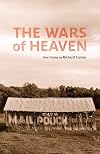
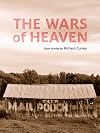
The Wars of Heaven
by Richard Currey
On This Page
Description
In The Wars of Heaven, Richard Currey focuses his poetic imagination on the lives of the working class in West Virginia-a train engineer, an epileptic, coal miners and outlaws, the fragile and dispossessed-depicting an isolated world of hardship, human endurance, and hard-won dignity. Like Sherwood Anderson's "Winesburg, Ohio," Currey speaks of a rural life with power and tenderness, giving us a lyric rendering of times and places now largely gone. The stirring clarity of people and show more landscape persists in the reader's imagination. show lessTags
Recommendations




















Member Reviews
In "The Love of a Good Woman," the centerpiece novella of Richard Currey's story collection, THE WARS OF HEAVEN, protagonist Delbert Keene is riding in a truck that is part of a traveling circus convoy and he watches with interest as the driver downshifts to negotiate steep downgrades and hairpin turns in the mountains of West Virginia.
I felt like I too was downshifting and negotiating uneven terrain as I moved through the stories of this slim volume (less than 150 pages), especially after only recently reading Currey's masterful novel of the Vietnam war, FATAL LIGHT. Because the seven stories between the glossy covers of the book take you up and down and around unexpected bends in their West Virginia settings, from a stunned and bereft show more widowed train engineer ("Tyler's Ballad") to a coal miner remembering his childhood and an older brother lost in a mine explosion ("Old Fires"). The title piece is a stream of consciousness testament to a mother from a young man who went bad and is on the run from a posse, a story reminiscent of the old folk song, "Tom Dooley." An especially affecting and effective story is "Jackson Stillwell," about a stunted epileptic child-man, smitten with a beautiful neighbor girl, once his playmate, who leaves him behind simply by growing up on schedule.
But it is without question the final novella, "The Love of a Good Woman," that is the star of this brief collection. Currey's portrayal of dreamer and thinker Delbert Keene, aka Keno the Clown, and his picaresque and fanciful journey from ex-husband and father to itinerant circus clown. Keene and his story brought to mind Flannery O'Connor's grotesque anti-heroes, but perhaps with more magical and fanciful overtones.
Before Richard Currey, my knowledge of West Virginia writers was pretty limited. Twenty-some years ago I was caught up in the bleakly beautiful THE STORIES OF BREECE D'J PANCAKE, an author who, I learned, tragically took his own life at the age of twenty-six. Later I read two books by Pinckney Benedict - THE DOGS OF GOD and THE WRECKING YARD - and enjoyed both tremendously. But Currey will occupy his own unique place in the writing pantheon of West Virginia. He is an American writer whose work I will continue to follow with great interest. This book? Highly recommended. (Four and a half stars) show less
I felt like I too was downshifting and negotiating uneven terrain as I moved through the stories of this slim volume (less than 150 pages), especially after only recently reading Currey's masterful novel of the Vietnam war, FATAL LIGHT. Because the seven stories between the glossy covers of the book take you up and down and around unexpected bends in their West Virginia settings, from a stunned and bereft show more widowed train engineer ("Tyler's Ballad") to a coal miner remembering his childhood and an older brother lost in a mine explosion ("Old Fires"). The title piece is a stream of consciousness testament to a mother from a young man who went bad and is on the run from a posse, a story reminiscent of the old folk song, "Tom Dooley." An especially affecting and effective story is "Jackson Stillwell," about a stunted epileptic child-man, smitten with a beautiful neighbor girl, once his playmate, who leaves him behind simply by growing up on schedule.
But it is without question the final novella, "The Love of a Good Woman," that is the star of this brief collection. Currey's portrayal of dreamer and thinker Delbert Keene, aka Keno the Clown, and his picaresque and fanciful journey from ex-husband and father to itinerant circus clown. Keene and his story brought to mind Flannery O'Connor's grotesque anti-heroes, but perhaps with more magical and fanciful overtones.
Before Richard Currey, my knowledge of West Virginia writers was pretty limited. Twenty-some years ago I was caught up in the bleakly beautiful THE STORIES OF BREECE D'J PANCAKE, an author who, I learned, tragically took his own life at the age of twenty-six. Later I read two books by Pinckney Benedict - THE DOGS OF GOD and THE WRECKING YARD - and enjoyed both tremendously. But Currey will occupy his own unique place in the writing pantheon of West Virginia. He is an American writer whose work I will continue to follow with great interest. This book? Highly recommended. (Four and a half stars) show less
Rating: 4* of five
The Publisher Says: The lives of the working class in West Virginia—a train engineer, an epileptic, coal miners and outlaws, the fragile and dispossessed—are explored in this powerful yet tender collection of six short stories and a novella. They depict an isolated world of hardship, human endurance, and hard-won dignity and are a lyrical rendering of times and places now largely gone—but the stirring clarity of people and landscape can persist in the reader's imagination.
I RECEIVED AN ARC FROM THE PUBLISHER VIA LIBRARYTHING EARLY REVIEWERS. THANK YOU.
My Review: The novella "The Love of a Good Woman" reminds me of Flannery O'Connor's Southern Gothics. All of the stories are set in West Virginia, so should we call show more it "Appalachian Gothic" just to be clear? You're missing a trick if you don't procure one for yourself because it's rich, involving prose that tells really honest stories about people's real lives...love, family, the curdled joy of intimacy all get their inversions here. There's something very Lewis Nordan, in his Wolf Whistle mode, about the whole collection. Recommended. show less
The Publisher Says: The lives of the working class in West Virginia—a train engineer, an epileptic, coal miners and outlaws, the fragile and dispossessed—are explored in this powerful yet tender collection of six short stories and a novella. They depict an isolated world of hardship, human endurance, and hard-won dignity and are a lyrical rendering of times and places now largely gone—but the stirring clarity of people and landscape can persist in the reader's imagination.
I RECEIVED AN ARC FROM THE PUBLISHER VIA LIBRARYTHING EARLY REVIEWERS. THANK YOU.
My Review: The novella "The Love of a Good Woman" reminds me of Flannery O'Connor's Southern Gothics. All of the stories are set in West Virginia, so should we call show more it "Appalachian Gothic" just to be clear? You're missing a trick if you don't procure one for yourself because it's rich, involving prose that tells really honest stories about people's real lives...love, family, the curdled joy of intimacy all get their inversions here. There's something very Lewis Nordan, in his Wolf Whistle mode, about the whole collection. Recommended. show less
 This review was written for LibraryThing Early Reviewers.
So now I have to somehow find the grit to review this superb collection of short stories (and one novella) by an author of whom I had never heard prior to receiving this book. Not that that has much to do with anything.
Richard Currey is that lovely thing, a poet in prose. He is also a poet of the heart and head, as well as of the region where these stories are set -- rural Appalachia. Having spent some time in that region myself, I think Currey positively nails it, and more importantly, nails it so that you can appreciate and share in it.
The best artists, to my mind -- at least the ones who deal in recognizable and describable human emotions, e.g. not those inhabiting the utterly abstract -- are capable of making you feel for and care show more about characters who are quite unlike you, whether it be in terms of race, religion, socioeconomic status, or whatever. Currey does this, brilliantly. I may not be from Appalachia, I may work on the campus of Harvard University, but Currey's characters are as real to me as the cat scratches on my left hand.
His prose swoops and sparkles, often throwing off startling images that immediately impress the sensory and emotional nature of a scene into your perception. The stories made me ache (in a good way).
The ONLY reason I keep back a half star is that very occasionally I had a reaction along the lines of "okay, I get it that these are complex, painfully real human characters, but surely they aren't ALL poets under the skin." But this is art, after all. Artifice is necessary.
The Wars of Heaven is only 148 (precious) pages long, and contains some of the best English-language prose you are likely to find this year. What are you waiting for? Are you really THAT busy? show less
Richard Currey is that lovely thing, a poet in prose. He is also a poet of the heart and head, as well as of the region where these stories are set -- rural Appalachia. Having spent some time in that region myself, I think Currey positively nails it, and more importantly, nails it so that you can appreciate and share in it.
The best artists, to my mind -- at least the ones who deal in recognizable and describable human emotions, e.g. not those inhabiting the utterly abstract -- are capable of making you feel for and care show more about characters who are quite unlike you, whether it be in terms of race, religion, socioeconomic status, or whatever. Currey does this, brilliantly. I may not be from Appalachia, I may work on the campus of Harvard University, but Currey's characters are as real to me as the cat scratches on my left hand.
His prose swoops and sparkles, often throwing off startling images that immediately impress the sensory and emotional nature of a scene into your perception. The stories made me ache (in a good way).
The ONLY reason I keep back a half star is that very occasionally I had a reaction along the lines of "okay, I get it that these are complex, painfully real human characters, but surely they aren't ALL poets under the skin." But this is art, after all. Artifice is necessary.
The Wars of Heaven is only 148 (precious) pages long, and contains some of the best English-language prose you are likely to find this year. What are you waiting for? Are you really THAT busy? show less
This review was written for LibraryThing Early Reviewers.The Wars of Heaven is both the title of this book, written by Richard Currey, and of one of the six short stories collected. Besides them, there is a longer short story that the author chooses to call a novella.
Richard Currey is an artisan of the word and a master teller. His prose is poetic and uplifting. He deals with strong and sensitive characters, men and women of West Virginia, who suffer, love, know sacrifice and disaster, and face life with all the makings of real human beings. Currey deals with suicide, accidents and labour conditions in coal mines, an epileptic boy, fatal disabilities and a son turned criminal (to mention the subjects of the short stories) with a perceptive feeling for what goes on the mind of his characters. show more He is not sentimental; he calls a spade a spade, leaving the reader impressed by the accurate psicological description of motives and faithful situations.
The novella is quite different from the rest of the stories. Its tone and style are light, playful, humorous. The central character is a loveable oddball who can perhaps be best described as a modern reincarnation of Don Quixote. A true joy to read about his concept of what the world is all about, and just how misinformed everyone is. show less
Richard Currey is an artisan of the word and a master teller. His prose is poetic and uplifting. He deals with strong and sensitive characters, men and women of West Virginia, who suffer, love, know sacrifice and disaster, and face life with all the makings of real human beings. Currey deals with suicide, accidents and labour conditions in coal mines, an epileptic boy, fatal disabilities and a son turned criminal (to mention the subjects of the short stories) with a perceptive feeling for what goes on the mind of his characters. show more He is not sentimental; he calls a spade a spade, leaving the reader impressed by the accurate psicological description of motives and faithful situations.
The novella is quite different from the rest of the stories. Its tone and style are light, playful, humorous. The central character is a loveable oddball who can perhaps be best described as a modern reincarnation of Don Quixote. A true joy to read about his concept of what the world is all about, and just how misinformed everyone is. show less
This review was written for LibraryThing Early Reviewers.The Wars of Heaven: Short Stories
By Richard Currey
Santa Fe Writers Project
Reviewed by Karl Wolff
West Virginia during the Great Depression is the setting for The Wars of Heaven: Short Stories byRichard Currey. In six short stories and a novella, Currey paints a picture of life filled with unrelenting poverty and random violence. It is also a life filled with tragedy, comedy, and the challenges of faith, whether that faith is in unionizing the coal mines or the faith found in clapboard churches that dot the mountainous landscape.
In countless reviews, Currey's writing has been described as poetic. This comes from a writer who has won the O. Henry and Pushcart prizes. He has also received fellowships from the National Endowment for the show more Arts in both fiction and poetry. Although citing a litany of awards doesn't make a great writer. (This can also be said for writers who pen bestsellers.) What makes The Wars of Heaven a pleasure to read involved Currey's verbal concision. Not a word is wasted in any of his stories. But the writing is such that one doesn't immediately think "literary," at least when that word means an undue attention to the sentence at the expense of the narrative. Currey combines a highly precise prose style with stories filled with compelling characters and forward-moving narratives.
The opening story hovers between an elegant short story and a prose poem. "Tyler's Ballad" tells the story of Edward Tyler, an elderly train engineer who marries a much younger woman. He remains oblivious to her melancholy until his brother discovers she committed suicide with a shotgun. Currey creates a believable setting and a powerful story arc all within seven pages. For anyone learning the nuts and bolts of writing a short story, he or she should read "Tyler's Ballad." This is just one of many sad stories in The Wars of Heaven. But there are several shades of sadness, a subtle gradation ranging from the relentlessly bleak like "Tyler's Ballad" to the darkly comical, as in "Believer's Flood."
"Believer's Flood" involves the reminisces of an aged coal miner, wheezing with black lung. Like Job, he has endured a series of calamities. These hardships stem from Raymond Dance's attempts to unionize the Red Jacket Consolidated Coal and Coke Company in Red Jacket, West Virginia. The suffering and futility of the unionizing efforts, combined with Raymond's catastrophic domestic life, only sharpen the comedy. The comedy comes from the razor sharp irony of the entire situation. Raymond puts his life on the line and sacrifices his domestic happiness for a job he hates that will kill him with slow agonizing cruelty. (In yet another year of this interminable Great Recession, I'm sure a few readers will identify with Raymond's situation.)
The titular short story focuses on a botched robbery and gunfight. For this story, Currey creates a literary style similar to Molly Bloom's soliloquy at the end of Ulysses. The narrator, a not-too-bright wannabe outlaw, tells the tale in long winding sentences. This storytelling comes in sharp contrast to the terse and taciturn stories told by stoic workingmen.
The short story collection ends with the novella, "The Love of a Good Woman." Delbert Keene narrates the first part and the second two parts are told in third person. The novella traces the misadventures of Delbert as he gets divorced and committed to an insane asylum. After being discharged, he joins the circus and participates in what some see as a terribly planned bank robbery. He infuriates people around him because he is a dreamer and a kind of amateur public intellectual. He seems completely out of place wherever he goes, but remains gleeful and positively oblivious to the common practicalities of this flint-hard West Virginia existence. Whereas the short stories before this were a spectrum of tragedy, the novella is a lighthearted comedy. Beyond the well-polished sentence and verbal concision, Currey is a master arranger. The comic tale at the end of these sad stories harkens back to Greek theater with the satyr following the Sophoclean tragedy. "The Love of a Good Woman" offers necessary breathing space and a break from the sadness. He still fills the story with the requisite poverty and suffering, but this time the situations have a comic twist. It is with the slightest tonal shift that can turn a tale of unrelenting sadness into one of gut-busting hilarity. Currey, like Samuel Beckett, can ride the fine line between the two tones with a deft touch.
I'm giving this a perfect 10, not only because it is fine writing, but because these are stories that can be enjoyed because they entertain. For those interested in the Great Depression, this can be enjoyed in the same way as the HBO series Carnivale. This also makes a nice addition to the bookshelf for those who like to read Depression-era writers like John Steinbeck, Samuel Beckett, and William Faulkner.
Out of 10/10
http://www.cclapcenter.com/2014/06/book_review_the_wars_of_heaven.html show less
By Richard Currey
Santa Fe Writers Project
Reviewed by Karl Wolff
West Virginia during the Great Depression is the setting for The Wars of Heaven: Short Stories byRichard Currey. In six short stories and a novella, Currey paints a picture of life filled with unrelenting poverty and random violence. It is also a life filled with tragedy, comedy, and the challenges of faith, whether that faith is in unionizing the coal mines or the faith found in clapboard churches that dot the mountainous landscape.
In countless reviews, Currey's writing has been described as poetic. This comes from a writer who has won the O. Henry and Pushcart prizes. He has also received fellowships from the National Endowment for the show more Arts in both fiction and poetry. Although citing a litany of awards doesn't make a great writer. (This can also be said for writers who pen bestsellers.) What makes The Wars of Heaven a pleasure to read involved Currey's verbal concision. Not a word is wasted in any of his stories. But the writing is such that one doesn't immediately think "literary," at least when that word means an undue attention to the sentence at the expense of the narrative. Currey combines a highly precise prose style with stories filled with compelling characters and forward-moving narratives.
The opening story hovers between an elegant short story and a prose poem. "Tyler's Ballad" tells the story of Edward Tyler, an elderly train engineer who marries a much younger woman. He remains oblivious to her melancholy until his brother discovers she committed suicide with a shotgun. Currey creates a believable setting and a powerful story arc all within seven pages. For anyone learning the nuts and bolts of writing a short story, he or she should read "Tyler's Ballad." This is just one of many sad stories in The Wars of Heaven. But there are several shades of sadness, a subtle gradation ranging from the relentlessly bleak like "Tyler's Ballad" to the darkly comical, as in "Believer's Flood."
"Believer's Flood" involves the reminisces of an aged coal miner, wheezing with black lung. Like Job, he has endured a series of calamities. These hardships stem from Raymond Dance's attempts to unionize the Red Jacket Consolidated Coal and Coke Company in Red Jacket, West Virginia. The suffering and futility of the unionizing efforts, combined with Raymond's catastrophic domestic life, only sharpen the comedy. The comedy comes from the razor sharp irony of the entire situation. Raymond puts his life on the line and sacrifices his domestic happiness for a job he hates that will kill him with slow agonizing cruelty. (In yet another year of this interminable Great Recession, I'm sure a few readers will identify with Raymond's situation.)
The titular short story focuses on a botched robbery and gunfight. For this story, Currey creates a literary style similar to Molly Bloom's soliloquy at the end of Ulysses. The narrator, a not-too-bright wannabe outlaw, tells the tale in long winding sentences. This storytelling comes in sharp contrast to the terse and taciturn stories told by stoic workingmen.
The short story collection ends with the novella, "The Love of a Good Woman." Delbert Keene narrates the first part and the second two parts are told in third person. The novella traces the misadventures of Delbert as he gets divorced and committed to an insane asylum. After being discharged, he joins the circus and participates in what some see as a terribly planned bank robbery. He infuriates people around him because he is a dreamer and a kind of amateur public intellectual. He seems completely out of place wherever he goes, but remains gleeful and positively oblivious to the common practicalities of this flint-hard West Virginia existence. Whereas the short stories before this were a spectrum of tragedy, the novella is a lighthearted comedy. Beyond the well-polished sentence and verbal concision, Currey is a master arranger. The comic tale at the end of these sad stories harkens back to Greek theater with the satyr following the Sophoclean tragedy. "The Love of a Good Woman" offers necessary breathing space and a break from the sadness. He still fills the story with the requisite poverty and suffering, but this time the situations have a comic twist. It is with the slightest tonal shift that can turn a tale of unrelenting sadness into one of gut-busting hilarity. Currey, like Samuel Beckett, can ride the fine line between the two tones with a deft touch.
I'm giving this a perfect 10, not only because it is fine writing, but because these are stories that can be enjoyed because they entertain. For those interested in the Great Depression, this can be enjoyed in the same way as the HBO series Carnivale. This also makes a nice addition to the bookshelf for those who like to read Depression-era writers like John Steinbeck, Samuel Beckett, and William Faulkner.
Out of 10/10
http://www.cclapcenter.com/2014/06/book_review_the_wars_of_heaven.html show less
This review was written for LibraryThing Early Reviewers.How does one rate a book at variance with itself? This book is a mismatched combination of short stories. Most of the stories are prosaic and need work, yet the novella at the end of the book is a surprisingly good piece of literature. The shorts have phrases that feel contrived and unnatural, and seem to compete with one another for attention. In contrast, the novella flows easily and fluently, with rhythm. It is absent of ad-like statements and is much more developed and refined. The difference is unfortunate; the first half could easily persuade one to put the book down unfinished.
In the novella, The Love of a Good Woman, the author questions man's emotional states – what is normal, what is madness, and what are the criteria we show more use to assess others. It is here that he illustrates his unique understanding of human nature. He employs an ironic view point that adds both depth and complexity to this hypnotic tale. It is unfortunate the whole book did not display these talents.
Some of the author's stories are read on NPR. I do not know if any from this book have been included. Yet, I have to wonder if they translate better when read aloud by a good narrator. It is just a thought, but a necessary aspect to consider due to the inconsistencies in writing quality. Books are modified to fit the screen or theater. Can the same principle apply to shorts made for radio – like Story Corp on NPR? If so, the author needs to determine how he wants these read – what form - and publish them accordingly. show less
In the novella, The Love of a Good Woman, the author questions man's emotional states – what is normal, what is madness, and what are the criteria we show more use to assess others. It is here that he illustrates his unique understanding of human nature. He employs an ironic view point that adds both depth and complexity to this hypnotic tale. It is unfortunate the whole book did not display these talents.
Some of the author's stories are read on NPR. I do not know if any from this book have been included. Yet, I have to wonder if they translate better when read aloud by a good narrator. It is just a thought, but a necessary aspect to consider due to the inconsistencies in writing quality. Books are modified to fit the screen or theater. Can the same principle apply to shorts made for radio – like Story Corp on NPR? If so, the author needs to determine how he wants these read – what form - and publish them accordingly. show less
This review was written for LibraryThing Early Reviewers.Being a West Virginia native I was eagerly awaiting this collection of short stories. I was not disappointed.
The writing is so lyrical I kept re-reading certain sections just to enjoy them. Some brought me to tears.
I especially enjoyed the section at the beginning of the story Wars of Heaven where Rockwell is describing his mother’s coffee. It is magical. Luther’s plight in Rock of Ages also touched me deeply.
The collection is very bleak and atmospheric. It takes you there. Five Stars ++
The writing is so lyrical I kept re-reading certain sections just to enjoy them. Some brought me to tears.
I especially enjoyed the section at the beginning of the story Wars of Heaven where Rockwell is describing his mother’s coffee. It is magical. Luther’s plight in Rock of Ages also touched me deeply.
The collection is very bleak and atmospheric. It takes you there. Five Stars ++
This review was written for LibraryThing Early Reviewers.Members
- Recently Added By
Author Information
5+ Works 229 Members
Classifications
Statistics
- Members
- 46
- Popularity
- 649,394
- Reviews
- 14
- Rating
- (4.21)
- Languages
- Dutch, English
- Media
- Paper, Ebook
- ISBNs
- 13
- ASINs
- 2