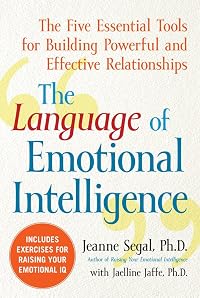
The Language of Emotional Intelligence: The Five Essential Tools for Building Powerful and Effective Relationships
by Jeanne Segal
On This Page
Description
Learn how to increase your emotional intelligence with five simple tools It's no secret that emotional intelligence plays a crucial role in your relationships. But how do you apply these specialized skills in everyday life? It's easy--with this practical, ready-to-use guide by a renowned expert in the field of emotional intelligence and communication. Using the latest research and true-to-life examples, Dr. Jeanne Segal's step-by-step program shows you how to incorporate the five basic tools show more of emotional intelligence to enhance your relationships in the workplace, at home, and in all areas of your life. You'll learn how to: "Read" other people Make powerful connections Defuse arguments and conflicts Repair wounded feelings Understand nonverbal cues Build stronger, more satisfying relationships Packed with simple exercises, revealing self-quizzes, and proven calming techniques, this user-friendly guide can help you reach into the hearts and minds of others--sometimes without saying a word! Once you master the language of emotional intelligence, you'll be able to form mutually rewarding bonds that last a lifetime. Dr. Segal's method is a complete, hands-on approach to one of the most important life skills you will ever learn. show lessTags
Recommendations







Member Reviews
I've read several books on Emotional Intelligence over the years. I purchased Emotional Intelligence 2.0 after reviewing this book. It is good. Still, I also quite like this one. It's not too long. It's easy to read. It's gives a clear hope that improvement is possible and a straightforward means of doing it. As always, change is not claimed to be easy.
This book is somewhere between a workbook and a book to read, but it is still an interesting read. After the introductory material, there are plenty of assignments. These are not quizzes that need to be answered before moving on. Rather, they are exhortations to be observant. For example: One exercise recommends keeping a notebook where observations are recorded for a week.
Chapter 7: show more Nonverbal communication
p. 121-123 contains an assignment to keep a notebook of observations for a week
- Eye contact
- Facial expressions
- Tone of voice
- Posture and gestures
- Touch
- Intensity
- Timing and pace
- Sounds that convey understanding
"- Eye contact: Is this source of connection missing, too intense, or just right in yourself or in the person you are looking at?
- Facial expressions: What is your face showing? Is it masklike and unexpressive, or emotionally present and filled with interest? What do you see as you look into the face of others?
- Tone of voice: does your voice project warmth, confidence, and delight, or is it strained and blocked/ What do you hear as you listen to other people?
- Posture and gestures: Does your body feel still and immobile, or relaxed? Sensing the degree of tension in your shoulders and jaw answers this question. What do you observe about the degree of tension or relaxation in the body of the person you are speaking to?
- Touch: Remember, what feels good is relative. How do you like to be touched? Who do you like to have touching you? Is the difference between what you like and what the other person likes obvious to you?
- Intensity: Do you or the person you are communicating with seem flat, cool, and disinterested, or over-the-top and melodramatic? Again, this has as much to do what feels good to the other person as it does with what you personally prefer.
- Timing and pace: What happens when you or someone you care about makes an important statement? Does a response - not necessarily verbal - come too quickly or too slowly? Is there an easy flow of information back and forth?
- Sounds that convey understanding: Do you use sounds to indicate that you are attending to the other person? Do you pick up on sounds from others that indicate their caring or concern for you?
Because the point of this exercise is simply to observe, there are no right or wring answers, only useful information that you will take to the next chapter." (p. 122-123)
"In some settings nonverbal communication is particularly effective and gives us an edge. ...
When people come to us with problems, often they are not asking us to solve them. Therefore, unless someone comes to us with a problem and specifically requests a solution, we are probably being asked to simply listen. Most people, young as well as old, want the satisfaction of solving their own problems. By listening, we contribute to this satisfaction and build trust in the relationship." (p. 138)
When it is Not Advisable to Attempt Conflict Resolution
"In deciding whether you are unsafe, emotionally or physically, consider the following in your relationship:
- Is your physical safety being threatened?
- Are you afraid?
- Are you being beaten down - intellectually or emotionally - or worn down physically?
- Has your sense of self diminished in the relationship?
- Are you ashamed of the way you are being treated?
- Is the person you have a relationship with unable to take responsibility for his or her own injurious behavior?
- Does the person you are in a relationship with have an alcohol or drug problem?"
"If you said yes to any of the preceding questions, you may need assistance before focusing on resolving differences." (p. 193-194)
"If you actually practiced the longer exercises in Chapter 4 and Chapter 6, give yourself a big hand of applause." (p. 213)
Somehow, this book did not achieve popularity, but I give it 5 stars. show less
This book is somewhere between a workbook and a book to read, but it is still an interesting read. After the introductory material, there are plenty of assignments. These are not quizzes that need to be answered before moving on. Rather, they are exhortations to be observant. For example: One exercise recommends keeping a notebook where observations are recorded for a week.
Chapter 7: show more Nonverbal communication
p. 121-123 contains an assignment to keep a notebook of observations for a week
- Eye contact
- Facial expressions
- Tone of voice
- Posture and gestures
- Touch
- Intensity
- Timing and pace
- Sounds that convey understanding
"- Eye contact: Is this source of connection missing, too intense, or just right in yourself or in the person you are looking at?
- Facial expressions: What is your face showing? Is it masklike and unexpressive, or emotionally present and filled with interest? What do you see as you look into the face of others?
- Tone of voice: does your voice project warmth, confidence, and delight, or is it strained and blocked/ What do you hear as you listen to other people?
- Posture and gestures: Does your body feel still and immobile, or relaxed? Sensing the degree of tension in your shoulders and jaw answers this question. What do you observe about the degree of tension or relaxation in the body of the person you are speaking to?
- Touch: Remember, what feels good is relative. How do you like to be touched? Who do you like to have touching you? Is the difference between what you like and what the other person likes obvious to you?
- Intensity: Do you or the person you are communicating with seem flat, cool, and disinterested, or over-the-top and melodramatic? Again, this has as much to do what feels good to the other person as it does with what you personally prefer.
- Timing and pace: What happens when you or someone you care about makes an important statement? Does a response - not necessarily verbal - come too quickly or too slowly? Is there an easy flow of information back and forth?
- Sounds that convey understanding: Do you use sounds to indicate that you are attending to the other person? Do you pick up on sounds from others that indicate their caring or concern for you?
Because the point of this exercise is simply to observe, there are no right or wring answers, only useful information that you will take to the next chapter." (p. 122-123)
"In some settings nonverbal communication is particularly effective and gives us an edge. ...
When people come to us with problems, often they are not asking us to solve them. Therefore, unless someone comes to us with a problem and specifically requests a solution, we are probably being asked to simply listen. Most people, young as well as old, want the satisfaction of solving their own problems. By listening, we contribute to this satisfaction and build trust in the relationship." (p. 138)
When it is Not Advisable to Attempt Conflict Resolution
"In deciding whether you are unsafe, emotionally or physically, consider the following in your relationship:
- Is your physical safety being threatened?
- Are you afraid?
- Are you being beaten down - intellectually or emotionally - or worn down physically?
- Has your sense of self diminished in the relationship?
- Are you ashamed of the way you are being treated?
- Is the person you have a relationship with unable to take responsibility for his or her own injurious behavior?
- Does the person you are in a relationship with have an alcohol or drug problem?"
"If you said yes to any of the preceding questions, you may need assistance before focusing on resolving differences." (p. 193-194)
"If you actually practiced the longer exercises in Chapter 4 and Chapter 6, give yourself a big hand of applause." (p. 213)
Somehow, this book did not achieve popularity, but I give it 5 stars. show less
This book looks as factors in peoples personalities that get in the way of relationships with others. Things like insecurities, tics, and other things that can hamper emothional strength.
Ratings
Members
- Recently Added By
Author Information

10 Works 181 Members
Jeanne Segal, Ph.D., is a psychologist, sociologist, popular speaker, internationally recognized author, and managing editor of the premier health and relationship website Jaelline Jaffe, Ph.D., is a psychologist and trainer specializing in relationship issues
Common Knowledge
- Dedication
- To the writers, Web-designers, and Rotarians who make helpguide.org a fitting memorial to the life of our daughter Morgan Leslie Segal by helping millions enjoy healthier, happier lives.
- First words
- Most people put their best foot foward in a new work setting or when looking to attract a mate, but often stumbe while trying to keep their relationships rewarding.
- Last words
- (Click to show. Warning: May contain spoilers.)We all have what it takes if we are willing to apply ourselves.
Classifications
Statistics
- Members
- 43
- Popularity
- 685,699
- Reviews
- 2
- Rating
- (3.33)
- Languages
- English
- Media
- Paper, Ebook
- ISBNs
- 2
- ASINs
- 1