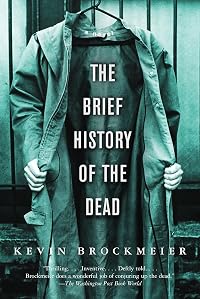
The Brief History of the Dead
by Kevin Brockmeier
On This Page
Description
From Kevin Brockmeier, one of this generation's most inventive young writers, comes a striking new novel about death, life, and the mysterious place in between. The City is inhabited by those who have departed Earth but are still remembered by the living. They will reside in this afterlife until they are completely forgotten. But the City is shrinking, and the residents clearing out. Some of the holdouts, like Luka Sims, who produces the City's only newspaper, are wondering what exactly is show more going on. Others, like Coleman Kinzler, believe it is the beginning of the end. Meanwhile, Laura Byrd is trapped in an Antarctic research station, her supplies are running low, her radio finds only static, and the power is failing. With little choice, Laura sets out across the ice to look for help, but time is running out. Kevin Brockmeier alternates these two storylines to create a lyrical and haunting story about love, loss and the power of memory.From the Trade Paperback edition.
. show less
Tags
Recommendations


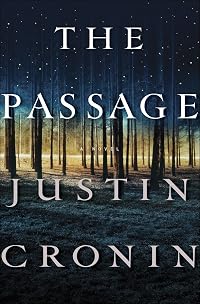
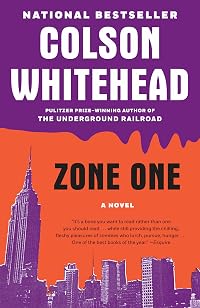
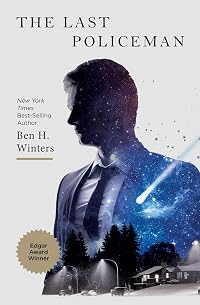
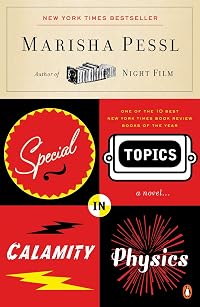



Member Recommendations
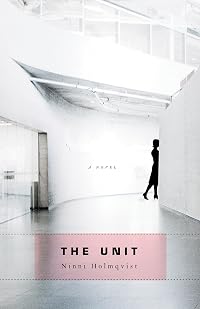
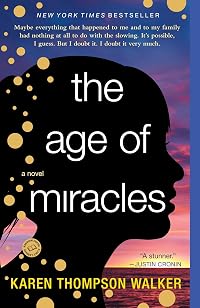
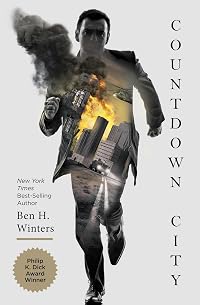
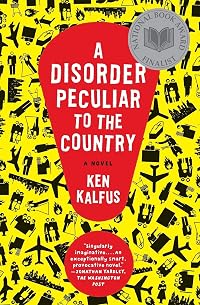
bluepiano A character in one and most characters in the other are in the same transitional state. Brpckmeier's cracker is imaginative though told in a conventional way; Mendelsohn's excellent novel leaves an impression that lingers long.
Member Reviews
Rating: 3.9* of five
The Publisher Says: From Kevin Brockmeier, one of this generation's most inventive young writers, comes a striking new novel about death, life, and the mysterious place in between. The City is inhabited by those who have departed Earth but are still remembered by the living. They will reside in this afterlife until they are completely forgotten.
But the City is shrinking, and the residents clearing out. Some of the holdouts, like Luka Sims, who produces the City’s only newspaper, are wondering what exactly is going on. Others, like Coleman Kinzler, believe it is the beginning of the end. Meanwhile, Laura Byrd is trapped in an Antarctic research station, her supplies are running low, her radio finds only static, and show more the power is failing. With little choice, Laura sets out across the ice to look for help, but time is running out.
Kevin Brockmeier alternates these two storylines to create a lyrical and haunting story about love, loss and the power of memory.
My Review: I am simply appalled that my cynical shell has been breached by a man who has an MFA from the Iowa Writer's Workshop, and who has been published in McSweeney's, Crazyhorse, and suchlike Writerly Venues.
Appalled.
But then there's this:
That, laddies and gentlewomen, needed saying and needed Brockmeier to say it. It's just that true, and just that beautifully crafted.
I hate that.
I make merciless fun of, and throw lots of rotten eggs at, the Writerly Writers like Eggers and Franzen and Foster Wallace for their pretty sentences going nowhere new or even all that interesting. Their self-congratulatory cadres, nay myrmidons, attack anyone who dares say, "yeah, so?" of the myrmidons' ikons. Why can't Brockmeier have inspired such a slavish, culty following, so that I may point and say, "but him! He's a good one! He's a Writerly Writer with something *interesting* to say!"
Life is unfair.
But anyway. The story is a good one, of dislocation in time and space with all that implies for identity...how do we survive as ourselves even knowing that we aren't in any space ever known to us?...so we're already of to a pleasing start. The Writerly Writing is an enhancement of the basic story, because the sentences being self-consciously pretty and profound make a point about the afterlife. It's a well-used technique in this instance, and doesn't feel show-offy as normally it could or even would.
The ending. Well, now, all things have flaws. The important question is, is it a raku pottery crazing-type flaw, or an inclusion-in-the-diamond-type flaw? This will greatly depend on one's point of view of the afterlife. I'm on the fence with this book's ending...and I come down on the raku-pottery side only because I like the rest of the book so much. A different mood, and this would be a three-star review with a sad, impatient growl about the sentimentality of the ending.
Lucky Brockmeier. I had Thin Mints before I wrote this review. show less
The Publisher Says: From Kevin Brockmeier, one of this generation's most inventive young writers, comes a striking new novel about death, life, and the mysterious place in between. The City is inhabited by those who have departed Earth but are still remembered by the living. They will reside in this afterlife until they are completely forgotten.
But the City is shrinking, and the residents clearing out. Some of the holdouts, like Luka Sims, who produces the City’s only newspaper, are wondering what exactly is going on. Others, like Coleman Kinzler, believe it is the beginning of the end. Meanwhile, Laura Byrd is trapped in an Antarctic research station, her supplies are running low, her radio finds only static, and show more the power is failing. With little choice, Laura sets out across the ice to look for help, but time is running out.
Kevin Brockmeier alternates these two storylines to create a lyrical and haunting story about love, loss and the power of memory.
My Review: I am simply appalled that my cynical shell has been breached by a man who has an MFA from the Iowa Writer's Workshop, and who has been published in McSweeney's, Crazyhorse, and suchlike Writerly Venues.
Appalled.
But then there's this:
Anyone who has ever experienced love knows that you can have too much or too little. You can have love that parches, love that defeats. You can have love measured out in the wrong proportions. It's like your sunlight and water - the wrong kind of love is just as likely to stifle hope as it is to nourish it.
That, laddies and gentlewomen, needed saying and needed Brockmeier to say it. It's just that true, and just that beautifully crafted.
I hate that.
I make merciless fun of, and throw lots of rotten eggs at, the Writerly Writers like Eggers and Franzen and Foster Wallace for their pretty sentences going nowhere new or even all that interesting. Their self-congratulatory cadres, nay myrmidons, attack anyone who dares say, "yeah, so?" of the myrmidons' ikons. Why can't Brockmeier have inspired such a slavish, culty following, so that I may point and say, "but him! He's a good one! He's a Writerly Writer with something *interesting* to say!"
Life is unfair.
But anyway. The story is a good one, of dislocation in time and space with all that implies for identity...how do we survive as ourselves even knowing that we aren't in any space ever known to us?...so we're already of to a pleasing start. The Writerly Writing is an enhancement of the basic story, because the sentences being self-consciously pretty and profound make a point about the afterlife. It's a well-used technique in this instance, and doesn't feel show-offy as normally it could or even would.
The ending. Well, now, all things have flaws. The important question is, is it a raku pottery crazing-type flaw, or an inclusion-in-the-diamond-type flaw? This will greatly depend on one's point of view of the afterlife. I'm on the fence with this book's ending...and I come down on the raku-pottery side only because I like the rest of the book so much. A different mood, and this would be a three-star review with a sad, impatient growl about the sentimentality of the ending.
Lucky Brockmeier. I had Thin Mints before I wrote this review. show less
Fascinating tale interwoven between people living in a city of the afterlife and what increasingly becomes clear is the last living human, struggling to survive in the Antarctic.
Really skillfully woven together. Suspenseful. And even though you can sort of guess what happens next in one story, there's no answer to the other.
What happens to the dead in the afterlife?
Also a delightful skewer of marketing and big corporations. Laura knows nothing about the Antarctic, had no desire to go, but Coca Cola wants to explore it as a new source of water for their products.
Really skillfully woven together. Suspenseful. And even though you can sort of guess what happens next in one story, there's no answer to the other.
What happens to the dead in the afterlife?
Also a delightful skewer of marketing and big corporations. Laura knows nothing about the Antarctic, had no desire to go, but Coca Cola wants to explore it as a new source of water for their products.
A beautifully written, beautifully conceived little fairy tale. I almost wish it could have gone on forever, especially as I feel that the ending is the weakest part of the book.[return][return]Half of the novel is based on a gorgeous, appealing little wheeze. The afterlife (at least, the immediate afterlife) is neither Heaven nor Hell, but an ordinary City of day jobs and coffeeshops, minor inconveniences and random encounters, in which the Dead live as comfortably as they choose, as long as someone in the living world remembers them. Once the last living person who remembers them dies (and makes the transition to the City), they vanish, "softly and suddenly away" as Lewis Carroll would have said (and, indeed, "never be met with show more again.") No one knows where they go. [return][return]So, the City is a waiting room. It's a Purgatory, of sorts, but a very gentle and self-directed one. It's a place of choices, and --perhaps -- second chances: you can choose to be exactly the same obnoxious, work- and status-driven jerk you were in life. Or, you can choose to live the life you wished you'd been able to live when you were alive -- say, open up an greasy spoon diner, where you greet all of your customers by name, and serve up wonderful all-day breakfasts. If you enjoyed your life, you can carry on doing exactly what you used to do -- perhaps with the benefit of new friends, new lovers, or a new, revitalized relationship with someone you'd become stale with. All up to you. [return][return]As you have probably guessed, I unreservedly loved the half of the book set in the City. I loved the (seemingly) random focus on a different residents of the City in each chapter, stories that hinted at their connections to the world of the Living, hinted at the familiar yet slightly dystopian future of its backstory, and made some nicely timed revelations about the drama unfolding for the Living and the Dead. I loved the fact that Brockmeier kept the mechanics vague, and even a little illogical: there is money (there are a couple of beggars, and a crazy street preacher has some coins thrown at him by a woman who just wants him to leave her alone), but no sense that it's needed to get food at the diner, or paper for Luca Sims' homemade news sheet. And where does the food that's cooked and eaten, and the coffee that drunk in great quantities, and the paper come from? Dunno, don't really care. The City, for me, is a metaphor, in the very best sense, about love and the persistence of memory. Things that, you could argue, are pretty illogical themselves ... [return][return]My recollection, from my first reading of the novel about 10 years ago, was that I wasn't as blown away by the other half of the book -- the steadily unfolding drama of Laura Byrd, who is struggling to survive in Antarctica just as a particularly virulent virus is ripping across the globe. As I recalled, I understood Laura's story was necessary -- trying for no spoilers here (although I think you can guess what's what), but the deaths of so many people in the wider world, and Laura's dogged survival, has a great impact on the City -- provides what is, otherwise, just a nice wheeze with drama, mystery, something at stake.[return][return]So here's what's really interesting for me, on this rereading: reading it NOW (November 2020 -- hello from the Apocalypse, and Lockdown Hell, everyone ... :-), the chapters with Laura were, for the most part, brilliant. I don't know where Mr. Brockmeier got his crystal ball, but can I order one, please? Some of the offhand remarks about "the Blinks" (the terrible, highly contagious and almost instantly fatal disease) are painfully, well, funny, in a dark, black, bleak sort of way. From a diary entry, by one of Laura's companions ...[return][return]There's every single indication that the virus has taken a global toll. What's the word I'm looking for? Not an epidemic, but a --? Can't remember ...[return][return]Hmm, I think I can help you there (Later, down the page, he remembers. Pandemic. Yeah, I don't think we're going to forget that one for a while ...) And another one, from a teenager's blog the survivors discover, on an internet that it quietly folding in on itself, and vanishing (kind of like the City ...)[return][return]A few of us are still asymptomatic. We're holed up in the high school gym, away from everybody else. If it wasn't for the stupid quarantine, we'd be long gone by now ...[return][return]What breaks my heart -- and is SO DARN TRUE -- about that is how the high school jock throws around words like "asymptomatic" and "quarantine" as if they're the most natural things in the world. Brockmeier, in one line, captures how the virus even changes our vocabulary ... [return][return]Sadly, I am still not blown away by the final couple of chapter which IMHO, become too poetical, too airy-fairy. The real strengths of this fairy tale is how grounded it is, both in the ordinary, everyday world of the City, and in the snow and terrible loneliness of the Antarctic. BUT .. this is still a keeper, and highly recommended ... show less
Read the brief history of the dead by Kevin Brockheimer today, and enjoyed it a lot (I read it while huddled up at the back of a freezing cold bus as a blizzard swooped around and about, and I think that helped too!)
Laura Byrd is a naturalist, who works for Coca-Cola. As part of their latest advertising gimmick idea, she has been sent as part of a three-person expedition to the Antarctic to look at the feasibility of using melting Antarctic glacial water to make Coke...'the freshest water on the planet'. Things go wrong, and Laura's companions set out for help. When they don't return, with herself completely cut off from the world, she has to decide whether to struggle across the glaciers to find help, or just give up.
At the same time, show more in an unnamed city, the dead arrive. This is where the dead come after they cross into death, an ordinary city, where they live (mainly) ordinary lives, until eventually they vanish once more, to go no-one knows where. The rumour is that as long as someone in the real world still remembers you, then you remain in the city; but as soon as the last person to remember you dies in turn, then you pass onwards. In the real world, a viral plague is raging across the planet, and the numbers of the dead are rising...and then suddenly falling.
Brockheimer's novel started off as a short story (the revised version of which is now the first chapter of the book) which described the process of crossing into the city of the dead. While the city itself is fairly mundane, the manner of each person's crossing is fantastic and unique, and Brockheimer quickly uses it to sketch his city and some of its inhabitants. Chapters then alternate between those set in the city, and those describing Laura's struggle across the Antarctic, as the two - inevitably - collide and feed into each other. Brockheimer's approach is almost one step removed, as he describes the lives, past and present, of the city's inhabitants, and how memories and identities play into each other, about the meanings of lives lived and how death changes that, and how more interconnected than we realise we often are; but at the same time, there are some beautiful small and personal moments (Laura's parents realising how they fell out of love and falling back in again is very well, and quite subtly, done for example). It's well-written, and reminded me a lot of Calvino - in a lot fo ways, it's a story about the nature of stories, bound in with identity and memory. Another good one for this year so far. show less
Laura Byrd is a naturalist, who works for Coca-Cola. As part of their latest advertising gimmick idea, she has been sent as part of a three-person expedition to the Antarctic to look at the feasibility of using melting Antarctic glacial water to make Coke...'the freshest water on the planet'. Things go wrong, and Laura's companions set out for help. When they don't return, with herself completely cut off from the world, she has to decide whether to struggle across the glaciers to find help, or just give up.
At the same time, show more in an unnamed city, the dead arrive. This is where the dead come after they cross into death, an ordinary city, where they live (mainly) ordinary lives, until eventually they vanish once more, to go no-one knows where. The rumour is that as long as someone in the real world still remembers you, then you remain in the city; but as soon as the last person to remember you dies in turn, then you pass onwards. In the real world, a viral plague is raging across the planet, and the numbers of the dead are rising...and then suddenly falling.
Brockheimer's novel started off as a short story (the revised version of which is now the first chapter of the book) which described the process of crossing into the city of the dead. While the city itself is fairly mundane, the manner of each person's crossing is fantastic and unique, and Brockheimer quickly uses it to sketch his city and some of its inhabitants. Chapters then alternate between those set in the city, and those describing Laura's struggle across the Antarctic, as the two - inevitably - collide and feed into each other. Brockheimer's approach is almost one step removed, as he describes the lives, past and present, of the city's inhabitants, and how memories and identities play into each other, about the meanings of lives lived and how death changes that, and how more interconnected than we realise we often are; but at the same time, there are some beautiful small and personal moments (Laura's parents realising how they fell out of love and falling back in again is very well, and quite subtly, done for example). It's well-written, and reminded me a lot of Calvino - in a lot fo ways, it's a story about the nature of stories, bound in with identity and memory. Another good one for this year so far. show less
I seem to be having an AMAZING reading month. I can't remember the last time I read so many 4 star stories in a short time frame (we'll give 'Consider Phlebas' a pass, and roll it into the Culture books overall). Partly this is, I think, because I've taken the pressure off myself to stick to "recent" releases and just concentrated on hunting down fiction that I think I'll love.
Anyways... this was phenomenal. The kind of book that sets my brain alight, that delights in and plays with language; that contains enormous scope and far-reaching themes, yet very personal stories; that examines the universe through tiny, refractive lenses. The imagery and skillful writing were a joy. I think this will stay with me for quite awhile.
Fans of show more weird fiction, new weird, surrealism, and/or litfic with a speculative edge, should pick up this novel if they haven't already.
TLDR: Look, it was just fucking great. Fin. show less
Anyways... this was phenomenal. The kind of book that sets my brain alight, that delights in and plays with language; that contains enormous scope and far-reaching themes, yet very personal stories; that examines the universe through tiny, refractive lenses. The imagery and skillful writing were a joy. I think this will stay with me for quite awhile.
Fans of show more weird fiction, new weird, surrealism, and/or litfic with a speculative edge, should pick up this novel if they haven't already.
TLDR: Look, it was just fucking great. Fin. show less
There's being dead and there's being alive and, in between, when you're dead, but still remembered by the living, there's a second life in the city of the dead, a sprawling metropolis where people arrive suddenly and leave just as abruptly. Luka's a journalist who writes a daily newsletter in the city and who reports as there's an influx of people and then as the city empties out until only a few thousand inhabitants remain.
Back in the world of the living, Laura works for Coca Cola and is on assignment in the Antarctic as a "wildlife specialist" as part of a publicity campaign. The world is a difficult place now, sometime in the future, with wars and terrorism and global warming no longer an abstract idea. She's there with two other show more co-workers when an antenna breaks off of their communications array and they are left unable to contact anyone.
The Brief History of the Dead is a dystopian tale set at the end of the world and it's a cleverly told story of the recently dead, living in the city for a long as they are remembered. Oh, and it's a story about survival in the Antarctic, all in a slim novel. There's not a word wasted, with each of the threads of Brockmeier's tale worth a book of its own. I couldn't put it down, and all too quickly it was over. show less
Back in the world of the living, Laura works for Coca Cola and is on assignment in the Antarctic as a "wildlife specialist" as part of a publicity campaign. The world is a difficult place now, sometime in the future, with wars and terrorism and global warming no longer an abstract idea. She's there with two other show more co-workers when an antenna breaks off of their communications array and they are left unable to contact anyone.
The Brief History of the Dead is a dystopian tale set at the end of the world and it's a cleverly told story of the recently dead, living in the city for a long as they are remembered. Oh, and it's a story about survival in the Antarctic, all in a slim novel. There's not a word wasted, with each of the threads of Brockmeier's tale worth a book of its own. I couldn't put it down, and all too quickly it was over. show less
A different, non-religious telling of purgatory. In Brockmeier's death sequence, when people died they went to a big city to live (in another dimension?). They lived until there was nobody else to remember them, then they passed into the next dimension, which was where Brockmeier's book ended. This was one of the oddest books I've read, neither odd good or odd bad! I had this both on Audible and Kindle. 272 pages
Members
- Recently Added By
Published Reviews
ThingScore 100
What if those enjoying the afterlife require for their continuing existence being remembered by Earthlings? ... Since the afterlife, as depicted here, is never believable (the denizens show little stress about their temporary status), the stakes of Laura’s sledding aren’t what Brockmeier hopes. ... In this speculative fiction, perhaps the most interesting element to wonder about is how show more Brockmeier will get away with blaming Coca-Cola for causing the pandemic. After a charming first chapter that imagines highly individual “crossings” to the other side, a novelistic virus called “The Flicks” debilitates the rest. show less
added by Lemeritus
Brockmeier's epigraph and the publisher's blurb spell out, pretty much, the connection between the doomed quest of Laura Byrd in the even-numbered chapters, and the denizens of the anomalous city in the odd-numbered ones. Such is his sensitivity and skill that Brockmeier contrives a mystery that is nonetheless subtle, absorbing, and ultimately satisfying. As befits a writer whose stated show more influences include Marilynne Robinson's Housekeeping alongside JG Ballard and Italo Calvino, The Brief History is both formal and heartfelt, an elegiac fabulation on the fragile, ignorant beauty of human life. show less
added by Lemeritus
Between earth and whatever lies beyond, the inhabitants of a benevolent purgatory known simply as The City have realised that death can be a wonderful restorative. ... Just as they had originally believed that The City owed its existence to the memories of the living, so now the citizens are increasingly convinced that Laura herself sustains it. ...The prose spreads a patina of whimsy over show more even the most urgent emotions: the characters are sometimes hearts that think rather than people who feel. But for all its foibles, The Brief History of the Dead must be accounted a prodigy of imagination, insight and overwhelming tenderness. show less
added by Lemeritus
Lists

Magic Realism
371 works; 52 members

Winter Books
127 works; 17 members

2000s (the decade, not the century)
184 works; 11 members

Top Five Books of 2014
1,064 works; 398 members

Blue Pyramid 1,276 Best Books of All Time
1,248 works; 32 members

LibraryThingers' 1001 Books You Must Read Before You Die
442 works; 30 members

Dystopian and Apocalyptic Literature
350 works; 74 members

An End of the World Reading List
63 works; 4 members

Favorite Books from the 2000s
35 works; 3 members

Books Read in 2007
326 works; 8 members

Speculative Fiction to Read
706 works; 32 members

Ghosts
278 works; 18 members

It's the end of the world as we know it!
90 works; 23 members

Best Survival Stories
97 works; 15 members

Ten+ Books About the Afterlife
13 works; 2 members

Post-Apocalyptic Fiction
57 works; 3 members

BingoDOG - Scientists in Fiction
111 works; 17 members

Stories set in the Polar Regions
33 works; 3 members
Talk Discussions
Past Discussions
The Brief History of the Dead (SPOILER ALERT) in Someone explain it to me... (January 2008)
Author Information

29+ Works 4,504 Members
Kevin Brockmeier won an O. Henry Award in 2001 for "These Hands". He has published stories in the Georgia Review. The Carolina Quarterly, The Chicago Tribune (as a Nelson Algren award recipient) & Writing on the Edge (as an Italo Calvino Short Fiction Award Winner). He is a 1999-2000 recipient of a James Michener-Paul Engle Fellowship. Kevin lives show more in Little Rock, Arkansas where he teaches Creative Writing. (Bowker Author Biography) show less
Awards and Honors
Awards
Common Knowledge
- Canonical title
- The Brief History of the Dead
- Original publication date
- 2006-02-14
- People/Characters
- Laura Byrd; Luka Sims
- Important places
- Antarctica; The City
- Epigraph
- Many African societies divide humans into three categories: those still alive on earth, the sasha, and the zamani. The recently departed whose time on earth overlapped with people still here are the sasha, the living-dead. ... (show all)They are not wholly dead for they still live in the memories of the living who can call them to mind, create their likeness in art, and bring them to life in anecdote. When the last person to know an ancestor dies, that ancestor leaves the sasha for the zamani, the dead. As generalized ancestors, the zamani are not forgotten but revered. Many ... can be recalled by name. But they are not the living dead. There is a difference.
-- James Loewen, Lies My Teacher Told Me - Dedication
- For My Dad
- First words
- When the blind man arrived in the city, he claimed that he had traveled across a desert of living sand.
- Quotations
- There was a flaw at the heart of their discussion, the blind man realized. They were mistaking the spirit for the soul. Many people tended to use the words casually, interchangeably, as though there was no difference at all... (show all) between them, but the spirit and the soul were not the same thing. The body was the material component of a person. The soul was the nonmaterial component. The spirit was simply the connecting line.
Not forever, but long enough.
. . . orchardlike rows of the box springs . . . - Last words
- (Click to show. Warning: May contain spoilers.)It would happen in a matter of days or weeks. They would gather together in the clearing around the monument [in a park], however many thousands of them there were, and they would stand, shoulder to shoulder. They would listen to each other’s voices, and they would breathe each other’s breath. And they would wait for that power that would pull them like a chain into whatever came next, into that distant world where broken souls are wrenched out of their histories.
- Blurbers
- Whitehead, Colson; Baker, Kevin
- Canonical DDC/MDS
- 813.6
- Canonical LCC
- PS3602.R63
Classifications
Statistics
- Members
- 2,723
- Popularity
- 6,783
- Reviews
- 181
- Rating
- (3.63)
- Languages
- 7 — Catalan, Dutch, English, Estonian, French, German, Spanish
- Media
- Paper, Audiobook, Ebook
- ISBNs
- 27
- ASINs
- 5