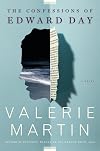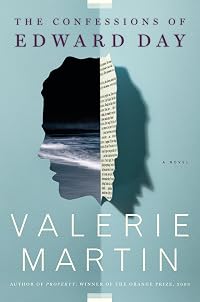
The Confessions of Edward Day: A Novel
by Valerie Martin
On This Page
Description
New York, in the 1970s: rents were cheap, love was free, and the explosion of theater venues off and off-off Broadway afforded aspiring actors the opportunity to work for nothing. After Edward Day joins his fellow actors for a summer weekend on the Jersey shore, his life is never the same.Tags
Recommendations






















Member Recommendations
Member Reviews
I found myself somewhat perplexed, though highly entertained, by this book. It's the story of an actor in the 1970s, his career on the stage and his friendships within the theater community, as well as a deeply antagonistic relationship with a disturbed doppelganger who saves him from drowning early on. While the tension of the relationship between Edward and Guy, a kind of manifestation of his baser self, is what drives the plot of the novel, much has been made among reviewers of the way in which Martin creates effectively the world of 1970s NYC theater. Yes, she does that, but I was hoping for a little more discussion of technique, rehearsal, the actual feeling of being onstage, than is here. Martin is more interested in the ways in show more which being an actor both causes and results from a deep, unrelenting narcissism, and how that manifests itself in perpetually self-obsessed behavior in one's personal life. There's nothing wrong with this as a project, but I suppose I was somewhat disappointed not to get more time with Edward on the stage than in a bar.
Regardless, the plot of this subtle, taught novel is compelling until the final page, and it's a highly enjoyable, thought-provoking read. show less
Regardless, the plot of this subtle, taught novel is compelling until the final page, and it's a highly enjoyable, thought-provoking read. show less
The 'confessions' are a pseudo-memoir, by an author exploring acting from from the outside. All the more impressive, then, that actors and critics have treated the book with respect. It has been widely reviewed, attracting some eminent commentary, particularly in relation to its setting – 1970s Broadway – and insights into the acting profession.
As usual, Valerie Martin walks around her topic to observe all sides, and isn’t scared of big themes. This time it is life and death, the double, the Self and Other, the limits of what we can know. Above all, though, it studies the impact of a persecutor in your life.
Edward was one of four boys to a mother who had longed for a daughter. He was the most girlish of them and closest to his show more mother, but she abandoned her family for a lesbian relationship. Edward’s first night of sex with a girl coincides with his mother’s suicide. It leaves him with a wish to be other than he is. He declares that his acting isn't about narcissism or even self-expression, but rather the chance to be someone else.
A talented fellow actor later tells him: "I get myself from what I see you getting about me." But that is different to seeing oneself only through a persona - through an outer shell seen by others, like politicians crafting themselves around their images. That "is not, perhaps, a bad way to start", Edward tells us, but you truly find yourself as an actor when you discover and draw out your inner self, and subordinate it to your purposes.
Such subtlety distinguishes Edward from fellow actor Guy Margate. Guy sees himself only through a persona, even in moments of crisis. He is unaware, for example, of how his jealous gaze at Edward could be applied by him on stage. Guy has a gift for mimicry, but mimics, we're told, are rarely good actors.
The story turns around Guy and Edward. They are both aspiring actors, very similar looking, chasing the same parts. In one scene they actually stare at each other’s reflections in the mirror. They pursue the same woman, fellow thespian Madeleine. This 'double' stuff is so blatant that we are being invited, I think, to look beyond it.
Early on in the novel the reader first encounters Guy in the act of saving Edward’s life. One night Edward swims out from a beach near the holiday house where he has been partying with other young actors (and seducing one of them), but gets caught a riptide. Guy swims out and pulls him free, but from then on Guy is toxic for Edward. Like Edward’s mother, Guy follows the gift of life with small but ongoing doses of death.
Guy sets Edward up, puts him in a bad light whereever possible, overpowers him in any social situation he can. He finds and plays on weak spots, sends varied signals of menace. He tries to disorient Edward through moments of phony friendship.
The biggest problem for Edward is Guy’s parasitic hunger for his life. His hard-won bits of money will do for a start. Then there is the issue of Edward’s latent theatrical talent. Perhaps Guy senses that whatever his own short terms successes he is hollow as an actor and person. The "dead gazing upon the living", he fastens on Edward: he will never just drift away.
Perhaps it amused a female writer to study rivalry between men.
Above all, it is a fight over the fellow young thespian Madeleine. Within this triangle another theme of the book plays out: the limits of what we can know of the world and one another. We see only through Edward’s eyes, so a lot of their interplay is hidden. But Guy's cold commentary on Edward shows that our enemies have insights about us, knowledge we ourselves lack or won’t look at.
In these memoirs Edward does not give Madeleine’s personality the same attention as Guy's; indeed, once he has her for himself his interest in her declines, until Guy makes another move on her, and the story darkens.
Madeleine's vagueness contrasts with the dazzling power of Marlene Webern, as she blazes briefly through Edward’s career. An older, accomplished performer, Marlene sees deeply into Edward and shocks him to life as an actor. He lusts for her yet she is really the Good Mother he's missed, and whom Guy will never have.
At one curious moment early in the book, when Guy and Edward walk away from the nocturnal beach rescue, Guy insists that they already know each other. Perhaps so: his animosity to Edward is already fully formed. In that case Edward as autobiographer has left many blanks, and has let this anecdote slip through a calculatedly false account of their relations. Some reviewers have taken this approach and one interpreted Edward himself as a monster. But I think it would be more in keeping with the story to understand Guy’s assertion as the first of many ploys to knock his enemy off balance. In that case his hatred of Edward had ignited only hours before, during a the party in which Edward was busy with Madeleine, still blessedly unaware of Guy’s existence. show less
As usual, Valerie Martin walks around her topic to observe all sides, and isn’t scared of big themes. This time it is life and death, the double, the Self and Other, the limits of what we can know. Above all, though, it studies the impact of a persecutor in your life.
Edward was one of four boys to a mother who had longed for a daughter. He was the most girlish of them and closest to his show more mother, but she abandoned her family for a lesbian relationship. Edward’s first night of sex with a girl coincides with his mother’s suicide. It leaves him with a wish to be other than he is. He declares that his acting isn't about narcissism or even self-expression, but rather the chance to be someone else.
A talented fellow actor later tells him: "I get myself from what I see you getting about me." But that is different to seeing oneself only through a persona - through an outer shell seen by others, like politicians crafting themselves around their images. That "is not, perhaps, a bad way to start", Edward tells us, but you truly find yourself as an actor when you discover and draw out your inner self, and subordinate it to your purposes.
Such subtlety distinguishes Edward from fellow actor Guy Margate. Guy sees himself only through a persona, even in moments of crisis. He is unaware, for example, of how his jealous gaze at Edward could be applied by him on stage. Guy has a gift for mimicry, but mimics, we're told, are rarely good actors.
The story turns around Guy and Edward. They are both aspiring actors, very similar looking, chasing the same parts. In one scene they actually stare at each other’s reflections in the mirror. They pursue the same woman, fellow thespian Madeleine. This 'double' stuff is so blatant that we are being invited, I think, to look beyond it.
Early on in the novel the reader first encounters Guy in the act of saving Edward’s life. One night Edward swims out from a beach near the holiday house where he has been partying with other young actors (and seducing one of them), but gets caught a riptide. Guy swims out and pulls him free, but from then on Guy is toxic for Edward. Like Edward’s mother, Guy follows the gift of life with small but ongoing doses of death.
Guy sets Edward up, puts him in a bad light whereever possible, overpowers him in any social situation he can. He finds and plays on weak spots, sends varied signals of menace. He tries to disorient Edward through moments of phony friendship.
The biggest problem for Edward is Guy’s parasitic hunger for his life. His hard-won bits of money will do for a start. Then there is the issue of Edward’s latent theatrical talent. Perhaps Guy senses that whatever his own short terms successes he is hollow as an actor and person. The "dead gazing upon the living", he fastens on Edward: he will never just drift away.
Perhaps it amused a female writer to study rivalry between men.
Above all, it is a fight over the fellow young thespian Madeleine. Within this triangle another theme of the book plays out: the limits of what we can know of the world and one another. We see only through Edward’s eyes, so a lot of their interplay is hidden. But Guy's cold commentary on Edward shows that our enemies have insights about us, knowledge we ourselves lack or won’t look at.
In these memoirs Edward does not give Madeleine’s personality the same attention as Guy's; indeed, once he has her for himself his interest in her declines, until Guy makes another move on her, and the story darkens.
Madeleine's vagueness contrasts with the dazzling power of Marlene Webern, as she blazes briefly through Edward’s career. An older, accomplished performer, Marlene sees deeply into Edward and shocks him to life as an actor. He lusts for her yet she is really the Good Mother he's missed, and whom Guy will never have.
At one curious moment early in the book, when Guy and Edward walk away from the nocturnal beach rescue, Guy insists that they already know each other. Perhaps so: his animosity to Edward is already fully formed. In that case Edward as autobiographer has left many blanks, and has let this anecdote slip through a calculatedly false account of their relations. Some reviewers have taken this approach and one interpreted Edward himself as a monster. But I think it would be more in keeping with the story to understand Guy’s assertion as the first of many ploys to knock his enemy off balance. In that case his hatred of Edward had ignited only hours before, during a the party in which Edward was busy with Madeleine, still blessedly unaware of Guy’s existence. show less
What a wonderful treat this book is! I tend to forget Valerie Martin. On the one hand, this means that I end up missing her novels. On the other hand, I get to rediscover her often which sort of fulfills my fantasies of re-reading various books & authors for the first time all over again.
I spent most of my twenties & thirties in theaters. First as an actor & later as a director with my own production company. Acting was fun because it provided me with an opportunity to explore sides of myself that I tended to avoid & to do things I'd probably never ever do in my real life. Directing, however, was my ultimate love in the theater. Where else do you get to interrogate text prior to making it get up and walk around?
The Confessions of Edward show more Day is the memoir of Edward Day, an actor reminiscing about his salad days in the New York theater world of the 1970s where everyone was a student of Stella Adler or Sanford Meisner & living hand-to-mouth from audition to audition waiting for that big break. Edward Day is the definitive actor, a narcissist whose self-awareness is so thin that he can't see himself. Edward stands so far outside himself in observation of his emotions as material for his acting that he is essentially a non-person. Scarily, he is in many ways the most complete person in this tale of doubling & its consequences.
Ms. Martin is asking some big questions here: What is owed to someone who saves your life? What does it mean to be both an actor & a person? If you have a doppleganger, which one of you is real?
Ms. Martin's writing is, as always, superb. She manages to create characters who suck you into their worlds. She writes with a delicate menace that is reminiscent of Patricia Highsmith, but less bound to the thriller genre. This is a wonderfully written, compelling story that ended far too soon. show less
I spent most of my twenties & thirties in theaters. First as an actor & later as a director with my own production company. Acting was fun because it provided me with an opportunity to explore sides of myself that I tended to avoid & to do things I'd probably never ever do in my real life. Directing, however, was my ultimate love in the theater. Where else do you get to interrogate text prior to making it get up and walk around?
The Confessions of Edward show more Day is the memoir of Edward Day, an actor reminiscing about his salad days in the New York theater world of the 1970s where everyone was a student of Stella Adler or Sanford Meisner & living hand-to-mouth from audition to audition waiting for that big break. Edward Day is the definitive actor, a narcissist whose self-awareness is so thin that he can't see himself. Edward stands so far outside himself in observation of his emotions as material for his acting that he is essentially a non-person. Scarily, he is in many ways the most complete person in this tale of doubling & its consequences.
Ms. Martin is asking some big questions here: What is owed to someone who saves your life? What does it mean to be both an actor & a person? If you have a doppleganger, which one of you is real?
Ms. Martin's writing is, as always, superb. She manages to create characters who suck you into their worlds. She writes with a delicate menace that is reminiscent of Patricia Highsmith, but less bound to the thriller genre. This is a wonderfully written, compelling story that ended far too soon. show less
Valerie Martin has an unequaled ability to capture the essence of a character and build a page-turning story around it. I was sucked into Edward Day's life as if by an industrial vacuum cleaner, fascinated by his persona and the events that shaped it.
As the story progresses, a peculiar tension builds around Edward Day. It is a struggle not between good and evil or anything nearly as mundane as good guys versus bad guys, but rather a growing realization that he may be the villain of his own memoir. I don't believe I have experienced a character such as that since reading Crime and Punishment.
This book epitomizes the writer's dictum to "don't tell--show", which serves the theme perfectly. Edward tells his own story, commenting on the show more actions, appearances, and attitudes of every other character in the piece in ways that ultimately reveal more about him than about them. It's a powerful technique that Martin has clearly mastered.
The business of acting in live theater makes a wonderful background for the story. Edward Day is a consummate actor, which also happens to make him the perfect protagonist for this excellent dark novel. show less
As the story progresses, a peculiar tension builds around Edward Day. It is a struggle not between good and evil or anything nearly as mundane as good guys versus bad guys, but rather a growing realization that he may be the villain of his own memoir. I don't believe I have experienced a character such as that since reading Crime and Punishment.
This book epitomizes the writer's dictum to "don't tell--show", which serves the theme perfectly. Edward tells his own story, commenting on the show more actions, appearances, and attitudes of every other character in the piece in ways that ultimately reveal more about him than about them. It's a powerful technique that Martin has clearly mastered.
The business of acting in live theater makes a wonderful background for the story. Edward Day is a consummate actor, which also happens to make him the perfect protagonist for this excellent dark novel. show less
This fictional memoir surprised and amazed me. Valerie Martin (Mary Rielly, Trepass) vividly captures the life of an actor in New York in the 1970s. This was a time when actors were clammoring to get in class with Sandy Meisner, Stella Adler, and Uta Hagen, and sat over drinks discussing nothing but their methods, their motivations and their roles. Edward Day takes us on his journey to find truth in his life, and, thus, truth in his acting.
Synopsis: Valerie Martin re-creates the seamy theater world of 1970's New York, when rents were cheap, love was free, and nudity on stage was the latest craze. Edward Day, a talented and ambitious young actor, finds his life forever altered during a weekend party on the New Jersey shore. There he show more seduces the delicious Madeleine Delavergne and is saved from drowning by the mysterious Guy Margate, who becomes Edward's rival on stage and off.
And so, at a time when actors flocked to the great method teachers to hone the art of the "truthful" performance, Edward discovers that truth - in theater and in life - is ever elusive and never inert.
Actors are a strange breed, and Valerie Martin gave us as accurate a portrait as one could hope without spilling over into stereotypes or hyperbole. As someone who has poured over Hagen's Respect for Acting, and Meisner's On Acting, it's no mystery why I got completely swept up in The Confessions of Edward Day. I spent a wee bit of time in New York studying acting, and I used to talk with my fellow actors, all of us in awe over New York in the 1970s. Valerie Martin transports us to that time effortlessly.
Edward Day is on a quest in search of truth in his acting, which,, according to Stella Adler, he should find in the truth of his life. Every conversation, every gesture, every laugh, and every emotion he has in life, he dissects and files away for use in his work. If that is how he lives his life, how can that be truthful? But this is the life of an actor, narcisistic to the core.
Even if you aren't an actor, or don't watch Inside the Actor's Studio, it's fascinating to follow Edward Day from his growing career to his love affairs, with Guy Margate lurking in the wings of both. For the 20+ years of this memoir, Ed is never able to shake Guy, the man who saved his life. At what point is that debt repaid? Beyond the actor's story, this novel is downright dark and creepy, and I loved every minute of it.
http://www.alisons-bookmarks.blogspot.com show less
Synopsis: Valerie Martin re-creates the seamy theater world of 1970's New York, when rents were cheap, love was free, and nudity on stage was the latest craze. Edward Day, a talented and ambitious young actor, finds his life forever altered during a weekend party on the New Jersey shore. There he show more seduces the delicious Madeleine Delavergne and is saved from drowning by the mysterious Guy Margate, who becomes Edward's rival on stage and off.
And so, at a time when actors flocked to the great method teachers to hone the art of the "truthful" performance, Edward discovers that truth - in theater and in life - is ever elusive and never inert.
Actors are a strange breed, and Valerie Martin gave us as accurate a portrait as one could hope without spilling over into stereotypes or hyperbole. As someone who has poured over Hagen's Respect for Acting, and Meisner's On Acting, it's no mystery why I got completely swept up in The Confessions of Edward Day. I spent a wee bit of time in New York studying acting, and I used to talk with my fellow actors, all of us in awe over New York in the 1970s. Valerie Martin transports us to that time effortlessly.
Edward Day is on a quest in search of truth in his acting, which,, according to Stella Adler, he should find in the truth of his life. Every conversation, every gesture, every laugh, and every emotion he has in life, he dissects and files away for use in his work. If that is how he lives his life, how can that be truthful? But this is the life of an actor, narcisistic to the core.
Even if you aren't an actor, or don't watch Inside the Actor's Studio, it's fascinating to follow Edward Day from his growing career to his love affairs, with Guy Margate lurking in the wings of both. For the 20+ years of this memoir, Ed is never able to shake Guy, the man who saved his life. At what point is that debt repaid? Beyond the actor's story, this novel is downright dark and creepy, and I loved every minute of it.
http://www.alisons-bookmarks.blogspot.com show less
An interesting character study and a glimpse into the not-so-glamorous world of the working theater actor. I appreciate the intelligence of Martin's prose and would also recommend her earlier novel, Trespass.
Written in the style of an intimate memoir, The Confessions of Edward Day delves into the daily lives of a group of struggling stage actors living in New York City in the 1970s and 1980s. Edward Day is the first person narrator and the undeniable star of this novel. As his career unfolds, we follow Ed through acting school, numerous auditions and call-backs, conflicts with friends and family, and even a summer season spent in a Vermont theater company. Throughout it all, Ed makes the most of the insignificant parts he lands, always hoping for the next big break and waiting tables between shows to pay his rent.
Through the engaging and honest voice of Ed Day, Valerie Martin writes with authority about the uncertain and stressful world of show more stage actors. Indeed, Martin so successfully inhabits the life and voice of Ed Day that she all but disappears from view. Ed’s charisma and motivation drive the action, most of which centers around a complicated love triangle and Ed’s ongoing power struggle with a rival actor. With this quick-paced and intelligent novel, Martin delivers a riveting look inside the psyche of an actor.
This review also appears on my blog Literary License. show less
Through the engaging and honest voice of Ed Day, Valerie Martin writes with authority about the uncertain and stressful world of show more stage actors. Indeed, Martin so successfully inhabits the life and voice of Ed Day that she all but disappears from view. Ed’s charisma and motivation drive the action, most of which centers around a complicated love triangle and Ed’s ongoing power struggle with a rival actor. With this quick-paced and intelligent novel, Martin delivers a riveting look inside the psyche of an actor.
This review also appears on my blog Literary License. show less
Members
- Recently Added By
Published Reviews
ThingScore 100
“Edward Day” might finally bring Martin the recognition she deserves. Her previous novel, “Trespass,” which explored a suburban woman’s distrust of her son’s refugee lover, was a richer book. But “Edward Day” has its deep pleasures, particularly in the ingenious way Martin probes the sensibility of an artist while using it as a prism through which to tell a tale.
added by Shortride
Author Information

27+ Works 4,061 Members
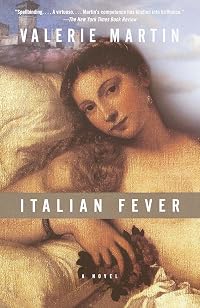
Valerie Martin is the author of six novels & two collections of short fiction, including "Italian Fever", "The Great Divorce", & "Mary Reilly". She lived in Italy for three years & now resides in upstate New York. (Bowker Author Biography)
Some Editions
Awards and Honors
Distinctions
Common Knowledge
- First words
- My mother liked to say Freud should have been strangled in his crib.
Classifications
Statistics
- Members
- 152
- Popularity
- 215,372
- Reviews
- 15
- Rating
- (3.66)
- Languages
- English
- Media
- Paper, Audiobook, Ebook
- ISBNs
- 11
- ASINs
- 3