
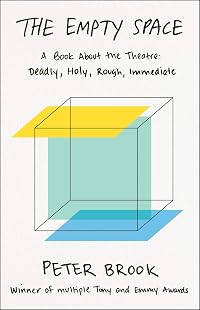
The Empty Space: A Book about the Theatre
by Peter Brook
On This Page
Description
New to Penguin Modern Classics on the 40th anniversary of first publicationIn The Empty Space, groundbreaking director Peter Brook draws on a life in love with the stage to explore the issues facing any theatrical performance.Tags
Recommendations



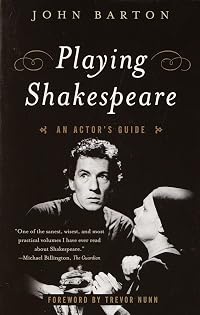
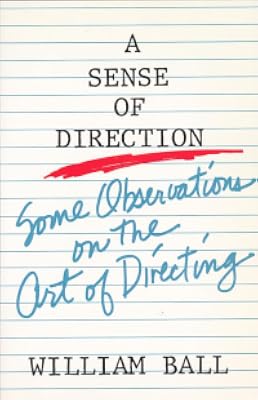

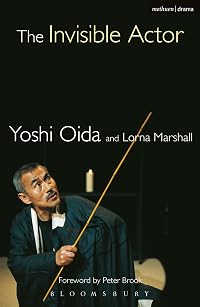
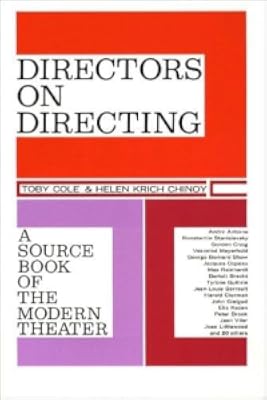




Member Recommendations
Member Reviews
This short book from 1968 is one I should have read as an undergraduate in the 1980s. It is the first book by famed director Peter Brook, collecting a series of four lectures on the state of theater and its possibilities. The pieces do progress and build upon one another, moving from the critical viewpoint, through theory and history, to more practical concerns and perspectives.
The first part is "The Deadly Theatre," and in it Brook discusses all the ways in which theatrical works fail. "All through the world theatre audiences are dwindling" (10). There is a doom loop in which conventionality in writing, acting, and production, along with criticism and economic pressures, lead to lowered audience expectations, which in turn foster show more lackluster performances. The deadly theater is not integral to society, it is a superfluous appendage which can be profitably ignored.
In "The Holy Theatre" Brook addresses the ambition of the theater to make les Invisibles visible. He introduces the "illuminated genius" Antonin Artaud as the touchstone of this ambition, and recounts some of Brook's own experiments in a "theatre of cruelty." For further demonstrations of the "holy" trajectory, he outlines the work of Merce Cunningham, Samuel Beckett, and Jerzy Grotowski.
Brook's paragon of "The Rough Theatre" is Bertolt Brecht. The rough in some senses opposes the holy: rather than being drawn out of themselves by the holy, participants are thrown back into themselves by the rough. It is a theater of examination and exposure, rather than exaltation and ecstasy. But Brook insists that these two are complements that can and should inform each other, as they do--he claims--in the work of Shakespeare.
"The Immediate Theatre" brings the focus to the actual work of theatrical production, eventually settling on a (provisional) formula in the Francophone terms of repetition (rehearsal), representation (performance), and assistance (spectatorship). That these are all to some degree false cognates Brook does not explicitly make a matter of concern. He concludes with questions about whether theater can have enduring transformative effects for either its producers or its consumers.
Throughout this book, the prose is beautiful and eminently quotable. "It is not the fault of the holy that it has become a middle-class weapon to keep children good" (46). "As I continue to work, each experience will make these conclusions inconclusive again" (100). "Today, it is hard to see how a vital theatre and a necessary one can be other than out of tune with society--not seeking to celebrate the accepted values, but to challenge them" (134).
More than half a century after its composition The Empty Space is certainly valuable to students of 20th-century theater history, but also, I think, to anyone still concerned to generate and appreciate living performances in stage environments. show less
The first part is "The Deadly Theatre," and in it Brook discusses all the ways in which theatrical works fail. "All through the world theatre audiences are dwindling" (10). There is a doom loop in which conventionality in writing, acting, and production, along with criticism and economic pressures, lead to lowered audience expectations, which in turn foster show more lackluster performances. The deadly theater is not integral to society, it is a superfluous appendage which can be profitably ignored.
In "The Holy Theatre" Brook addresses the ambition of the theater to make les Invisibles visible. He introduces the "illuminated genius" Antonin Artaud as the touchstone of this ambition, and recounts some of Brook's own experiments in a "theatre of cruelty." For further demonstrations of the "holy" trajectory, he outlines the work of Merce Cunningham, Samuel Beckett, and Jerzy Grotowski.
Brook's paragon of "The Rough Theatre" is Bertolt Brecht. The rough in some senses opposes the holy: rather than being drawn out of themselves by the holy, participants are thrown back into themselves by the rough. It is a theater of examination and exposure, rather than exaltation and ecstasy. But Brook insists that these two are complements that can and should inform each other, as they do--he claims--in the work of Shakespeare.
"The Immediate Theatre" brings the focus to the actual work of theatrical production, eventually settling on a (provisional) formula in the Francophone terms of repetition (rehearsal), representation (performance), and assistance (spectatorship). That these are all to some degree false cognates Brook does not explicitly make a matter of concern. He concludes with questions about whether theater can have enduring transformative effects for either its producers or its consumers.
Throughout this book, the prose is beautiful and eminently quotable. "It is not the fault of the holy that it has become a middle-class weapon to keep children good" (46). "As I continue to work, each experience will make these conclusions inconclusive again" (100). "Today, it is hard to see how a vital theatre and a necessary one can be other than out of tune with society--not seeking to celebrate the accepted values, but to challenge them" (134).
More than half a century after its composition The Empty Space is certainly valuable to students of 20th-century theater history, but also, I think, to anyone still concerned to generate and appreciate living performances in stage environments. show less
Dated writing but an interesting text that focuses on the how and why theatre is created. Looking at all elements of a creative company, Brook explores the intangible power of theatre.
The author has interesting points about the nature of theatre, but at times one would almost believe he hated the theatre. He doesn't, of course, but he didn't like certain aspects of what people were doing in theatre. His points were interesting, and worth considering, though I'm not sure I would agree with him. I think it is the sort of views he represented that were the reason for the excesses of experimental theatre in the 1970s and 1980s. A worthwhile book, but rather out of date, of course.
For my money, this is the best all-around an d most essential book on/about theatre. It encapsulates a great deal about the kinds of theatre that exist in practice, not in the theoretical, not the kinds of theatre people in theatre like to believe/claim/feel they do. It's informative and inspiring.
In The Empty Space, groundbreaking director Peter Brook draws on a life in love with the stage to explore the issues facing any theatrical performance. Here he describes important developments in theatre from the last century, as well as smaller scale events, from productions by Stanislavsky to the rise of Method Acting, from Brecht's revolutionary alienation technique to the free form Happenings of the 1960s, and from the different styles of such great Shakespearean actors as John Gielgud and Paul Scofield to a joyous impromptu performance in the burnt-out shell of the Hamburg Opera just after the war.
This book has really helped to change my perceptions on what theatre is and how it works. The Empty Space clarifies Brook's thoughts on the theatre, expanded from traditional definition, and helps to illustrate some of the visions behind this masterful director's work.
His distinction between deadly theatre and sacred theatre has been one of the most dynamic concepts i have come across: you can apply it to all the other arts too and wow how different the sacred is from the deadly!
Members
- Recently Added By
Lists

Bibliography for How to be a Heroine
148 works; 12 members

Best Sellers / Popular 1968
237 works; 5 members
Author Information

51+ Works 2,078 Members
Series
Belongs to Publisher Series
Common Knowledge
- Canonical title
- The Empty Space: A Book about the Theatre
- Original title
- Inquest
- Original publication date
- 1960
- Quotations
- A performance gets set and usually has to be repeated -- and repeated as well and as accurately as possible -- but from the day it is set something invisible is beginning to die.
It is not the fault of the holy that it has become a middle-class weapon to keep children good.
We must open our empty hands and show that really there is nothing up our sleeves. Only then can we begin. - Original language*
- English
*Some information comes from Common Knowledge in other languages. Click "Edit" for more information.
Classifications
Statistics
- Members
- 1,198
- Popularity
- 20,757
- Reviews
- 11
- Rating
- (4.15)
- Languages
- 9 — Dutch, English, Estonian, Finnish, French, German, Italian, Portuguese, Spanish
- Media
- Paper, Audiobook, Ebook
- ISBNs
- 26
- UPCs
- 1
- ASINs
- 19