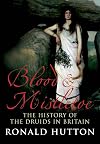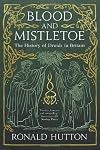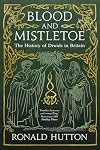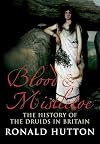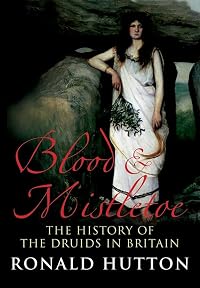
Blood and Mistletoe: The History of the Druids in Britain
by Ronald Hutton
On This Page
Description
Crushed by the Romans in the first century A.D., the ancient Druids of Britain left almost no reliable evidence behind. Because of this, historian Ronald Hutton shows, succeeding British generations have been free to reimagine, reinterpret, and reinvent the Druids. Hutton's captivating book is the first to encompass two thousand years of Druid history and to explore the evolution of English, Scottish, and Welsh attitudes toward the forever ambiguous figures of the ancient Celtic world.Druids show more have been remembered at different times as patriots, scientists, philosophers, or priests; sometimes portrayed as corrupt, bloodthirsty, or ignorant, they were also seen as fomenters of rebellion. Hutton charts how the Druids have been written in and out of history, archaeology, and the public consciousness for some 500 years, with particular focus on the romantic period, when Druids completely dominated notions of British prehistory. Sparkling with legends and images, filled with new perspectives on ancient and modern times, this book is a fascinating cultural study of Druids as catalysts in British history. show lessTags
Recommendations





Member Reviews
Hutton has out-done himself with this definitive, meticulous, and respectful look into the 2,000 year history of the Druids. There's so much that history has misinterpreted, misunderstood, assumed and forgotten about them.
Turns out, the earliest reference to Druids isn't in Britain, but in Gaul, and described by Julius Caesar. However his writings are based completely on hearsay! Since then, Druids went from being regarded as "savages and menaces to being romantic and admirable, once the civilization that was doing the viewing had absorbed them." In France, Germany, Ireland and Wales. The English, in fact, were the last to incorporate them into their ancient history due to their association with the Irish.
The word "Druid" being related show more to "oak" remained an unsupported fact until the mid-20th c., now largely abandoned. If one has to choose a Druidic tree per se, it's likely to be the rowan. The white robes and their worship of naturally forming henges is also unfounded. Even the famous Lindow Man, when discovered in 1984, was immediately assumed to have been ritualistically killed by Druids. The history of the Druids is full of these kinds of scenarios, bending the evidence to fit the conclusion. By the late 18th c. into the 19th c. once Britain has taken hold, the full romantic Druid is born. There are Druidic poetry clubs, societies with initiation ceremonies and regalia, much like the Freemasons. But where there are free thinkers, there is revolution. Hutton explores this trend through poet Iolo Morganwg. In 1853, Britain even saw its first Noble Order of Female Druids!
Throughout, Hutton isn't trying to slight modern Druids, but instead explores the evolution and creation of something new and our ever growing affection for this mystical and ancient group. show less
Turns out, the earliest reference to Druids isn't in Britain, but in Gaul, and described by Julius Caesar. However his writings are based completely on hearsay! Since then, Druids went from being regarded as "savages and menaces to being romantic and admirable, once the civilization that was doing the viewing had absorbed them." In France, Germany, Ireland and Wales. The English, in fact, were the last to incorporate them into their ancient history due to their association with the Irish.
The word "Druid" being related show more to "oak" remained an unsupported fact until the mid-20th c., now largely abandoned. If one has to choose a Druidic tree per se, it's likely to be the rowan. The white robes and their worship of naturally forming henges is also unfounded. Even the famous Lindow Man, when discovered in 1984, was immediately assumed to have been ritualistically killed by Druids. The history of the Druids is full of these kinds of scenarios, bending the evidence to fit the conclusion. By the late 18th c. into the 19th c. once Britain has taken hold, the full romantic Druid is born. There are Druidic poetry clubs, societies with initiation ceremonies and regalia, much like the Freemasons. But where there are free thinkers, there is revolution. Hutton explores this trend through poet Iolo Morganwg. In 1853, Britain even saw its first Noble Order of Female Druids!
Throughout, Hutton isn't trying to slight modern Druids, but instead explores the evolution and creation of something new and our ever growing affection for this mystical and ancient group. show less
I must admit that Blood and Mistletoe was not my favorite of Hutton’s books — although he had my attention and care for the subject by the end. The book surveys the very small pile of primary resources about and references to ancient druids, and then moves into an exploration of the rise and evolution of modern druid groups, as well as contemporary attitudes toward druids past and present.
Hutton makes a clear case against any confident assertion that an organized group or social cast, called something like “druids,” certainly existed in the ancient world and practiced recognizable rituals or faiths from the corpus of ideas we might recognize as “druidic” in the 21st century. (e.g., Harvesting mistletoe, performing human show more sacrifices, serving as counselors and astrologers, etc.)
I generally agree with his cautious approach, although I can easily believe that a set of terms similar to the word “druid” were used loosely to describe wise people, poets, mediums, and magicians in various parts of northern and central Europe. This is indeed how the word tends to manifest in the earlier written sources from northern Europe; I’m specifically thinking of the medieval Irish stories which mention druids, mostly as scheming and showy individual magicians. Such a loose application of related terms might easily account for the strange array of perspectives on druids that we inherit from ancient, foreign authors.
However, in the section on Irish mythology, Hutton claims that the entire corpus of Irish sagas was clearly written and never orally transmitted because of its lack of rhyming and other memorable structures. He makes no mention of what I understand (unless I am mistaken) to be a notable exception to this: that is the various examples in which metered stanzas of rosc poetry seem to peak out through the prose of the written literature. My learning here is limited, but indicates that these rosc stanzas do hint to at least parts of these stories having older, oral transmissions. I don’t believe this necessarily means that they are pre-Christian in origin. Christianity is widely credited with the arrival of written language in Ireland, of course, but I am also confident that there have been thriving, thoroughly Christian societies that were functionally illiterate. So, while I don’t think that the presence of rosc poetry negates his larger points about a lack of substantial evidence for druids in pre-Christian Ireland, I simultaneously wonder what could have been explored had Hutton given these seemingly-older sections of the Irish sagas a bit more attention. Perhaps nothing, they may be entirely irrelevant, but I am left with some curiosity about the matter.
I initially found it difficult to invest in the content of the book, but I imagine it would have been much easier had I possessed a special interest in the origins and development of the modern druid movement or had a particular affection for the history of Welsh nationalism. I found Hutton’s writing uncharacteristically lacking in suspense, curiosity, and intrigue without the motivation I imagine those special interests would have imparted to me.
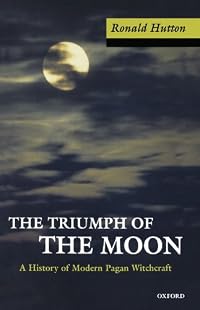
To his credit, Hutton did provide his customary serving of saucy, scathing (though politely British) investigations into the characters involved in the formation of modern druidry. It’s hard not to enjoy the way he lays out the truths of such figures against their claims. I think the personalities covered in this book and his earlier book The Triumph of the Moon have a lot of parallels worth considering for anyone interested in the history and formation of contemporary movements such as modern pagan witchcraft, druidry, and neopaganism. What sort of personality does it require to forge such modern beliefs? show less
Hutton makes a clear case against any confident assertion that an organized group or social cast, called something like “druids,” certainly existed in the ancient world and practiced recognizable rituals or faiths from the corpus of ideas we might recognize as “druidic” in the 21st century. (e.g., Harvesting mistletoe, performing human show more sacrifices, serving as counselors and astrologers, etc.)
I generally agree with his cautious approach, although I can easily believe that a set of terms similar to the word “druid” were used loosely to describe wise people, poets, mediums, and magicians in various parts of northern and central Europe. This is indeed how the word tends to manifest in the earlier written sources from northern Europe; I’m specifically thinking of the medieval Irish stories which mention druids, mostly as scheming and showy individual magicians. Such a loose application of related terms might easily account for the strange array of perspectives on druids that we inherit from ancient, foreign authors.
However, in the section on Irish mythology, Hutton claims that the entire corpus of Irish sagas was clearly written and never orally transmitted because of its lack of rhyming and other memorable structures. He makes no mention of what I understand (unless I am mistaken) to be a notable exception to this: that is the various examples in which metered stanzas of rosc poetry seem to peak out through the prose of the written literature. My learning here is limited, but indicates that these rosc stanzas do hint to at least parts of these stories having older, oral transmissions. I don’t believe this necessarily means that they are pre-Christian in origin. Christianity is widely credited with the arrival of written language in Ireland, of course, but I am also confident that there have been thriving, thoroughly Christian societies that were functionally illiterate. So, while I don’t think that the presence of rosc poetry negates his larger points about a lack of substantial evidence for druids in pre-Christian Ireland, I simultaneously wonder what could have been explored had Hutton given these seemingly-older sections of the Irish sagas a bit more attention. Perhaps nothing, they may be entirely irrelevant, but I am left with some curiosity about the matter.
I initially found it difficult to invest in the content of the book, but I imagine it would have been much easier had I possessed a special interest in the origins and development of the modern druid movement or had a particular affection for the history of Welsh nationalism. I found Hutton’s writing uncharacteristically lacking in suspense, curiosity, and intrigue without the motivation I imagine those special interests would have imparted to me.
To his credit, Hutton did provide his customary serving of saucy, scathing (though politely British) investigations into the characters involved in the formation of modern druidry. It’s hard not to enjoy the way he lays out the truths of such figures against their claims. I think the personalities covered in this book and his earlier book The Triumph of the Moon have a lot of parallels worth considering for anyone interested in the history and formation of contemporary movements such as modern pagan witchcraft, druidry, and neopaganism. What sort of personality does it require to forge such modern beliefs? show less
Long and somewhat tedious for casual reading, Ronald Hutton's Blood and Mistletoe is an intriguing history not of the ancient Celtic Druids (which, as Hutton points in the first chapter, we know very little of), but of how the ancient Druids have been perceived, imagined, and re-created by historians, archaeologists, scholars, clergymen, poets, forgers, rebels, and eccentrics in the centuries since ancient Celtic times. This is not a book about modern Druidry or paganism, but a history of modern Druidry's origins and a useful antidote to the pseudo-histories that are sometimes still repeated by some modern Druids and Druid orders. I was most impressed with how Hutton treated modern Druids and Druidry both seriously and respectfully, and show more with how he described how the way we perceive history can be shaped by the personalities of those who present it to us. I would recommend this book, but with the caveat that it is somewhat dry and academic in tone for the casual reader. show less
This volume could more accurately be considered a history of ideas about the Druids. Hutton meticulously traces the literary and historical use of the idea of Druid as it supports various attitudes toward history, religion and political power. The work is somewhat dry, as the detailed expostion relies on citation of numerous sources. Hutton has included some of the same material in an earlier volume, _The Druids_, intended for the popular audience
Ratings
Members
- Recently Added By
Published Reviews
added by Shortride
Author Information

37+ Works 4,638 Members
Ronald Hutton is Professor of History at the University of Bristol.
Common Knowledge
- Original publication date
- 2009
Classifications
- Genres
- Nonfiction, History, Religion & Spirituality, General Nonfiction
- DDC/MDS
- 299.160941 — Religion Other religions Shintoism/Taoism/Other Mythologies Indo-European Celtic, Druid
- LCC
- BL910 .H88 — Philosophy, Psychology and Religion Religions. Mythology. Rationalism Religions. Mythology. Rationalism History and principles of religions European. Occidental Other European
- BISAC
Statistics
- Members
- 270
- Popularity
- 119,199
- Reviews
- 4
- Rating
- (3.88)
- Languages
- English
- Media
- Paper, Audiobook, Ebook
- ISBNs
- 7
- ASINs
- 2