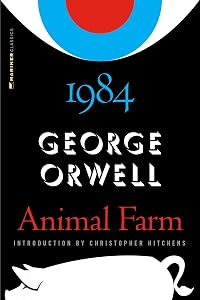
Animal Farm / 1984
by George Orwell 
On This Page
Description
This edition features George Orwell's best known novels - 1984 and Animal Farm - with an introduction by Christopher Hitchens. In 1984, London is a grim city where Big Brother is always watching you and the Thought Police can practically read your mind. Winston Smith joins a secret revolutionary organization called The Brotherhood, dedicated to the destruction of the Party. Together with his beloved Julia, he hazards his life in a deadly match against the powers that be. Animal Farm is show more Orwell's classic satire of the Russian Revolution - an account of the bold struggle, initiated by the animals, that transforms Mr. Jones's Manor Farm into Animal Farm-a wholly democratic society built on the credo that All Animals Are Created Equal. But are they? show lessTags
Recommendations





Member Reviews
I wiped out my previous review on Goodreads proper but will maintain the old one on here for now in addition to this one. I wiped out the Goodreads one because it is so tonally dissonant from my current reaction and understanding. My rating remains at four stars, shockingly. Often when I read a book I haven't in a decade or longer, my view changes drastically. Hell, even when I reread a book from a few years ago! So. The original Goodreads review was one I wrote when I wasn't entirely comfortable on the site yet. Now I'm a lot more confident. I read this in ninth grade. Whipped through it in one night, is more accurate. The teacher who assigned it was one of the most hated in the entire school, and students who had been graduated from show more my school years ago, still remembered how much they hated her. She was rude, cruel, hated students who were smarter than her, and a bigot. She also had a lot in common with Dolores Umbridge. I am not even kidding. I get horrible stomach aches when I read the fifth Harry Potter book because suddenly I'm fourteen again and I hate it. Back to this book. I did not care about it back then, and have always associated it with that teacher I hated. I didn't understand what it -really- was back then at all. As such, I wrote an incredibly superficial essay that hit all the rubric points it was supposed to, but it was clear the whole book was beyond me at the time. I picked it up as an adult now, and all I remember was Boxer's fate and the ending pages because they were so unsettling.
This book is a chilling, unflinching look at the origins and progress of totalitarianism, and more pointedly, late stage capitalism. The stages of each are so clearly delineated. And in such a short amount of pages! I was able to spot the pigs' progress towards being dictators, and knew where the white paint was going way before it even went there. Mollie was not a stupid animal: she was clearly stating she did not wish to be part of the rebellion. I wish the narrative hadn't gone after her so much, if all that was going to happen was that she went to the farm next door and got the life she wanted. Unlike so many animals that were later killed because some little piggy had a huge ego and a way of swaying others. I was upset, reading this. The phrase, "History does not repeat itself, but it does rhyme," by Mark Twain was in my head over and over again because this is happening today and it's awful. There are a lot of people trying to stop it. I hope it does stop. Without being too spoilery, the book does not have that result. And the ending is still just as powerful now. I remember thinking this was somehow a banned book in some schools. I don't think it should be banned; I think teens need to keep reading this and questioning authority. Adults, too. show less
This book is a chilling, unflinching look at the origins and progress of totalitarianism, and more pointedly, late stage capitalism. The stages of each are so clearly delineated. And in such a short amount of pages! I was able to spot the pigs' progress towards being dictators, and knew where the white paint was going way before it even went there. Mollie was not a stupid animal: she was clearly stating she did not wish to be part of the rebellion. I wish the narrative hadn't gone after her so much, if all that was going to happen was that she went to the farm next door and got the life she wanted. Unlike so many animals that were later killed because some little piggy had a huge ego and a way of swaying others. I was upset, reading this. The phrase, "History does not repeat itself, but it does rhyme," by Mark Twain was in my head over and over again because this is happening today and it's awful. There are a lot of people trying to stop it. I hope it does stop. Without being too spoilery, the book does not have that result. And the ending is still just as powerful now. I remember thinking this was somehow a banned book in some schools. I don't think it should be banned; I think teens need to keep reading this and questioning authority. Adults, too. show less
Animal Farm: There is a reason, much like Candide, that this book is an unforgettable classic. There is a special something in Animal Farm, a impactful weight in so few pages. Each word is carefully chosen to give the imagination just enough food to contemplate the stifling air of control and dictatorship. Orwell uses satire to tell his own moralistic fairy tale which showcases for the reader the danger and intoxication power brings. The pacing is smooth, the characters are moving, and the way Orwell tells how they face each challenge is moving. Both the first time I read Animal Farm and this past re-read, I was eager to learn what happened next.
I highly recommend Animal Farm to everyone. It is digestible for any reader, and its deeper show more themes offer contemplation long after it is finished. show less
I highly recommend Animal Farm to everyone. It is digestible for any reader, and its deeper show more themes offer contemplation long after it is finished. show less
Animal Farm
Orwell's classic fable in which the animals, led by the pigs, evict Mr. Jones from the farm and begin to rule themselves on Animal Farm.
Although I've never read the tale myself before, [Animal Farm] is so ingrained in the social consciousness that I knew every detail before it happened. And yet despite the fact that there was no surprises in this satire, it was still a worthwhile reading experience. Orwell's tale is succinct, sharply insightful, and so brilliantly describes the Communist Revolution in Russia sparing neither the communists nor the democratic powers, while still creating sympathy for the working classes. My favourite part of reading the book was matching up the animal characters with the leaders of the Russian show more revolution that I spent weeks studying in high school history classes. A classic that is highly readable and highly recommended.
1984
The classic dystopia set in 1984, in which Winston Smith begins to question the supremacy of the Party and Big Brother.
From it's fantastic opening sentence, Orwell's novel is a classic of the dystopian genre for a reason. Brilliantly conceptualized, the world building, the politics, and Winston Smith's character arc are the definition of perfection. With a plot that is terrifying for its ongoing plausibility and language that has made its way into the vernacular, the lasting impact of this novel is undeniable. show less
Orwell's classic fable in which the animals, led by the pigs, evict Mr. Jones from the farm and begin to rule themselves on Animal Farm.
Although I've never read the tale myself before, [Animal Farm] is so ingrained in the social consciousness that I knew every detail before it happened. And yet despite the fact that there was no surprises in this satire, it was still a worthwhile reading experience. Orwell's tale is succinct, sharply insightful, and so brilliantly describes the Communist Revolution in Russia sparing neither the communists nor the democratic powers, while still creating sympathy for the working classes. My favourite part of reading the book was matching up the animal characters with the leaders of the Russian show more revolution that I spent weeks studying in high school history classes. A classic that is highly readable and highly recommended.
1984
The classic dystopia set in 1984, in which Winston Smith begins to question the supremacy of the Party and Big Brother.
From it's fantastic opening sentence, Orwell's novel is a classic of the dystopian genre for a reason. Brilliantly conceptualized, the world building, the politics, and Winston Smith's character arc are the definition of perfection. With a plot that is terrifying for its ongoing plausibility and language that has made its way into the vernacular, the lasting impact of this novel is undeniable. show less
Review is for Animal Farm ONLY
“All animals are equal, but some animals are more equal than others.”
In the first chapter of the book, we learn that Mr. Jones, the owner of the farm, is a drunkard and ‘Major’, an old hog is the ‘leader’ of the animals. He calls a meeting and tells the animals they need to ‘stand up for their rights’. He also tells them he is dying. Soon after this the animals revolt and take over the farm.
At first it goes well for the animals, then the old adage “Power corrupts”, comes into play and the animals are found to be in a worse situation. The pigs take advantage of the animals poor memories and rewrite history and the “7 commandments”.
Animal Farm is a satire of the Russian Revolution show more under Stalin. It was very difficult to get this book published, even in London because of the pro-Stalin sentiment. After all, Stalin had helped them defeat the Germans. He didn’t fight against the Germans out of the goodness of his heart, Germany was making moves on the Soviet Union and also Stalin wanted the countries that Germany had occupied during the war. Berlin was this nice little city and he wanted it.
What I got from this is commentary on how the poor, regular people suffer when government has too much power. I’m not up on my Russian Revolution history, but apparently what happened in the book was a mirror of what happened in Russia. Orwell was trying to make people aware. The book became much more popular during the cold war.
This was a quick read, some people find it grim, I thought it was scary, if we aren’t careful we might lose our freedom in our efforts to stay safe. The animals thought they were safe, and that they were better off with the pigs ruling, but were they? show less
“All animals are equal, but some animals are more equal than others.”
In the first chapter of the book, we learn that Mr. Jones, the owner of the farm, is a drunkard and ‘Major’, an old hog is the ‘leader’ of the animals. He calls a meeting and tells the animals they need to ‘stand up for their rights’. He also tells them he is dying. Soon after this the animals revolt and take over the farm.
At first it goes well for the animals, then the old adage “Power corrupts”, comes into play and the animals are found to be in a worse situation. The pigs take advantage of the animals poor memories and rewrite history and the “7 commandments”.
Animal Farm is a satire of the Russian Revolution show more under Stalin. It was very difficult to get this book published, even in London because of the pro-Stalin sentiment. After all, Stalin had helped them defeat the Germans. He didn’t fight against the Germans out of the goodness of his heart, Germany was making moves on the Soviet Union and also Stalin wanted the countries that Germany had occupied during the war. Berlin was this nice little city and he wanted it.
What I got from this is commentary on how the poor, regular people suffer when government has too much power. I’m not up on my Russian Revolution history, but apparently what happened in the book was a mirror of what happened in Russia. Orwell was trying to make people aware. The book became much more popular during the cold war.
This was a quick read, some people find it grim, I thought it was scary, if we aren’t careful we might lose our freedom in our efforts to stay safe. The animals thought they were safe, and that they were better off with the pigs ruling, but were they? show less
For whatever reason, "Animal Farm" was never assigned to me in school. I'm disappointed that I waited so long to read it. Of course, it's brilliant. Tragic, disturbing, all-too realistic, and so very, very sad.
"Animal Farm" is a allegorical look at Stalinist Russia. How those with evil--but seemingly well intentioned--ideals can sway an unsuspecting and naive public into believing pretty much anything. It also underscores how so often history repeats itself.
This is a book that everyone should read, especially Americans. As we head into the 2012 election, we need frequent reminders that we need to keep an eye on our leaders' actions and not just the flowery words they use. You know. Like "hope" and "change."
"Animal Farm" is a allegorical look at Stalinist Russia. How those with evil--but seemingly well intentioned--ideals can sway an unsuspecting and naive public into believing pretty much anything. It also underscores how so often history repeats itself.
This is a book that everyone should read, especially Americans. As we head into the 2012 election, we need frequent reminders that we need to keep an eye on our leaders' actions and not just the flowery words they use. You know. Like "hope" and "change."
It had been many years since I'd read these books, and my feelings about them haven't changed much. Neither is subtle, but I really like Animal Farm, a short, pointed observational story about how easily power corrupts. 1984 is longer and more in-depth, but it bogs down a little too much in making the same point repeatedly. Still, both of them are important works and well worth reading.
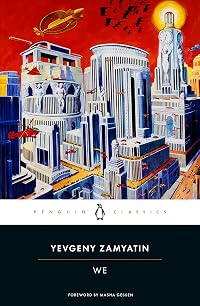
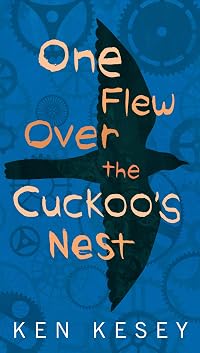
I have to confess that I never read either of these classics before (although my mother did read Animal Farm to me when I was a child). All in all, I find Animal Farm to be fantastic because it's so simple. In fact, most children can understand it--even on its deepest level--maybe not the specific historical allusions, but then, what's really important isn't that it happened in Russia, but that it could happen anywhere--and I had no trouble at around 8, understanding what the pigs were up to and why. I find 1984, for all its accolades, to be the weaker of the two. The first half or so is fantastic, but then the book lapses into pedantry for far too long, having killed much of its dramatic momentum before the wheels start turning again. show more Of course, it hurts the modern reader somewhat that we know what's going to happen--even if you've never seen the movie or had the ending spoiled (as I hadn't). In 1949, Orwell hadn't been exposed to as much Holocaust narrative as we have. For the modern reader, it's horrible, but not surprising. All in all, 1984 is a great book, but Brave New World seems to have emerged as the better predictor of the totalitarianism of the future (or the present, as the case may be). It Can't Happen Here is a better cautionary tale, and Atlas Shrugged is more inspirational. If the future path of psychological torture is what interests you most, you might be better off with A Clockwork Orange or even One Flew Over the Cuckoo's Nest. That said, those are comparisons that everyone should get to make for himself--and that everyone should make. You actually should read them all--including 1984--while you still can. show less
Members
- Recently Added By
Lists

Carole's List
445 works; 13 members

The Greatest Books
99 works; 5 members

Books That Changed Our Perspective
423 works; 168 members

Best Satire
188 works; 29 members
20th Century Literature
1,161 works; 54 members
Author Information

386+ Works 220,889 Members
George Orwell was born Eric Arthur Blair on June 25, 1903 in Motihari in Bengal, India and later studied at Eton College for four years. He was an assistant superintendent with the Indian Imperial Police in Burma. He left that position after five years and moved to Paris, where he wrote his first two books: Burmese Days and Down and Out in Paris show more and London. He then moved to Spain to write but decided to join the United Workers Marxist Party Militia. After being decidedly opposed to communism, he served in the British Home Guard and with the Indian Service of the BBC during World War II. After the war, he wrote for the Observer and was literary editor for the Tribune. His best known works are Animal Farm and 1984. His other works include A Clergyman's Daughter, Keep the Aspidistra Flying, The Road to Wigan Pier, Homage to Catalonia, and Coming Up for Air. He died on January 21, 1950 at the age of 46. (Bowker Author Biography) show less
George Orwell has a Legacy Library. Legacy libraries are the personal libraries of famous readers, entered by LibraryThing members from the Legacy Libraries group.
Some Editions
Awards and Honors
Distinctions
Series
Belongs to Publisher Series
Punane raamat (9)
Work Relationships
Contains
Common Knowledge
- Canonical title
- Animal Farm / 1984
- Original publication date
- 1945 & 1949
- Disambiguation notice
- Please do NOT combine these 2-novel anthology editions of "Animal Farm" and "Nineteen-Eighty Four" with either of the individual works or any of the larger Orwell anthology editions that contain either of these two common tit... (show all)les.
Classifications
Statistics
- Members
- 4,244
- Popularity
- 3,569
- Reviews
- 36
- Rating
- (4.24)
- Languages
- 14 — Chinese, Danish, English, Estonian, French, German, Italian, Korean, Latvian, Russian, Spanish, Swedish, Ukrainian, Portuguese (Portugal)
- Media
- Paper, Audiobook, Ebook
- ISBNs
- 86
- UPCs
- 2
- ASINs
- 34