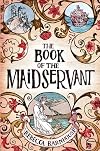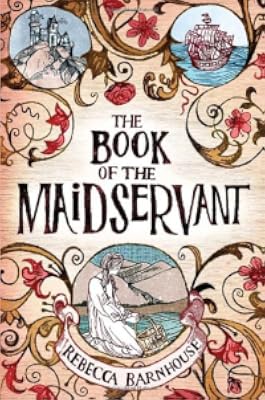
The Book of the Maidservant
by Rebecca Barnhouse
On This Page
Description
“A funny and wise book about friendship, loyalty, and love.”—Karen CushmanJohanna is a servant girl to Dame Margery Kempe, a renowned medieval holy woman. Dame Margery feels the suffering the Virgin Mary felt for her son but cares little for the misery she sees every day. When she announces that Johanna will accompany her on a pilgrimage to Rome, the suffering truly begins. After walking all day, Johanna must fetch water, wash clothes, and cook for the entire party of pilgrims. Then show more arguing breaks out between Dame Margery and the other travelers, and Johanna is caught in the middle. As the fighting escalates, Dame Margery turns her back on the whole group, including Johanna. Abandoned in a foreign land where she doesn’t even speak the language, the young maidservant must find her own way to Rome.
Inspired by the fifteenth-century text The Book of Margery Kempe, the first autobiography in English, debut novelist Rebecca Barnhouse... show less
Tags
Recommendations
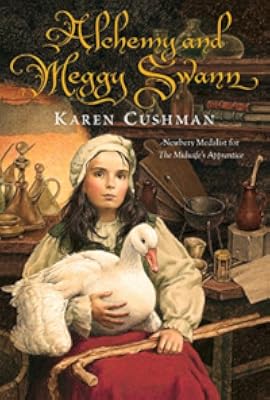



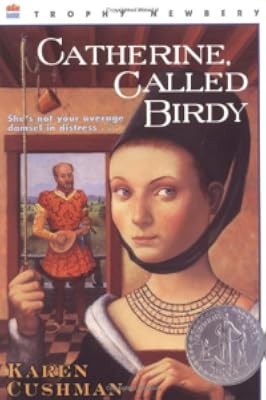



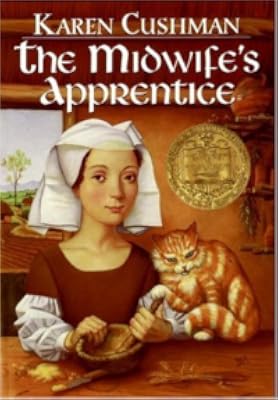









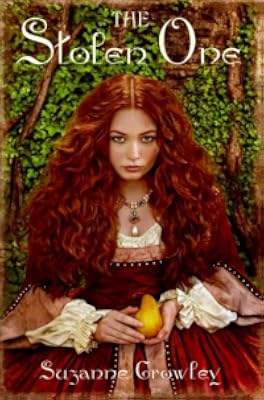



















Member Recommendations
Member Reviews
This book was lovely, and became even more so when I read the author's note at the end. It's based on The Book of Margery Kempe, the first autobiography in English, which details Kempe's religious pilgrimages. When she read that book, Rebecca Barnhouse paid attention to how Kempe described her maidservant and thought it sounded a little fishy. This is the part I love—that Barnhouse was able to see through Kempe's own words and imagine what Kempe was like from the maid's perspective. Johanna is a likable narrator and her story is at times so painful and frustrating that I just kept wishing, over and over, that the next sentence would have her hauling back and punching certain characters right in the face.
For me, the description of life show more in the fifteenth century was wonderful and so fascinating to read. And unlike many other YA books I've read, this one is very well-written; I loved the style, and didn't have to keep reminding myself, "it's written for kids, it's written for kids" (*cough*Rick Riordan*cough*). I loved the chance to see what the life of a young girl in Europe in the 1400s was like. show less
For me, the description of life show more in the fifteenth century was wonderful and so fascinating to read. And unlike many other YA books I've read, this one is very well-written; I loved the style, and didn't have to keep reminding myself, "it's written for kids, it's written for kids" (*cough*Rick Riordan*cough*). I loved the chance to see what the life of a young girl in Europe in the 1400s was like. show less
Margery Kempe's memoir has become a standard syllabus inclusion for feminist literature courses. Well-off but not noble, Margery bore 14 children before claiming to have had a vision of Christ telling her to become abstinent. She got her husband to comply by paying off his debts. As her visions increased, so did her hysterical crying when she experienced them. Some claim this was a ploy for public attention, but others believe that she was a true visionary. Although she was illiterate, she dictated her quite fascinating memoir The Book of Margery Kempe, to a scribe.
[The Book of the Maidservant] is just that: the story of the maid who accompanied Kempe on her pilgrimage to the Holy Land. Kempe had been warned that her maid would cause show more her trouble, and perhaps, from her point of view, she did. But according to Barnhouse's novel, the maidservant (here named Joanna) suffered considerable trials of her own along the way, including harsh treatment by Kempe, continuing harassment from a would-be rapist, being taken advantage of other pilgrims who loaded her with more and more work, and getting lost and separated from her mistress in Rome. Kempe does not come off well here: Barnhouse obviously adheres to the opinion that Margery was an ambitious, indulged woman who broke the rules of medieval English society and used religion as a way to exalt her status and to get her own way. Nevertheless, her novel is an engaging look into the customs and class structure of the times, and Joanna is a very likable, if somewhat hapless, character. She creates a solid picture of what these pilgrimages must have been like, especially for those who, like Joanna, had no choice but to make them. show less
[The Book of the Maidservant] is just that: the story of the maid who accompanied Kempe on her pilgrimage to the Holy Land. Kempe had been warned that her maid would cause show more her trouble, and perhaps, from her point of view, she did. But according to Barnhouse's novel, the maidservant (here named Joanna) suffered considerable trials of her own along the way, including harsh treatment by Kempe, continuing harassment from a would-be rapist, being taken advantage of other pilgrims who loaded her with more and more work, and getting lost and separated from her mistress in Rome. Kempe does not come off well here: Barnhouse obviously adheres to the opinion that Margery was an ambitious, indulged woman who broke the rules of medieval English society and used religion as a way to exalt her status and to get her own way. Nevertheless, her novel is an engaging look into the customs and class structure of the times, and Joanna is a very likable, if somewhat hapless, character. She creates a solid picture of what these pilgrimages must have been like, especially for those who, like Joanna, had no choice but to make them. show less
{ Full review originally posted on my blog, PidginPea's Book Nook. }
I wasn't sure what to expect from The Book of the Maidservant, but the wonderful writing and the swiftly moving plot sucked me in from the very beginning and didn't let me go. The action builds rapidly as Johanna finds herself facing one adventure after another, meeting wonderful friends and terrible enemies along the way.
I'm not very familiar with medieval history, but Barnhouse definitely brought the time period alive. You can see and hear and smell everything right along with Johanna, both the good and the bad. As Johanna travels with the pilgrims, you get to experience medieval Europe through the eyes of a young girl, who must serve the party but still tries to show more preserve her own independence as much as she can.
Johanna struggles with her faith throughout the book in very realistic and age-appropriate ways. In a world and time where being a good and devout Christian is of great importance, she tries hard to keep her thoughts and actions kind, despite the many injustices being done to her. As she gets into increasingly difficult situations, she starts to feel like God and the saints have abandoned her. As she deals with all of this, the book never feels preachy. It simply allows you in to Johanna's thoughts as she tries to figure things out on her own.
The Book of the Maidservant was one of the best books I've read in a while. It's a wonderful work of middle grade historical fiction: realistic and educational while remaining very interesting and relatable. show less
I wasn't sure what to expect from The Book of the Maidservant, but the wonderful writing and the swiftly moving plot sucked me in from the very beginning and didn't let me go. The action builds rapidly as Johanna finds herself facing one adventure after another, meeting wonderful friends and terrible enemies along the way.
I'm not very familiar with medieval history, but Barnhouse definitely brought the time period alive. You can see and hear and smell everything right along with Johanna, both the good and the bad. As Johanna travels with the pilgrims, you get to experience medieval Europe through the eyes of a young girl, who must serve the party but still tries to show more preserve her own independence as much as she can.
Johanna struggles with her faith throughout the book in very realistic and age-appropriate ways. In a world and time where being a good and devout Christian is of great importance, she tries hard to keep her thoughts and actions kind, despite the many injustices being done to her. As she gets into increasingly difficult situations, she starts to feel like God and the saints have abandoned her. As she deals with all of this, the book never feels preachy. It simply allows you in to Johanna's thoughts as she tries to figure things out on her own.
The Book of the Maidservant was one of the best books I've read in a while. It's a wonderful work of middle grade historical fiction: realistic and educational while remaining very interesting and relatable. show less
In this historical fiction work set in 15th Century Europe, Johanna serves as a maidservant to Dame Margery Kempe, a holy woman given to fits of religious passion, who, despite her great piety, mistreats her servants. When Dame Margery decides to go on a pilgrimage to Rome, she takes Johanna with her, and after a dangerous journey full of conflicts, abandons Johanna in Venice. Without speaking the local language, any money, or any idea of how to return to England, Johanna must find a way to survive on her own.
The narrative is packed with small details about Medieval life, so Johanna's story conveys a fully-realized picture of the 15th Century, and the well developed setting makes Johanna's character, situation and danger believable. show more Johanna is an engaging narrator, and a great strength of this book is her character development, for as the journey progresses, Johanna transforms from an angry, but timid, servant to a resourceful woman who is able to confront both her own personal demons and the mistress who mistreated her. A wonderful scene near the end of the novel conveys the extent of Johanna's growth as she admits/realizes that she has been deceiving herself about the circumstances that brought her to be in Margery's employ, and that the person she has cast as the villain in her life is not at all the one responsible for her misfortune. As the author's note explains, the character of Dame Margery is based on a real person, who is known because she is the author of the first English autobiography, and while fiction, much of the story is based on Dame Margery's account as well as those of other pilgrims. The reader, however, does not need to be familiar with the historical context to appreciate the story, and this book would be enjoyed by high school age readers. show less
The narrative is packed with small details about Medieval life, so Johanna's story conveys a fully-realized picture of the 15th Century, and the well developed setting makes Johanna's character, situation and danger believable. show more Johanna is an engaging narrator, and a great strength of this book is her character development, for as the journey progresses, Johanna transforms from an angry, but timid, servant to a resourceful woman who is able to confront both her own personal demons and the mistress who mistreated her. A wonderful scene near the end of the novel conveys the extent of Johanna's growth as she admits/realizes that she has been deceiving herself about the circumstances that brought her to be in Margery's employ, and that the person she has cast as the villain in her life is not at all the one responsible for her misfortune. As the author's note explains, the character of Dame Margery is based on a real person, who is known because she is the author of the first English autobiography, and while fiction, much of the story is based on Dame Margery's account as well as those of other pilgrims. The reader, however, does not need to be familiar with the historical context to appreciate the story, and this book would be enjoyed by high school age readers. show less
Really enjoyed this one, especially the character of Johanna and the historical details. I found my chest getting tight and my shoulders tensing as I read, out of sympathy for Johanna and my anger at Margery and some of the other characters. I don't actually know when I've been more furious with a fictional character (or in this case a based-on-historical character). In some ways that made this an uncomfortable book to read, but also a rewarding one, and I cheered wholeheartedly at the end.
I'm very much looking forward to more from Rebecca Barnhouse!
I'm very much looking forward to more from Rebecca Barnhouse!
“My mistress says you mustn’t stare into the fire lest the devil look out at you from the flames. ‘He’ll see into your soul,’ she says.” So begins the story of Johanna, serving girl to Dame Margery Kempe, a woman known for her religious fervor. Forced to accompany her mistress on a pilgrimage to Rome, Johanna experiences the difficulties of medieval travel – bug-infested bedding, blistering feet, rain-soaked clothing, moldy food. Through a series of events including being abandoned by her mistress, Johanna makes her way to Rome, maturing along the way. In Rome, Johanna finds acceptance and companionship where she least expected it. Barnhouse’s vivid portrayal of medieval life sets the stage for this story of hardship and show more personal growth. As the author’s note states, Barnhouse created Johanna out of a fascination with the maligned maidservant portrayed in Dame Margery Kempe’s autobiography. In telling the story from this new perspective, Barnhouse has created a strong-willed, hard-working female character that will inspire adolescent girls with her fiery personality. While Johanna is at times whiny, I don't think that we can discredit her as a wimpy character. Many teenage girls portrayed in juvenile and young adult fiction have similar character traits that can grate on the nerves of the reader while simultaneously creating a character that the reader can relate to. show less
I loved this fictionalized account based on truth! Dame Margery Kempe tells about her experiences on a 15th-century pilgrimage to Rome in what some consider to be the first English autobiography, but it was the references to the Dame's serving girl that intrigued Rebecca Barnhouse. This story is Johanna's fictionalized account of her life and experiences, and I enjoyed every minute of it. I was caught up in her story right away, and loved learning about life in 15th-century England. Johanna was not always a servant, so her yearnings for her family and the freedom to do as she pleased were very compelling. She also had a lot to learn about the 'real world' and the people in it, and her journey across the sea to the continent, and walking show more the pilgrim's trail to Rome, was enlightening on many levels. She struggles with her faith (England was still a Catholic nation at this time) and the teachings and conflicts within the church, and this all adds to the ambiance of the book. I highly recommend this book, as well as Barnhouse's The Coming of the Dragon, and Peaceweaver. She's an author to watch! show less
Members
- Recently Added By
Lists

Reading history in Children's Books
78 works; 3 members
Author Information

8 Works 398 Members
Rebecca Barnhouse is a Professor of English at Youngstown State University, where she was named Distinguished Professor in Teaching.
Some Editions
Common Knowledge
- Canonical title
- The Book of the Maidservant
- Original publication date
- 2009
- People/Characters
- Johanna; Dame Margery Kempe
- Important places
- Rome, Italy
- Dedication
- For Sid
- First words
- My mistress says you mustn't stare into the fire lest the devil look out at you from the flames.
- Blurbers
- Cushman, Karen
Classifications
Statistics
- Members
- 131
- Popularity
- 249,997
- Reviews
- 12
- Rating
- (3.29)
- Languages
- English
- Media
- Paper, Audiobook, Ebook
- ISBNs
- 9
- ASINs
- 3