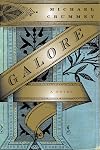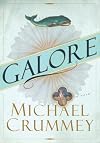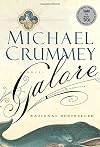
Galore
by Michael Crummey
On This Page
Description
Winner of the Commonwealth Writers' Prize for Best Book, Caribbean & Canada and the Canadian Authors Association Literary Award; Finalist for the Governor General's Literary Award for Fiction, the Thomas Head Raddall Atlantic Book Award, and the Winterset AwardWhen a whale beaches itself on the shore of the remote coastal town of Paradise Deep, the last thing any of the townspeople expect to find inside it is a man, silent and reeking of fish, but remarkably alive. The discovery of this show more mysterious person, soon christened Judah, sets the town scrambling for answers as its most prominent citizens weigh in on whether he is man or beast, blessing or curse, miracle or demon.
Though Judah is a shocking addition, the town of Paradise Deep is already full of unusual characters. King-me Sellers, self-appointed patriarch, has it in for an inscrutable woman known only as Devine's Widow, with whom he has a decades-old feud. Her granddaughter, Mary Tryphena, is just a child when Judah washes ashore, but finds herself tied to him all her life in ways she never expects. Galore is the story of the saga that develops between these families, full of bitterness and love, spanning two centuries.
With Paradise Deep, award-winning novelist Michael Crummey imagines a realm where the line between the everyday and the otherworldly is impossible to discern. Sprawling and intimate, stark and fantastical, Galore is a novel about the power of stories to shape and sustain us.
. show less
Tags
Recommendations


















Member Reviews
Every so often I finish a book, and can't start another one because I'm still thinking about the book I just finished. Galore is one of those books.
Galore pulled me in from the start. Part historical fiction, part magical realism, and part multi-generational family saga. Witchcraft and modern (for its time) medicine. Two feuding families. The haves vs. the have-nots. Religion. Ghosts. Galore has it all. Stories Galore. There is abundance every so often, and there are hard times more often. The people of this fictional town in long ago Newfoundland feel so real you would recognize any of them if you saw them on the street.
The story begins with an infant's birth and a fully grown, nearly albino, mute man, being pulled out of the belly of show more a whale that washed ashore. The townspeople see nothing weird about this, and neither does the reader. The author's wonderful storytelling style weaves the lives of the characters together in an unforgettable manner that will have you thinking about this book long after you've finished it.
The comparisons to One Hundred Years of Solitude are inevitable, and I started making them early in the book (and before I read reviews that make such a comparison). However, in many ways Galore is more readable than 100 years and the characters are more human. show less
Galore pulled me in from the start. Part historical fiction, part magical realism, and part multi-generational family saga. Witchcraft and modern (for its time) medicine. Two feuding families. The haves vs. the have-nots. Religion. Ghosts. Galore has it all. Stories Galore. There is abundance every so often, and there are hard times more often. The people of this fictional town in long ago Newfoundland feel so real you would recognize any of them if you saw them on the street.
The story begins with an infant's birth and a fully grown, nearly albino, mute man, being pulled out of the belly of show more a whale that washed ashore. The townspeople see nothing weird about this, and neither does the reader. The author's wonderful storytelling style weaves the lives of the characters together in an unforgettable manner that will have you thinking about this book long after you've finished it.
The comparisons to One Hundred Years of Solitude are inevitable, and I started making them early in the book (and before I read reviews that make such a comparison). However, in many ways Galore is more readable than 100 years and the characters are more human. show less
In Galore, Micheal Crummey creates a community in Newfoundland that begins in the late 1700s and stretches all the way past WWI. Through six generations of families, he explores pretty much everything that makes a community. There are memorable events and memorable characters, but the real brilliance of the book is how the community develops. In the beginning, there is a man who washes up on shore in the belly of a whale, half of one beat up Bible, medicine by superstition, no school, no libraries, no art for art's sake, no churches. By the end of the book there are competing churches, a doctor well-versed in the knowledge of the time, corporations and labor unions, schools, artists, etc.
But is life better? Is it progress?
These show more questions aren't asked directly, but they were on my mind while reading this. Crummey takes you such a long way with this community, but there are consistent references to the past that keep your mind on where it started and where it ended up.
I found it thought-provoking and smart, though as with many books that span a lot of time, some generation's characters engaged me more than others.
I enjoyed this and would like to read more by Michael Crummey. show less
But is life better? Is it progress?
These show more questions aren't asked directly, but they were on my mind while reading this. Crummey takes you such a long way with this community, but there are consistent references to the past that keep your mind on where it started and where it ended up.
I found it thought-provoking and smart, though as with many books that span a lot of time, some generation's characters engaged me more than others.
I enjoyed this and would like to read more by Michael Crummey. show less
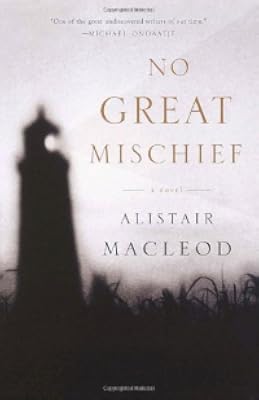
I don't know if you've ever read Alistair Macleod but he's this really great Canadian writer who is amazing at describing the settings of his books. Since most of his books take place on the Canadian east coast this means he's really good at making you feel damp and cold. Michael Crummey, another native of the Canadian east coast (Newfoundland to be exact) can now be said to share that gift.
Galore takes place is a small fishing village on the east coast and chronicles the lives of the Devine family. The novel spans across generations, beginning with the arrival of a beached whale on the shores of Paradise Deep. Upon further examination of the whale, a man is found in his stomach. Much to everyone's amazement this man is still alive but show more unable to speak. He is named Judah and taken in by the Devine family. Following children and grand children, you watch as this family survives against an incredibly harsh climate, decades long disputes, political changes and a war.
This book was brilliant! Like I mentioned earlier Crummey does an amazing job at setting the scene. Newfoundland (weather-wise) is not the ideal place to be. It rains, a lot, and winters are harsh and difficult – especially if you're a remote fishing village. Crummey makes you feel like you're facing this atmosphere head on with the characters and he does so in a way that you don't even notice it. It's mixed right in with the dialogue and action. I don't mean to suggest that you're going to be shivering while you read this but you are definitely going to empathize with these towns-people.
As for the characters, there are certainly a lot of them. I think all in all the book spans 4-5 generations of the Devine family and you get to know each generation quite intimately. Though many of their problems are the same, each character is also unique. I felt like I knew each one and as a result there were some I connected with and some I despised. You get swept up in all the family squabbles and long time disputes. The relationships that formed were also quite beautiful in their way. Due to the time period and place, people didn't generally come together via romantic love but many of their relationships still ended up strong and respectful. And when love was involved there was usually heartache to go with it. The heartache and other emotions just felt so real and so human. It was easy to forget you were reading a book and not just hearing about people you've known your whole life.
Galore is not a light read. It's not depressing either. It's a full range of thoughts and emotions, the same way that you experience a full range of thoughts and emotions in a life. It's beautifully written and well crafted. Michael Crummey is clearly a very talented author and one I look forward to reading more of in the future. show less
Galore takes place is a small fishing village on the east coast and chronicles the lives of the Devine family. The novel spans across generations, beginning with the arrival of a beached whale on the shores of Paradise Deep. Upon further examination of the whale, a man is found in his stomach. Much to everyone's amazement this man is still alive but show more unable to speak. He is named Judah and taken in by the Devine family. Following children and grand children, you watch as this family survives against an incredibly harsh climate, decades long disputes, political changes and a war.
This book was brilliant! Like I mentioned earlier Crummey does an amazing job at setting the scene. Newfoundland (weather-wise) is not the ideal place to be. It rains, a lot, and winters are harsh and difficult – especially if you're a remote fishing village. Crummey makes you feel like you're facing this atmosphere head on with the characters and he does so in a way that you don't even notice it. It's mixed right in with the dialogue and action. I don't mean to suggest that you're going to be shivering while you read this but you are definitely going to empathize with these towns-people.
As for the characters, there are certainly a lot of them. I think all in all the book spans 4-5 generations of the Devine family and you get to know each generation quite intimately. Though many of their problems are the same, each character is also unique. I felt like I knew each one and as a result there were some I connected with and some I despised. You get swept up in all the family squabbles and long time disputes. The relationships that formed were also quite beautiful in their way. Due to the time period and place, people didn't generally come together via romantic love but many of their relationships still ended up strong and respectful. And when love was involved there was usually heartache to go with it. The heartache and other emotions just felt so real and so human. It was easy to forget you were reading a book and not just hearing about people you've known your whole life.
Galore is not a light read. It's not depressing either. It's a full range of thoughts and emotions, the same way that you experience a full range of thoughts and emotions in a life. It's beautifully written and well crafted. Michael Crummey is clearly a very talented author and one I look forward to reading more of in the future. show less
As the title promises, Michael Crummey’s newest novel, Galore, delivers great abundance: of personalities, history, folklore, and vernacular. It is a yarn in the best sense of the word, unspooling over the course of a century in a small Newfoundland fishing village to give us not just the history of a place and its people, but of its storytelling.
The tales start off tall and gradually compact, as the book rolls along, to accommodate the modern age. But the beginning is well-nigh Biblical. A whale washes up on shore one April and a mute, albino-white man tumbles from its slit belly:
"The Toucher triplets were poking idly at the massive gut with splitting knives and prongs, dirty seawater pouring from the gash they opened, a crest of show more blood, a school of undigested capelin and herring, and then the head appeared, the boys screaming and falling away at the sight. It was a human head, the hair bleached white. One pale arm flopped through the ragged incision and dangled into the water.
"For a time no one moved or spoke, watching as if they expected the man to stand and walk ashore of his own accord. Devine’s Widow waded over finally to finish the job, the body slipping into the water as she’s cut it free. The Catholics crossed themselves in concert and Jabez Trim said, Naked came I from my mother’s womb."
The stink of fish refuses to wash off him, and though he eventually comes to be called Judah—a compromise between Judas and Jonah, as the matter of who was famously swallowed by the whale is never quite agreed on—for a time he is known only as the stranger. And a stranger he is, not only in his considerable oddness but because he becomes a fulcrum of sorts in the deeply divided community. Paradise Deep is what passes for the village, holding the single store, the docks, and the cove’s only wood-floored house, all the domain of its first settler, King-Me Sellers—so named because of his penchant for cheating at checkers. Separated from the ramshackle town center by a long ridge and scrub forest is the Gut, home to the Irish and the “bushborn.” This is the domain of Devine’s Widow, sworn enemy of King-Me Sellers, midwife, matriarch, perhaps a witch, and her descendants. The two families’ mutual distrust, of course, produces its own kind of passion: Sellers’ daughter and Devine’s Widow’s son manage a long and mostly happy marriage despite the animosity of their parents. And their daughter Mary Tryphena, whose destiny is tangled with Judah’s for most of her life, still carries a flame for King-Me’s grandson, Absalom.
They are split by religion, too—not only the Catholic-Protestant division you’d expect of British and Irish immigrants, but in the ways the old customs are supplanted by the new. When the novel opens, collective belief is embodied in the town’s one incomplete copy of the Bible “recovered from the gullet of a cod the size of a goat,” a sacred apple tree brought over as a sapling from Ireland a hundred years prior, and the charmingly drunken Jesuit, Father Phelan. But the years bring a Catholic priest from St. John’s who excommunicates poor Father Phelan and a series of ill-fated churches of both faiths, each grander than the next. Paradise Deep gets a doctor, and then a union organizer, and a hospital is built, and a union hall. Little by little the old ways give in to the pull of modernity, but at the cost of the community’s animating mystery—Judah’s acceptance first hinges on the sudden change in fishing fortune that coincides with his arrival, but eventually he becomes their sin eater, locked away for a crime he didn’t commit, and it’s clear that the cove’s residents are the poorer for it. If Crummey makes a single misstep structuring the book, it would be in dividing it into two parts; what happens to Paradise Deep and its denizens in that span of time doesn’t need to be spelled out so heavy-handedly. As the old magic gives way to the new commerce, and a year is finally named, rooting the story in history rather than timelessness, it’s clear what we’re being shown. He’s a more skillful writer than that, and his evocations of the ways the past hangs on need no further explanation:
"The old hospital had the feel of a place evacuated during an emergency. The air smelled of formaldehyde and disinfectant and chloroform and rot. The margins of each room cluttered with the detritus of thirty years of frontier medicine, outdated equipment, empty glass bottles and stacks of paper, the shards of ten thousand teeth trapped along the baseboards."
Crummey’s descriptions of people and places, thick with the wonderful local dialect and at the same time sinuous and evocative, are what bring Galore its sense of plenty. The cast of characters, with their loves and feuds, is complicated enough that the book leads off with not one but two pages of family trees. This is a beautifully realized, roughshod little world, ruled equally by passion and poverty, magic and religion and merchantry. If these matriarchs and patriarchs and nods to the supernatural conjure up thoughts of Gabriel Garcia Marquez, that’s all right—the novel’s epigraph is a quote of his: “The invincible power that has moved the world is unrequited, not happy, love.” But here the elements of magic realism are not so much whimsical as utilitarian. Crummey nods to ghosts and spells and moves along; they are no less real than the secret longing his characters each carry in their hearts.
For it’s love in all its guises that fuels the book, that keeps these stuttering, stinking, odd and at the same time thoroughly recognizable characters so mobile. And though Salon’s Good Sex in Fiction Awards have come and gone this year, I’d happily nominate Galore for the running in 2012. Consider, for instance, the good Father Phelan:
"Mrs. Gallery’s bed was constructed in the same fashion as the wharves and fish flakes and walls of the tilts, spruce logs skinned of their rind and nailed lengthwise on one side of the room. There was a thick layer of boughs as a mattress and bedding of ancient woolen blankets and a leathery sealskin and underneath it all the heat of Mrs. Gallery. He lifted the covers and crawled in beside her. Her mouth sweet as spruce gum and the skin of her thighs like fresh cream. Mrs. Gallery spread her legs and brought his hand to the wet of her, a little noise at the back of her throat when he found it. —That’s the bowl that never goes empty, Mrs. Gallery, he whispered. —That’s the miracle of the loaves and the fishes. His hand rocking slowly into her and he began talking in Latin, his voice rising enough to be heard through the house as she came for the first time."
And the scene of young Abel Devine’s deflowering by an older woman, late in the book, is nothing but sweet:
"They lay nearly naked on the bed afterwards, silent under the weight of what had passed between them. Abel forced himself up on an elbow to look down at her. —Esther, he said, but she placed a finger against his lips. She said, Never tell a woman you love her, Abel.
"He stared, his eyes filming over with tears.
"—It will always sound like a lie, she said. —Better you let a woman figure it out for herself."
In a book where nearly everything is driven by misplaced love, it’s interesting that two who find some version of happily realized desire are the apostate Catholic priest and the country doctor. A small subtle message: that to gain true love it may prove useful to have a passion above oneself, whether healing or ministering. And another, sadder one: that the truest enemy of love is to live a long life:
"The stairs were almost too much for him and he stood on the landing a minute to get his wind. Ambushed by an image of Bride as the cancer dismantled her one organ at a time, the veins showing through her papery skin. The false teeth in her wasted face made her look a corpse in the bed and he’d wished he was dead, watching her leave in so much torment. —I can make it stop, he told her, knowing she’d never consent to such a thing. —When you’re ready.
"Bride offering the slightest nod. —Now the once, she said.
"It was the oddest expression he’d learned on the shore. Now the once. The present twined with the past to mean soon, a bit later, at some unspecified point in the future. As if it was all the same finally, as if time was a single moment endlessly circling on itself."
In the tale’s final pages, this idea—now the once—assumes majestic proportions. Not only are the places, the characters, and their words rendered deftly and with kindness throughout, even the most unlovable among them, but the bones of the story itself are constructed with a master craftsman’s skill. This yarn unspools with joy even as it winds itself into a new ball, and the reader is rewarded, at the very end, with a startling, elegant symmetry. Galore is indeed full, stuffed to bursting with humanity, and Michael Crummey has done the citizens of Paradise Deep justice. show less
The tales start off tall and gradually compact, as the book rolls along, to accommodate the modern age. But the beginning is well-nigh Biblical. A whale washes up on shore one April and a mute, albino-white man tumbles from its slit belly:
"The Toucher triplets were poking idly at the massive gut with splitting knives and prongs, dirty seawater pouring from the gash they opened, a crest of show more blood, a school of undigested capelin and herring, and then the head appeared, the boys screaming and falling away at the sight. It was a human head, the hair bleached white. One pale arm flopped through the ragged incision and dangled into the water.
"For a time no one moved or spoke, watching as if they expected the man to stand and walk ashore of his own accord. Devine’s Widow waded over finally to finish the job, the body slipping into the water as she’s cut it free. The Catholics crossed themselves in concert and Jabez Trim said, Naked came I from my mother’s womb."
The stink of fish refuses to wash off him, and though he eventually comes to be called Judah—a compromise between Judas and Jonah, as the matter of who was famously swallowed by the whale is never quite agreed on—for a time he is known only as the stranger. And a stranger he is, not only in his considerable oddness but because he becomes a fulcrum of sorts in the deeply divided community. Paradise Deep is what passes for the village, holding the single store, the docks, and the cove’s only wood-floored house, all the domain of its first settler, King-Me Sellers—so named because of his penchant for cheating at checkers. Separated from the ramshackle town center by a long ridge and scrub forest is the Gut, home to the Irish and the “bushborn.” This is the domain of Devine’s Widow, sworn enemy of King-Me Sellers, midwife, matriarch, perhaps a witch, and her descendants. The two families’ mutual distrust, of course, produces its own kind of passion: Sellers’ daughter and Devine’s Widow’s son manage a long and mostly happy marriage despite the animosity of their parents. And their daughter Mary Tryphena, whose destiny is tangled with Judah’s for most of her life, still carries a flame for King-Me’s grandson, Absalom.
They are split by religion, too—not only the Catholic-Protestant division you’d expect of British and Irish immigrants, but in the ways the old customs are supplanted by the new. When the novel opens, collective belief is embodied in the town’s one incomplete copy of the Bible “recovered from the gullet of a cod the size of a goat,” a sacred apple tree brought over as a sapling from Ireland a hundred years prior, and the charmingly drunken Jesuit, Father Phelan. But the years bring a Catholic priest from St. John’s who excommunicates poor Father Phelan and a series of ill-fated churches of both faiths, each grander than the next. Paradise Deep gets a doctor, and then a union organizer, and a hospital is built, and a union hall. Little by little the old ways give in to the pull of modernity, but at the cost of the community’s animating mystery—Judah’s acceptance first hinges on the sudden change in fishing fortune that coincides with his arrival, but eventually he becomes their sin eater, locked away for a crime he didn’t commit, and it’s clear that the cove’s residents are the poorer for it. If Crummey makes a single misstep structuring the book, it would be in dividing it into two parts; what happens to Paradise Deep and its denizens in that span of time doesn’t need to be spelled out so heavy-handedly. As the old magic gives way to the new commerce, and a year is finally named, rooting the story in history rather than timelessness, it’s clear what we’re being shown. He’s a more skillful writer than that, and his evocations of the ways the past hangs on need no further explanation:
"The old hospital had the feel of a place evacuated during an emergency. The air smelled of formaldehyde and disinfectant and chloroform and rot. The margins of each room cluttered with the detritus of thirty years of frontier medicine, outdated equipment, empty glass bottles and stacks of paper, the shards of ten thousand teeth trapped along the baseboards."
Crummey’s descriptions of people and places, thick with the wonderful local dialect and at the same time sinuous and evocative, are what bring Galore its sense of plenty. The cast of characters, with their loves and feuds, is complicated enough that the book leads off with not one but two pages of family trees. This is a beautifully realized, roughshod little world, ruled equally by passion and poverty, magic and religion and merchantry. If these matriarchs and patriarchs and nods to the supernatural conjure up thoughts of Gabriel Garcia Marquez, that’s all right—the novel’s epigraph is a quote of his: “The invincible power that has moved the world is unrequited, not happy, love.” But here the elements of magic realism are not so much whimsical as utilitarian. Crummey nods to ghosts and spells and moves along; they are no less real than the secret longing his characters each carry in their hearts.
For it’s love in all its guises that fuels the book, that keeps these stuttering, stinking, odd and at the same time thoroughly recognizable characters so mobile. And though Salon’s Good Sex in Fiction Awards have come and gone this year, I’d happily nominate Galore for the running in 2012. Consider, for instance, the good Father Phelan:
"Mrs. Gallery’s bed was constructed in the same fashion as the wharves and fish flakes and walls of the tilts, spruce logs skinned of their rind and nailed lengthwise on one side of the room. There was a thick layer of boughs as a mattress and bedding of ancient woolen blankets and a leathery sealskin and underneath it all the heat of Mrs. Gallery. He lifted the covers and crawled in beside her. Her mouth sweet as spruce gum and the skin of her thighs like fresh cream. Mrs. Gallery spread her legs and brought his hand to the wet of her, a little noise at the back of her throat when he found it. —That’s the bowl that never goes empty, Mrs. Gallery, he whispered. —That’s the miracle of the loaves and the fishes. His hand rocking slowly into her and he began talking in Latin, his voice rising enough to be heard through the house as she came for the first time."
And the scene of young Abel Devine’s deflowering by an older woman, late in the book, is nothing but sweet:
"They lay nearly naked on the bed afterwards, silent under the weight of what had passed between them. Abel forced himself up on an elbow to look down at her. —Esther, he said, but she placed a finger against his lips. She said, Never tell a woman you love her, Abel.
"He stared, his eyes filming over with tears.
"—It will always sound like a lie, she said. —Better you let a woman figure it out for herself."
In a book where nearly everything is driven by misplaced love, it’s interesting that two who find some version of happily realized desire are the apostate Catholic priest and the country doctor. A small subtle message: that to gain true love it may prove useful to have a passion above oneself, whether healing or ministering. And another, sadder one: that the truest enemy of love is to live a long life:
"The stairs were almost too much for him and he stood on the landing a minute to get his wind. Ambushed by an image of Bride as the cancer dismantled her one organ at a time, the veins showing through her papery skin. The false teeth in her wasted face made her look a corpse in the bed and he’d wished he was dead, watching her leave in so much torment. —I can make it stop, he told her, knowing she’d never consent to such a thing. —When you’re ready.
"Bride offering the slightest nod. —Now the once, she said.
"It was the oddest expression he’d learned on the shore. Now the once. The present twined with the past to mean soon, a bit later, at some unspecified point in the future. As if it was all the same finally, as if time was a single moment endlessly circling on itself."
In the tale’s final pages, this idea—now the once—assumes majestic proportions. Not only are the places, the characters, and their words rendered deftly and with kindness throughout, even the most unlovable among them, but the bones of the story itself are constructed with a master craftsman’s skill. This yarn unspools with joy even as it winds itself into a new ball, and the reader is rewarded, at the very end, with a startling, elegant symmetry. Galore is indeed full, stuffed to bursting with humanity, and Michael Crummey has done the citizens of Paradise Deep justice. show less
This was a beautifully-written, multi-generational tale with magical-realism elements. Mr. Crummey's descriptions of life in 19th and early 20th century Newfoundland are vivid and there are many poetic, sassy, and otherwise quotable lines.
I had a bit of a problem keeping all the characters and their relationships straight. If I had been reading the dead tree book version instead of the eBook version, I would have made a copy of the family tree for constant reference. My attention waned and my reading speed slowed throughout the middle of the book but I became enthralled again toward the ending.
I had a bit of a problem keeping all the characters and their relationships straight. If I had been reading the dead tree book version instead of the eBook version, I would have made a copy of the family tree for constant reference. My attention waned and my reading speed slowed throughout the middle of the book but I became enthralled again toward the ending.
Michael Crummey’s Giller Prize-winning novel Galore is an epic multi-family saga that draws obvious comparisons with Gabriel Garcia Marquez’s One Hundred Years of Solitude. Set in the frigid (and wholly invented) fishing town of Paradise Deep on the Newfoundland coast, Galore explores the fortunes (and lack thereof) of two rival families over the course of six generations. Beginning with magical realist bombast, the residents of Paradise Deep excise a near-albino mute Judah from the belly of a beached whale. Through literal feast and famine, modernity encroaches on the village over the coming generations, held at bay only by the unforgiving landscape and the stolidly traditional people who call it home. Full of magic, humor, icy show more beauty and marvelous dialogue, Galore is a delight. show less
Written with Michael Crummey's highly readable wit and insight, Galore is a rethinking of the story of Jonah and the whale, albeit without the Biblical admonition about destiny. In fact, one might say Crummey refutes the concept of preordination in this family saga rife with pig-headed vengeance, of conversations never opened, of secrets and shames. It is a raw tale, a ridiculous tale, and despite that element of the ridiculous, there is also the ring of truth to the lives Crummey reveals to us.
The language is clever, employing literary devices with a deft hand while keeping the Newfoundland dialect intact. The characters he sketches are fully-realized, and although their lives are beset with the incredible, they are also quite show more believable. It has always been an amazement to me how Crummey does that: creates extraordinary characters who are believable and accessible.
Definitely going on my shelves in hardcover. show less
The language is clever, employing literary devices with a deft hand while keeping the Newfoundland dialect intact. The characters he sketches are fully-realized, and although their lives are beset with the incredible, they are also quite show more believable. It has always been an amazement to me how Crummey does that: creates extraordinary characters who are believable and accessible.
Definitely going on my shelves in hardcover. show less
Members
- Recently Added By
Published Reviews
ThingScore 100
Newfoundland author Crummey’s award-winning third novel, published in Canada in 2009, affirms that our lives are always astonishing. It’s been justly compared to Gabriel García Márquez’s One Hundred Years of Solitude. It also calls to mind Graham Swift’s Waterland and Alexis Wright’s Carpentaria, as well as William Faulkner’s epic Compson novels, and will appeal to readers who show more enjoyed those works. show less
added by sduff222
Crummey lovingly carves out the privation and inner intricacies that mark his characters' lives with folkloric embellishments and the precision of the finest scrimshaw.
added by Christa_Josh
An intriguing read.
added by Christa_Josh
Lists

Recommend the 20 best books you've read in the last five years
2,168 works; 606 members

The Best of Canadian Literature
235 works; 33 members
CBC Books - Canada's 100 (+ bonus 10): Which have you read?
110 works; 23 members

International IMPAC Dublin Literary Award
179 works; 6 members

History in the long view
55 works; 3 members

Canadian Historical Fiction 🇨🇦
157 works; 8 members
Author Information

18+ Works 2,935 Members
Michael Crummey was born in Buchans, Newfoundland, Canada on November 18, 1965. He received a BA in English from Memorial University in 1987. He pursued graduate work at Queen's University, but dropped out of the PhD program in 1989. In 1986, he entered and won the Gregory J. Power Poetry Contest at Memorial University. He was first published in show more the St. John's-based literary mag TickleAce. In 1994, he won the inaugural Bronwen Wallace Award for Poetry. His first book of poetry, Arguments with Gravity, was published in 1996 and won the Writer's Alliance of Newfoundland and Labrador Book Award for Poetry. His works include Hard Light, Emergency Roadside Assistance, and Flesh and Blood. (Bowker Author Biography) show less
Some Editions
Awards and Honors
Awards
Distinctions
Common Knowledge
- Canonical title
- Galore
- Original title
- Galore
- Original publication date
- 2009-08-11
- People/Characters
- Judah
- Important places
- Newfoundland, Canada
- Epigraph
- The invincible power that has moved the world is unrequited, not happy, love. -- Gabriel Garcia Marquez
I will bring my people again from the depths of the sea. -- Psalms - Dedication
- for Arielle, Robin and Ben
- First words
- He ended his time on the shore in a makeshift asylum cell, shut away with the profligate stink of fish that clung to him all his days.
- Last words
- (Click to show. Warning: May contain spoilers.)Even as he fell he pictured her watching from across the room the next time he opened his eyes to the light.
- Blurbers
- Johnston, Wayne
Classifications
- Genres
- General Fiction, Fiction and Literature, Historical Fiction
- DDC/MDS
- 813.54 — Literature & rhetoric American literature in English American fiction in English 1900-1999 1945-1999
- LCC
- PR9199.3 .C717 .G36 — Language and Literature English English Literature English literature: Provincial, local, etc.
- BISAC
Statistics
- Members
- 795
- Popularity
- 35,055
- Reviews
- 50
- Rating
- (3.95)
- Languages
- English, French, Italian, Polish
- Media
- Paper, Audiobook, Ebook
- ISBNs
- 23
- ASINs
- 5