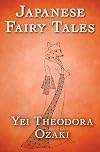
Japanese Fairy Tales
by Yei Theodora Ozaki
On This Page
Description
Travel back in time with this eclectic collection of ancient and medieval Japanese folktales, myths, and fables from Yei Theodora Ozaki, a skilled translator born to a Japanese father and European mother who as a young woman and adult divided her time between both regions. Spanning centuries, the collection is sure to engage folktale fans and readers of all ages..
Tags
Recommendations

















Member Recommendations
Member Reviews
A great sampling of fairy tales from Japan. Ozaki describes in her preface that she sought to make these 'Western-friendly' in her retellings; I take this as reference to her inserted explanations about certain cultural tokens, or the substitution of certain words (e.g. "samurai" becomes "knight") rather than having reshaped the stories themselves. Their morals are not always clear to me and the story can sometimes turn surprisingly violent, but this is no different from reading the tales related by Perrault, the Grimm brothers or Anderson. Something that is different: a few of these are more like legends, describing the unrelated exploits of semi-historical figures (e.g. Emperor Kotei, Princess Hase, Prince Yamato Take). Recurring show more themes are also different: frequently there is an old childless peasant couple who are suddenly blessed with a son/daughter via supernatural means, and references to an undersea kingdom ruled by a dragon king. I hope that by becoming familiar with these it will enrich my reading of other Japanese literature.
My Lord Bag of Rice - a hero demonstrates bravery against dire odds
The Tongue-Cut Sparrow - a shewish wife learns a lesson about greed. Eerily similar to Grimms' "The Magical Wishing Fish".
The Story of Urashima Taro, the Fisher Lad - the mixed blessings of favours from beyond
The Farmer and the Badger - horrific deceit and sly revenge, a darker tale
The Shinansha, or South Pointing Carriage - concerning Emperor Kotei, legendary Chinese inventor
The Adventures of Kintaro, the Golden Boy - anyone can rise to Samurai, even the son of a disgraced one
The Story of Princess Hase - the legend of Chujo-hime and the Taima Mandala of the Taima-dera Temple in Nara
The Story of the Man Who Did Not Wish to Die - if birthdays are preferable to the alternative, what is preferable to an eternity of birthdays?
The Bamboo-Cutter and the Moon-Child - a young woman from the moon is wooed by the emperor, leading to a Mount Fuji legend
The Mirror of Matsuyama - a young woman believes it is her dead mother looking back from a mirror, rather than her own reflection
The Goblin of Adachigahara - a simple monster story, but perhaps suggesting the monster has other shades
The Sagacious Monkey and the Boar - a monkey reminds his master of their bond
The Happy Hunter and the Skillful Fisher - an meritous quest inevitably meets with reward
The Story of the Old Man Who Made Withered Trees Flower - good fortune cannot be stolen
The Jelly Fish and the Monkey - how the jellyfish came to be
The Quarrel of the Monkey and the Crab - a son avenges his father's murder; another dark one
The White Hare and the Crocodiles - trickery contrasted with kindness
The Story of Prince Yamato Take - legend of the prince and his selfless wife
Momotaro, or the Story of the Son of a Peach - a magical child recruits animals to battle demons
The Ogre of Rashomon - a monster suffers from loss of limb
How an Old Man Lost His Wen - more jealousy of good fortune, but humourous this time
The Stones of Five Colors and the Empress Jokwa - water type versus fire type show less
My Lord Bag of Rice - a hero demonstrates bravery against dire odds
The Tongue-Cut Sparrow - a shewish wife learns a lesson about greed. Eerily similar to Grimms' "The Magical Wishing Fish".
The Story of Urashima Taro, the Fisher Lad - the mixed blessings of favours from beyond
The Farmer and the Badger - horrific deceit and sly revenge, a darker tale
The Shinansha, or South Pointing Carriage - concerning Emperor Kotei, legendary Chinese inventor
The Adventures of Kintaro, the Golden Boy - anyone can rise to Samurai, even the son of a disgraced one
The Story of Princess Hase - the legend of Chujo-hime and the Taima Mandala of the Taima-dera Temple in Nara
The Story of the Man Who Did Not Wish to Die - if birthdays are preferable to the alternative, what is preferable to an eternity of birthdays?
The Bamboo-Cutter and the Moon-Child - a young woman from the moon is wooed by the emperor, leading to a Mount Fuji legend
The Mirror of Matsuyama - a young woman believes it is her dead mother looking back from a mirror, rather than her own reflection
The Goblin of Adachigahara - a simple monster story, but perhaps suggesting the monster has other shades
The Sagacious Monkey and the Boar - a monkey reminds his master of their bond
The Happy Hunter and the Skillful Fisher - an meritous quest inevitably meets with reward
The Story of the Old Man Who Made Withered Trees Flower - good fortune cannot be stolen
The Jelly Fish and the Monkey - how the jellyfish came to be
The Quarrel of the Monkey and the Crab - a son avenges his father's murder; another dark one
The White Hare and the Crocodiles - trickery contrasted with kindness
The Story of Prince Yamato Take - legend of the prince and his selfless wife
Momotaro, or the Story of the Son of a Peach - a magical child recruits animals to battle demons
The Ogre of Rashomon - a monster suffers from loss of limb
How an Old Man Lost His Wen - more jealousy of good fortune, but humourous this time
The Stones of Five Colors and the Empress Jokwa - water type versus fire type show less
A really charming illustrated collection of popular Japanese fairy tales. Stories include the mythical invention of sumo, Urashima Taro (a young man lives with the Dragon King of the Ocean which causes time to pass him by), the Tale of the Bamboo Cutter, and Momotaro were particular favourites. Urashima Taro in particular is helpful to be familiar with, because it is often referenced in Japanese media to suggest that time has passed someone by.
An odd but engaging collection of early 20th century (1903) fairy tales collected from Japan. Reminded me of my youth, reading Grimm's tales. I can't say that many of these made sense in the way of fairy tales, but sometimes I think that is the point. I can tell you that I saw vestiges of classic tales such as Cinderella in some of the stories, thereby confirming my belief that fairy tales transcend cultures.
It's always interesting to read fairy tales from another culture, although they rarely blow me away. I especially liked the story about how the jellyfish lost his bones. I also liked the moral lessons of several of the stories.
As a well traveled nine year old of Western backgroud living in the middle east, this was my intoroduction to Japanese culture back in the early seventies.
It resulted in the firm opinion that the Japanese were VERY weird and an ongoing facsination with Japan that has lasted all my life.
It resulted in the firm opinion that the Japanese were VERY weird and an ongoing facsination with Japan that has lasted all my life.
$77 on abe but this is poor condition jacket.
$77.91 on Abebooks.com : 2022
Members
- Recently Added By
Lists

Favorite Childhood Books
1,646 works; 514 members

Asia
178 works; 7 members

Favorite Fairy Tales
269 works; 103 members
Author Information

21+ Works 893 Members
Some Editions
Series
Belongs to Publisher Series
Common Knowledge
- Canonical title
- Japanese Fairy Tales
- Alternate titles
- The Japanese Fairy Book
- Original publication date
- 1903
- People/Characters
- Kotei, Emperor of Japan; Fujiwara no Hidesato; Urashima Tarō; Kintaro; Chūjō-Hime aka Hase-Hime; Sentaro (show all 12); Kaguya-hime; Hoori (or Hikohohodemi no Mikoto); Hoderi (or Umisachi-hiko); Yamato Takeru (or Take); Momotaro; Jokwa, Royal Lady of the West
- Important places
- Japan
- Dedication
- Eleanor Marion-Crawford.
I dedicate this book to you and to the sweet child-friendship that you gave me in the days spent with you by the southern sea, when you used to listen with unfeigned pleasure to these fairy s... (show all)tories from far Japan. May they now remind you of my changeless love and remembrance.
Y. T. O.
Tokio, 1903. - First words
- Long, long ago there lived, in Japan a brave warrior known to all as Tawara Toda, or "My Lord Bag of Rice."
- Last words
- (Click to show. Warning: May contain spoilers.)All the people rejoiced greatly, and peace and prosperity were secured in China for a long time under the reign of the wise Empress Jokwa.
- Disambiguation notice
- The Japanese Fairy Book was also published under the title Japanese Fairy Tales.
The date of the preface and dedication, as well as that given in the copyright statement is 1908. Wikipedia gives the publi... (show all)cation date as 1903-1908.
Classifications
Statistics
- Members
- 758
- Popularity
- 36,992
- Reviews
- 7
- Rating
- (3.62)
- Languages
- 5 — English, German, Spanish, Swedish, Turkish
- Media
- Paper, Audiobook, Ebook
- ISBNs
- 121
- UPCs
- 1
- ASINs
- 47